How contemporary sculpture speaks to us: A look back at the 16th International Forum of Sculpture Network

The fully booked forum Bodytalk – The Return of the Human Figure in Contemporary Sculpture gathered around a hundred artists, curators and collectors from across Europe in Berlin from 29 to 31 October 2026.
Conceptual figuration was the focus of Sculpture Network’s flagship event, curated by Anne Berk and Anemone Vostell. Through gesture, posture and materiality, artists explore fundamental questions about human existence, shedding light on key themes such as identity, love, power, technology and our relationship with nature. Whilst monumental sculptures of the past still dictated their relevance from their pedestals, contemporary sculpture meets us at eye level.
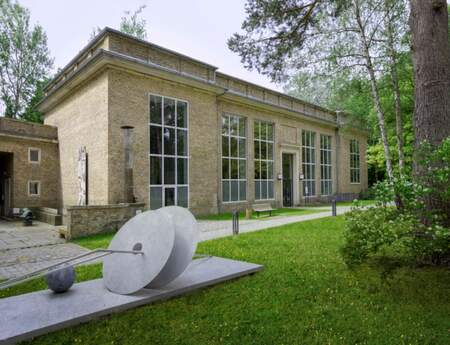
Opening at the Kunsthaus Dahlem
Dr. Dorothea Schöne, artistic director and managing director of the Kunsthaus Dahlem, opened the forum on the evening of 29 October and highlighted the historical significance of the venue. Originally built as a studio for Arno Breker, whose enormous neoclassical figures embodied the ideals of National Socialism, the building was home after 1945 to artists as diverse as Bernhard Heiliger and Wolf Vostell before becoming a venue for post-war modern art. Dr Friedrich Meschede, chairman of the Bernhard Heiliger Foundation – which is also based in the building – introduced the exhibition Time Is Not Lost – Sculptures for Lived-in Spaces by the long-forgotten sculptress Ruth Maria Linde-Heiliger.
Friday: Lecture day at the PalaisPopulaire
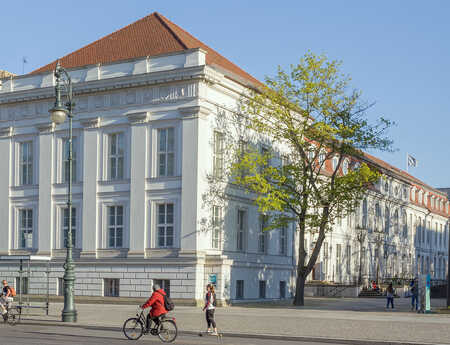
Anemone Vostell, co-curator and cultural manager in Berlin, hosted the lecture day at the PalaisPopulaire on Unter den Linden. As the exhibition venue – which succeeded the Deutsche Guggenheim and the KunstHalle Deutsche Bank – is closing its doors at the end of the year, the International Forum of Sculpture Network staged one of its last major events in these historic rooms.
Svenja von Reichenbach, director of the institution, welcomed the guests and invited them to visit the Moving Clouds exhibition. The exhibition features works by Lucia Tallová, the current winner of the Artist of the Year award – an initiative that Deutsche Bank Art & Culture will be continuing in the future. Von Reichenbach received special recognition for her initiative to create a space for contemporary sculpture in front of the former Princess’s Palace. With SculpturePopulaire, she has established a platform for art in the heart of this historic neighbourhood.
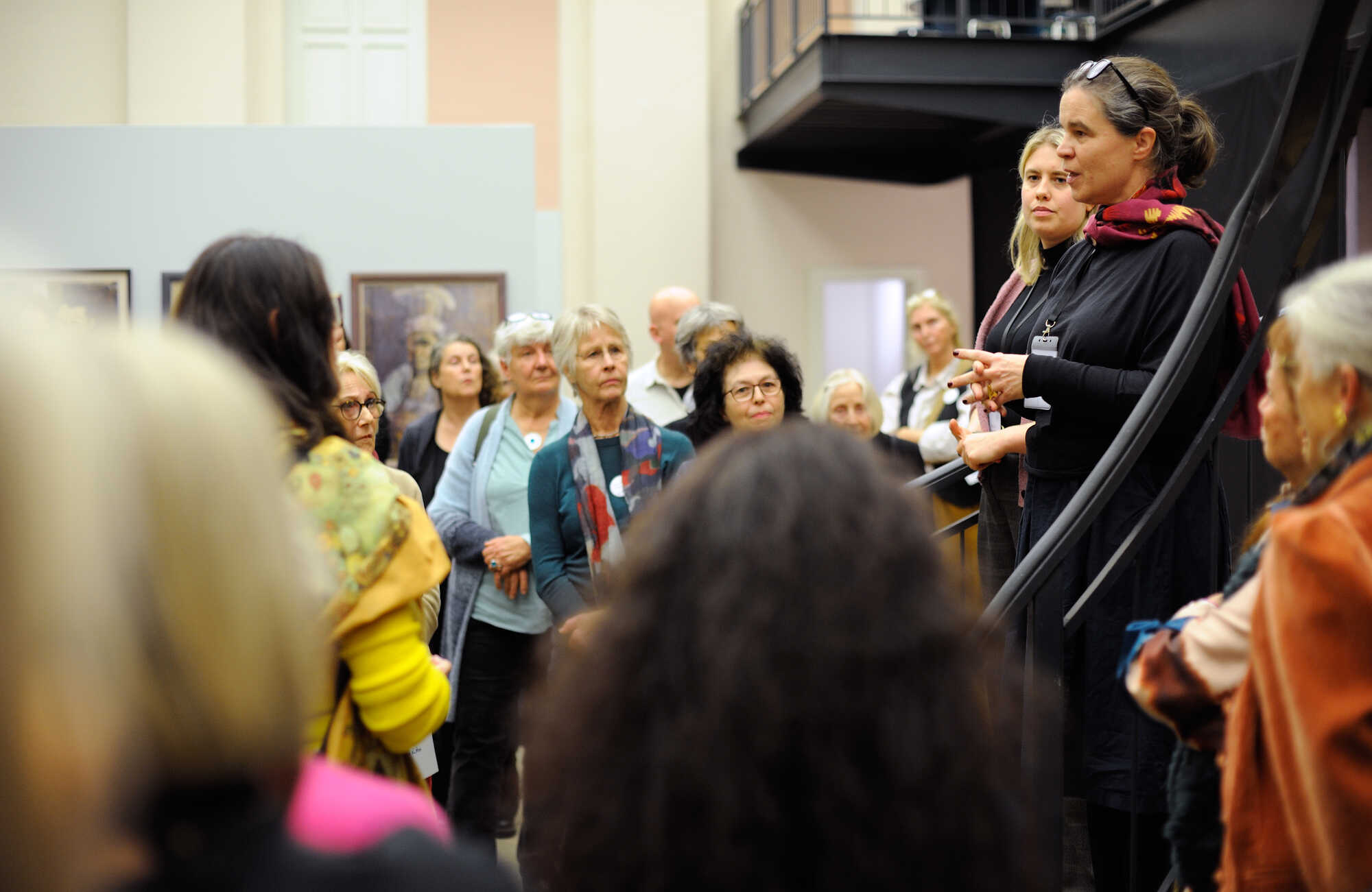
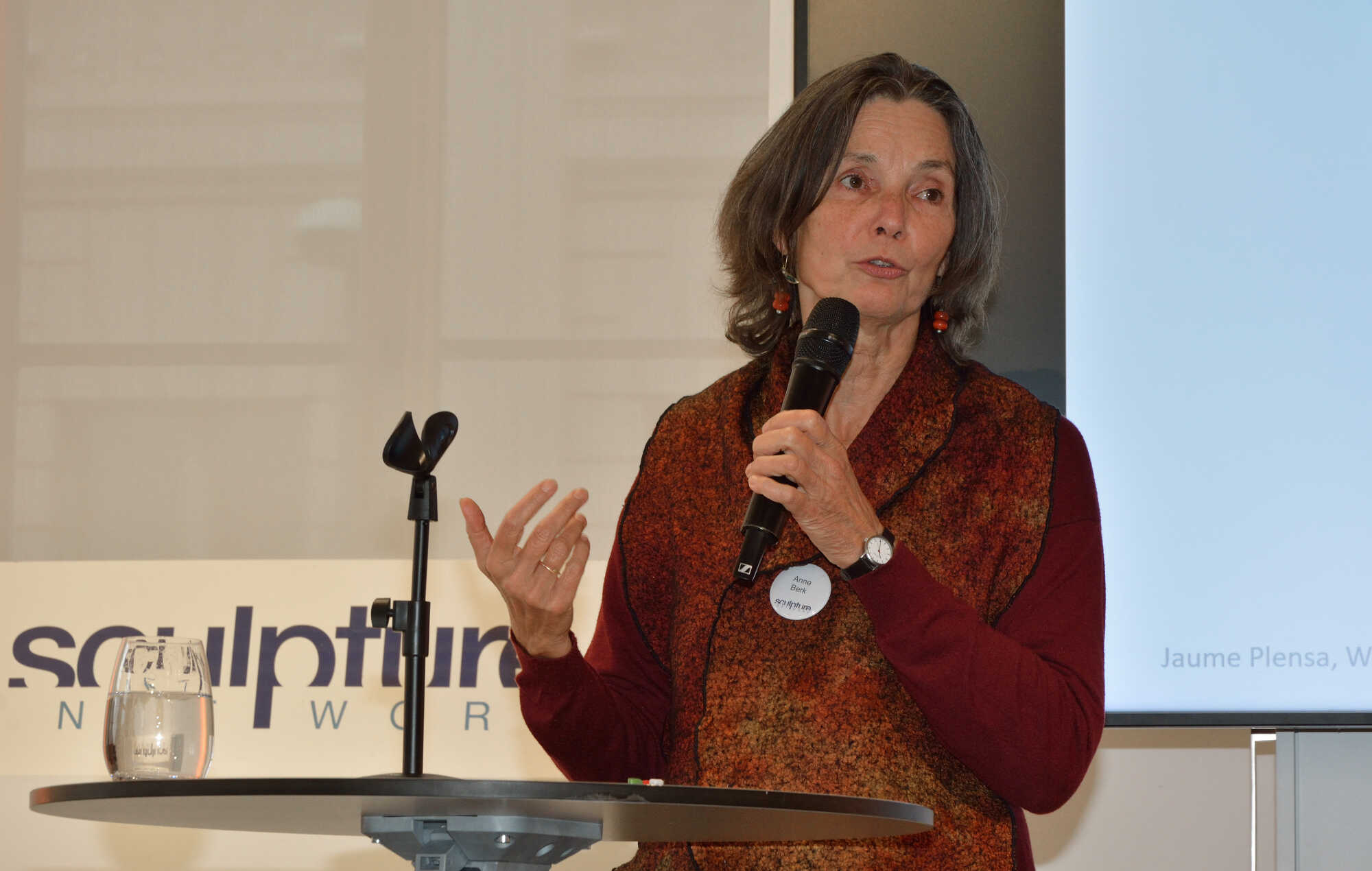
Anne Berk (NL), freelance curator, author and chairperson of Sculpture Network, introduced the theme of the forum, Bodytalk. Focus was put on the question of why the human figure is experiencing a comeback in contemporary sculpture and the manner in which these silent figures enter into dialogue with our own bodies through gesture and posture. In her book and exhibition In Search of Meaning. Mensbeelden in Globaal Perspectief (NL, 2015), she had already explored how artists around the world use the gesturing body as a medium to convey existential questions about life.
Prof. Dr Susanne Kähler (DE), Professor of Museology at HTW Berlin, traced the development of The body language(s) of sculpture in public spaces from the 1980s to the present day. As head of the digital platform Bildhauerei-in-Berlin.de, which archives around 3,000 sculptures, she examined the divided and reunified city from an East-West perspective. In doing so, she impressively demonstrated how Berlin’s statues bear witness to the transition from totalitarian regimes to democracy.
Anna Mustonen (FI), Chief Curator at Kiasma in Helsinki, provided an insight into the Venice exhibition she curated for the Nordic Pavilion 2026, featuring works by the sculptors Tori Wrånes, Klara Kristalova and Benjamin Orlow. Mustonen views sculpture as an embodied experience: in times of uncertainty, in worlds caught between collapse and renewal, bodies, myths and matter become intertwined. She combines sculpture, sound and performance to create a single work of art. Her intention is to bring about lasting renewal, not only in curation but also in the outreach strategies of contemporary museums such as Kiasma.

In the afternoon, presentations by two artists followed. The multidisciplinary trans artist Agnes Questionmark (IT) resonated deeply with the audience with her performative installations exploring questions of identity. She conceives of the body as a living archive and as an unstable interface between science, power and the self. Drawing on bioethics, mythology and critical theory, Questionmark creates immersive experiences featuring speculative anatomies, characterised by surgical, genetic and social interventions on her own body. Her visionary presentation, which also drew parallels with current developments in the fields of AI and robotics, visibly moved the audience. In spring 2027, Agnes Questionmark will take part in the New Museum Triennale in New York.
The Czech artist Andros Foros, who is taking part in the current ROHKUNSTBAU exhibition of international positions, offered a detailed insight into his artistic practice, which is shaped by Western iconography. With a twist of humour, he combines the grandeur of Gothic sculpture with the grotesque and the excesses of the present day. Some of his figures allude to the inner child as well as to the multiple identities we possess. Armour, costumes and weapons serve as a canvas for his inner feelings – they are the reflections of a young Prague-based sculptor in an increasingly fragmented world.
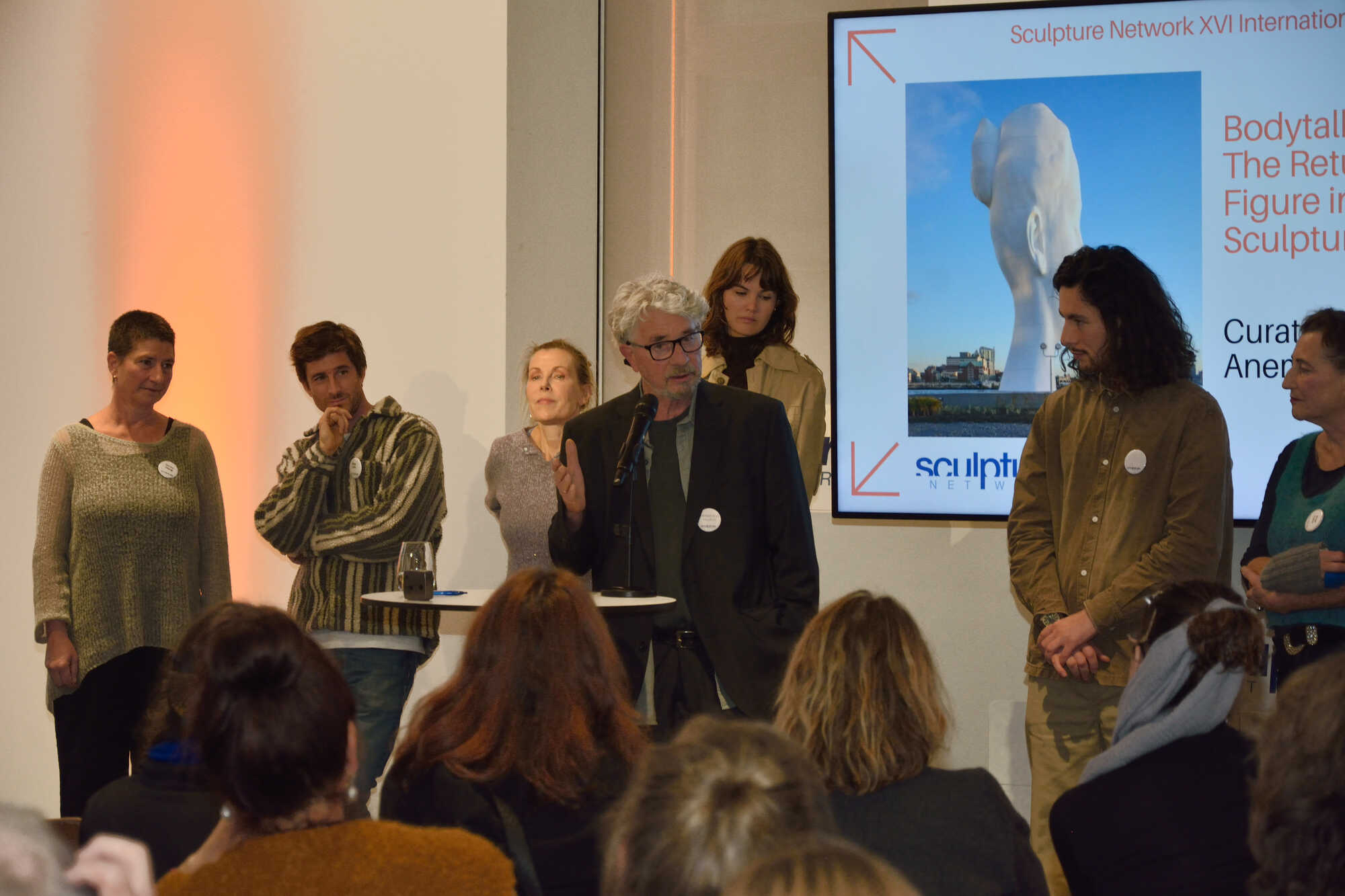
The 90-second presentations by ten curated network members offered an insight into the diversity of artistic approaches in dealing with the theme of Bodytalk: Margarete Adler (DE), Helena Aikin (ES), Birgit Cauer (DE), Herbert Hundrich (DE), Monika Majer (DE), Anna Mrzyglod (PL), and Fleur van den Berg (NL). Also among them were this year’s winners of the second Sculpture Network Emerging Artist Recommendation: Dries Celis (BE), Emilio Timp (NL), and Julie van Riel (NL). In addition, catalogues, leaflets and portfolios were on display in the Sculpture Network Showroom in the foyer, enabling participants to engage in a dialogue on equal terms.
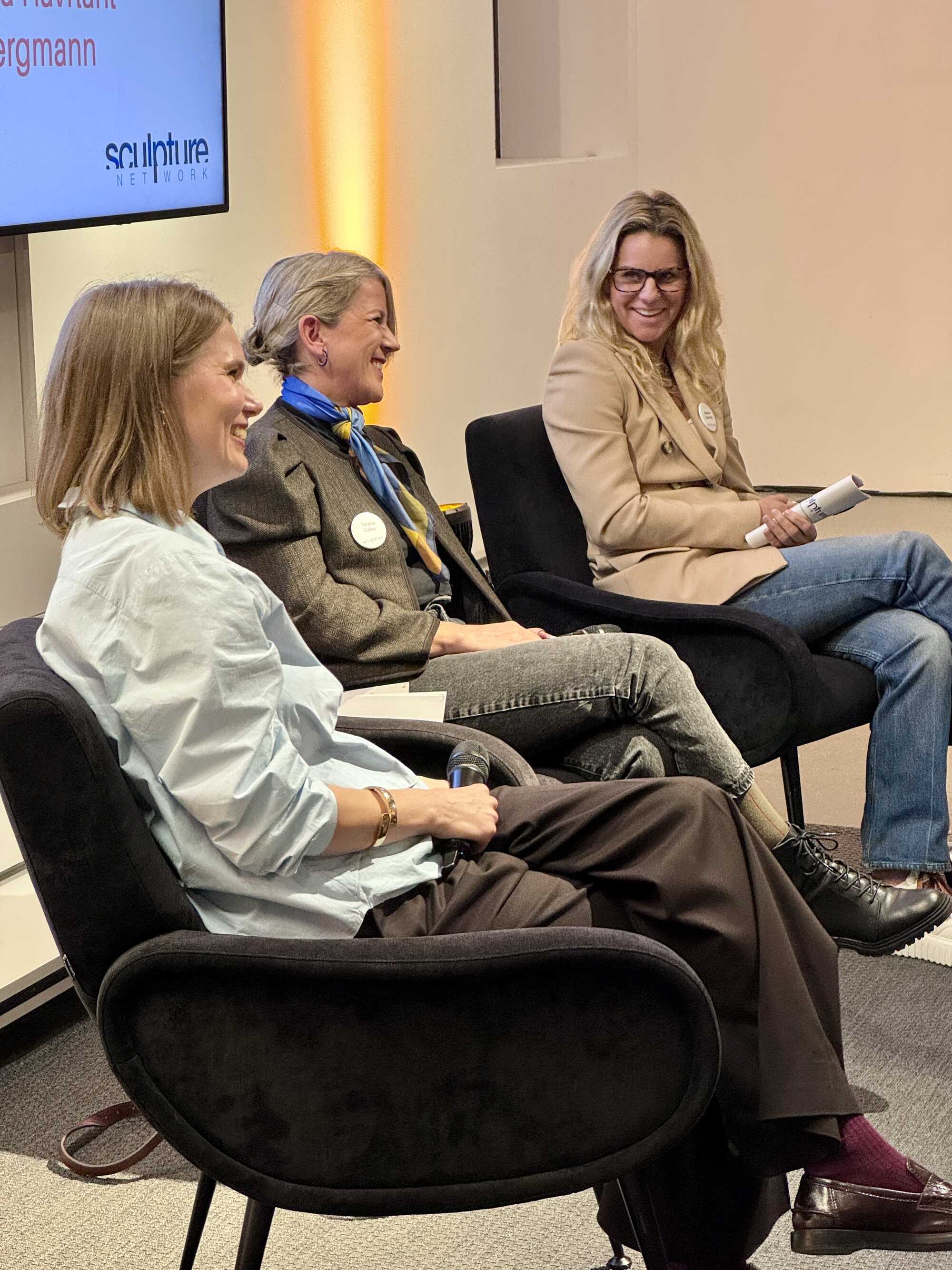
The day drew to a close with a first: the collectors’ discussion conceived by the Sculpture Network Curatorial Board. Moderated by art consultant Natasha Bergmann (ES), Teresa Calbo (ES), and Kateřina Havrlant (CZ), offered insights into the values, intuition, and motivation behind the acquisition of figurative works from a female perspective. In addition, the panel discussed the role that female collectors play in raising the profile of art.
Saturday: Hamburger Bahnhof and the Noack Foundry
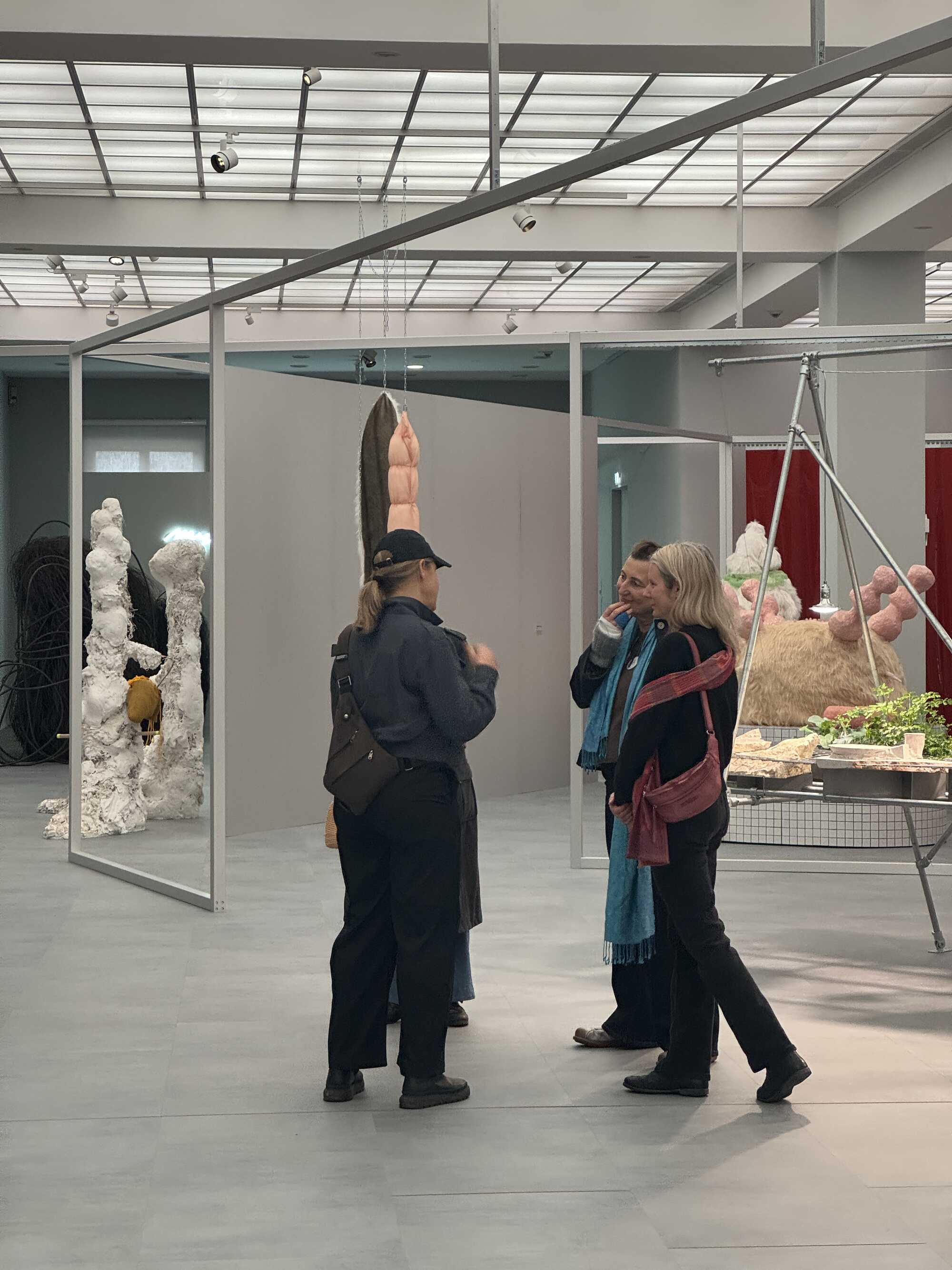
Alice Koegel, Head of Curatorial Affairs at the Hamburger Bahnhof – Nationalgalerie der Gegenwart, personally welcomed the 100 international guests. She invited them to take part in guided tours of the Endless Exhibition, the museum’s sculpture exhibition, as well as the exhibitions marking its 30th anniversary, including Matter of Care – Care of Matter by [materialistin]. Wibke Rahn, a member of the Leipzig-based collective of female artists, was in attendance to engage with the participating artists, who clearly enjoyed being part of the international community of sculptors.
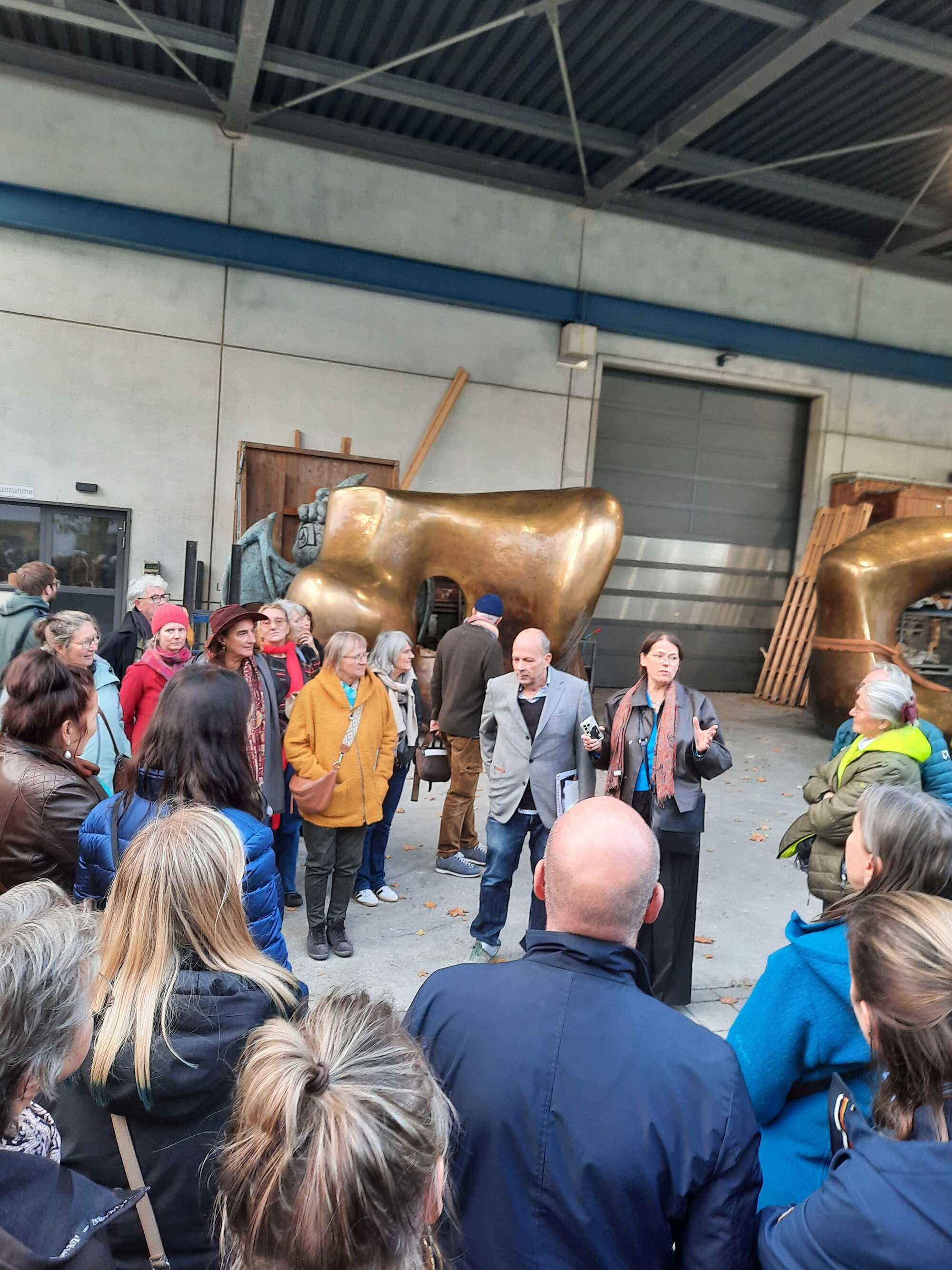
The tour concluded with a visit to the Noack foundry situated at the Spreebord, a waterfront area along the Spree River. Alongside works by Vera Röhm and Georg Baselitz, two enormous sculptures by the foundry’s former client, Henry Moore, were on display there. Hermann Noack IV spoke in person about how his family, now in its fourth generation, has carried on creating bronze sculptures throughout Germany’s turbulent history. The tour offered fascinating insights into the friendly relationships with renowned sculptors such as Henry Moore, Ernst Barlach, and Käthe Kollwitz, as well as Rainer Fetting and Jonathan Meese. The group also visited the studio of the German-Russian sculptor Anna Bogouchevskaia, situated within the 10,000-square-metre foundry compound, who works at the intersection of figuration and abstraction. A festive dinner at Bar Brasse, the property's French restaurant with a fireplace, provided the ideal setting for networking and sharing experiences with like-minded people from across Europe.
There was a wonderful atmosphere throughout the event. Participants were delighted by the talks given by renowned experts and international artists, as well as by the guided tours to significant sculpture sites in Berlin. They enjoyed the inspiring discourse and the opportunity to connect with artists, art professionals and collectors across borders.
That’s exactly what Sculpture Network offers! Not a member yet? Sculpture Network is an artist-led network where everyone is on equal footing – open to anyone with a passion for sculpture and three-dimensional art. Join us – because you are the network!
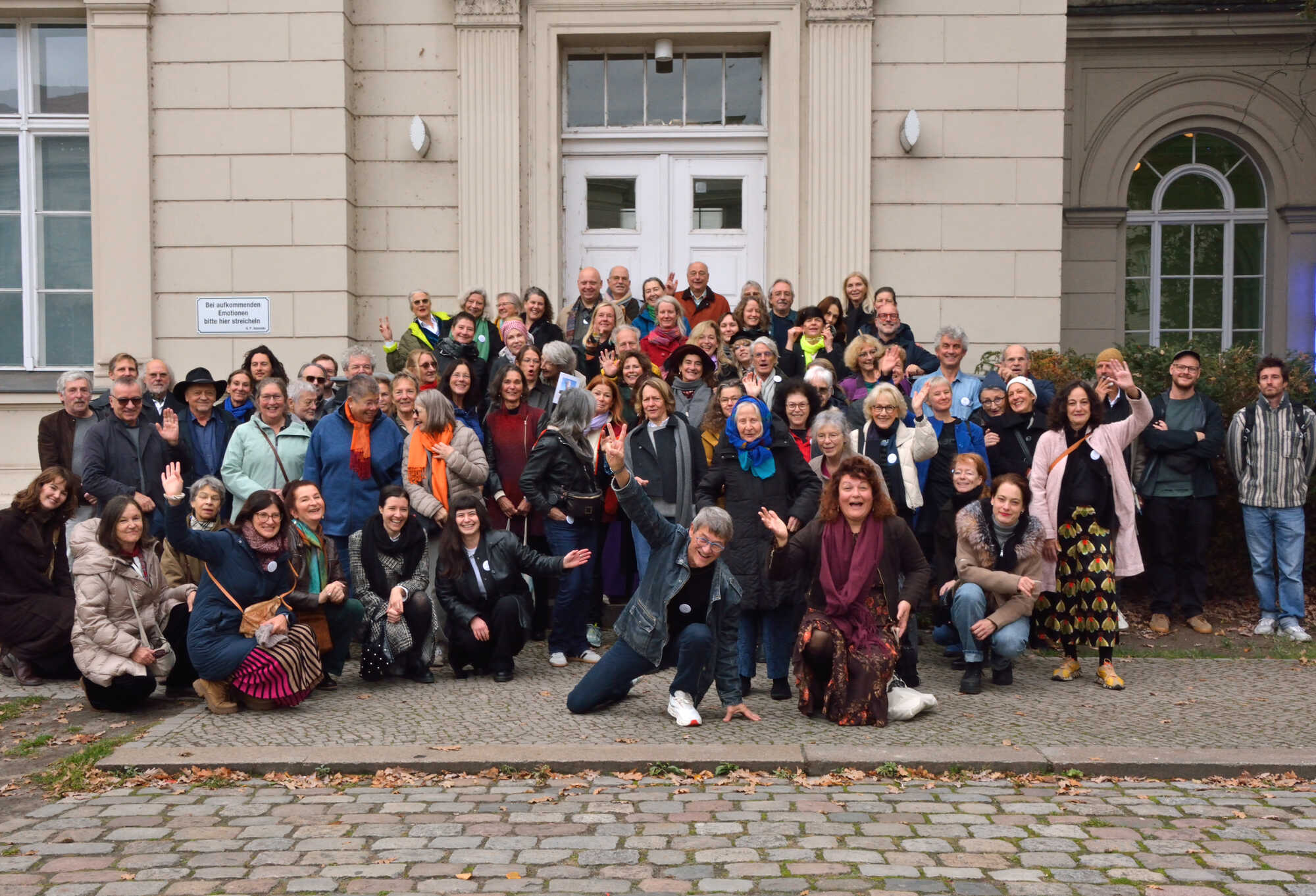
We would like to thank our partners BERLIN ART LINK, the online platform Bildhauerei-in-Berlin.de, Kunsthaus Dahlem, Hamburger Bahnhof – Nationalgalerie der Gegenwart, PalaisPopulaire by Deutsche Bank and Noack Gießerei & Galerie for their support.
Thanks to the outstanding speakers and the dedicated team at Sculpture Network – in particular Ilaria Specos, Julia Weiß, Zeynep Sahin and Elisabeth Pilhofer – the 16th International Forum Bodytalk in Berlin developed a dynamic all of its own. The local coordinators across Europe, the current Executive Board and the Curatorial Board, including founder Hartmut Stielow, also contributed to this truly magical energy, which will continue to resonate within us for a long time to come.
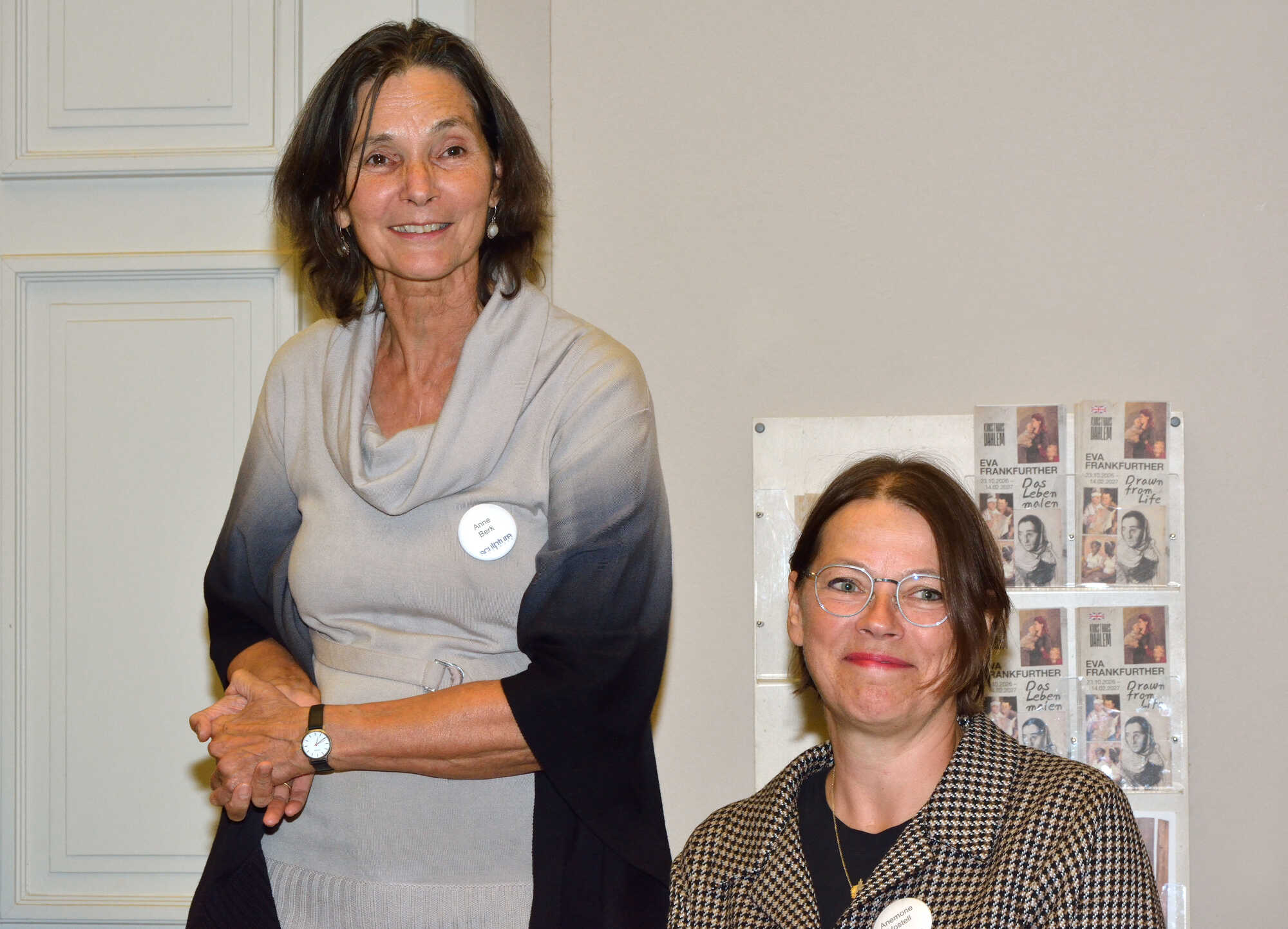
After the Forum is before the next Sculpture Network International Forum 2028. Stay up to date and sign up for our newsletter now!
This article was written in German by Anemone Vostell.
About the author

Anemone Vostell
Anemone Vostell is a Berlin-based cultural manager and founder of BAM! Berlin Art Management – art projects and consulting with a special interest in sculpture, installation art and land art.
Translation

Sybille Hayek
Sybille Hayek is an editor and translator. Since 2022 she has been supporting our team on a voluntary basis with her trained eye for detail and a great love of language.