The Great Appeal of our Discipline

In the Interview: Dorothea Schöne (Kunsthaus Dahlem) on coming to terms with the past, diversity of voices, strength and international perspectives.

The XIV. International Forum of Sculpture Network will take place in Berlin from 29 to 31 October 2026. Under the title Bodytalk – The Return of the Human Figure in Contemporary Sculpture, it will explore how, since the 1980s, the figure has re-established itself as a bearer of existential, social and physical experiences. The forum’s welcome reception will take place at the Kunsthaus Dahlem. One of the leading venues for sculpture in Berlin and beyond, it has, since its opening, focused on post-war sculpture and its historical context whilst consistently relating it to contemporary artistic discourse. As such, it provides an exceptional setting for discussing figure, body and space.
I spoke to Dorothea Schöne, art historian and director of the Kunsthaus Dahlem, about the transformed role of the figure, the “de-throning” of the sculpture, and about questions of historical reappraisal and the significance of international perspectives for contemporary sculpture.
Dear Dorothea Schöne, this year’s Sculpture Network forum is entitled Bodytalk – The Return of the Human Figure in Contemporary Sculpture. Anne Berk describes contemporary figuration as open, process-driven and “conceptual”: Contemporary sculpture is not interested in providing answers but in stimulating thought. How does this change our concept of the figure?
I believe that sculpture still provides “answers” today. It is just that the questions posed to art – or, rather, those posed by art to society – have changed. Every historical period poses new questions to its environment – whether initiated by art or, vice versa, by the audience. The critical re-examination of colonialism, for example, has also made us far more mindful of how we define objects and artefacts and of the significance of ritual or the spiritual element within this context. Associated with this is also the recognition of non-material, haptically tangible figures and figurativeness. It is in this constant process of shifting and expanding our understanding of art – and thus also of figuration – that the great appeal of our discipline has always lain.
Today, we encounter many figures “at eye level” – without a pedestal, without a heroic pose. In 2024, visitors were even able to cuddle up to the objects exhibited in Andreas Mühe. Bunker – Real Historical Space. What does it mean when a sculpture loses its heroic pose? What shift in the relationship between work and viewer – or the viewer’s role – does this entail, and how might it be of use to us today?
There has undoubtedly been a process of dethronement in the museum world. This is primarily attributable to a change in the perception of the audience. Viewers are being much more actively involved, and there is an effort to capture and reflect the diversity of voices within society. Within this process, the way we engage with art has certainly become somewhat more lightweight. At the same time, there has always been a humorous or playful approach to art, or indeed, art itself has been the source of such approaches. And heroic gestures are still to be found in sculpture today.
The current exhibition explores how artists in former Yugoslavia navigated the tensions between state directives, international modernism and individual artistic positions. Did early signs of a shift away from state-sanctioned art or of dissent emerge already there?
No, this is not about dissent. Tito would certainly not have tolerated anything like that. It is, much more, a visual expression of a connective link to the West. In other words, an artistic interpretation of what Tito sought to achieve politically as a bridging state between East and West. Such a clear distinction between state art and international modernism cannot be drawn so easily in the former Yugoslavia. For international modernism was, after all, a state-sanctioned movement.
What does the low proportion of female artists in the exhibition reveal? Does the exhibition thus implicitly offer an insight into the conditions under which female artists such as Ksenija Kantoci or Milena Lah worked and were perceived?
We basically see that, in all European countries from 1945 onwards, there have been more men and fewer women represented in the collections and within the exhibition canon. The reasons for this are complex and in many cases specific to individual countries. In this particular case, however, the proportion is simply due to the fact that the exhibition provides a representative overview of the collection of the National Museum of Modern Art in Zagreb, which was heavily male-dominated in the post-war decades. The balance has improved somewhat in subsequent decades.
The process of confronting ideologically charged art and its contexts often only begins decades later. Who initiates this process – the institutions or the art itself?
I would once again describe this as a reciprocal process. And without society as a whole – that is, the recipients of what is offered by both institutions and the arts – this process of coming to terms with the past simply will not happen. I often see this as a modular system in which many individual building blocks are needed to initiate a discourse and then to carry it forward with the necessary vigour and ensure it leaves a lasting resonance.
At the Kunsthaus Dahlem, Henrike Naumann explored the material and spatial traces of German history (Collapsing Reich Buildings) – her works straddle the boundaries between installation, performance and sculpture. Where do you draw the line between these concepts?
In this particular case, it is not at all easy to draw the line, because theatre and stage design have also been factored into the overall concept. It is precisely this moment of staging that becomes the defining factor. The concept of staging, in turn, forms an essential point of intersection between sculpture and installation. It is only within its spatial context that sculpture comes into its own. And this varies from place to place. Often this happens very spontaneously and unexpectedly, whereas with installations the relationship with space can be explored at an earlier stage.
Late-born artists often engage with historical developments that they themselves have not experienced. What role does the temporal distance play in this?
My belief is that a later generation offers different perspectives and opportunities and has been able to examine different archives. Furthermore, there is access to new research findings and, where appropriate, a degree of personal and emotional distance. Successor systems may bring freedoms but also new restrictions – precisely such restrictions that are then, in turn, only revealed again by a third system. In essence, this is the very nature of historiography, which does not speak of any absolute historical truth but always of one that is shaped by the circumstances.
What’s next after the current exhibition at the Kunsthaus Dahlem?
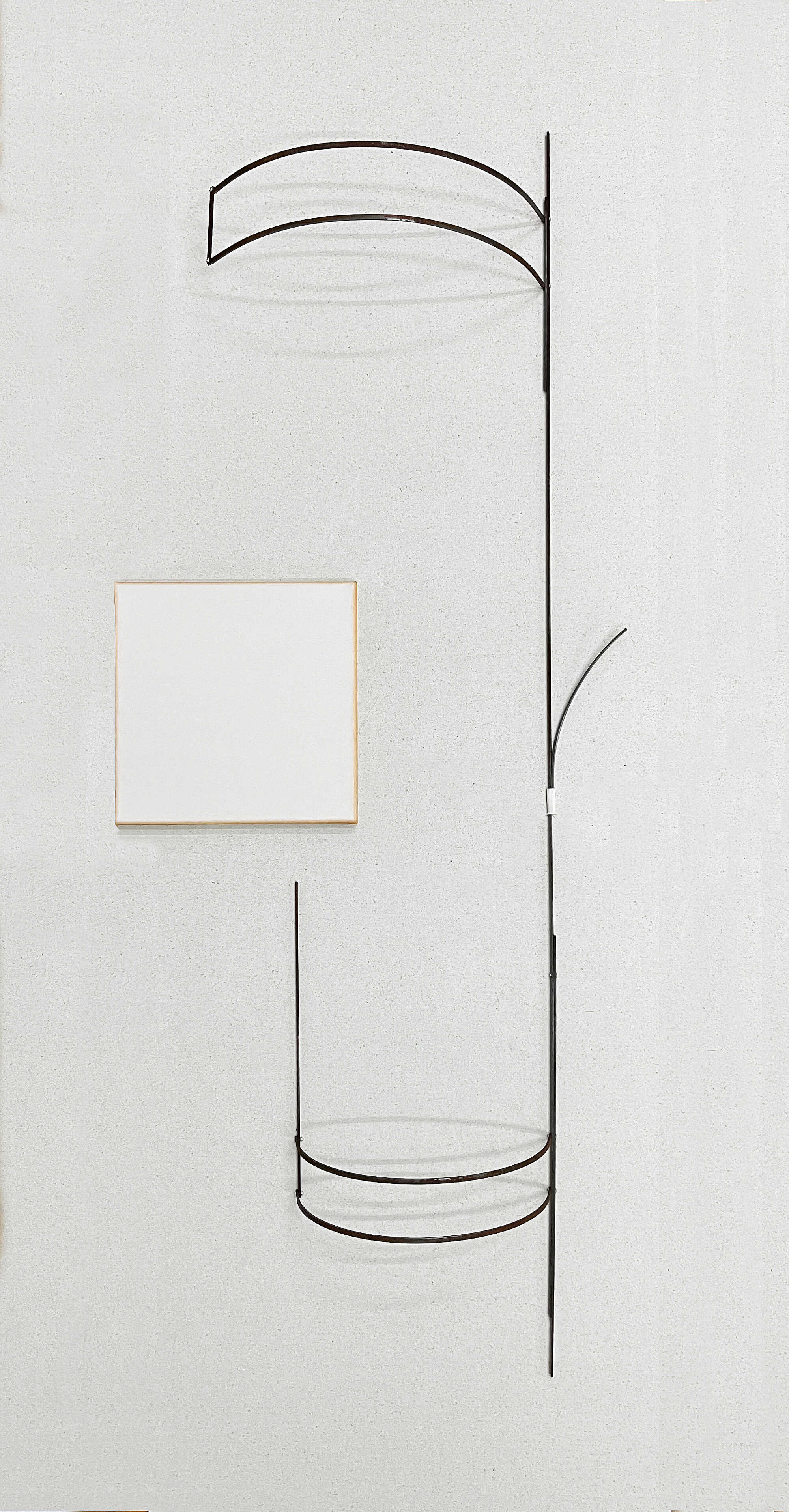
We are showcasing Gulnur Mukhazanova, an artist born in Kazakhstan and based in Berlin, who works primarily with textiles and has developed a site-specific piece that references Walter Benjamin’s concept of “now-time”. Alongside this, you can see works by the Austrian artist Melanie Ender, featuring her delicate steel sculptures and graphic art. In autumn, this will be followed by a solo exhibition of works by the painter Eva Frankfurther, who was born in Berlin and emigrated to England in 1938.
What questions should be reformulated during the Forum’s international exchange?
The emphasis here is on “international” – that is, on examining the topic from international perspectives, including those from outside Europe.
Thank you very much for the opportunity to speak with you!
Further information
Kunsthaus Dahlem
Opening hours Wednesday to Monday: 11am–5pm
Sculpture Network International Forum
29-31 October in Berlin. Curated by Anne Berk and Anemone Vostell
This text was written in German by Jana Noritsch.
About the author
Jana Noritsch
Jana Noritsch is a freelance author who has been working at the intersection of artwork, archives, and collections for nearly 20 years.
Translation

Sybille Hayek
Sybille Hayek is an editor and translator. Since 2022 she has been supporting our team on a voluntary basis with her trained eye for detail and a great love of language.