Sculpture Network International Forum to be Hosted at the PalaisPopulaire

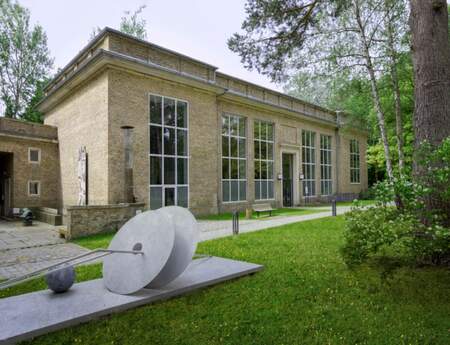
The 16th International Forum of Sculpture Network returns to its birthplace, Berlin. In 2004, the artist-led organisation dedicated to promoting three-dimensional art was founded at the Berlin Sculpture Workshop by Hartmut Stielow, a steel sculptor and member of the ODIOUS group, and entrepreneur Ralf Kirberg.
Since then, international forums on a variety of topics relating to contemporary sculpture have been held every two to three years at different venues across Europe; most recently, in collaboration with the Centre Pompidou and the Museo Picasso in Málaga, on the subject of Sculpture and Climate Emergency.
This year, international artists, curators and collectors will be discussing the return of the human figure in contemporary sculpture – right in the heart of Berlin, at the PalaisPopulaire on Unter den Linden.
Once the residence of Prussian princesses, now a platform for art and culture
For the PalaisPopulaire – which, following the Deutsche Guggenheim (1997) and the Deutsche Bank KunstHalle (2013), is Deutsche Bank’s new home for art and culture in Berlin – the rooms of the Prinzessinnenpalais were redesigned in 2017/18. Behind the Baroque façade, which was reconstructed in the 1960s, you will find state-of-the-art technology and a contemporary, clean-lined architectural design. The building reflects Berlin’s eventful history. It tells of princesses and wars but also of Modernism in the GDR.
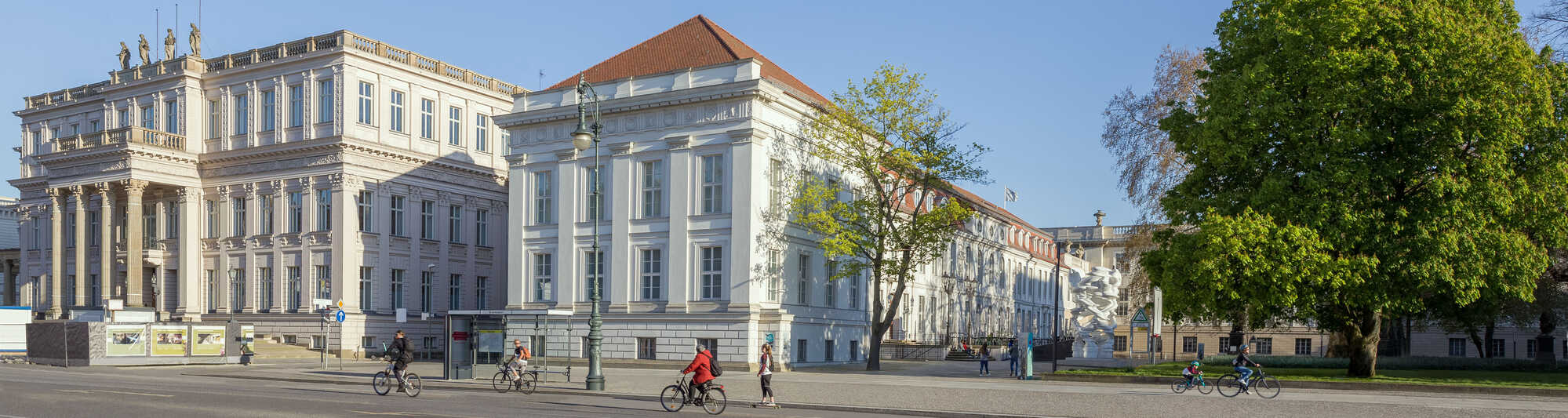
During the Second World War, large parts of Berlin’s historic centre were destroyed, including the Prinzessinnenpalais and the neighbouring State Opera House. Similar to the opera house, the Palais is also being rebuilt according to plans by Richard Paulick (1903-1979) – and will be put to new use as the “Operncafé”. Paulick, formerly Walter Gropius’s assistant at the Bauhaus in Dessau, combines a historical reconstruction of the building’s exterior with contemporary interior design and nods to the past, such as the wrought-iron bannister from Buch Castle and a starry sky inspired by Schinkel.
In December 1963, the Operncafé opened. Shortly afterwards, the Prinzessinnengarten – once a private garden that had been almost completely destroyed during the war – was restored and reopened as a public park; this is also where the statues of generals, which had previously lined Unter den Linden, found their new home.
SculpturePopulaire
The marble statues of the generals have now been moved to the public storage facility in Spandau for conservational reasons. Taking their place, the director of the PalaisPopulaire, Svenja Gräfin von Reichenbach, has established a platform for temporary exhibitions of contemporary sculpture: the SculpturePopulaire.
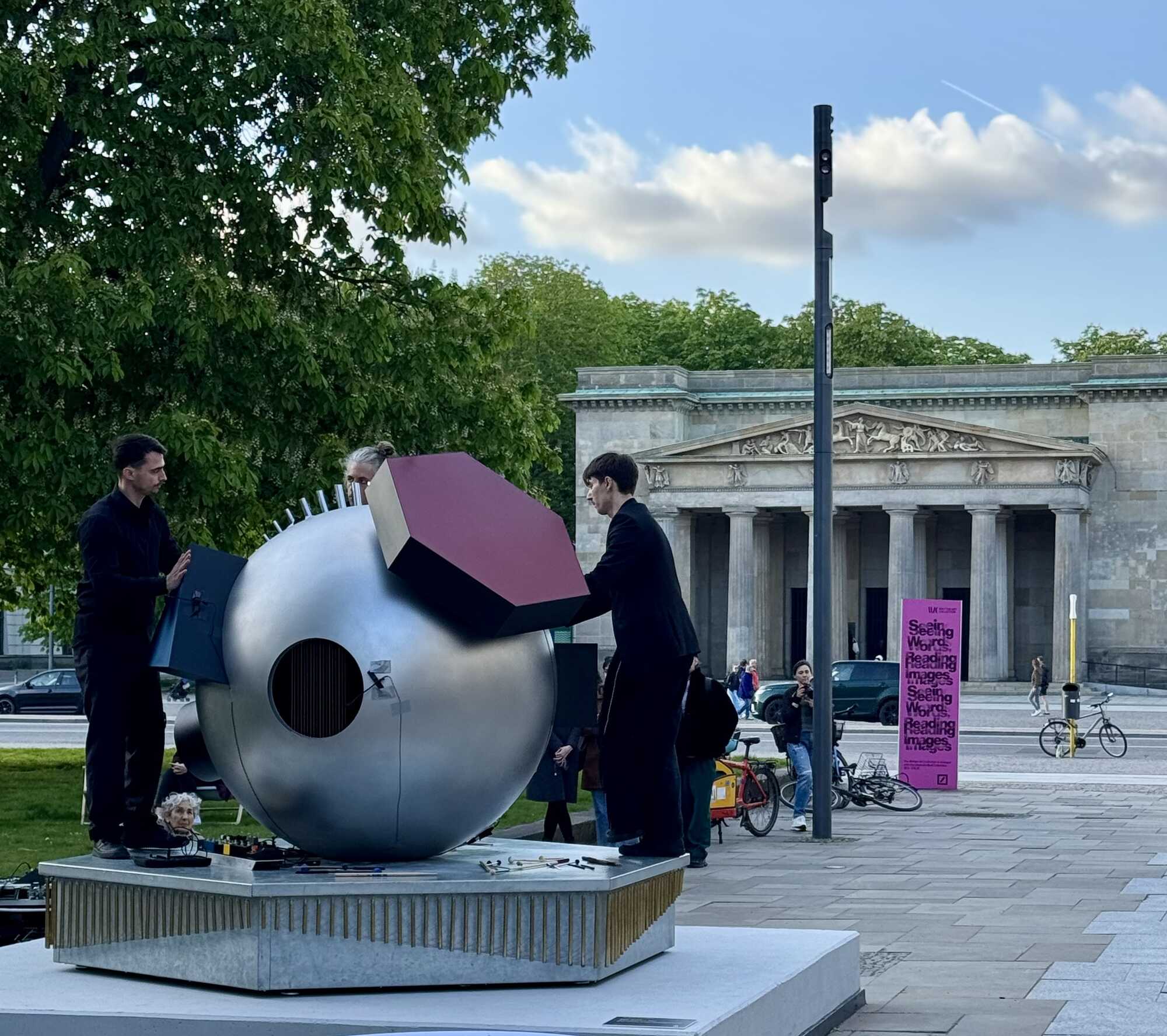
Inaugurated in 2019 with Tony Cragg’s Runner (2017), the space has since featured works by artists such as Valie Export with Doppelgängerin (2010/2020), Yinka Shonibare with Material (SG) V (2025) and, most recently, Kurt Schwitters Prize winner Nevin Aladağ with her Public Resonator (2023), turning the four square metres of concrete into the most photographed sculptural space on Unter den Linden.
Set amidst the historic ensemble formed by the State Opera, the Zeughaus and Humboldt University, as well as the memorial Neue Wache designed by Schinkel, with its central sculpture created by Käthe Kollwitz, these contemporary works provide a deliberate counterpoint – and underline the PalaisPopulaire’s ambition to serve as a forum for all those who wish to experience art and culture in an interdisciplinary manner, all under one roof.
Artist of the Year 2026 – Lucia Tallová
Monuments are also the focus of the current exhibition by Lucia Tallová, Artist of the Year 2026. As part of the Deutsche Bank Artist of the Year programme, the PalaisPopulaire will be showing the exhibition Moving Clouds starting on 10 September 2026. For the artist, who was born in Bratislava in 1985, this is her first institutional solo exhibition in Germany.
Tallová uses painting, collage, objects and installation. For her works, often large-scale, she mixes photographs, books, found objects and sculptural elements to create multi-layered visual worlds. The artist explores concepts such as memory, societal change and the legacies of the 20th century. The exhibition title Moving Clouds refers to clouds as a symbol for change and transience, whilst also describing an inner movement: being touched by the world, by its beauty as well as its fractures and contradictions.

In the exhibition, curated by Britta Färber, Global Head of Art&Culture at Deutsche Bank, as a total work of art, the installation Unstable Monuments is particularly striking: broken, tilted columns merge with photographs of women’s bodies found at flea markets, in second-hand bookshops and in archives. In it, Tallová explores the socialist past of her homeland, Slovakia, and the turmoil that followed the end of the East-West bloc mentality.
Tallová was nominated by Sam Bardaouil and Till Fellrath, directors of the Hamburger Bahnhof – Nationalgalerie der Gegenwart and founders of the curatorial platform Art Reoriented – our hosts on 31 October 2026, the Forum’s Visiting Day.
Farewell to the PalaisPopulaire
Moving Clouds will be the final exhibition at the PalaisPopulaire. After eight years as a space for art, culture and exchange on Unter den Linden, the institution will bid farewell to its visitors at the end of the year. Under the title MerciPalais, the PalaisPopulaire is hosting a weekend of art, talks and events from 21 to 22 November 2026 – an opportunity for Berliners and visiting guests to look back together upon eight years of PalaisPopulaire.
Meanwhile, Deutsche Bank’s cultural commitment will continue: the focus going forward will be on more flexible art formats, supporting young talent and collaborations at various venues across Berlin – such as projects featuring works from the Deutsche Bank Collection and a new sponsorship programme for young artists. The long-standing partnership with the Berlin Philharmonic and its education programme remains a key anchor.
Keynote speakers at the International Forum
Monuments overturned from their pedestals form the backdrop to this year’s Sculpture Network Forum, with the theme Bodytalk – The Return of the Human Figure in Contemporary Sculpture. Exploited for ideological purposes by both the Nazi and Soviet regimes, the human figure largely disappeared from Western art after the Second World War; figurative art became taboo. This changed in the 1980s. A “narrative turn” in art reflected the growing uncertainty in a world undergoing rapid change.
In this Berlin forum, curator Anne Berk (NL) draws attention to the return of the human figure in conceptual-figurative art and explores how these silent figures speak to our bodies using body language. Artists use the gesturing body to express their questions to life whilst exploring themes such as sexuality, identity, love, power, technology, mortality and our relationship with nature.
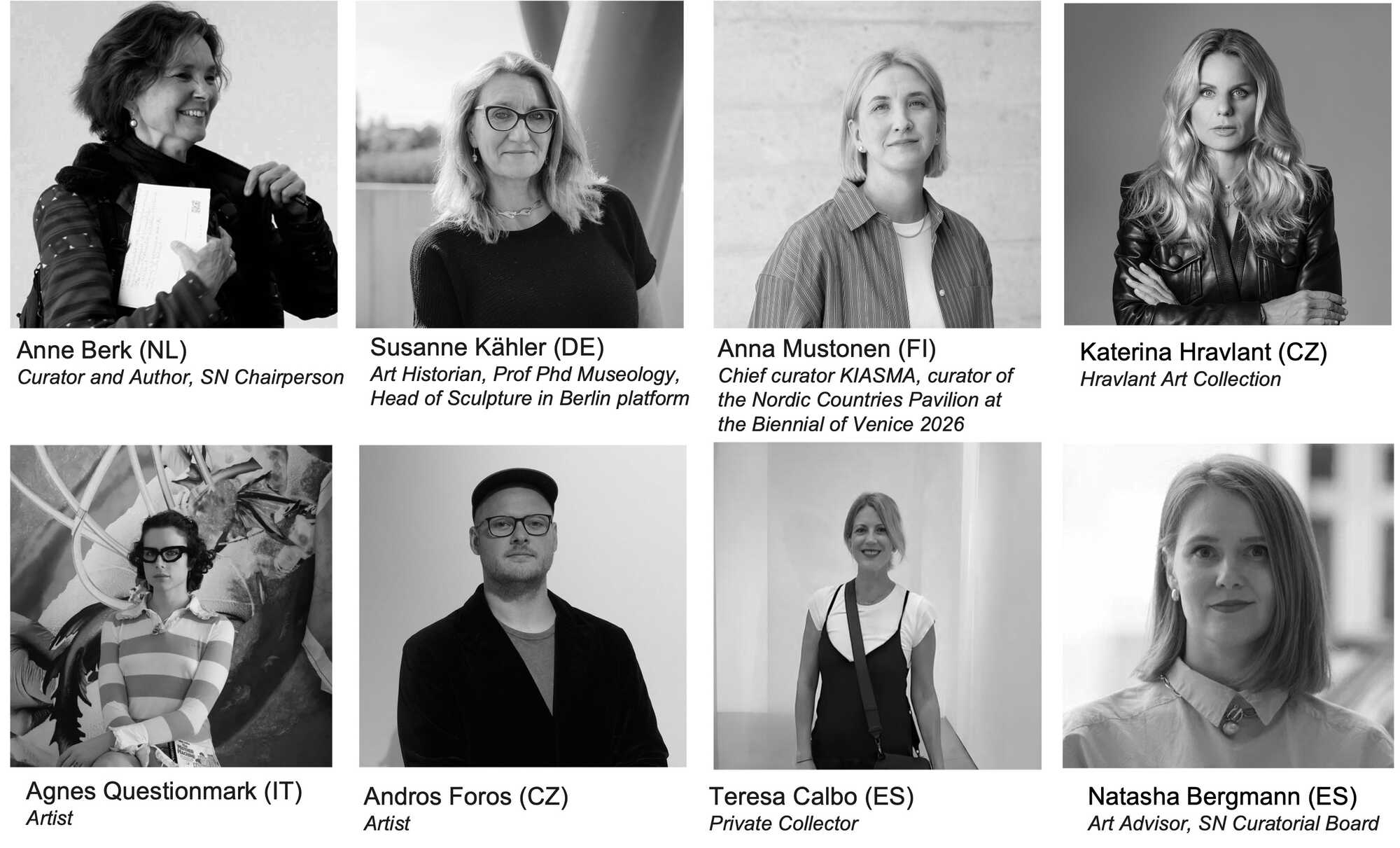
In collaboration with co-curator and cultural manager Anemone Vostell (DE), she is bringing international curators, collectors and sculptors to Berlin to discuss this development in contemporary sculpture:
Prof. Dr Susanne Kähler (DE) is an art historian, Professor of Museology at the Berlin University of Applied Sciences (HTW) and Director of Sculpture in Berlin, an online platform that archives 3,000 sculptures. Her topic is “The Body Language(s) of Sculpture in Public Spaces” from the 1980s to the present day, set against the backdrop of Berlin as a divided city. Statues clearly illustrate the changes in figurative sculpture, its body language and its function in society. From totalitarian regimes to democracy, Berlin’s public sculptures testify to the profound changes throughout history.
Anna Mustonen (FI), chief curator at Kiasma – Museum of Contemporary Art in Helsinki and curator of the Nordic Pavilion at the 2026 Venice Biennial, discusses the curatorial ideas behind the Venice presentation, a group exhibition featuring Tori Wrånes, Klara Kristalova and Benjamin Orlow. In times of uncertainty, bodies, myths and matter intertwine in worlds characterised by collapse and renewal. By bringing together sculpture, sound and performance, Mustonen reflects on sculpture as an embodied experience, as well as on Nordic and global perspectives.
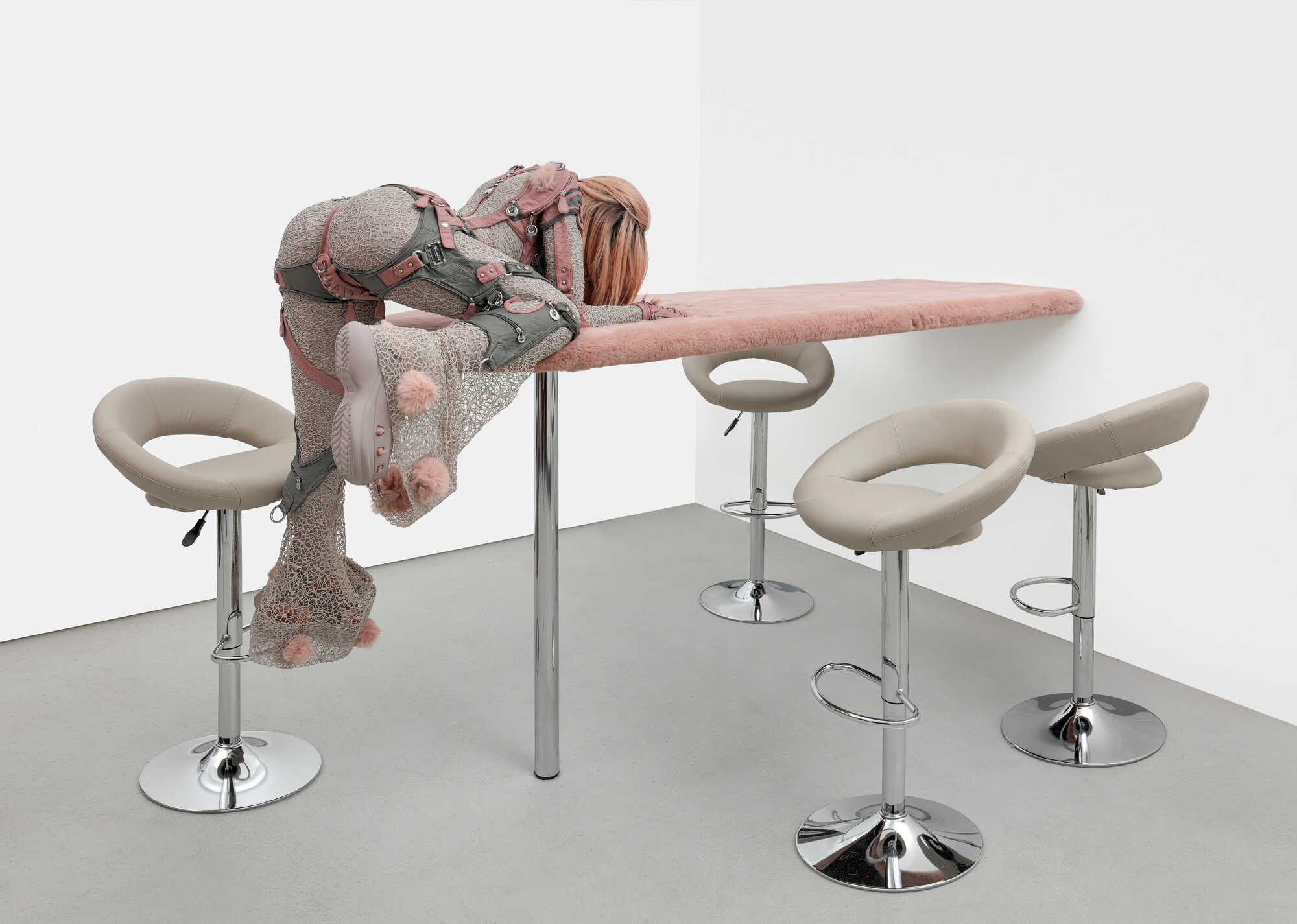
Agnes Questionmark (IT) is a multidisciplinary artist whose work spans performance, sculpture, video and installation. She explores the body as a living archive – as an unstable interface between science, power and the self. Drawing on bioethics, mythology and critical theory, she develops immersive experiences that confront viewers with shifting forms and propose speculative anatomies shaped by surgical, genetic and social interventions.
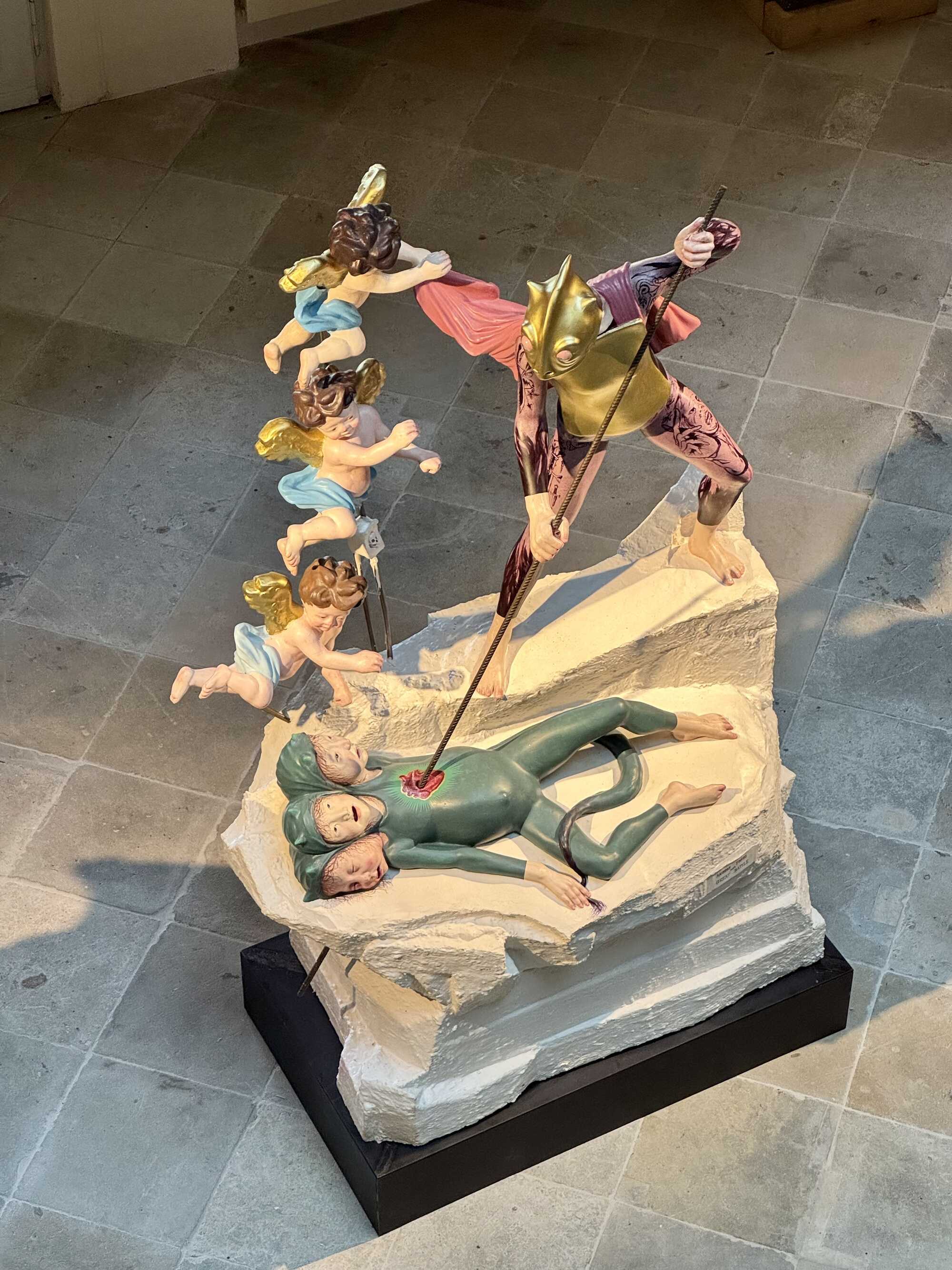
Andros Foros (CZ) shares his interest in Christian iconography and modern psychology. In a humorous way, he toys with stereotypes and combines the sanctity of Gothic sculpture with the grotesque and the exaggerated in the present day. Some of his figures allude to the inner child within us and embody the various identities we possess. Postures and gestures, as well as attributes such as armour, disguises and weapons, are used to convey inner feelings.
A conversation with collectors
A new feature of this International Forum is the collectors’ discussion, conceived by the Sculpture Network’s Curatorial Board, on current perspectives in the representation of the body in contemporary sculpture. In conversation with Natasha Bergmann (ES), a member of the curatorial board and art advisor, the collectors Teresa Calbo (ES) and Kateřina Havrlant (CZ) provide an insight into their motivation behind acquiring figurative works and shed light on the role of female collectors in shaping artistic visibility.
“Art spawns new ideas for shaping our future. It raises questions. It inspires people, opens up new perspectives and thus leads to unusual, innovative approaches. A commitment to the arts is a cornerstone of Deutsche Bank’s ‘Art & Culture’ programme and strengthens the company’s cultural diversity,” reads the PalaisPopulaire website. I would like to add the word “society” to that, and I trust that our International Forum Bodytalk will make a contribution towards this!
The original article was written in German by Anemone Vostell.
About the author

Anemone Vostell
Anemone Vostell is a Berlin-based cultural manager and founder of BAM! Berlin Art Management – art projects and consulting with a special interest in sculpture, installation art and land art.
Translation

Sybille Hayek
Sybille Hayek is an editor and translator. Since 2022 she has been supporting our team on a voluntary basis with her trained eye for detail and a great love of language.