I am a body, I am earth.

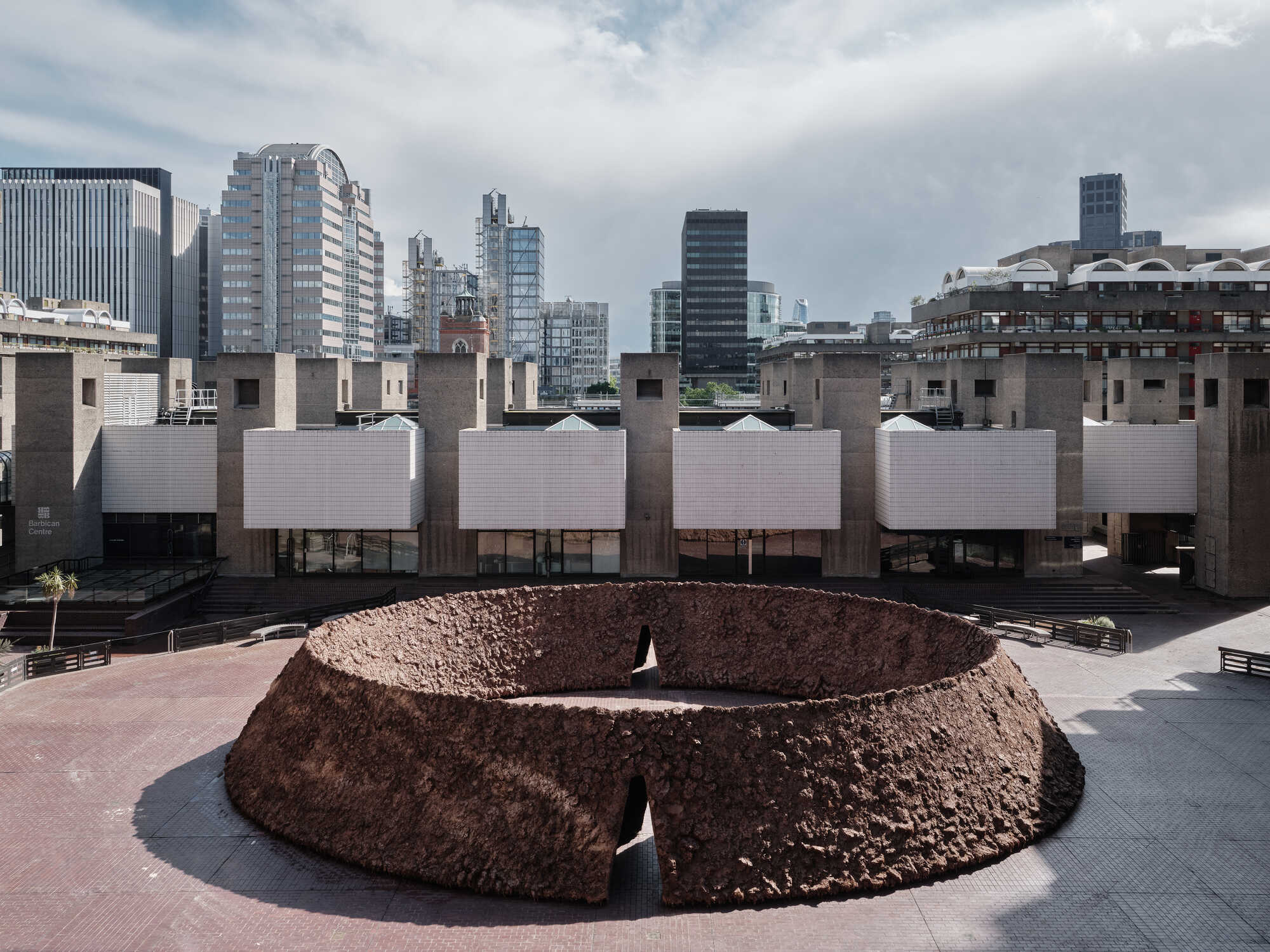
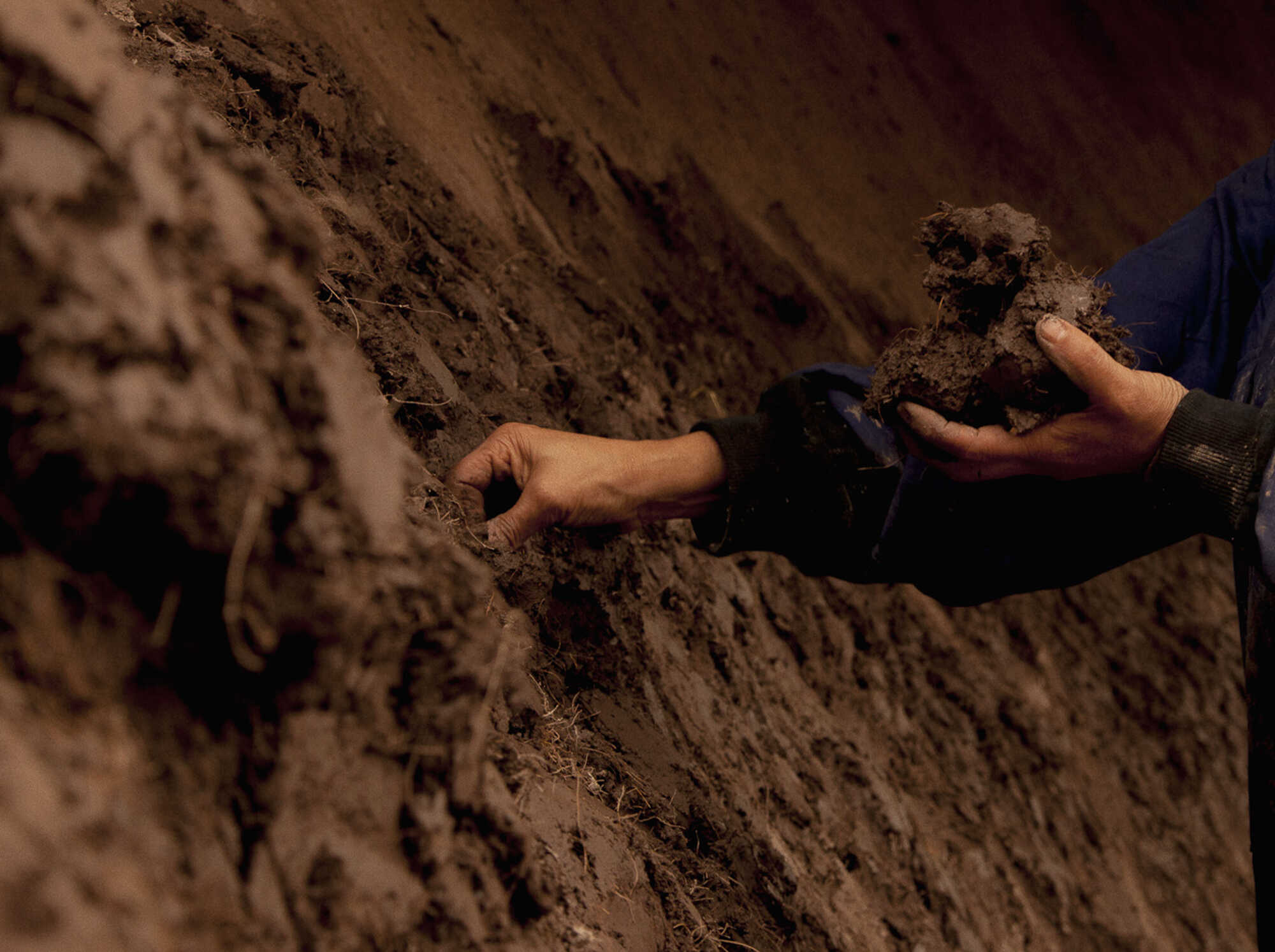
In central London, sitting in the Barbican courtyard, is Delcy Morelos’ most ambitious earthwork to date, origo. Constructed from clay, soil, hay, plant seeds and fragrant spices, the monumental sculpture is both materially and conceptually rooted in the earth itself.
Her longstanding practice has consistently challenged relationships between human beings and the earth. Set against the iconic architecture of the Barbican, origo extends beyond gallery spaces, inviting us to think, feel and connect with the earth.
Delcy Morelos’s practice is rooted in ancestral Andean cosmovisions and the aesthetics of minimalism and abstraction. Born in 1967 in Tierralta, Colombia, in the Córdoba region—an area brutally affected by armed conflict stemming from illegal land appropriation and large-scale mining projects throughout the 1990s and early 2000s—Morelos began making paintings from red clay pigments that explored the entanglements between the body, territory and violence. She has consistently represented the earth as a symbiotic partner endowed with its own agency, rather than a resource to be possessed and controlled. Her works inspire rumination on the interplay between human beings and the materiality of earth.
The artwork’s title, origo, meaning “origin” in Latin, is inspired by ancestral Andean and Amazonian knowledge. For Morelos, soil is the mother of all materials and the origin of all life forms. She explains, “In Andean ancestral traditions, the human being is living earth; I am a body, I am earth. In the exhibition space, the earth expresses itself; it is the center and mirror of what we are.” In origo, we are consistently reminded of the power and potentiality of this material and its influence on both human and non-human lives.
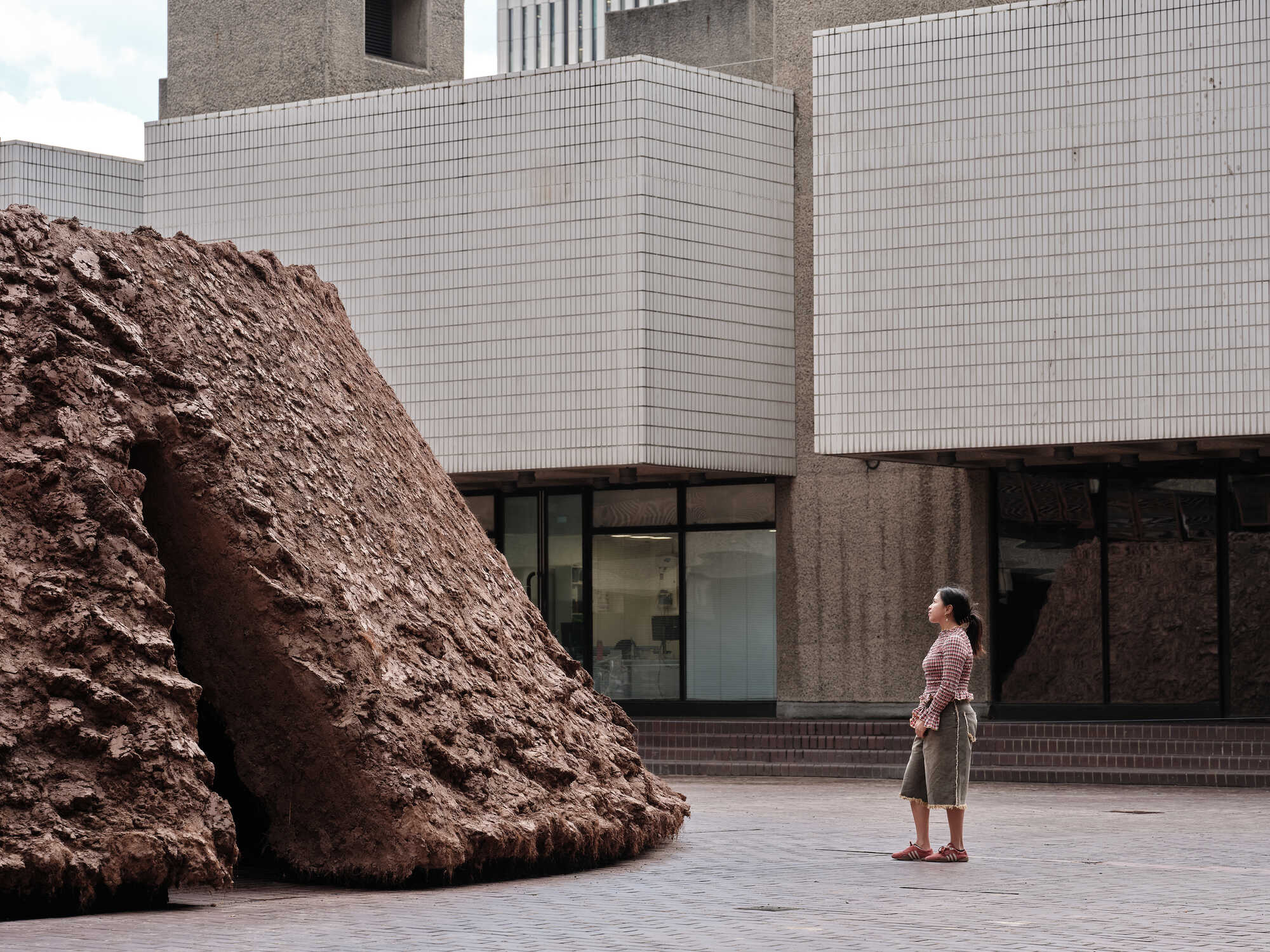
Throughout her practice, Morelos has developed monumental minimalist installations designed to be experienced immersively. As her most ambitious project to date, the scale and design of origo forces the viewers to surrender control as they encounter the sculpture. The arena-like structure measures 24 metres in width and 18 metres in diameter. Its angular walls tower over visitors, reaching more than three metres in height. Viewers can walk around the exterior and are invited inside through small triangular openings. The exaggerated scale of the sculpture reinforces the power and significance of the material. In doing so, Morelos encourages us to adopt a more ethical relationship with the earth, while challenging Western understandings of soil as something that can be controlled, extracted or owned.
Despite its harsh lines and imposing structure, origo takes the shape of an oval, or perhaps an egg. This serves as another reminder of the material’s life-giving powers and its significance as a maternal figure within Andean cosmologies. As you enter the centre of the sculpture, you are completely enveloped by the loamy scent of soil. The olfactory qualities of the work trigger a visceral, somatic response to the immersive environment. Inside the sculpture you feel both protected and alert, ultimately held within the care of an earthen womb.
origo responds to the Barbican’s architecture through both its minimalist geometry and its organic materiality. Hand-hewn and intensely tactile, the concrete surfaces of the Barbican represent a layered socio-architectural narrative arising from the devastation wrought by the Blitz and driven forward by post-war social idealism, modernist architectural principles, and humanist approaches to urban living. Influenced by Le Corbusier, the Barbican was designed in 1959 by architects Chamberlin, Powell and Bon as a utopian “city within a city”, incorporating high-density housing, elevated walkways, cultural infrastructure, and integrated green spaces. As a central public space within this communal living project, the Sculpture Court was conceived to integrate art into everyday life.
In this context, origo feels particularly resonant. Morelos’ use of earth introduces a material often absent from modernist architectural narratives, despite being the foundation upon which they are built. The work establishes a dialogue between concrete and soil, permanence and impermanence, human construction and the living systems that sustain it. Where the Barbican speaks to post-war visions of progress and collective futures, origo directs our attention to deeper temporalities rooted in the earth itself.
At a moment of accelerating ecological crisis, Morelos offers no didactic solutions. Instead, she creates the conditions for reflection, inviting visitors to slow down and reconsider their relationship with the ground beneath their feet. Within the imposing landscape of the Barbican, origo becomes both a site of encounter and a site of remembrance. Reminding us that the earth is not merely a backdrop to human activity but a living presence from which we emerge and upon which all life depends.
origo is on view in the Barbican Sculpture Court until 31 July.
Myfanwy Halton wrote this article in English.
About the author
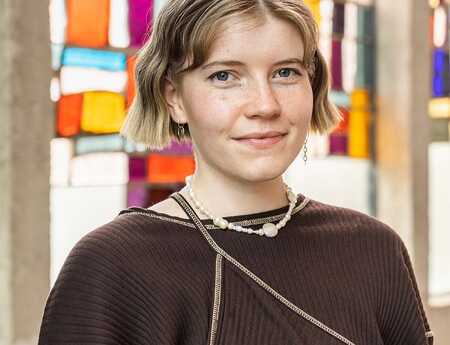
Myfanwy Halton
Myfanwy Halton is a writer and producer from Australia and is based in Munich.
Translation

Sybille Hayek
Sybille Hayek is an editor and translator. Since 2022 she has been supporting our team on a voluntary basis with her trained eye for detail and a great love of language.