Back Home

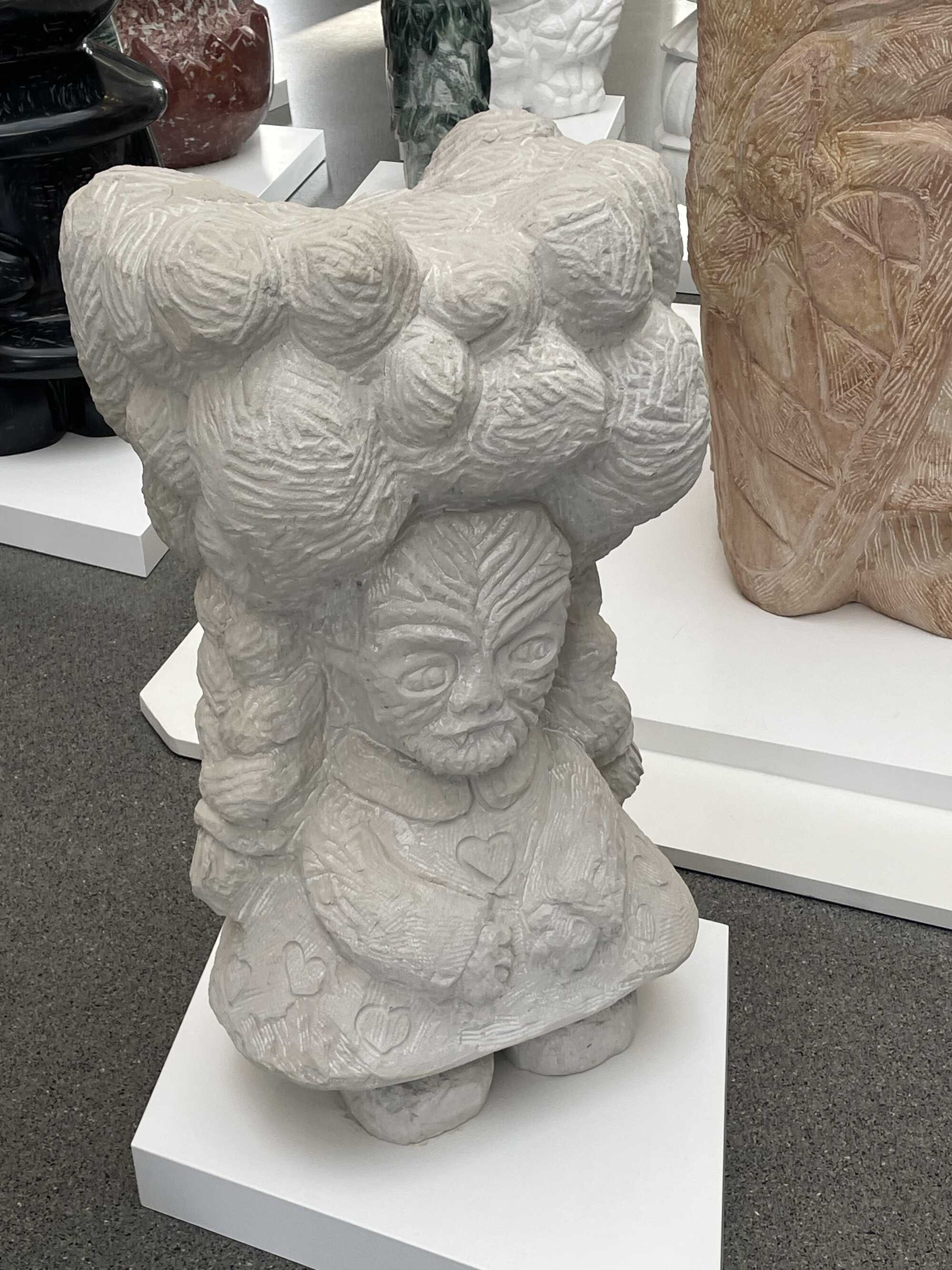
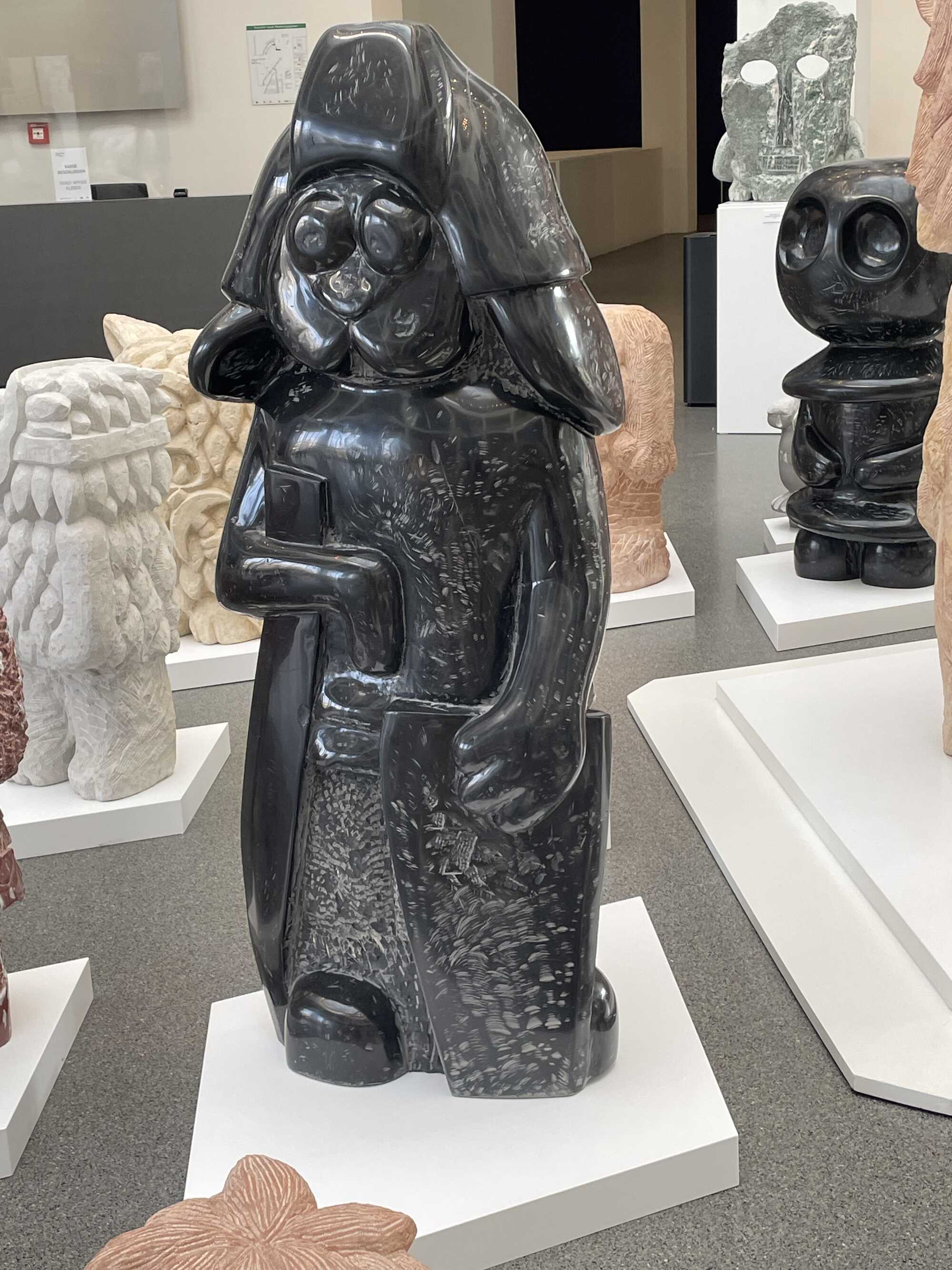
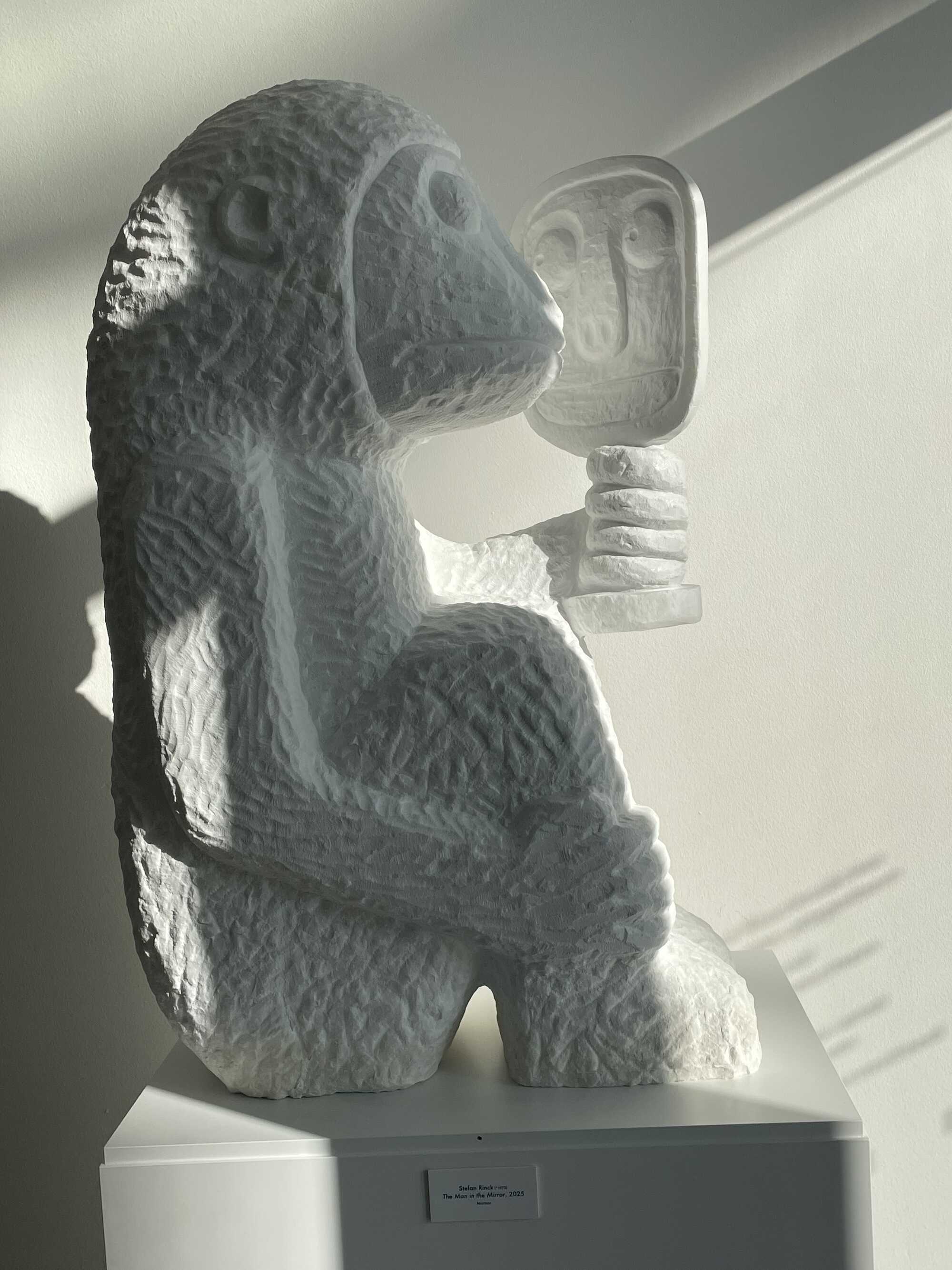
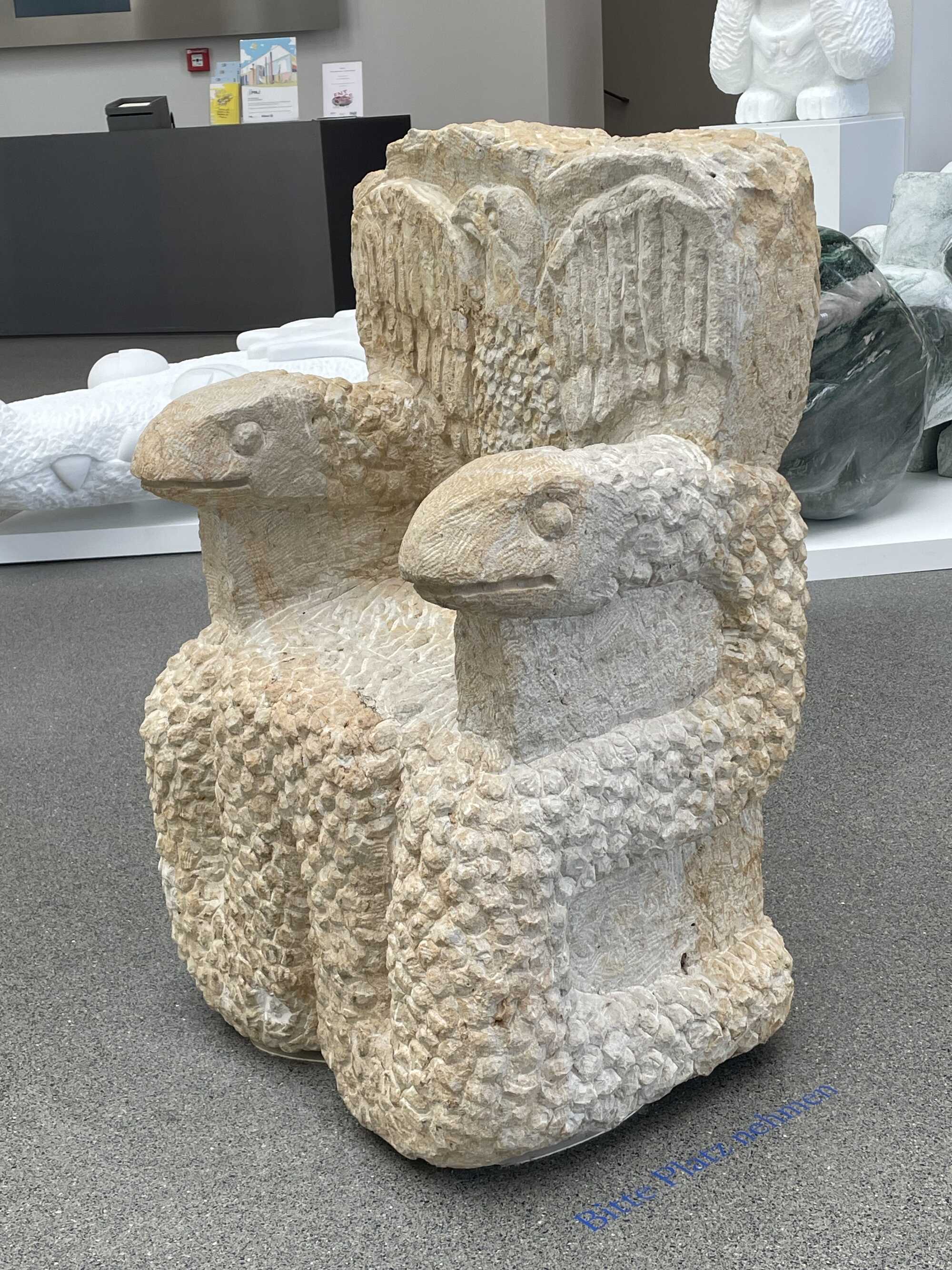
This was his territory. The Alpine Clan took up residence in the rotunda of the “Pinakothek der Moderne” in Munich until mid-April 2026. “The Return of the Alpine Clan” is the title Berlin-based sculptor Stefan Rinck has given to his collection of figurative stone sculptures – a wild mix of high and low culture, mediaeval stonemasonry, and contemporary sculptural traditions.
In his song “Wieder hier” (Back again) Marius Müller-Westernhagen sings about returning to a familiar place and the yearning for companionship and belonging. For Stefan Rinck, it is less about returning to one's roots but rather about the future of human beings in their homelands.
At first glance, his figures, obviously heavy yet seemingly light, appear to come from the distant mythical world of another time. Forward into the past, one might think. Wrong! The whimsical figures merely appear to be stuck in the past. Deeply rooted in the history of art, culture, and cinematography, they are nonetheless contemporary spaces of thought and visual imagery. Rinck’s seemingly chaotic universe – both in terms of content and technical execution – filled with grotesque mythical creatures, hybrid beings, and trolls is full of contradictions. It offers a glimpse of the present and of what is yet to come. The Alps are at risk. The glaciers are melting. People are complaining about overtourism. Nothing is as it once was, or as it is claimed to have once been. People feel drawn away, not just there. The present is Rinck's subject.
A female is the leader
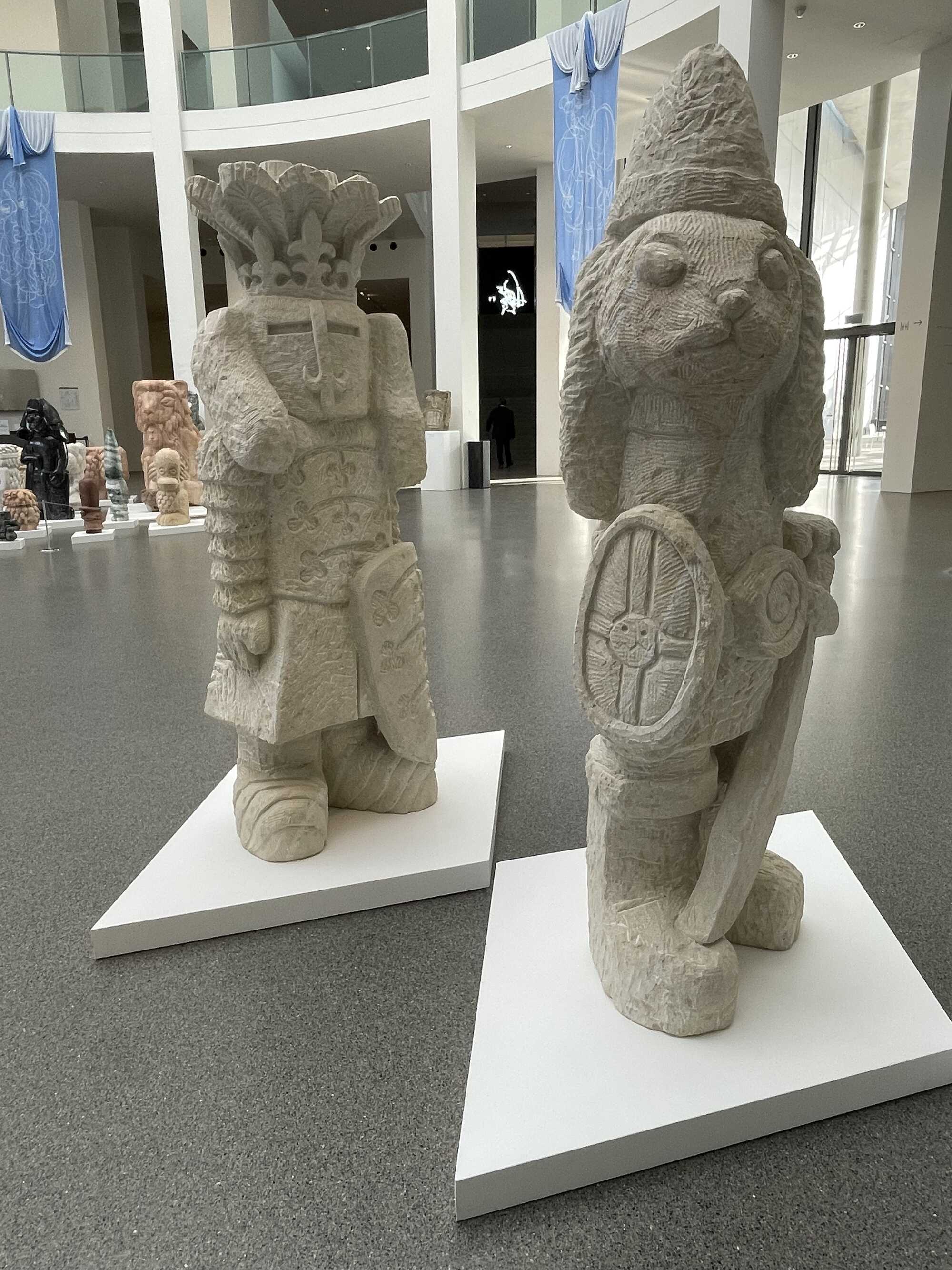
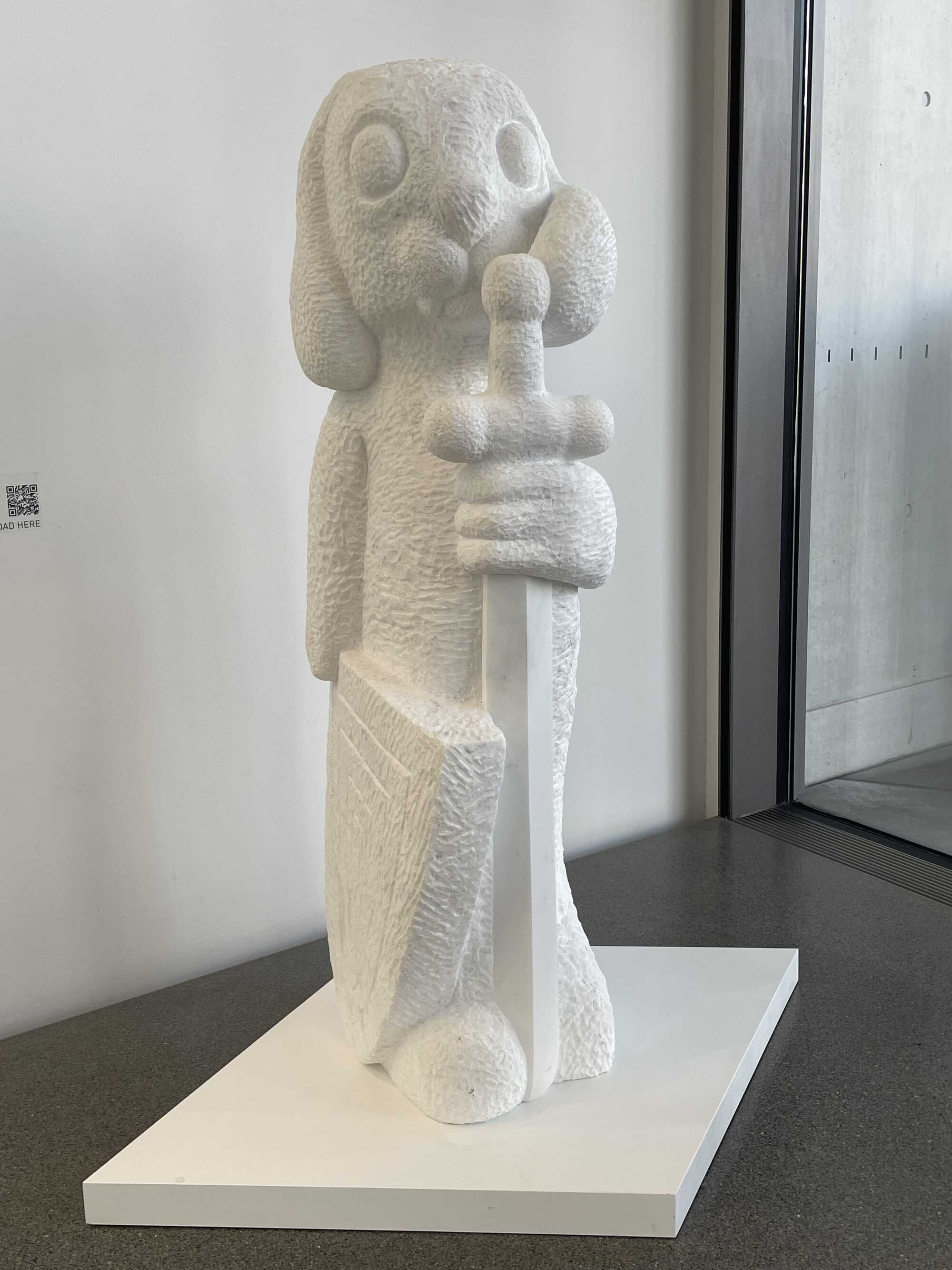
The leader of the Alpine Clan is a lioness holding a mace and a shield featuring the Bavarian state coat of arms – a diamond pattern carved from red sandstone. This allusion to the (obviously!) male heraldic beast of Bavaria goes without saying. The lioness is flanked by a baby mammoth, also carved from red sandstone, a Japanese shield-bearer made of Belgian granite, and countless fantastical creatures chiselled from stones from all over the world. The lioness looks determined, the baby mammoth cute, and the bearer of the shield menacing. The lioness is the (spiritual) leader of this menagerie of strange, grotesque figures, both small and large. In the midst of it all, a myriad of hares romp around as bearers of shields and guards of honour. Hares? Hares! Anyone with even a passing knowledge of art history will sit up and prick their ears! From mediaeval scriptures to Dürer's “Hare” and on to Baroque emblematics, and of course Joseph Beuys, who sought to explain art to a dead hare, the hare has long been held in high (artistic) esteem for its extraordinary powers of perception and adaptability. It wasn't until recently that he was trimmed down to a skittish rabbit, but that's another story.
All figures bear names
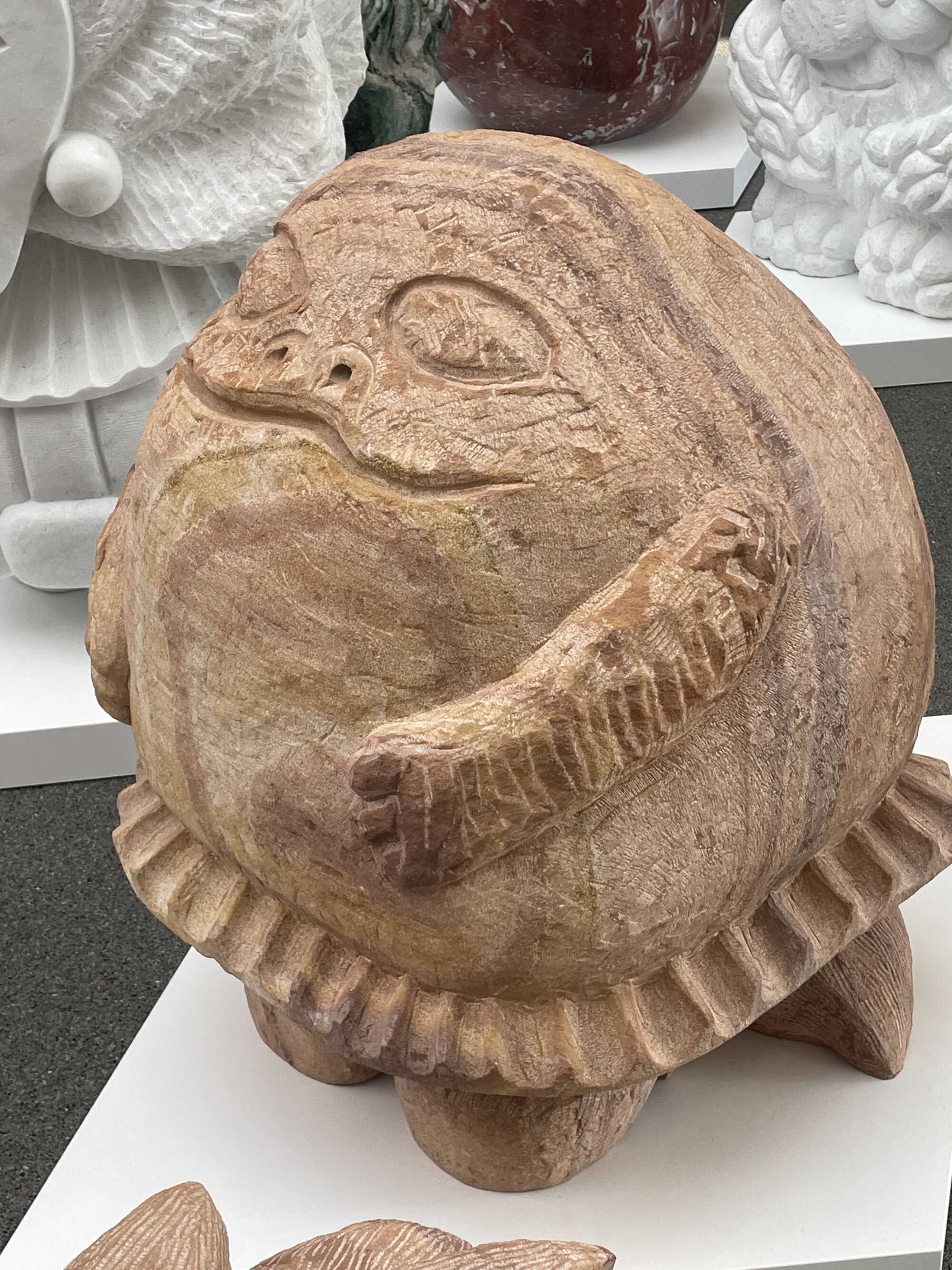
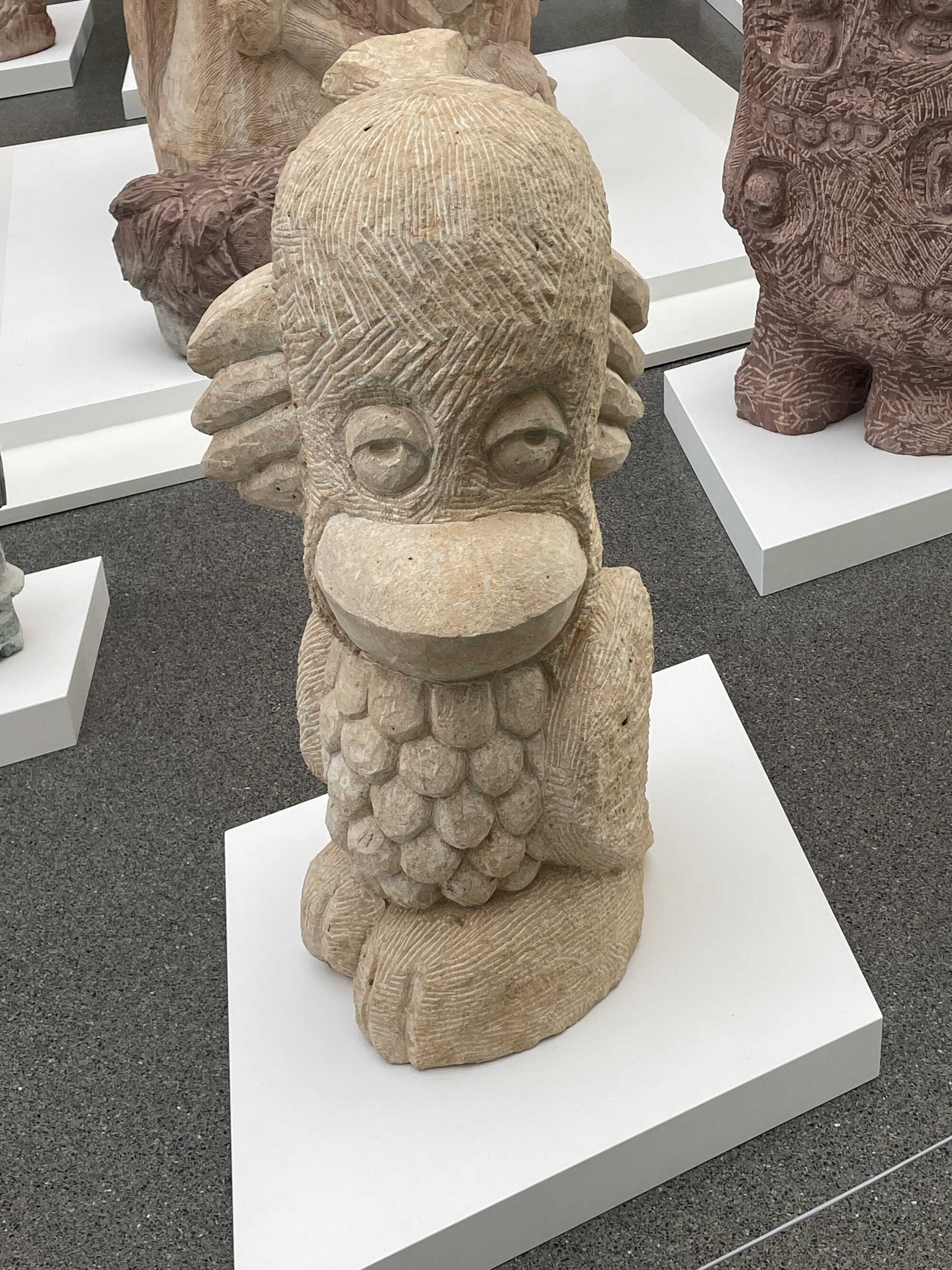
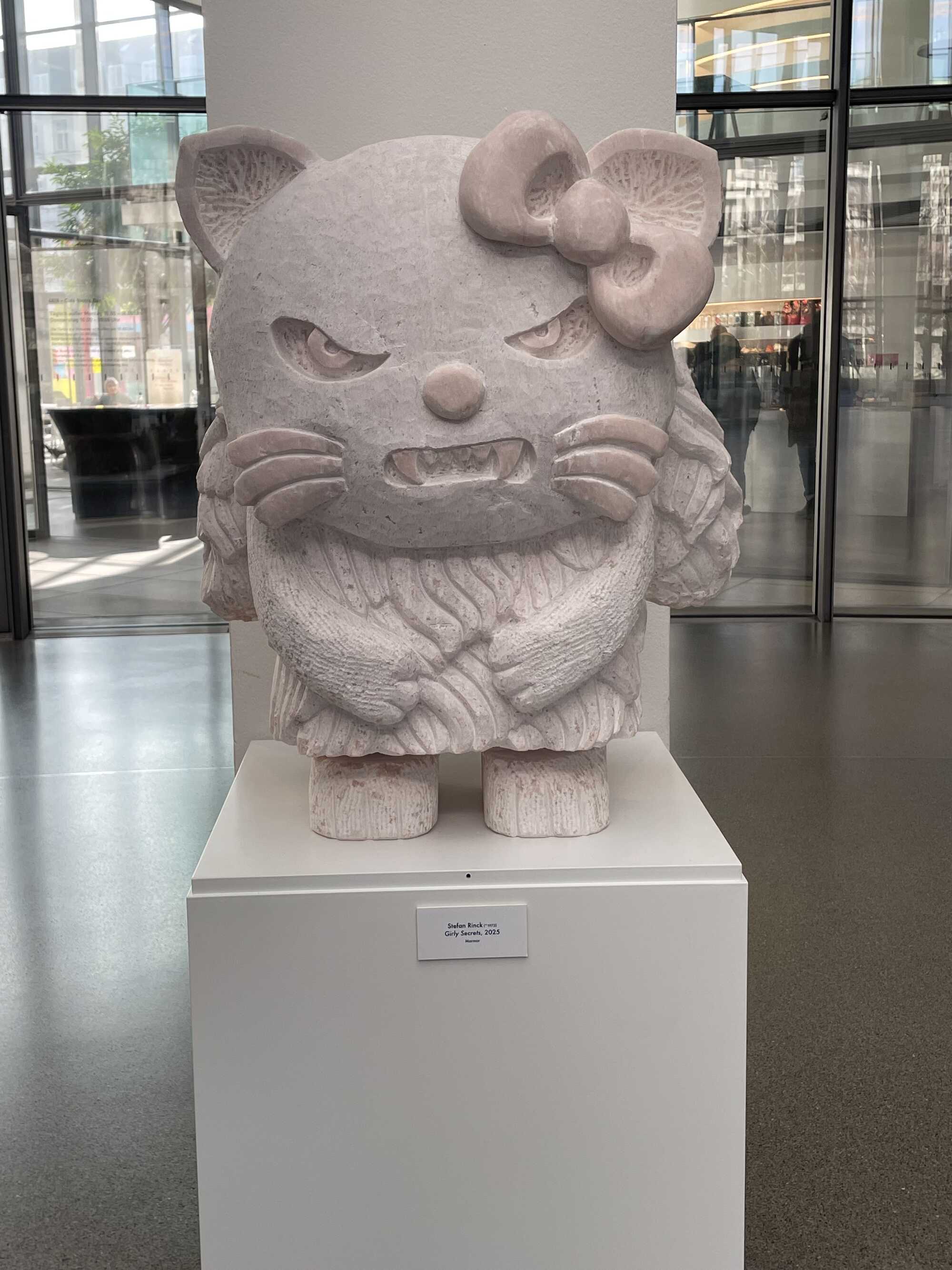
Anyway. Rinck, a trained stonemason, refers to his sculptures by specific names and (also) emphasises the tactile quality of the natural stones. One would love to touch them all; so inviting is the white marble of the “Snowrabbit Knight”, the blue Macaubas quartzite of the “Raindrop Ecuador”, and the green quartzite of a “Frat Mate” with its white horizontal stripes, while the rough Elbe sandstone feels rather repellent to the touch. Beyond that, they are a visual treasure trove. Just like their colleagues “Percht”, “Robot”, “Fettklößchen” (the fat dumpling), “Mafioso Normandai”, or “Honey Sucker”. They are reminiscent of Gothic gargoyles, Romanesque beast columns, ghosts, characters from pop culture, or the Mannerist figures in the “Park of Monsters” in the Italian town of Bomarzo, north of Rome. These figures, sometimes roughly hewn and at other times polished to a shine, open up realms of imagination and hold up a mirror to visitors. Inspired by Bavarian legends and folk customs, these sculptures are, however, primarily head-and-tilt figures. Seemingly rooted in popular folklore and playing on the cute, these stone heavyweights deftly teeter between silliness and seriousness. This blend of grandeur and humour brings contradictions and tensions to light. While Marius Müller-Westernhagen’s songs are all about longing for the familiar and a sense of closeness to one’s homeland, Stefan Rinck’s focus is on the loss of that very thing. The fact that the rural Alpine Clan has to find itself a new home in the urban rotunda of the “Pinakothek der Moderne” says it all. All that remains for its members is the hope and belief that one day they will return to their familiar surroundings, just like over 100 million other people all over the world.
This article was originally written in German by Willy Hafner. The author, who hails from the Palatinate, immediately fell in love with the “Senior Teacher at the Palatinate Forest Association”, who has mutated into a crocodile-like creature. He’s a must-have when it comes to that feeling of home.
About the author

Willy Hafner
Willy Hafner is a Munich based art historian who helped organize the first and second Sculpture Network Lab in 2019. Since then he has been reporting for us on exciting sculpture projects in Germany and beyond. He is also a member of the Patronage Committee of the Centro Internazionale di Scultura and helps emphasize the economic and cultural significance of the project.
Translation

Sybille Hayek
Sybille Hayek is an editor and translator. Since 2022 she has been supporting our team on a voluntary basis with her trained eye for detail and a great love of language.