On the Art of Conveying Art

On the banks of the Rhine in the small town of Bingen, 24 works of art are on display in public spaces until October. The grand opening ceremony is long over. The artists have left, the curators are back in Berlin, and the mayor is back at his desk in the town hall. What remains of a sculpture triennial on an ordinary, grey Wednesday afternoon?
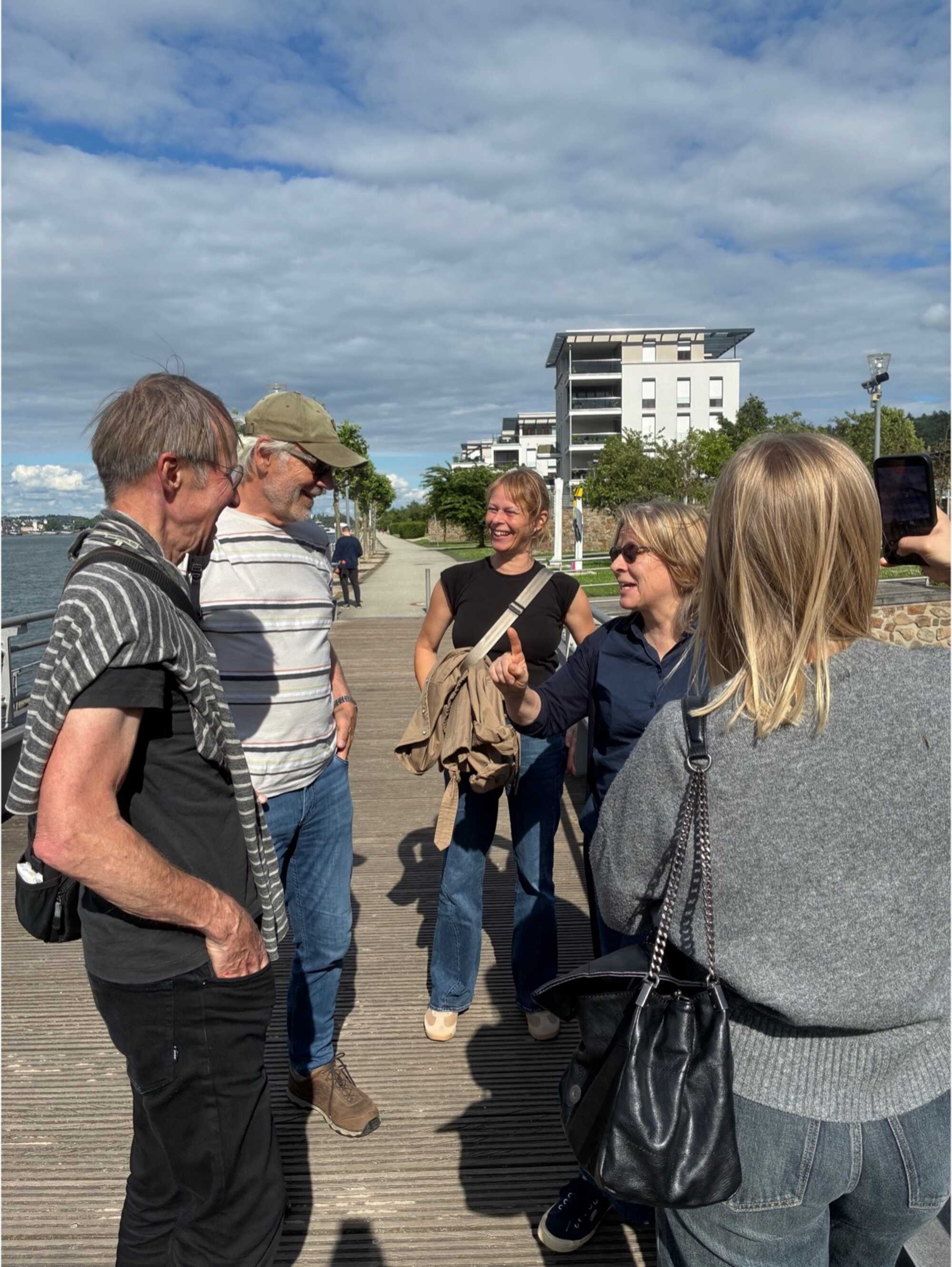
To figure this out, I’m meeting up with Karen Mildeberger from the Press and Public Relations department, Sabine Markowski from the Art Education team, and Lena from the team of young art educators. Together, we’re setting out to explore Connection and Solidarity – the title of this year’s triennial.
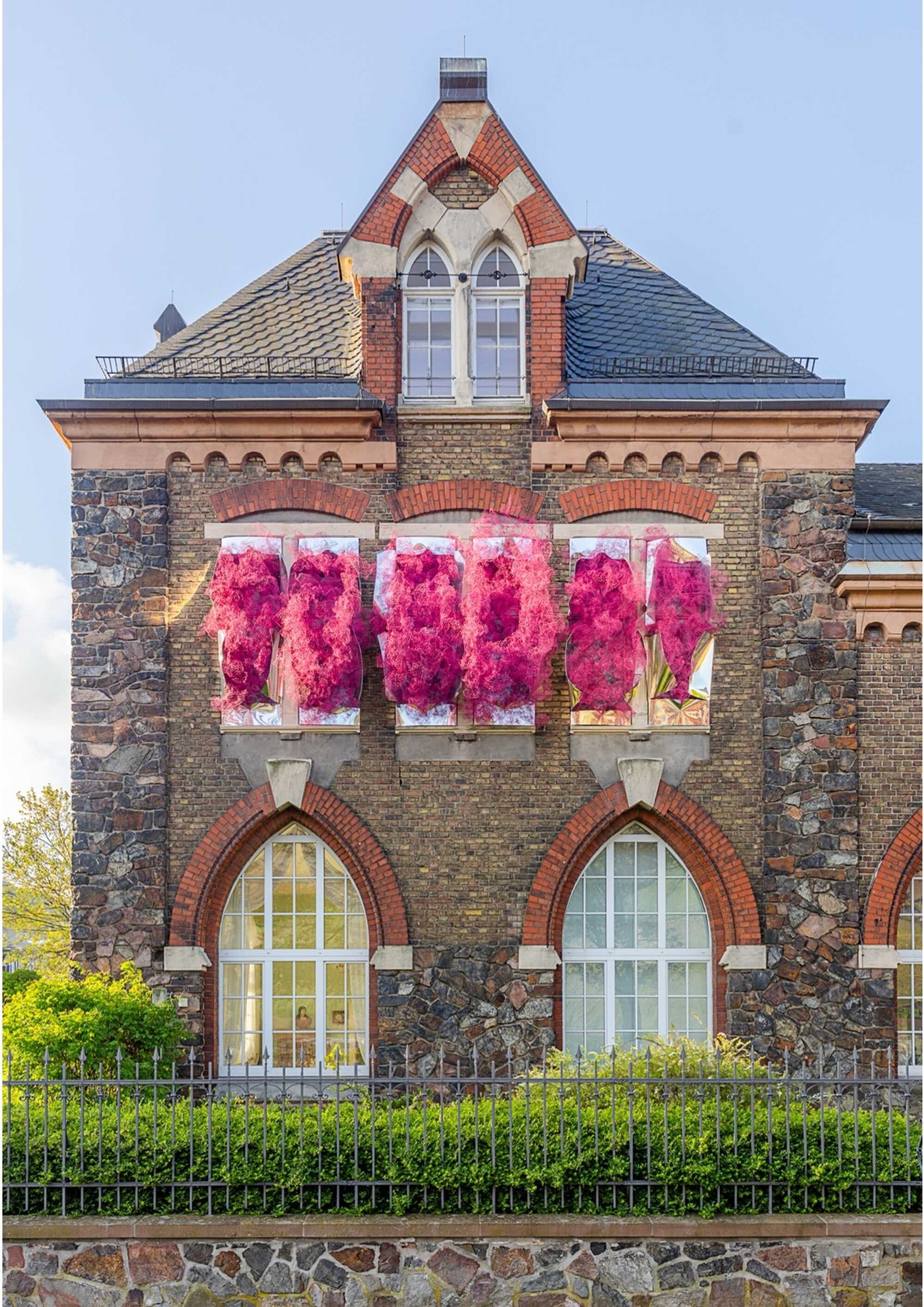
At our meeting point, the Museum am Strom, Karen speaks about her collaboration with Sculpture Network member Martine Seibert-Raken. For her work Once upon a time, specially made silver window frames had to be fitted. Today, pink clouds of wire billow out of the windows of the historic building, shifting character depending on the angle from which they are viewed. To some, they seem playful and light; to others, they seem out of place. Right from this very first work, it becomes obvious that art in public spaces does not thrive solely on the objects themselves but on the conversations they spark.
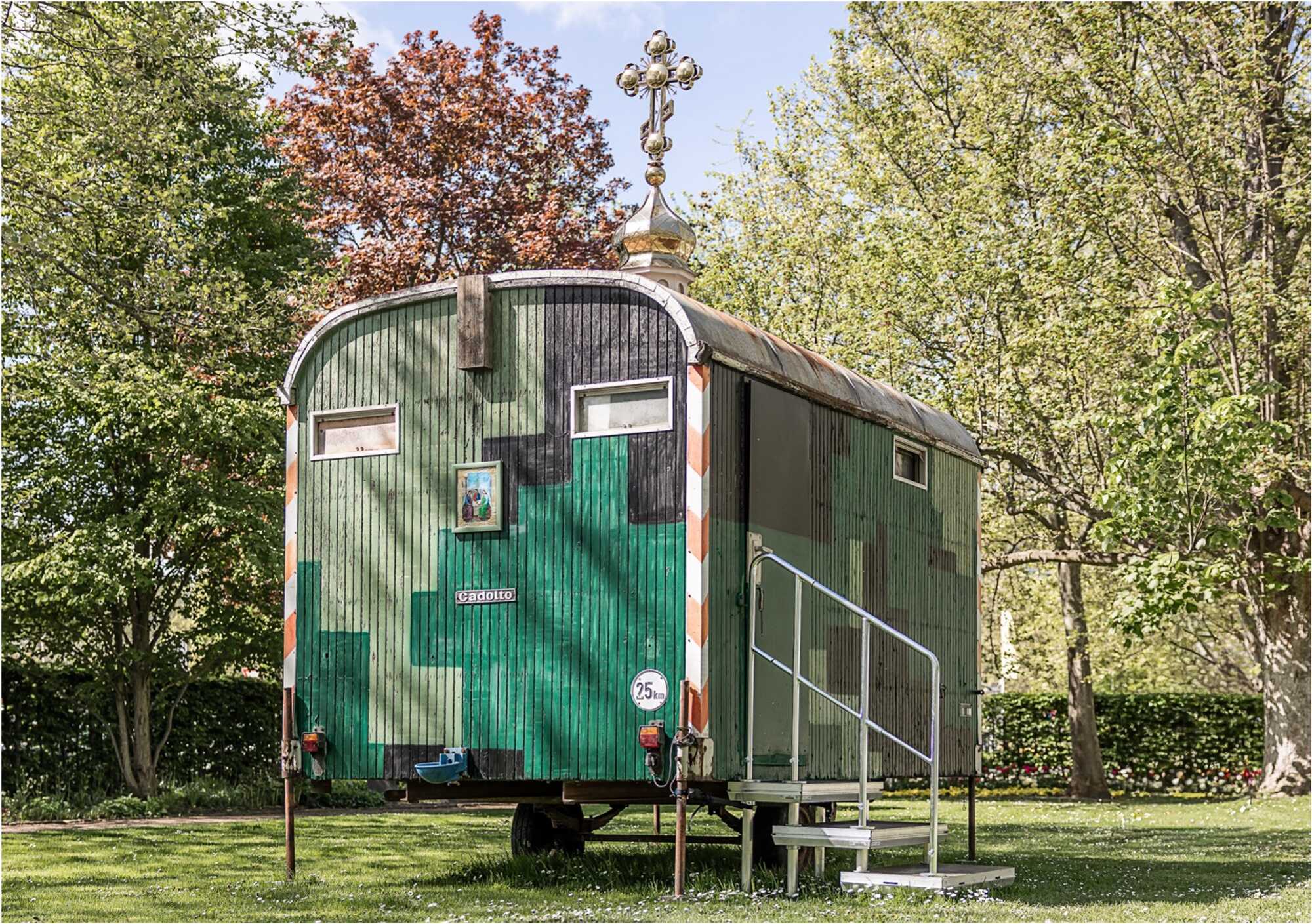
A little later, we find ourselves in front of Sasha Kurmaz’s Temple of the Transfiguration of the Lord. Sabine pulls a key out of her pocket. During the day, the small chapel in the building trailer is open; in the evening, it is locked up again. Inside, the temple is reminiscent of those makeshift places in Ukraine where Orthodox services are celebrated. It tells of community, faith and belonging, but also of rifts and conflicts. That the chapel has to be locked up at night seems almost contradictory. At the same time, it is this very situation that emphasises how complicated connection can sometimes be. Not every open space can remain open indefinitely.
Further on, Sabine shares a story about the park warden. His job is mainly to make sure dogs are kept on a lead and to keep people from cycling through the grounds. When she recently gave two teachers a guided tour of the exhibition, feeling briefly disappointed that the response from schools had been so restrained, the park warden unexpectedly stopped and spontaneously joined the tour. He was keen to find out exactly what was happening in “his” park and what each of the artworks was all about.
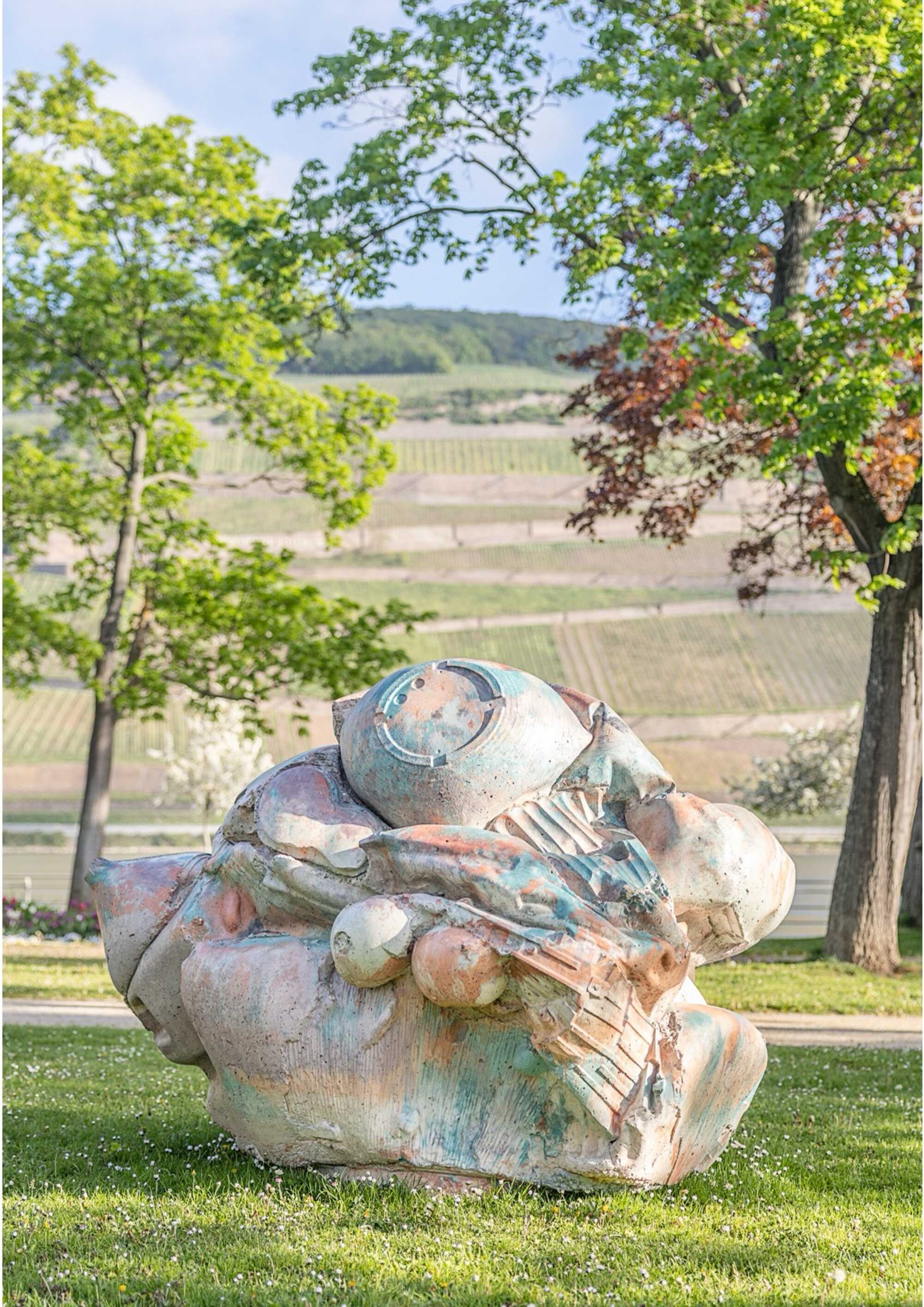
As we stand in front of Emilia Neumann’s UG. P I, I find myself reflecting on this story. The abstract plastic is not immediately easy to access. At first, many visitors are at a loss as to what to make of it. Yet the longer you look at it, the more lines, structures and reference points emerge. Perhaps that was precisely what piqued the park warden’s curiosity – the second glance that artworks sometimes require.
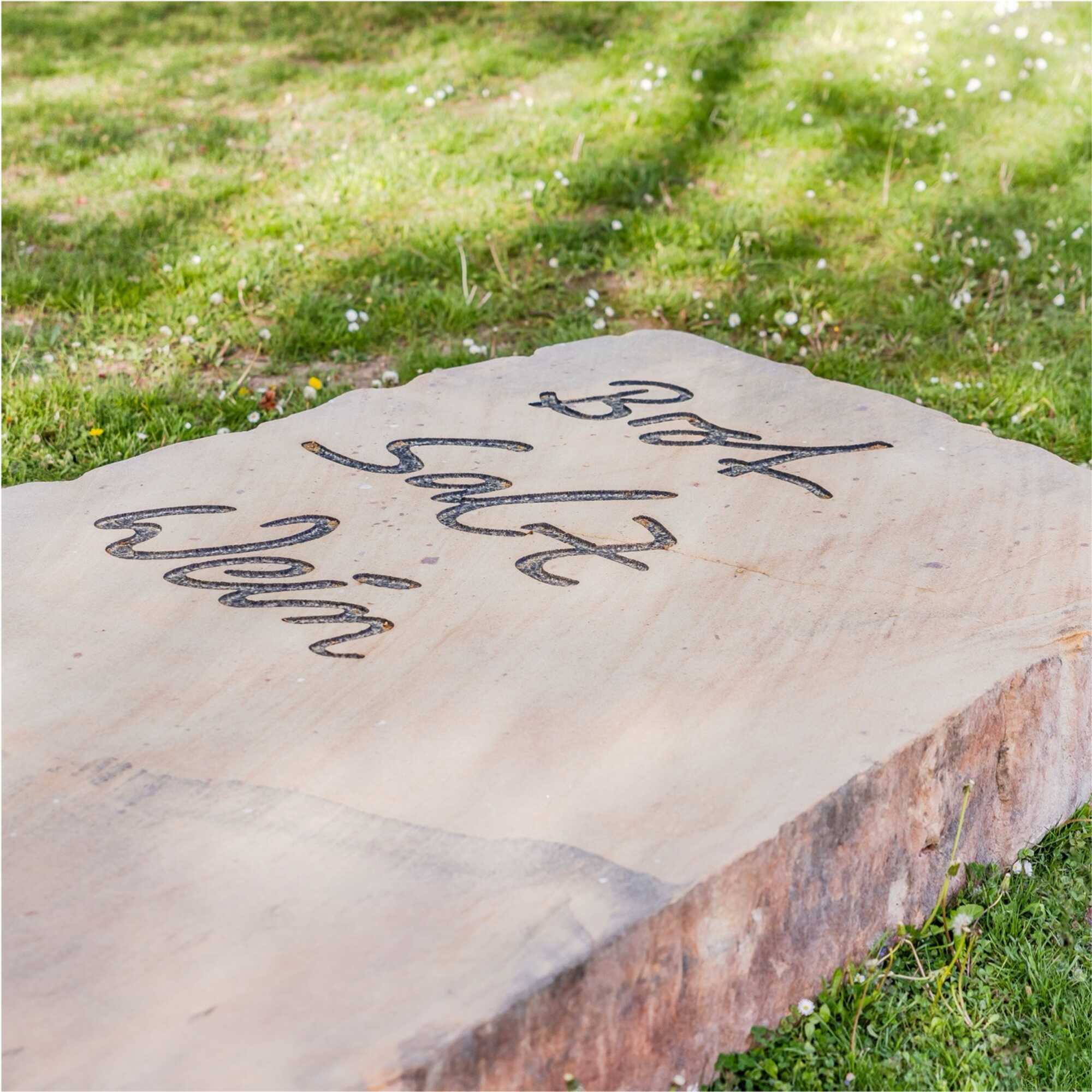
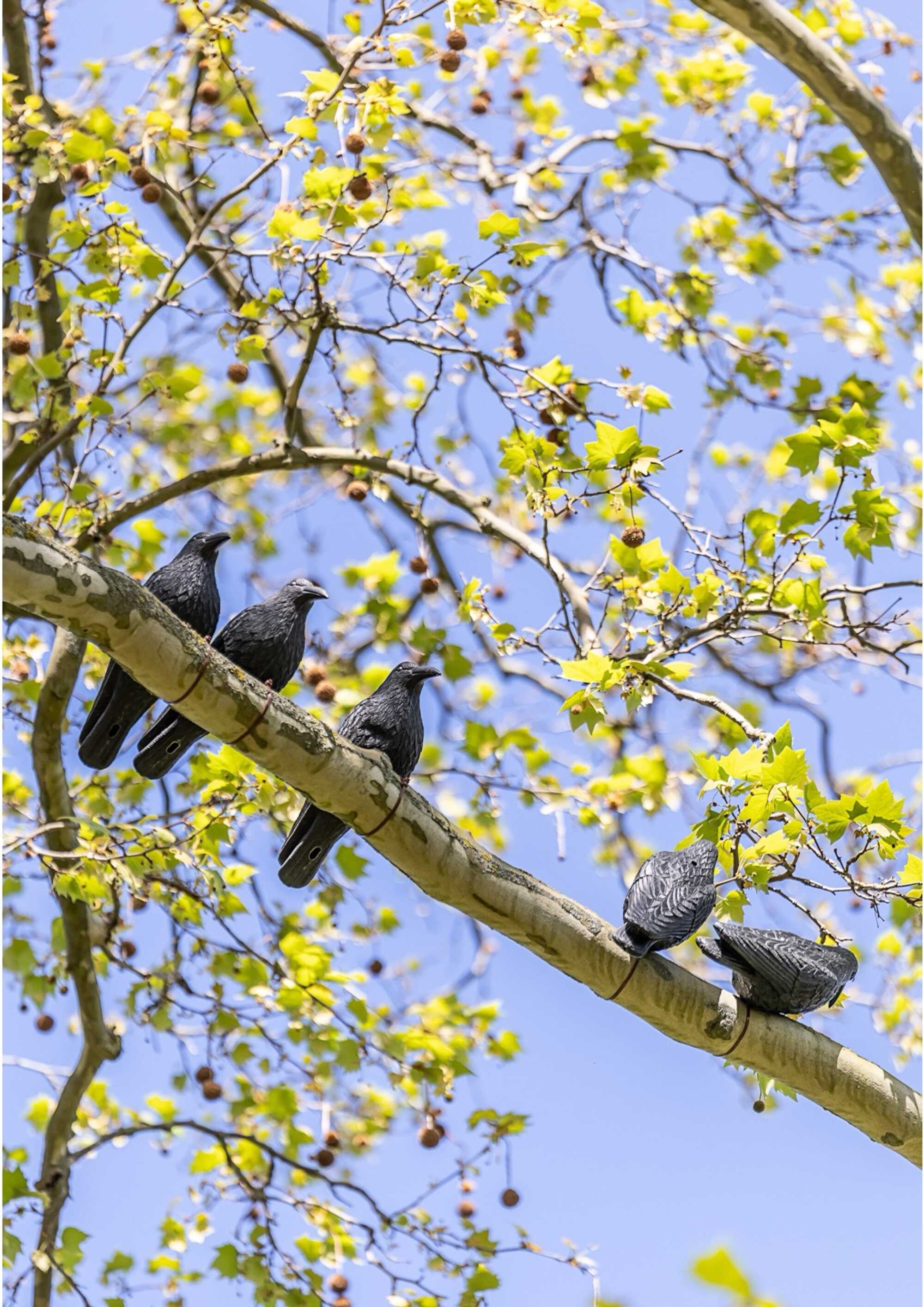
Thomas Judisch’s works are another example of just how challenging art mediation can be. The installation, with its bird figurines from the DIY store and a shopping list carved in stone, challenges even those visitors with an affinity for art. People are quick to say, “I could do that too.” Or you hear the classic line so common in Germany: “Is that art, or should we put it away?” For Lena and the other young art educators, statements and moments like these are part of their everyday lives. During the opening and on many weekends, they stand on the banks of the Rhine, strike up conversations with strangers and answer questions about the artworks (“It’s art. We should not put it away.”) At first, it took some courage. Now, many of them have become much braver. Here, art has not only sparked conversations but also boosted self-confidence.
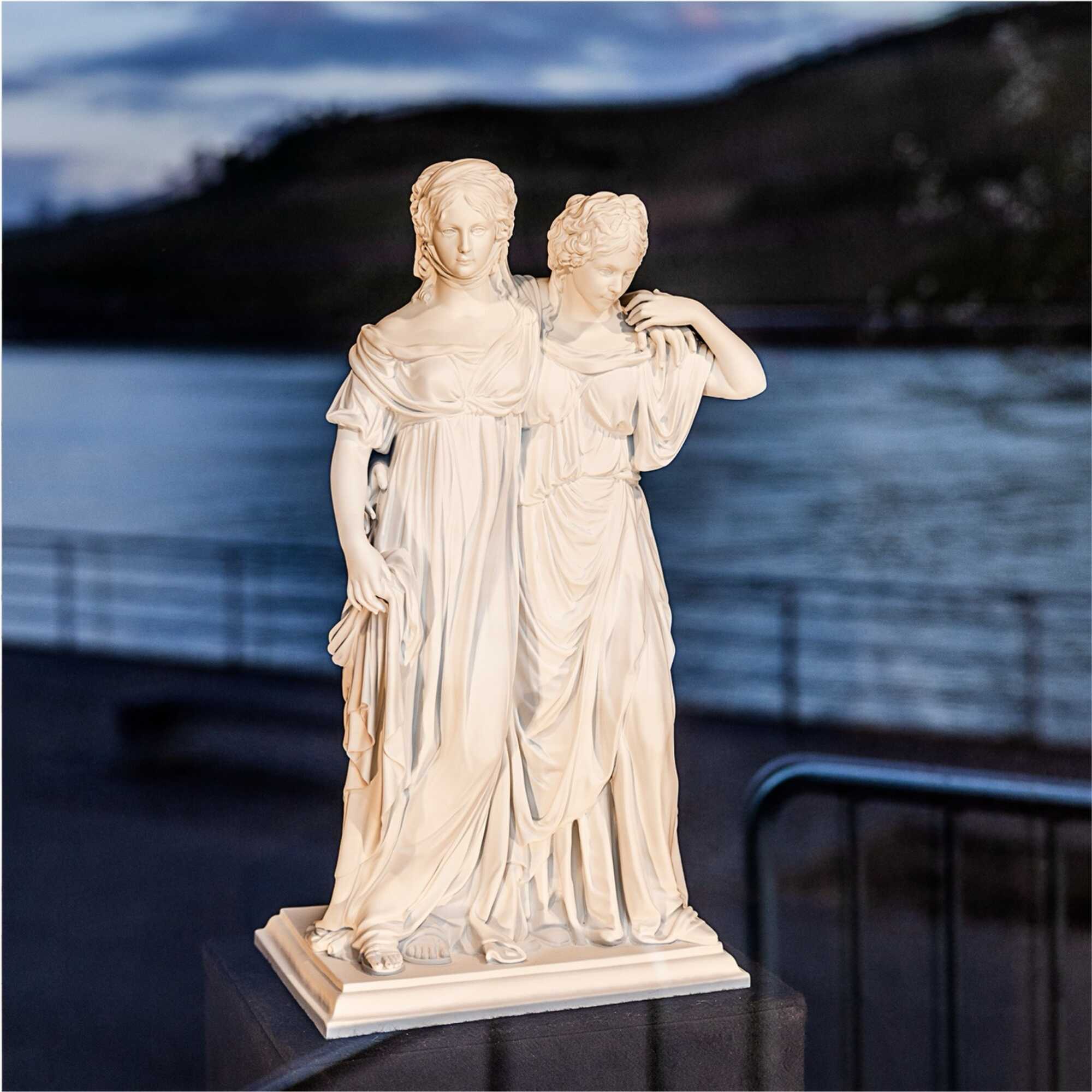
A few works further on, we look through a window at Johann Gottfried Schadow’s Group of Princesses. You have to climb up a few steps to view the work, looking through a window in the level house. Karen tells us about the founder, Kuno Pieroth, who regularly takes a stroll along the banks of the Rhine and tells interested – or sometimes less interested – passers-by about “his” works of art.
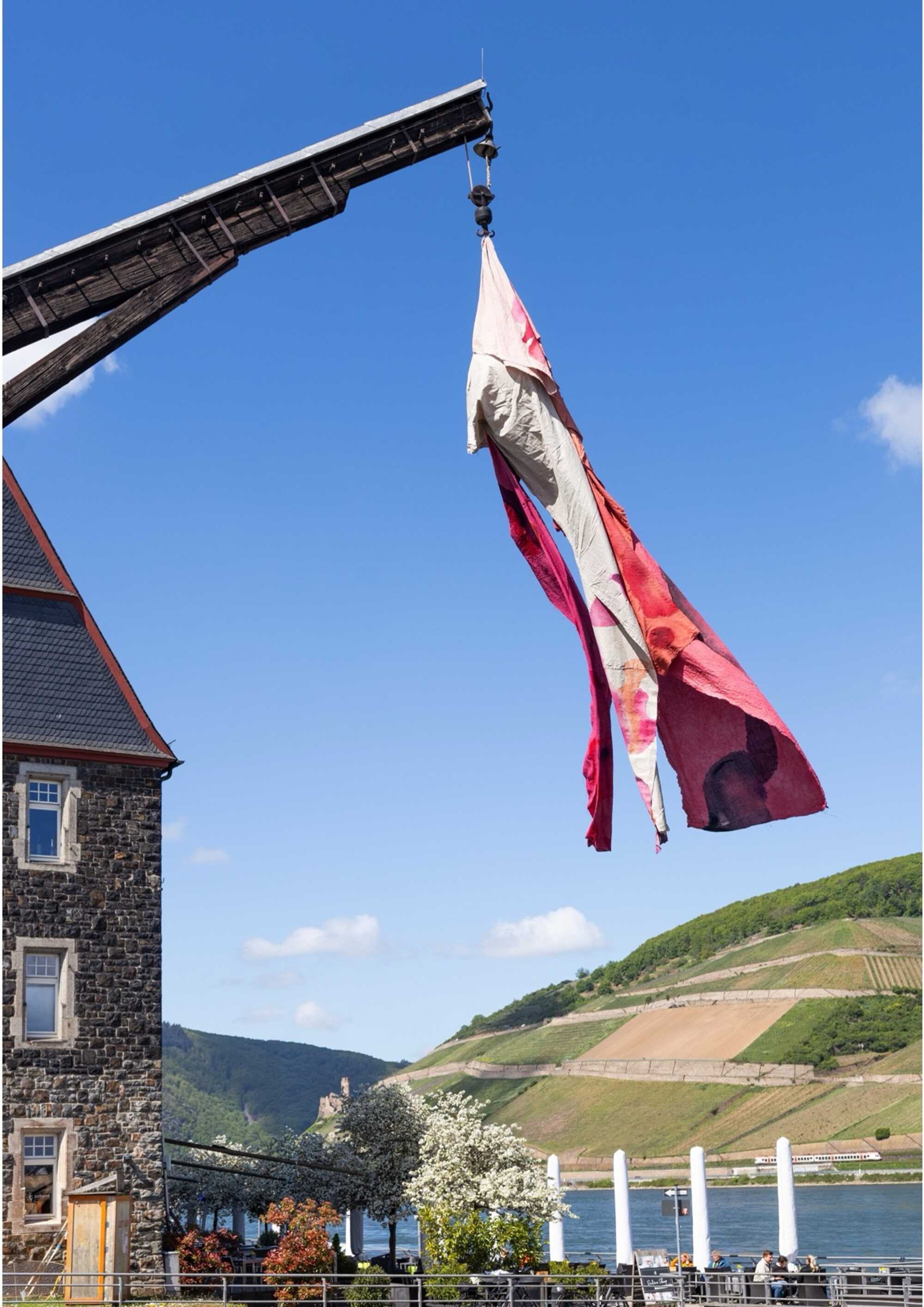
On the bridge in front of Nadine Schemmann’s Matronengeflüster (Whispers of the Matrones), we happen to bump into Sculpture Network writer Etienne Boileau, currently on holiday in the region. The conversation quickly shifts to the variety of reactions the installation provoked. Some are drawn to the billowing lengths of fabric, whilst others see in them a hanged person and react with aversion. The work references the Matronae – mother goddesses of the Roman, Germanic and Celtic religions who were worshipped along the Rhine. Between wind, water and fabric, a space for associations emerges.
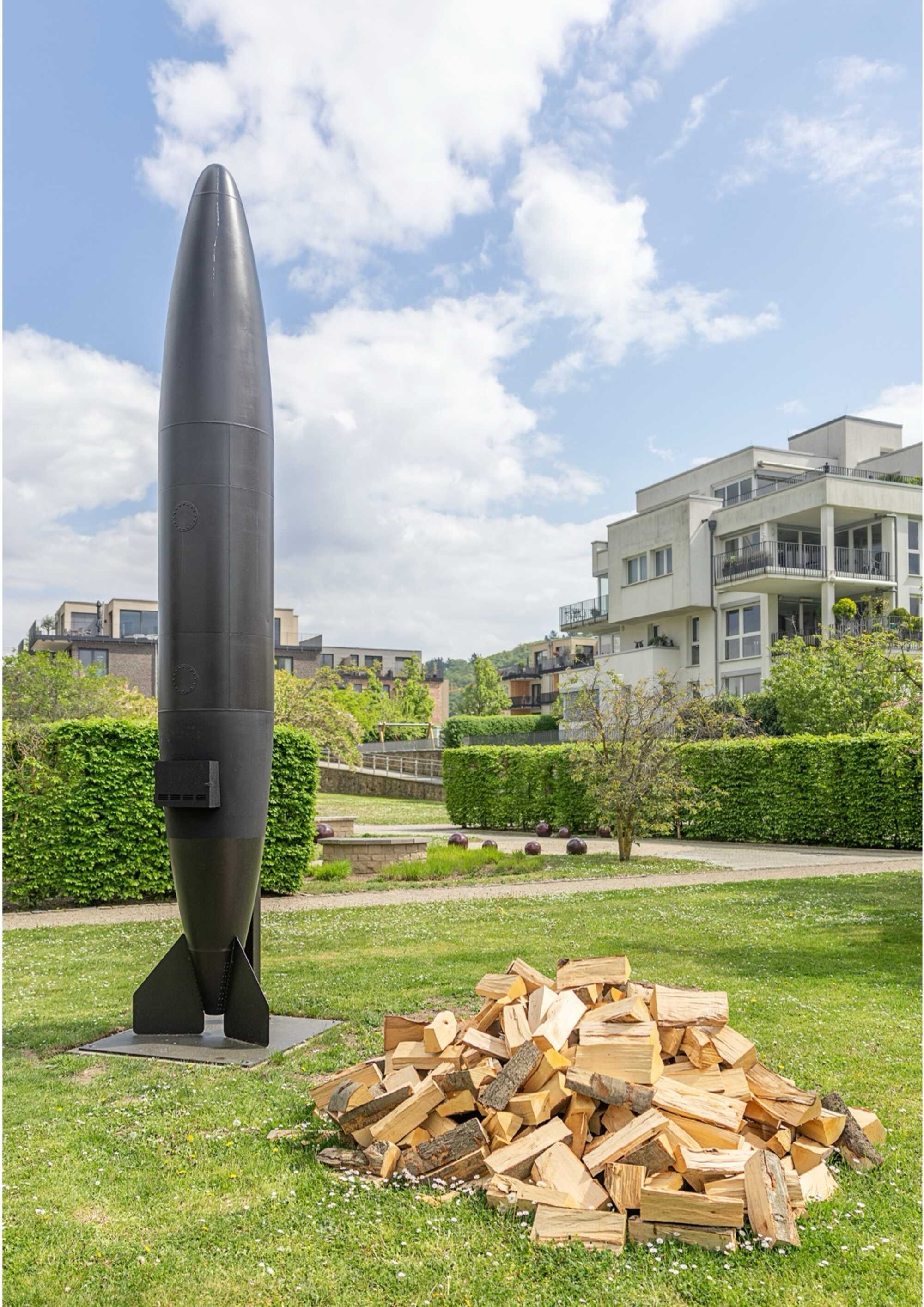
Later on, Sabine mentions two gardeners who regularly work in the park. Initially, they didn’t really know what to make of Thomas Judisch’s shopping lists. However, Michael Sailstorfer’s Brenner R04 caught their curiosity. Why is there a pile of wood next to a rocket? The answer is as simple as it is surprising: the sculpture can actually be used as a stove. As we stand in front of it, I wonder whether visitors might gather here in October, when temperatures drop. The artwork might then truly become a place of encounter – and the two gardeners will certainly be there.
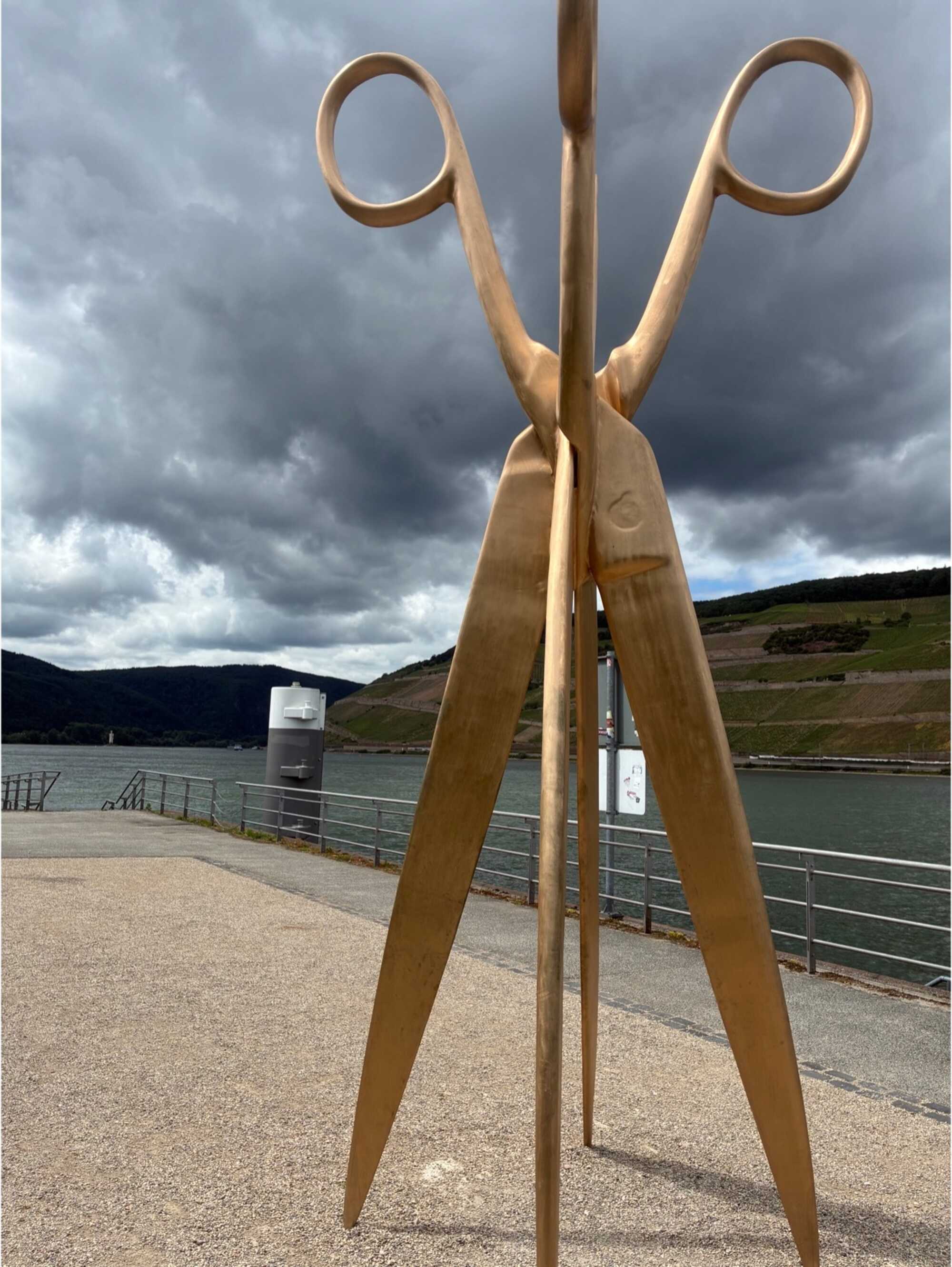
Not long after, I discover my personal favourite piece. Valie Export’s Die Doppelgängerin (The Female Double) exudes an enormous presence, even on this grey Wednesday afternoon. To me, the bronze pair of scissors seems less unifying, more divisive. And yet, at the same time, every cut also holds the possibility of a new beginning, of putting things back together again. Karen explains that Valie Export had originally intended to attend the opening. When news of her death reached them the day before the opening, it came as a shock to everyone involved. Suddenly, her artwork became a place of remembrance as well.
Finally, we reach Ba Selas’ Core Construction 8. It is here, of all places, that the exhibition’s title begins to unravel for me. The fragile stars must not be touched. Several signs urge visitors to keep their distance. The material will not withstand the elements indefinitely. Connection and solidarity hit their limits here. An insurmountable distance arises between the artwork and the audience. And yet it is precisely this work that tells a slightly different story. Whilst setting up the exhibition together, the artists struck up conversations with one another. They discussed materials, constructional aspects and possible improvements for the future. Practical problems gave rise to new contacts and new ideas.
So what is it that remains of a sculpture triennial on an ordinary, grey Wednesday afternoon? A passion for encounters sparked by art. And the insight that connection and solidarity rarely arise exactly in the places planned for. They unfold between schoolchildren and passers-by, between gardeners and rockets, between donors and visitors. They flourish in conversations, in questions and sometimes even in misunderstandings.
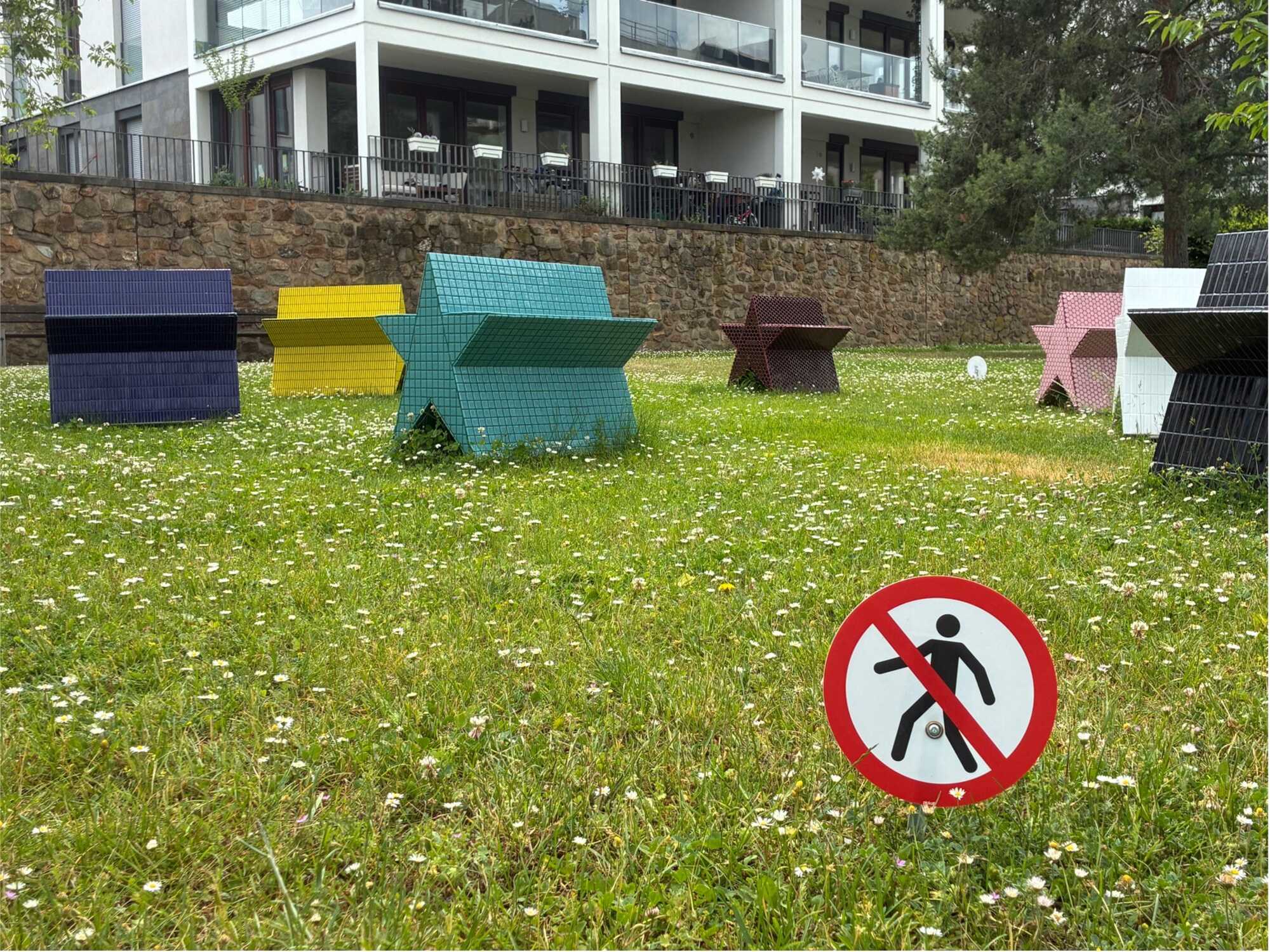
Not every work at the Triennale strikes a connection. Not every artistic idea is immediately accessible. Some works remain unwieldy, whilst others polarise opinions. Yet this is precisely what makes on-site art mediation so valuable. It does not attempt to provide all the answers. Instead, it creates opportunities for encounters.
Thanks to Sabine, Karen and Lena for an inspiring afternoon!
Further information
Skulpturen Triennale Bingen open till October 4th 2026
Elisabeth Pilhofer wrote this article in German.
About the author

Elisabeth Pilhofer
Elisabeth Pilhofer is a freelance editor and cultural manager based in Mainz, Germany.
Translation

Sybille Hayek
Sybille Hayek is an editor and translator. Since 2022 she has been supporting our team on a voluntary basis with her trained eye for detail and a great love of language.