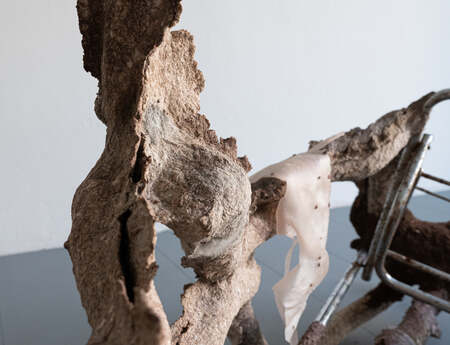
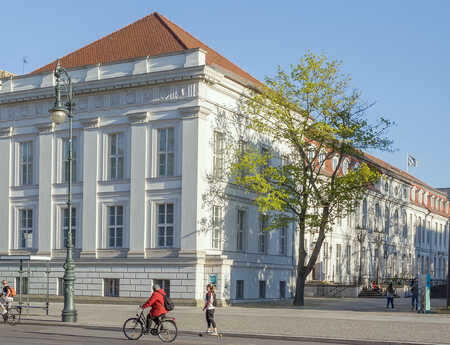
Bodytalk – The Return of the Human Figure in Contemporary Sculpture

We are very much looking forward to the International Forum, which will take place in Berlin in autumn 2026. Berlin is a city with a turbulent history and meaningful locations that add to the theme Bodytalk – The Return of the Human Figure in Contemporary Sculpture perfectly!
Since it was founded 20 years ago, the International Forum has been the cornerstone of the Sculpture Network experience. For two and a half days, you can be part of the discussions, networking, exchange, and inspiration, sharing your love for sculpture in the throbbing heart of Europe: Berlin.
The Forum theme
"As to the hands, it can scarcely be told of what a variety of motions they are susceptible, since they almost equal in expression the powers of language itself."
– Quintilian, De Institutio Oratoria, 35–100 A.D.
The Sculpture Network Forum Bodytalk in Berlin 2026 focuses on gesture and conceptual figuration: how sculptured silent figures speak to our bodies in a language we all know. The theme of the Forum is chosen by Anne Berk, a Dutch art critic and curator.
Since prehistory and the Venus of Willendorf, people have made figures and used gestures to express how it feels to be human. We still do so up to this day. But the meaning, values, tensions, and emotions change with the times.
Artists respond – often intuitively – to the times they live in. Art is made by human beings and reflects the values of a particular era. Art is a mirror of the world, but it is a broken mirror, with each artist producing a fragment with his or her own perspective on the world. Putting some of these fragments together, you can see a pattern.
In her long art practice as an art critic, Anne Berk saw the art world change from autonomous and abstract towards figurative and narrative art, which she highlighted in two exhibitions and books: Bodytalk. De Nieuwe Figuratie in de Nederlandse Beeldhouwkunst van de jaren negentig (2004). And In Search of Meaning – Mensbeelden in Globaal Perspectief (2015), book and exhibition at Museum De Fundatie (NL), explores the emergence of conceptual figuration and the meaning of the human figure in a global context.
Narrative turn
In the aftermath of World War II, the human figure largely disappeared from Western art. Exploited by both Nazi and Soviet regimes for ideological purposes, figuration became taboo. “I had to reinvent the figure,” said German sculptor Stephan Balkenhol – and so began a process of rediscovery that continues up to this day.
By the 1980s, the tide shifted. A ‘narrative turn’ in art reflected growing uncertainty in a world undergoing rapid change. Artists began to use the body once more – not as an object of propaganda or beauty, but as a vehicle for existential questioning. This ‘conceptual figuration’ is not about delivering answers but about inviting reflection. Through gesture, posture, and material, artists pose fundamental questions about human existence – and they do so without prescribing meaning.
Background
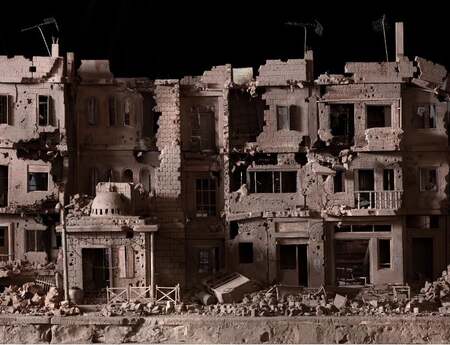
The fall of the Berlin Wall, the collapse of communism, and the erosion of belief systems – the late 20th century marked a turning point. As philosopher Jean-François Lyotard observed, the “grand narratives” that once structured life lost their power. Nowadays, in times of climate change, the threat of humanity to nature brings new challenges. What remains is a profound question: How should we live?
Across the globe, artists are turning to the human figure to explore this question. Their work becomes a form of self-inquiry:
Who am I?
What does it mean to inhabit a body?
How do we relate to one another?
What is the impact of technology?
How do we relate to nature?
Every-body
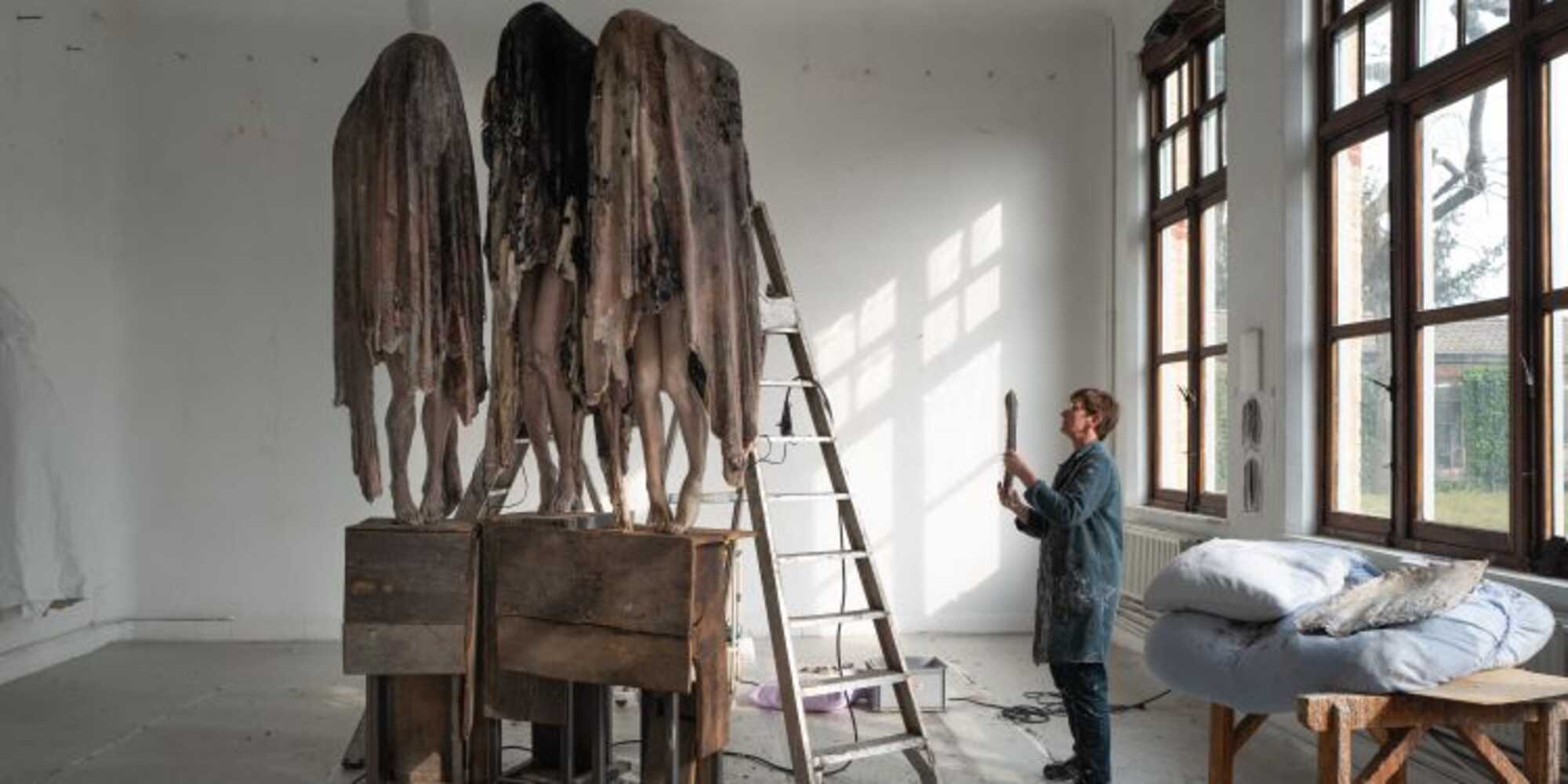
Often, these explorations begin with the artist’s own body – through casts, impressions, or digital mapping. Yet these are not self-portraits. These bodies are every-bodies, communicating through a shared visual language we all instinctively understand. In this way, the gesturing figures become a metaphor for being human.
The materials used – whether blood, silk, Dutch wax prints, or jewel beetles – carry symbolic meaning, adding further layers to the conversation between artist, artwork, and viewer.

A contemporary perspective
Contemporary figurative sculpture does not idealize the body – it investigates it.
We are part of nature. Life is change, and the changing body, with the life cycle from birth, sex, procreation, death, and after death, has always been a subject of art but was dealt with in religious contexts. But the development of science and the “disenchantment of the world,” as the German sociologist Max Weber put it, left us without the consolation of eternal life.
We can prolong life, but how to deal with death? “Death is taboo in our culture. With my figures, I sympathize with those who suffer, offering empathy and love as a form of comfort,’’ Berlinde de Bruyckere said.
Nowadays, with advanced technology enabling people to change their gender, Agnes Questionmark (what’s in a name?) embodies her questions about fluid gender identities in her figures, performances, and videos. How does it feel to change from man into woman? What if technology and AI take over, making our bodies redundant? How do we relate to the non-human world? Why wouldn’t you change from a human into an animal?
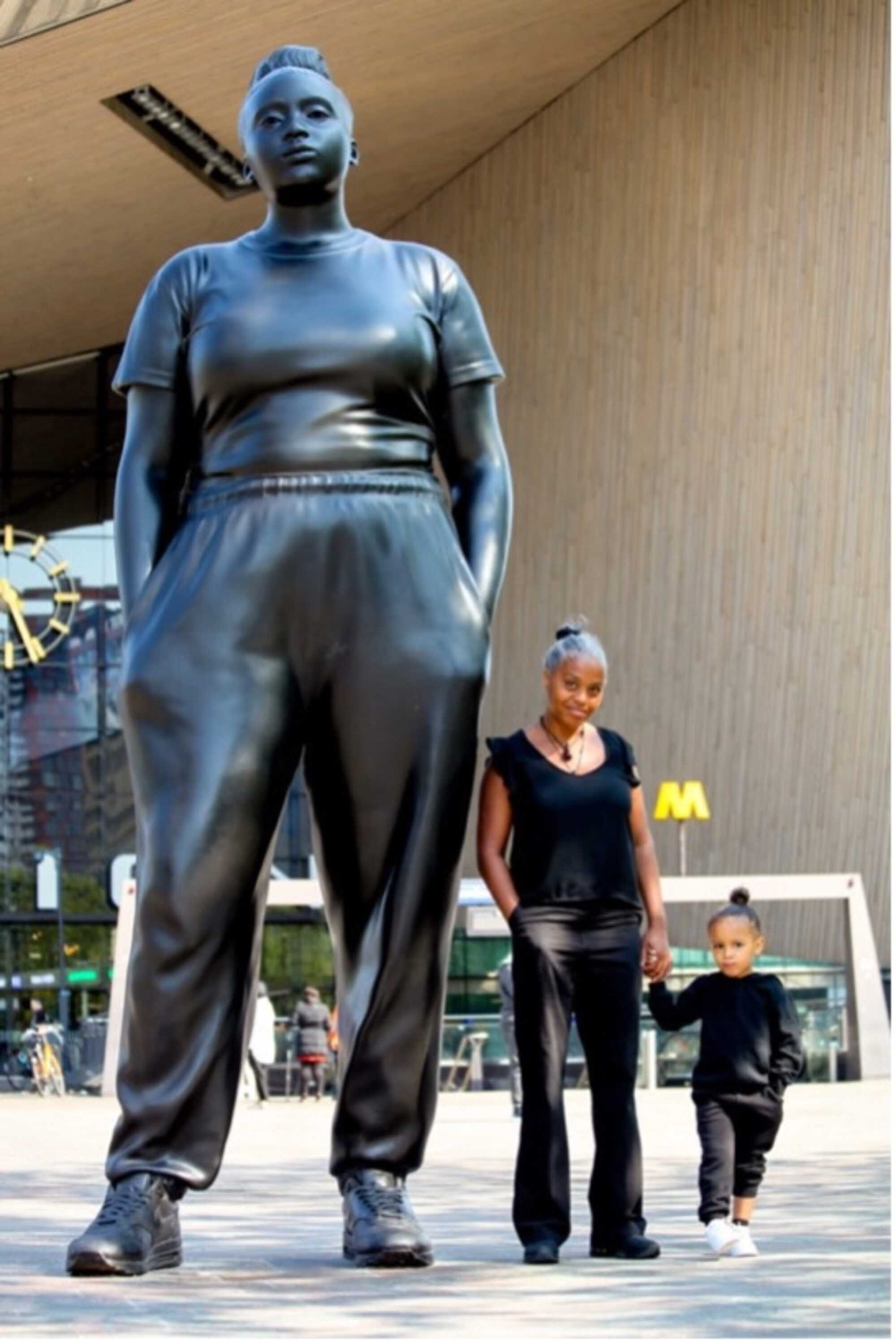
Our societies, the way we live together, and power relations are always shifting as well. Today, decolonization, globalization, and migration are also reflected in art. This leads to a new focus on artists from other parts of the world and the emancipation of Black artists such as Thomas J. Price, while former heroes are dethroned by deconstructing monuments, as Anne Wenzel shows.
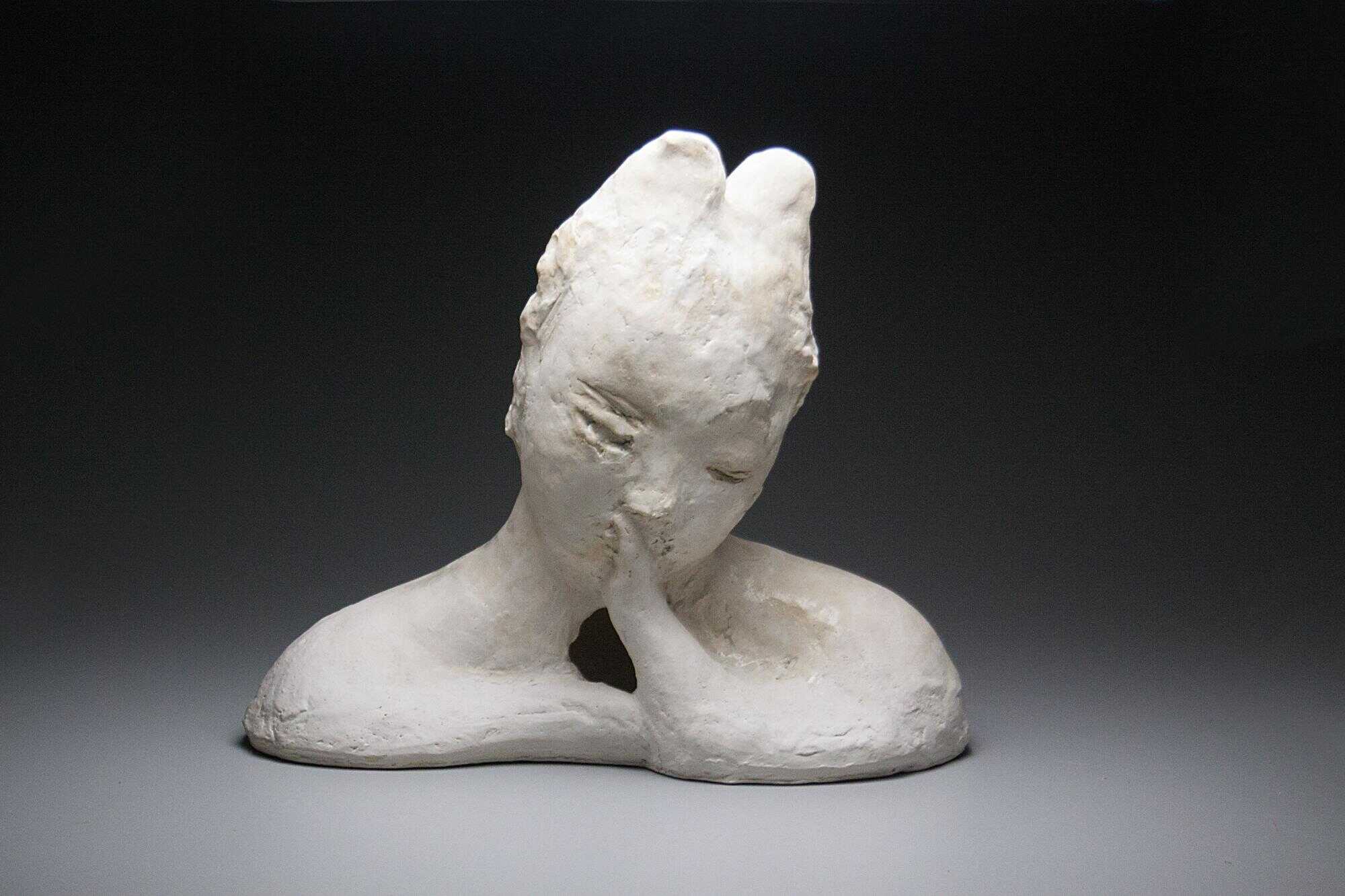
There has always been a struggle for power, but nowadays, in spite of ‘social’ media, people become even more divided. Which led Jaume Plensa to embody our longing for peace of mind and connection through communication in his serene figures. A mythical figure – part human, part animal – of Leiko Ikemura puts its fingers on its lips, the signum harpocraticum, a gesture that has been used since antiquity. It asks us to be silent, open up, and contemplate the wonder and infinite complexity of the nature we are part of but seem to have forgotten…
Reflection
These are just a few examples of the many themes that are embodied by contemporary ‘conceptual figuration’. Ranging from sexuality, love, mortality, and technology to questions of identity, gender, power, our relation to nature, and the cosmos, artists seek to contextualize human experience in new, meaningful ways.
Unlike the monuments of the past, which stood above us and dictated meaning from their pedestals, today's figures stand on the same level as the viewer. They meet us eye to eye – vulnerable, questioning, and real. Their gestures do not offer solutions, but they do offer connection. In a fragmented world, they invite us to reflect. And perhaps that, in itself, is enough.
Share your thoughts
There are no definitive answers, and the inspiring lectures and Berlin’s charged locations will offer us food for thought. We invite you to join the lectures, discussions, and visits at The International Forum Bodytalk and to share your thoughts and art with us in Berlin.
Curator: Anne Berk (NL), Chairperson of Sculpture Network, Curator and Author of In Search of Meaning – Mensbeelden in Globaal Perspectief, 2015, book and exhibition at Museum De Fundatie (NL), exploring the emergence of conceptual figuration and the meaning of the human figure in a global context.
Co-Curator: Anemone Vostell (DE), Board Member of Sculpture Network and Cultural Manager in Berlin.

This article was written by Anne Berk in English.
About the author

Anne Berk
Anne Berk is Chairperson of Sculpture Network, responsible for our events and also Coordinator for the Netherlands.
Translation

Sybille Hayek
Sybille Hayek is an editor and translator. Since 2022 she has been supporting our team on a voluntary basis with her trained eye for detail and a great love of language.