Our Fragmented Contemporary World

The Hamburger Bahnhof is celebrating its 30th anniversary, offering opportunities to reflect on life – and the institution itself. How should museums be envisioned today, as spaces for exchange, participation and movement? To mark its anniversary, the Hamburger Bahnhof – Nationalgalerie der Gegenwart is presenting an extensive programme that demonstrates just how closely the collection, architecture and artistic practice may be intertwined.
How can sculpture be envisioned today? Forms of questioning the human condition by Shilpa Gupta, Lina Lapelytė, [ materialistin ], Olafur Eliasson, Ayşe Erkmen and others invite visitors to the Hamburger Bahnhof to engage in reflection and feeling.
At a time when the “tele-intimate proximity of death and destruction”, as discussed by Susan Sontag in relation to the first media coverage of the Vietnam War (Susan Sontag, “Regarding the Suffering of Others”, 2003, p. 28; cf. also 1978: “On Photography”), has become part of our everyday lives, and Wolfgang Ullrich’s critical analysis of US political social media channels is diagnosed as “memocracy” (Verlag Wagenbach, 2026), the question of figure and body in art arises anew.
Based on the observation that artistic representations of the human figure are always an expression of their time, Anne Berk describes the current resurgence of the figure as part of a fundamental shift: art appears as a fragmented mirror of a present in which body, material and perception no longer carry unambiguous meanings but are instead treated as open questions. This issue will be part of the discussion at this year’s 16th Sculpture Network Forum in autumn, under the title Bodytalk.
At the Hamburger Bahnhof, with the set of works of the Erich Marx, Friedrich Christian Flick and Egidio Marzona collections, a holding has been built up that constitutes one of the most important centres for contemporary art and interprets sculpture in a multifaceted way as a spatial, relational practice. Since its foundation, the artistic dialogue between works, positions and generations has been a fundamental principle of the museum.
The exhibition year 2026 features a wide range of international and national positions: alongside Giulia Andreani, Sophie Calle, Tacita Dean, Thomas Demand, Olafur Eliasson, Ayşe Erkmen, Shilpa Gupta and Henrik Håkansson, Lina Lapelytė, the collective [ materialistin ], Ryuichi Sakamoto and Tomás Saraceno are also represented. This is supplemented by a new showcase of the collection, featuring works by, amongst others, Pierre Huyghe, Katharina Sieverding and Rirkrit Tiravanija. The group exhibition by [ materialistin ] gathers eight female sculptors working in Leipzig and delivers a clear plea for collective practice and solidarity – a signal that exceeds the institutional framework.
Many works operate at the intersection of object, installation and situation; they expand into space, occupy it and establish a relationship with the viewer’s body. This physical approach becomes evident in the work of Shilpa Gupta, for example, in her examination of language, boundaries and power structures. With her sculptural installation TRUTH, letters arranged in space that do not coalesce into a coherent statement, Anne Berks's “shattered mirror” is brought to life. “Truth” does not appear as a unified whole but as a spatially experienced fragmentation. Meaning only arises through movement in space and changes in perspective.
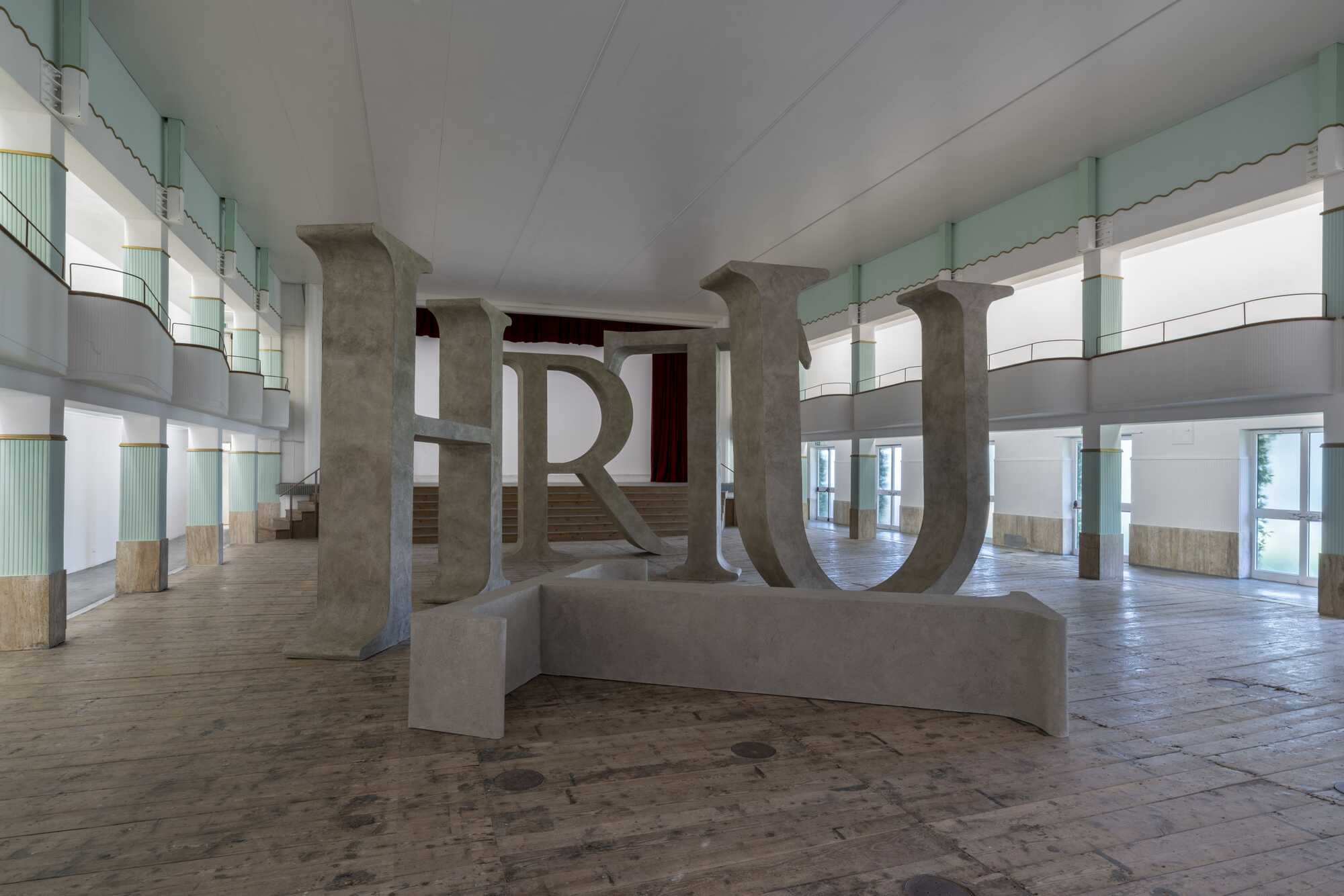
At the same time, the focus increasingly shifts towards participatory formats. From May onwards, Lina Lapelytė will transform the historic hall of the Hamburger Bahnhof into a polyphonic stage, where the visitors themselves become part of a choreographic structure. The space becomes activated through its own architectural logic; here, the body is not heroic; instead, it is passive, adrift, at the mercy of its surroundings.
The figures in the water defy any clear narrative; they represent a state, not a plot. This is consistent with Anne Berk’s “conceptual figuration“: the body poses questions about life, control and vulnerability without providing answers.

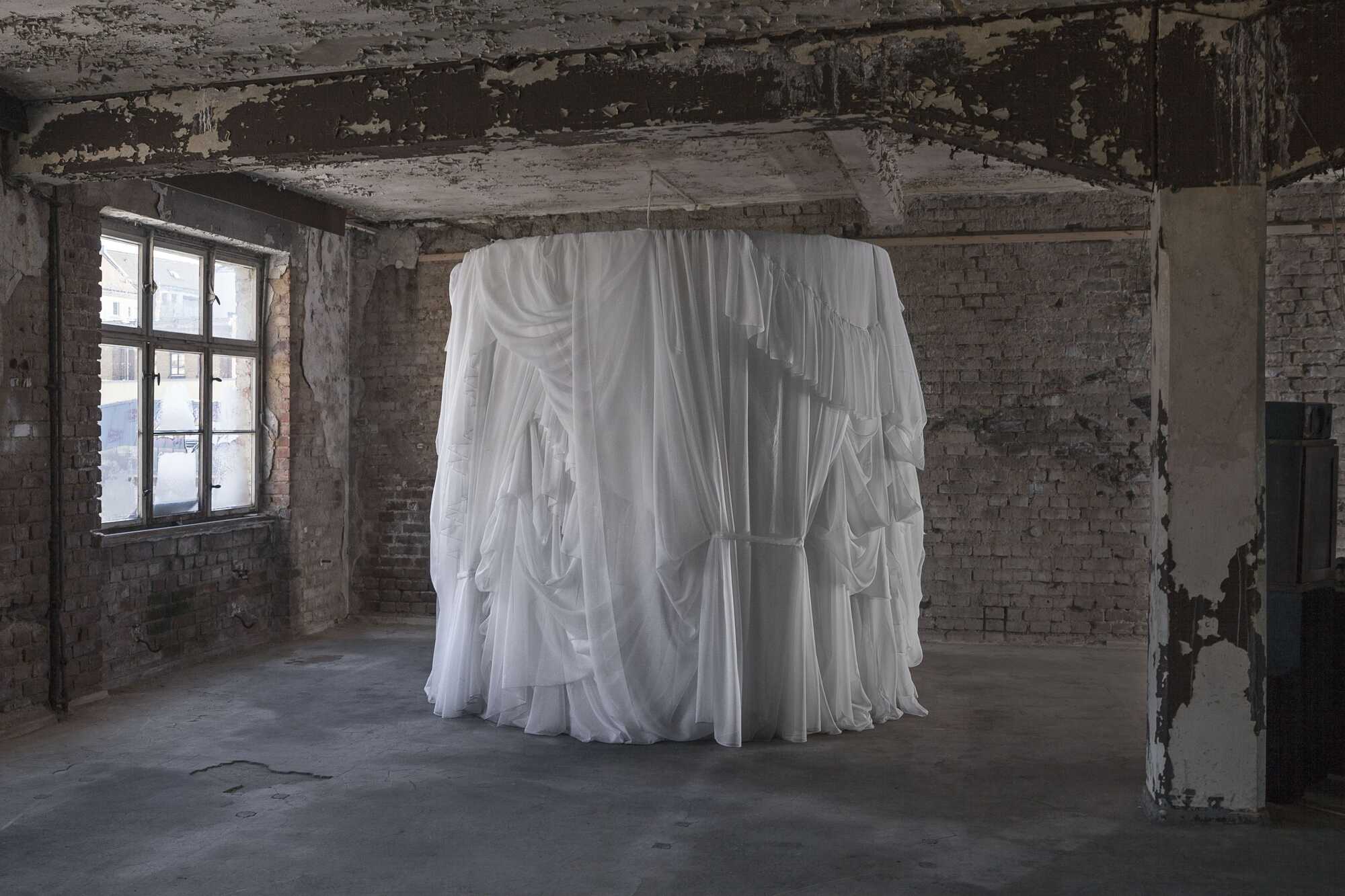
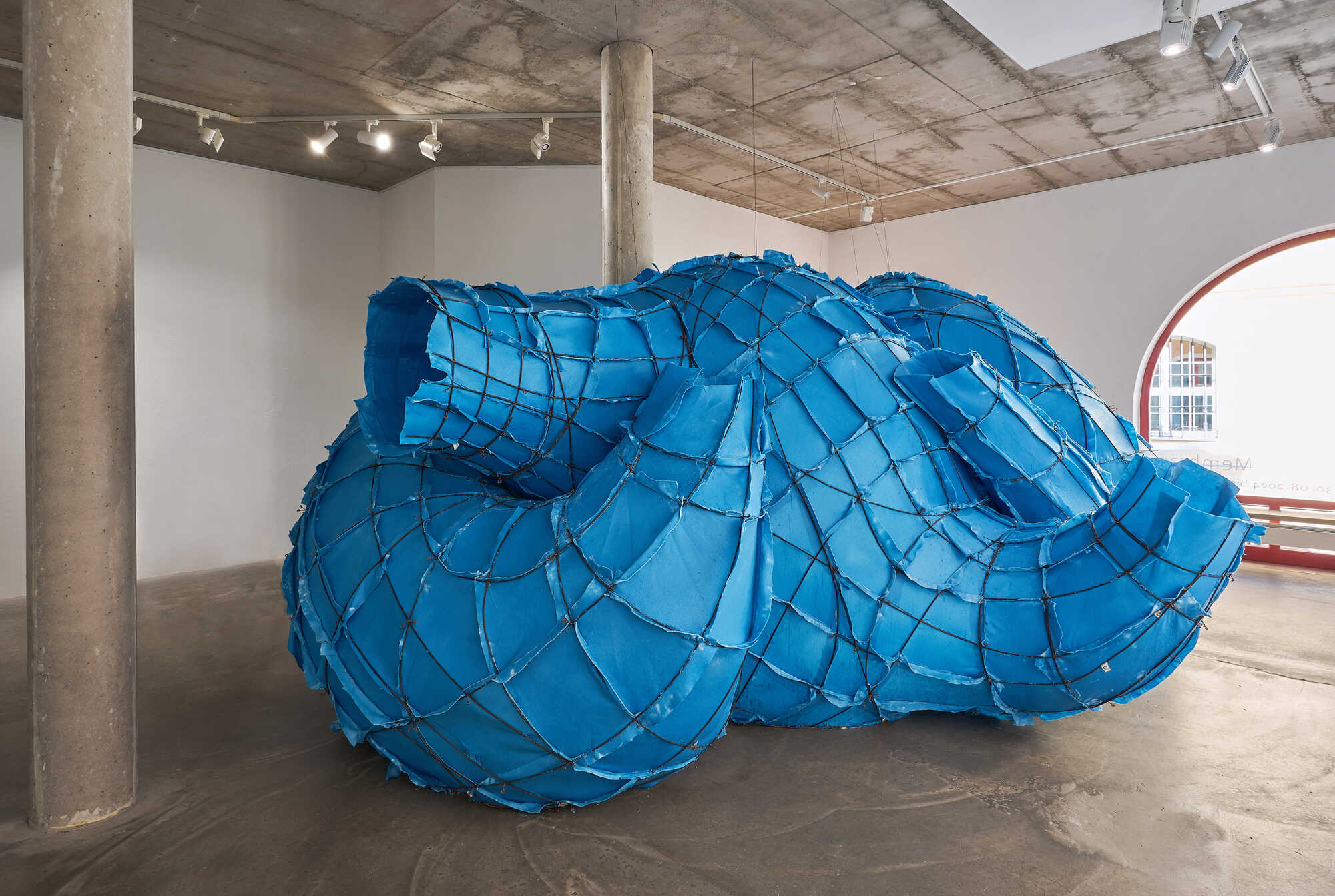
The collective [ materialistin ] echoes Anne Berk’s argument that material is not merely a medium but carries meaning in itself: in Agnes Lammert’s Membran, the material becomes a body-like shell – elastic, vulnerable, fraught with tension. At the same time, Agnes Lammert’s work mirrors Anne Berk’s exploration of our relationship towards nature: water as a medium, the body as part of an ecological system that defies control. The boundary between human and environment becomes permeable.
Sophie Uchman’s minimalist setting Aufrichtig (Upright), transforms an industrial slab into an almost organic gesture; the material “behaves“ itself. Wibke Rahn’s entropy, in turn, displays material in a state of dissolution as a process, which ties in with Anne Berk’s observation that materials are imbued with symbolic significance and open up additional layers of meaning.
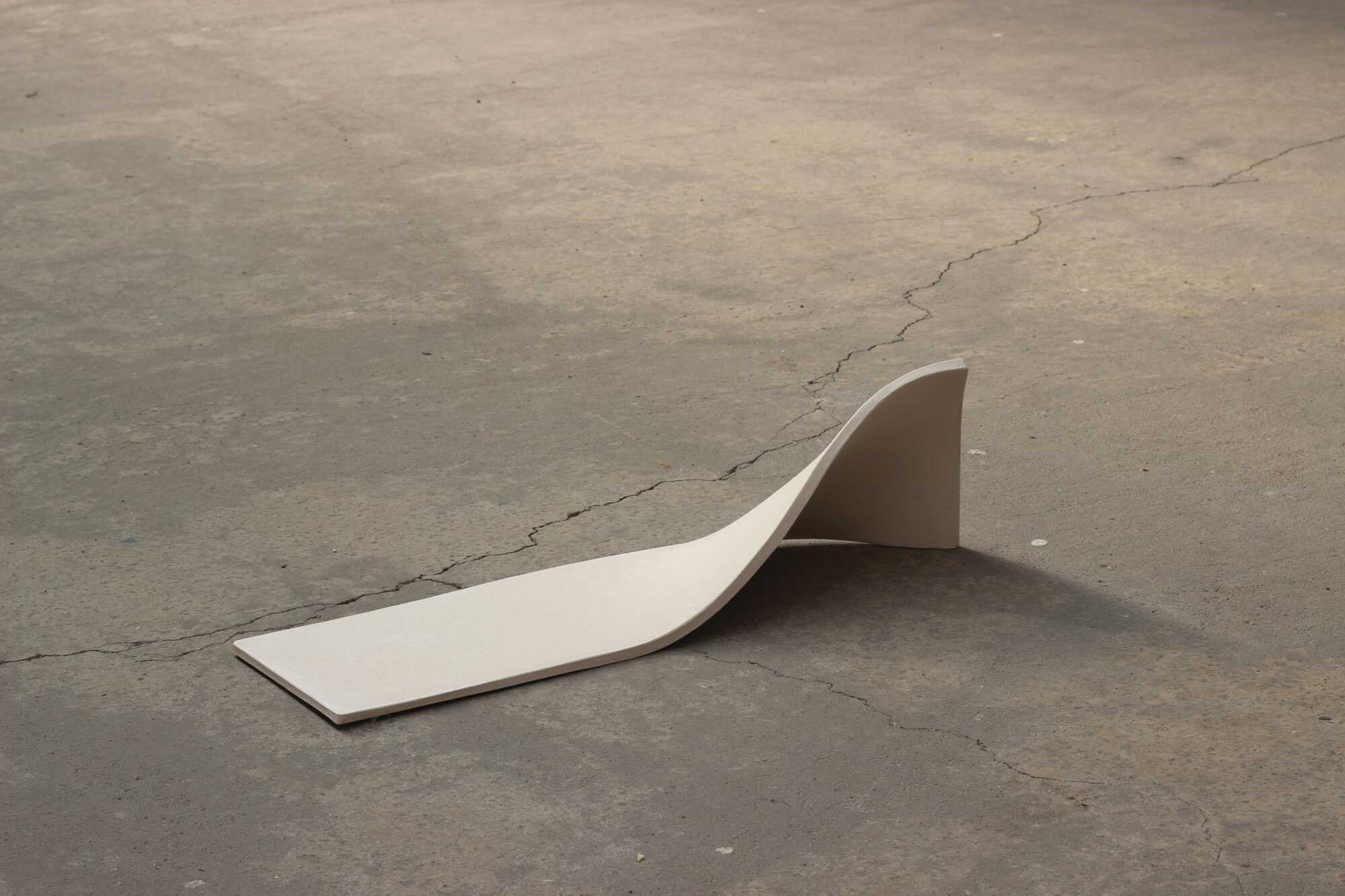
Neither these material-based artworks nor Shilpa Gupta’s TRUTH functions as a monument in the classical sense of sculpture: they eschew height, pathos and the unambiguousness of a dictated interpretation; they are instead horizontal, fragile settings, some of which may be entered or traversed or are of a situational nature.
Olafur Eliasson’s work (see above) shifts the focus from the depicted body to embodied perception. Colour, light and reflection create an unstable visual space in which the body itself becomes a measuring instrument. The “body“ becomes a condition for the experience.
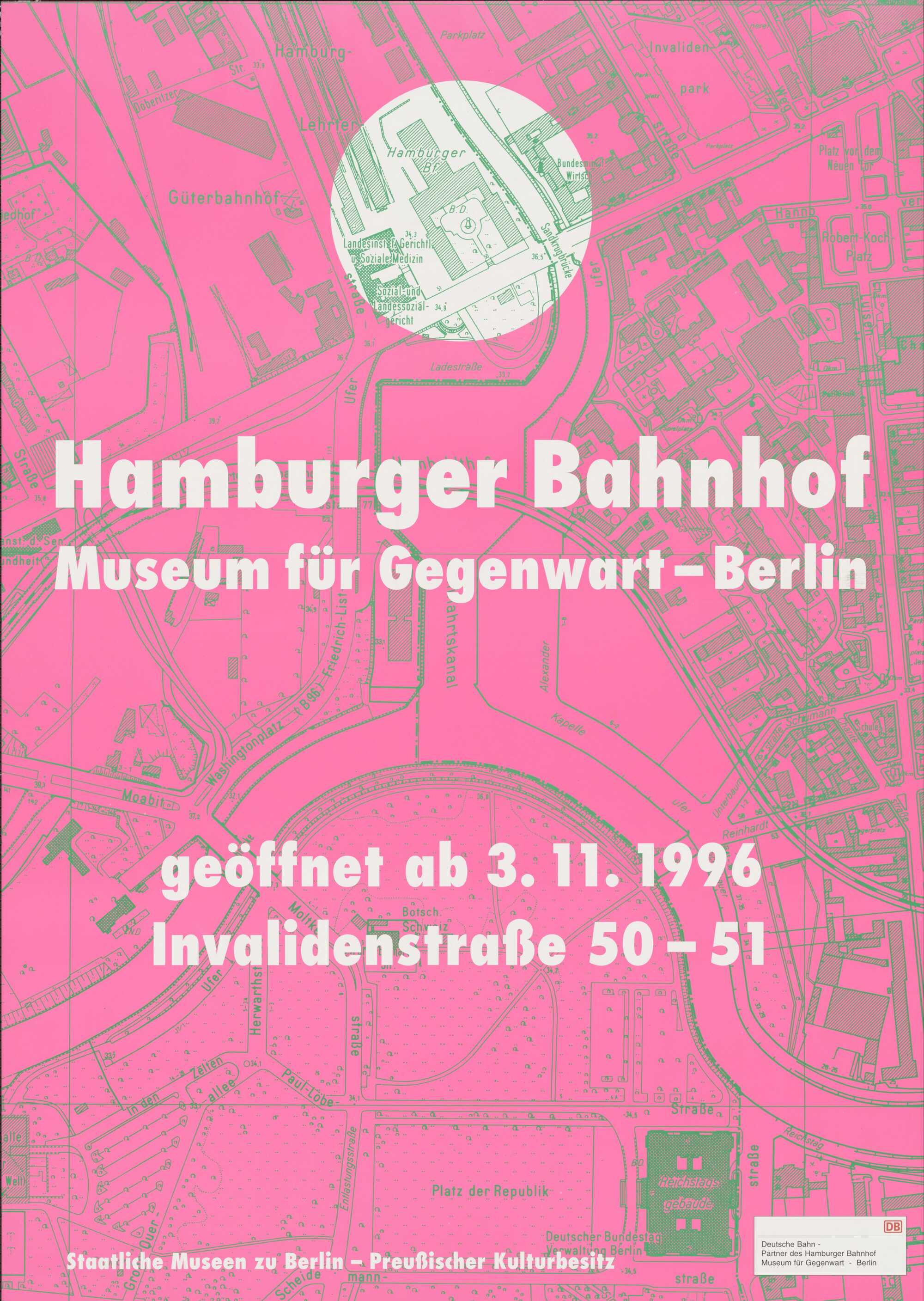
Since its opening in 1996, the Hamburger Bahnhof – Nationalgalerie der Gegenwart has established itself as one of Berlin’s key venues for contemporary art – a museum that reflects not only its own history but also the conditions under which art is created and perceived today. To mark its 30th anniversary, this vision is reflected in a programme comprising eight special exhibitions, a newly curated presentation of the permanent collection starting from 1989, and a wide-ranging public programme that deliberately reaches out into the urban space with over a thousand guided tours and events.
The focus lies less on an anniversary in a retrospective sense and more on the question of how a museum may be understood as an open, interconnected and discursive structure: as a space for dialogue, collaboration and collective practice. Accordingly, the Crossroads# series extends the programme to interdisciplinary projects spanning art, literature, theatre and music.
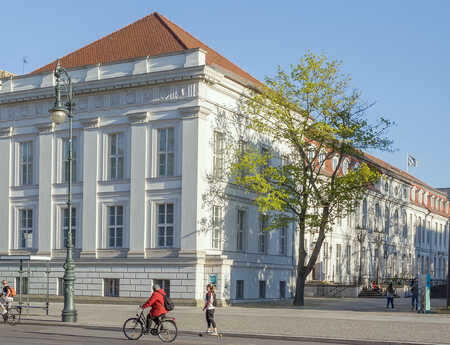
In terms of architecture, the Hamburger Bahnhof unfolds as an ensemble of different types of space. At its heart lies the historic station concourse: a space that accommodates large-scale, spacious installations and sculptures. Works such as Lee Bul‘s Crash (2018), Hito Steyerl‘s I Will Survive (2022), Eva Fàbregas’ Devouring Lovers (2023), Mark Bradford‘s Keep Walking (2024), Andrea Pichl‘s Values of Economy (2025) or Shilpa Gupta‘s What Still Holds (2026) make use of this architectural openness as a resonance chamber. Adjacent rooms of smaller, classically proportioned spaces allow for a more focused presentation of specific groups of works.
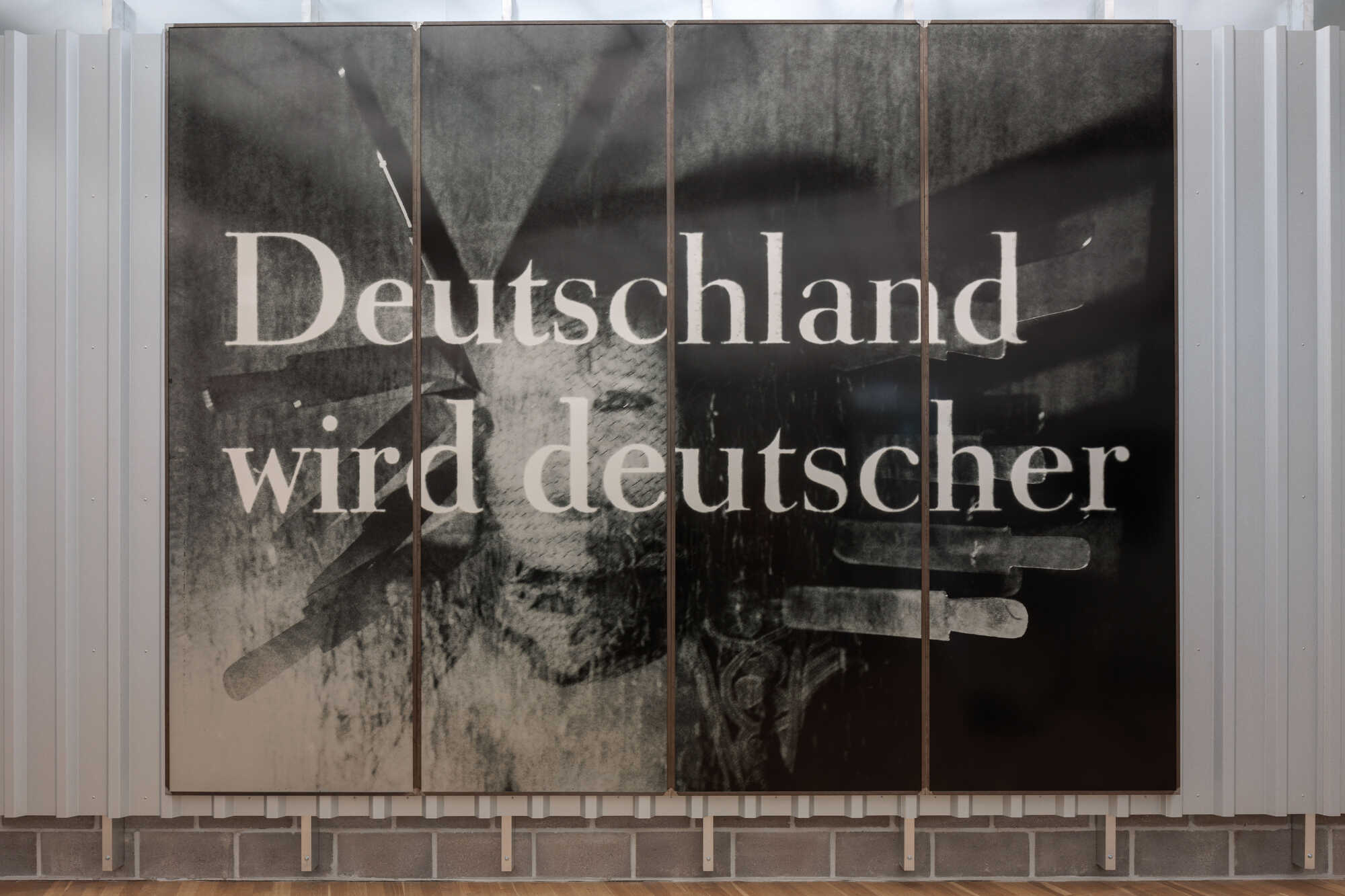
A major turning point was marked in 2018 by the exhibition Hello World. Revision of a Collection, which re-examined the holdings of the National Gallery within the Prussian Cultural Heritage Foundation from a more sensitised perspective and drew attention to previously marginalised positions. As a result, it became apparent that such systemic imbalances in historically grown collections could not be rectified in the short term but required long-term shifts in acquisition policy, research and presentation. Hello World thus remains a point of reference for current discourse on collections to this day.
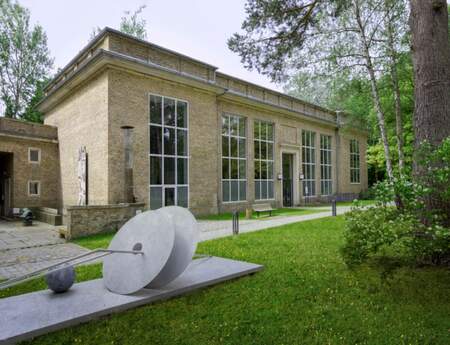
The Rieckhallen – long, narrow industrial buildings situated at the rear – form a significant extension to the museum. In the 2000s, the halls served as workspace and showroom; artists such as Olafur Eliasson, Thomas Demand and Tomás Saraceno worked here in close proximity to the visiting public. This intertwining of art production and presentation defined the venue but was scaled back in the 2010s. With formats such as Studio Rieckhallen, artists like Tacita Dean and Henrik Håkansson are now choosing to return to this context and to reconnect with the venue's productive history.
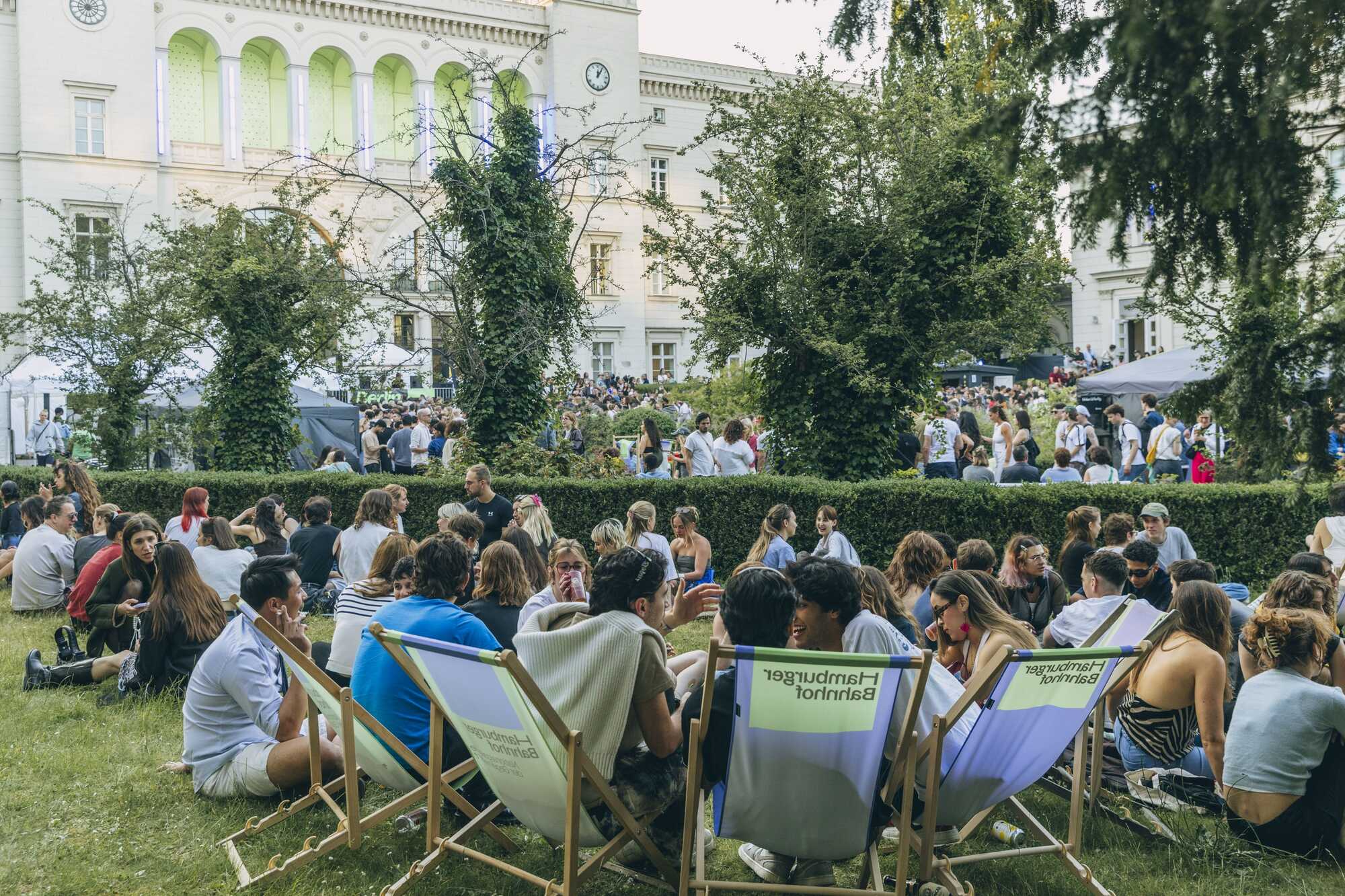
It's also worth visiting the museum more often this year for its formats beyond the exhibitions: the open-air series Berlin Beats has been transforming the museum garden into a social and performative space since 2023. During the anniversary weekend in November 2026, an international conference will explore questions regarding the institution’s future, alongside a 30-hour opening of the museum. In addition, from autumn onwards, a digital platform will make the museum’s discursive content freely accessible, adding a virtual dimension to the physical space. The Hamburger Bahnhof presents itself as both an exhibition venue and a dynamic entity which, alongside the presentation of art, creates a space that keeps art in motion through dialogue.
Within the broader context of this year’s International Forum of Sculpture Network, the museum’s programme ties in brilliantly with the current discourse on the return of the human figure, as articulated by Anne Berk.
This article was written in German by Jana Noritsch.
About the author
Jana Noritsch
Jana Noritsch is a freelance author who has been working at the intersection of artwork, archives, and collections for nearly 20 years.
Translation

Sybille Hayek
Sybille Hayek is an editor and translator. Since 2022 she has been supporting our team on a voluntary basis with her trained eye for detail and a great love of language.