24–25 February 2022, STADT.KUNST Herten as part of Stadtbesetzung 2021
Juggling: Stefan Sing
Concept: Katrin Wegemann
Introductory remarks: Mareike Donath
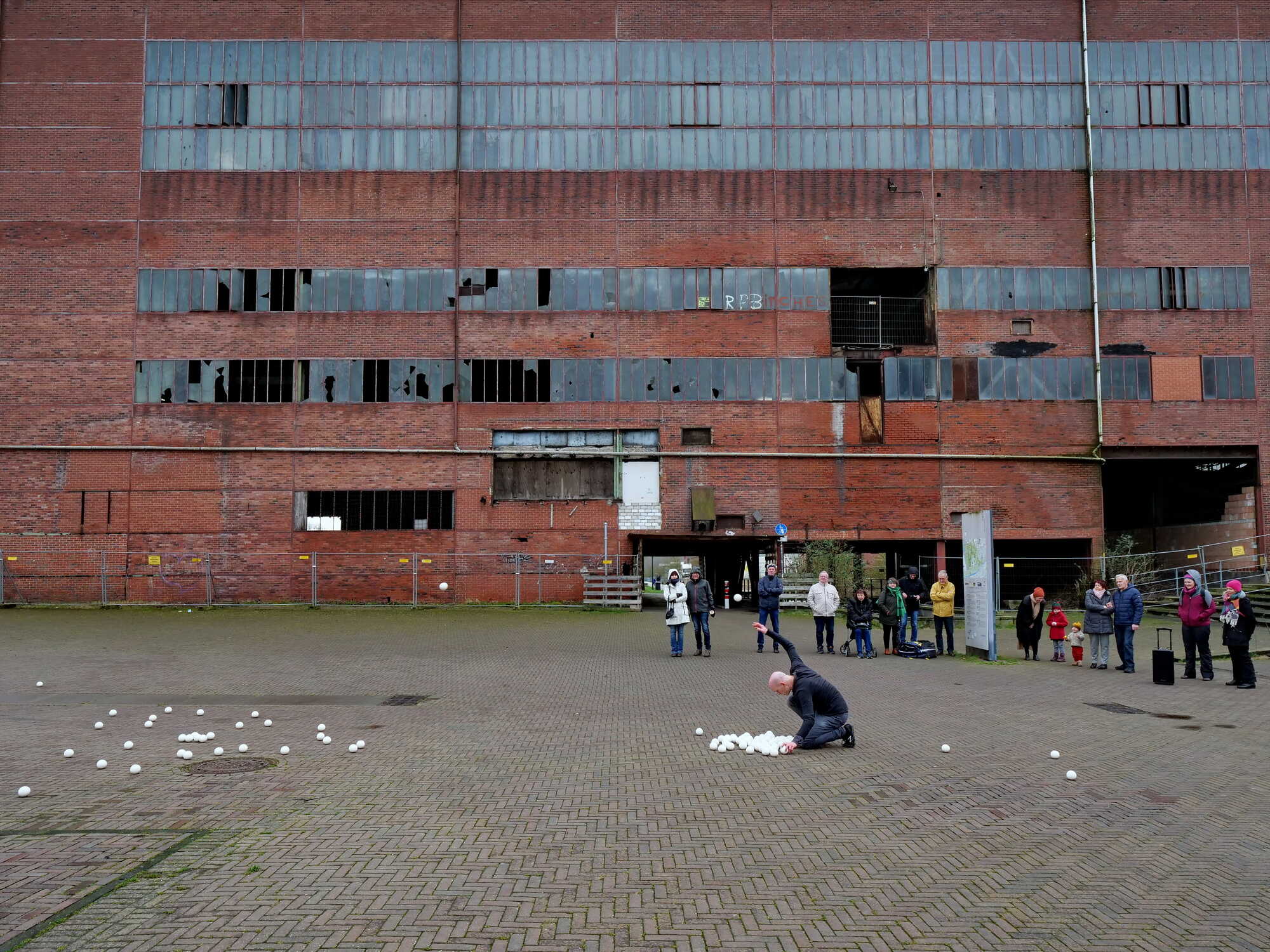
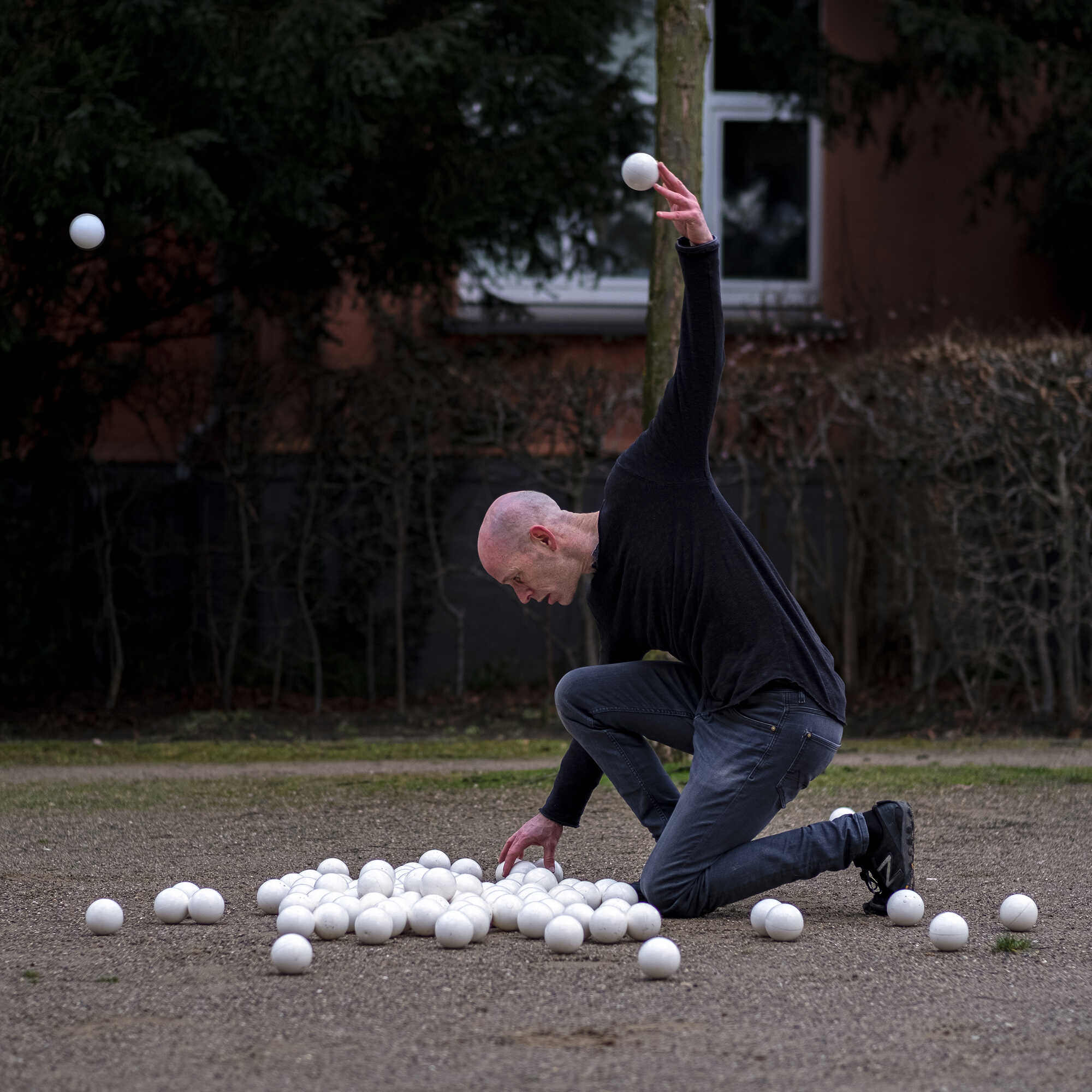
“Rethinking. Climate Change – Cultural Change.” The juggling artist Stefan Sing set artistic accents on this subject, with Urban Juggling at five locations in Herten. Art does not only take place in museums, but also in public space and everyday life. Sing‘s performance always adapted to the locations and the existing conditions, and metaphorically dealt with climate and cultural change.
The five locations encouraged people to rethink climate and cultural change in a variety of ways. The artistic interventions made it possible for the public to experience familiar urban space in a new way, and to engage directly with the issues raised by climate and cultural change. The connecting element of the five locations is the mining tradition and the reactivation of these areas – also with regard to climate and cultural change. This was addressed by Stefan Sing’s three-part juggling performance at all the locations.
Stefan Sing is a contemporary ball juggler who has been developing his unique style solo since 1985, as well as in various contemporary circus projects.
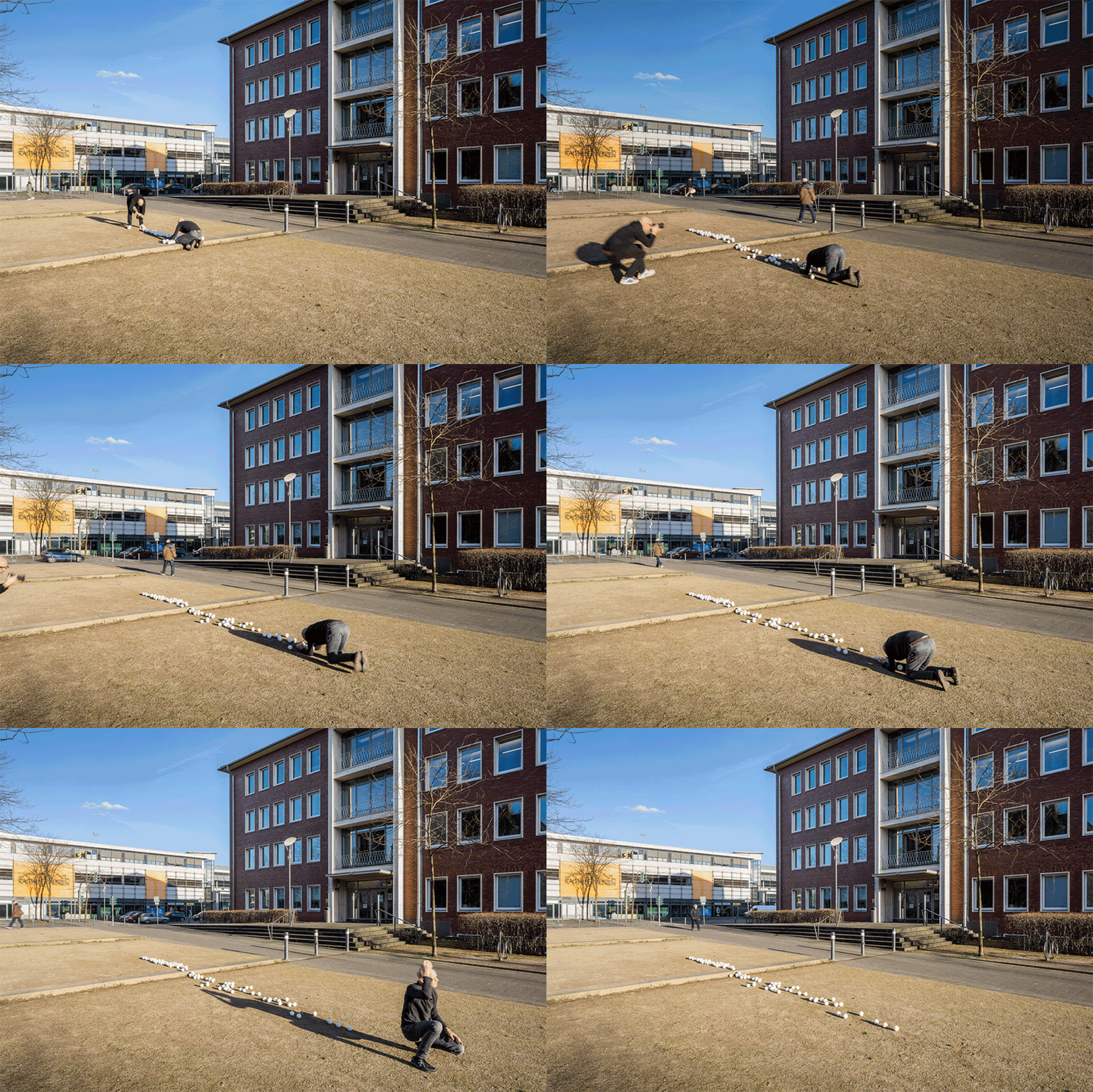
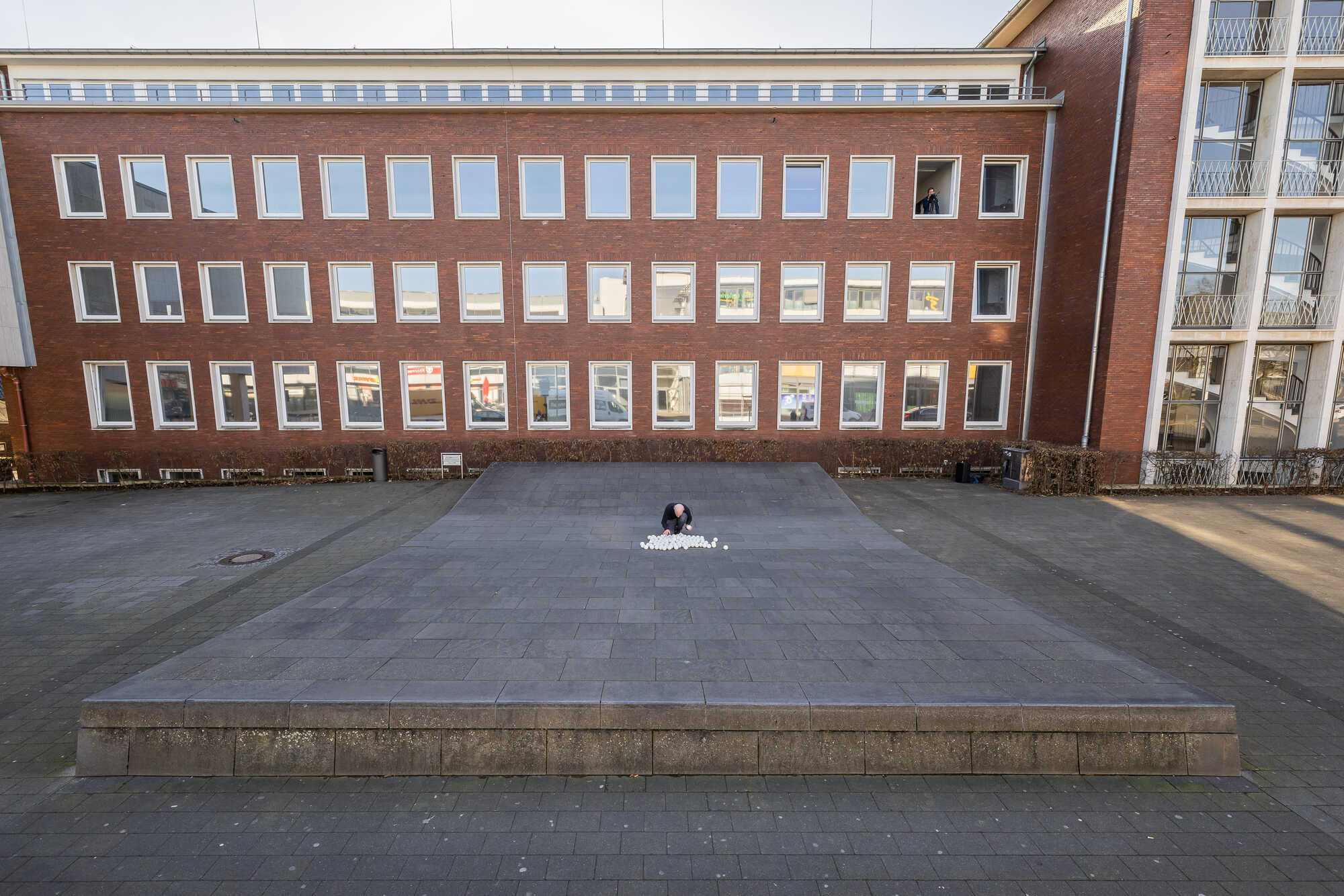
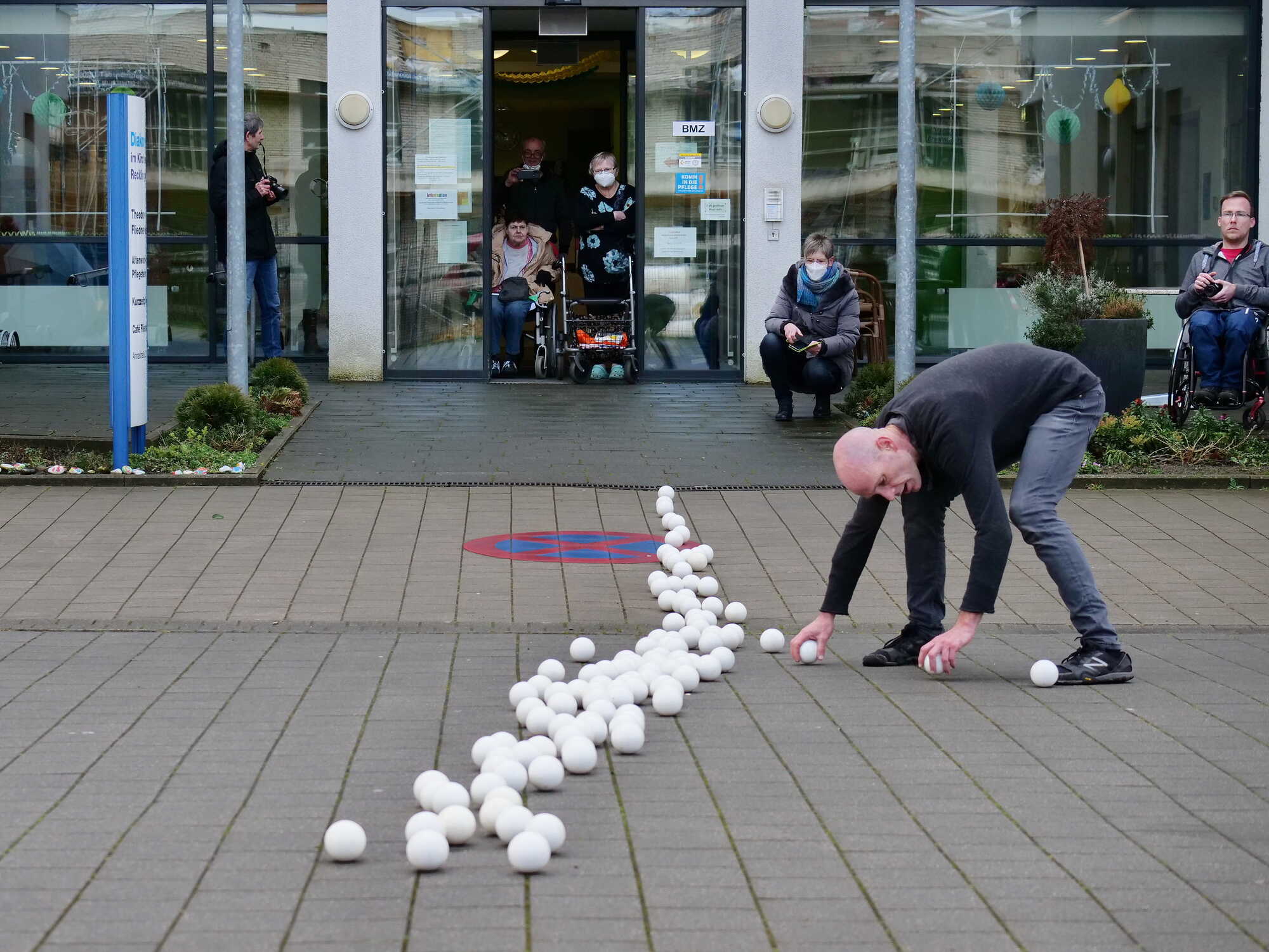
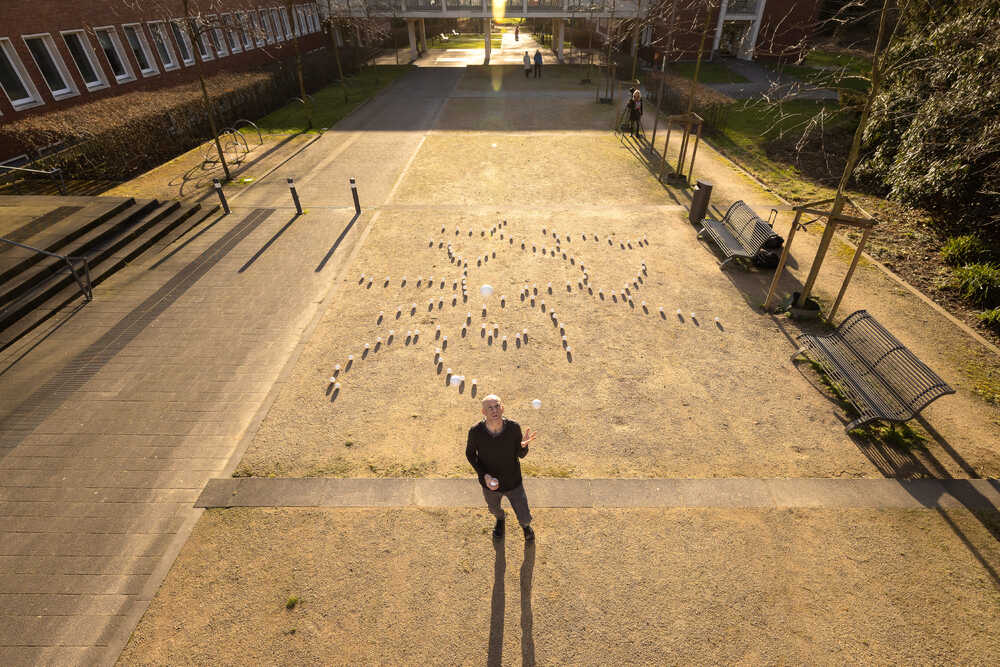
In Herten 120 balls experienced standstill, movement, acceleration, and deceleration and became a time-based sculpture. Beginning with square machine-like movements, a transformation process took place in the second part, which culminated in extravagant organic movements.
Starting from the Schlägel & Eisen Westerholt and Ewald coal mines, the connecting element of the five locations is the mining tradition and the reactivation of these areas – also with regard to climate and cultural change. This was addressed by Stefan Sing’s three-part juggling performance at all the locations. Idea and conception go back to Katrin Wegemann and the initiative STADT.KUNST Herten.
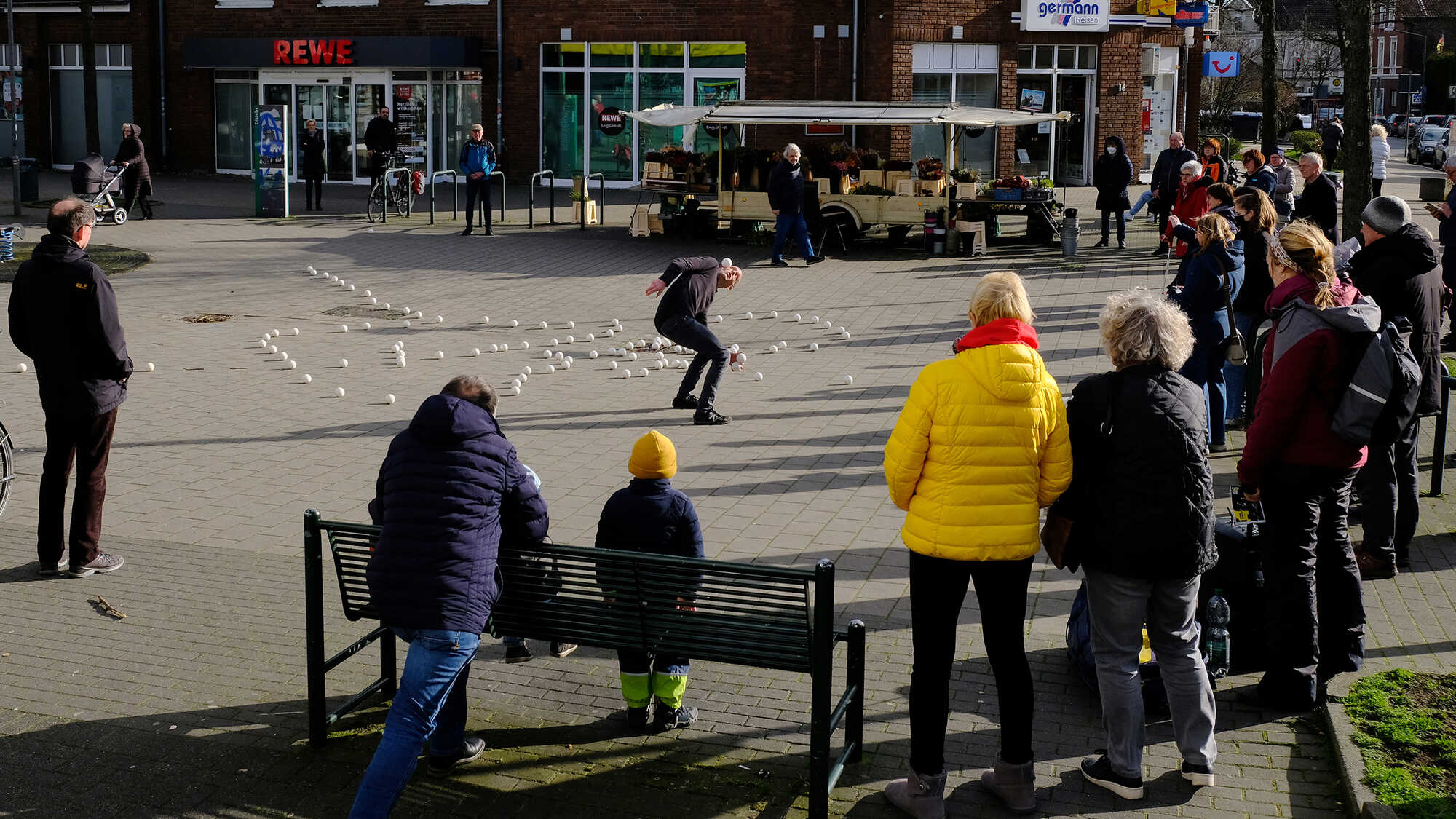
The first location was the marketplace in Disteln. It was once part of the Schlägel & Eisen coal mine, which consisted of four pits with a total of eight shafts. Coal mining began in Disteln in 1877 on the site of pit I / II. This was where the performance began and the cultural change is evident, where a new industrial area has been created after the demolition of the old facilities. Beginning on the Disteln market square, Stefan Sing led the audience into a small park-like area with the remains of the Disteln dump. At the highest point the ridge widens into a small triangular plateau, allowing a view of the neighborhood as well as the Hoheward dump.
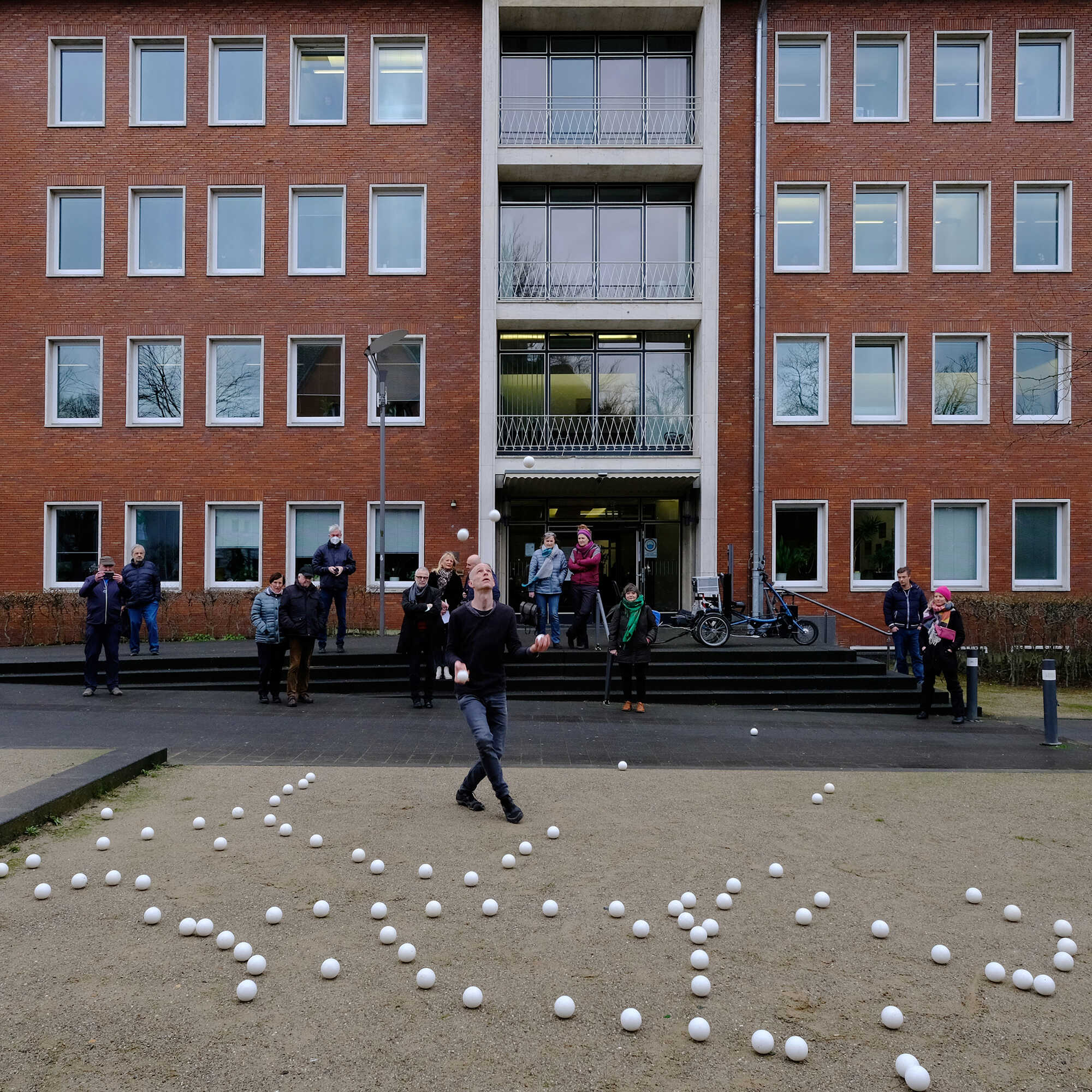
The second venue was another former Schlägel & Eisen mine. The first coal was mined at the V / VI pit in 1901. Here the cultural transformation involves reactivating the former buildings and areas. Part the former dump and some buildings, including the machine hall, still exist. The Gertrudenau residential and old people’s home in Scherlebeck was the setting here, in keeping with a central aspect of the “urban occupation”: the audience doesn’t always have to come to the art. It also works the other way around: the project brought art directly to the people. Stefan Sing first performed in the entrance area, before the performance continued towards the inner courtyard.
At the Theodor-Fliedner-Haus, also close to the Westerholt colliery and a freight-traffic axis, art was similarly be brought to where people live and work.
At Rathausplatz/Otto-Wels-Platz in Herten-Mitte the focus is on the connection between the old and the new. The oldest part of the city, the castle and the castle park, borders on the modern inner-city center here. In 2005 the two-part ground-level sculpture Bodenflügel [Ground Wing], by Dorothee Bielfeld, made this special connection visually. The artwork virtually bridges Kurt-Schumacher-Straße, which crosses the squares and separates the “city axis” and the “park axis.” The Baumtreppe [Tree Stairs], by wbp landscape architects, now links these two elements and leads directly into the castle park, which has only been open to the public since the 1970s.
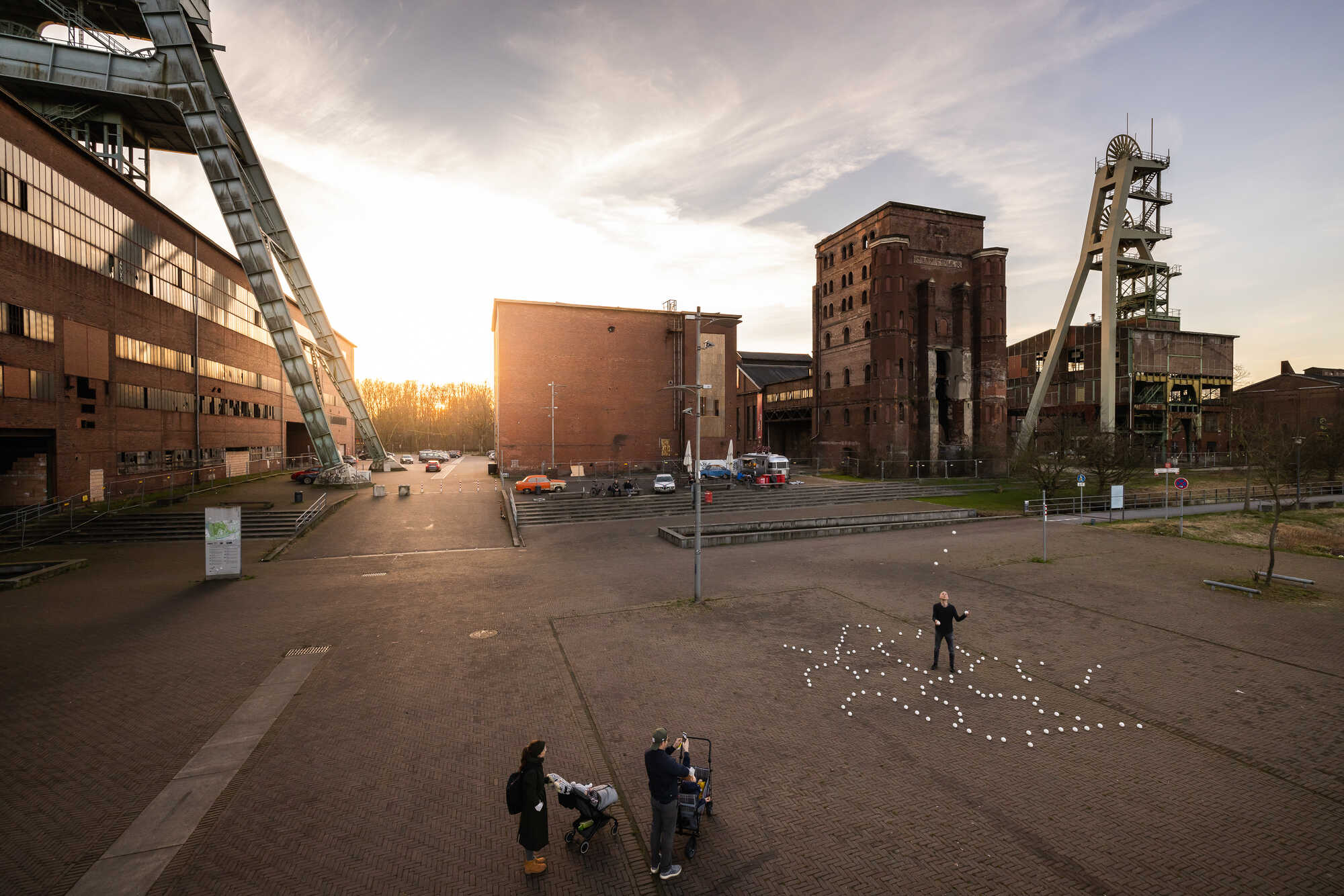
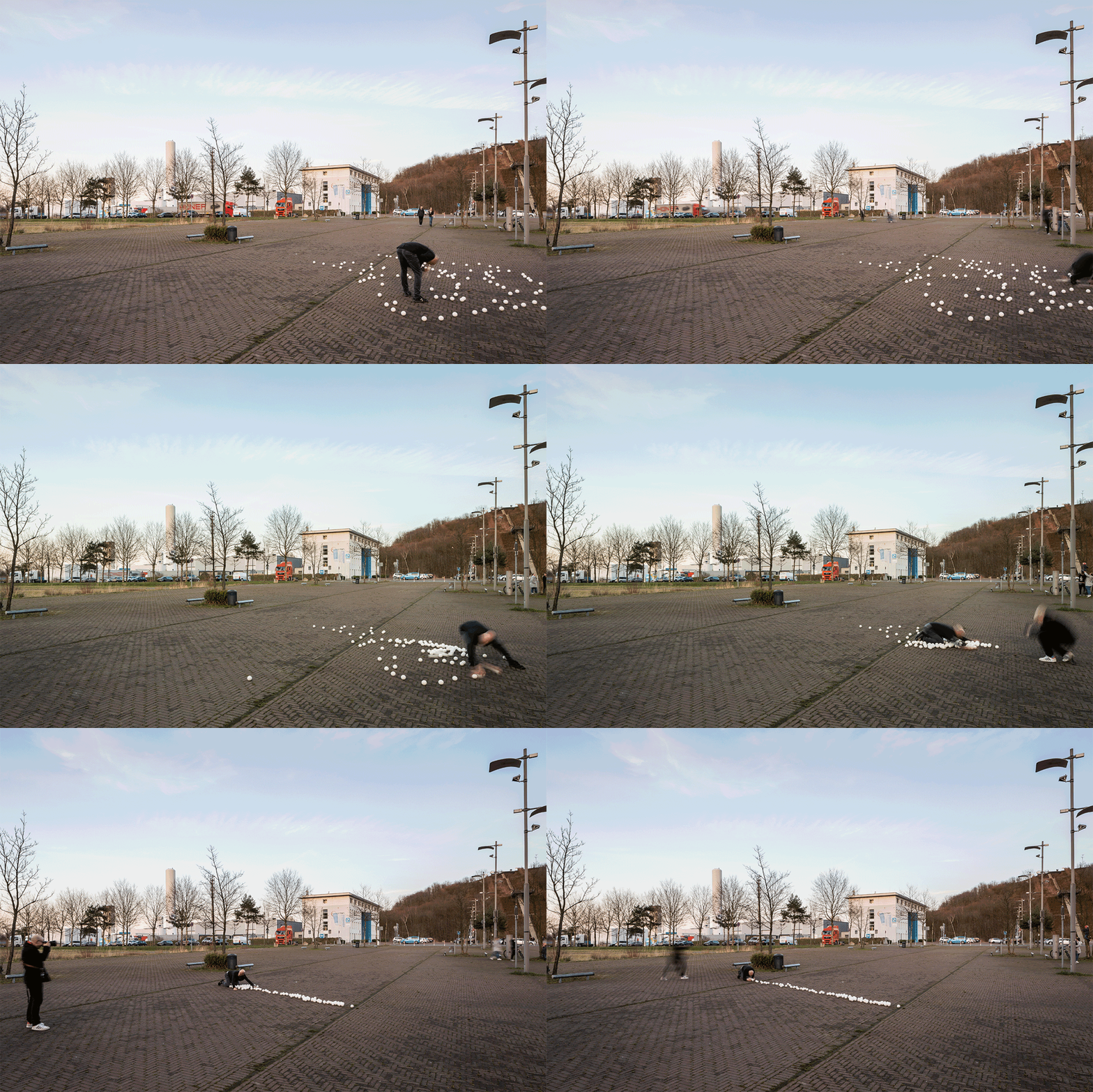
The final point was the Ewald colliery in Herten Süd, which is known beyond the city limits. Here Stefan Sing began his performance below the double-headed tower on Doncasterplatz and moved towards the top of the former dump. The old mine has developed into an important future location. The arrival of the artist at the Hydrogen Competence Center stood impressively for the rethinking and the change from the old to the new energy.
Stefan Sing showed the three-part Urban Juggling at all locations. His performance always adapted to the locations and the existing conditions, and metaphorically dealt with climate and cultural change. Beginning with square machine-like movements, a transformation process took place in the second part, which culminated in extravagant organic movements.
Stefan Sing is a contemporary ball juggler who has been developing his unique style solo since 1985, as well as in various contemporary circus projects.
He himself and his skills take a back seat. Sing always uses juggling and the movement of the balls as a language. His performances are very minimalistic and pure. 120 balls experienced standstill, movement, acceleration, and deceleration and became a time-based sculpture. The 20-minute piece was characterized by dance, acrobatics, and nouveau cirque, choreographed with high precision, perfect juggling technique, and offbeat movements. At each place a sitespecific 20 minute piece was shown.