Tomás Saraceno: Ancestral Futures

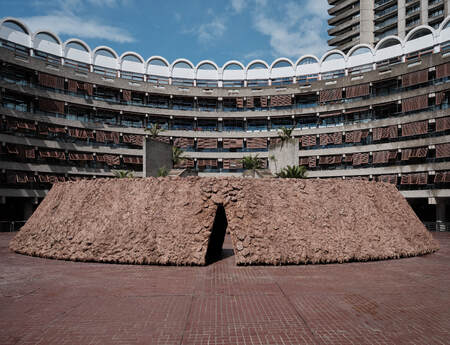
Water connects lands that might otherwise seem impossibly distant. In the exhibition Ancestral Futures at Haus der Kunst in Munich, Tomás Saraceno traces the connection between the water flowing through the nearby Isar in Munich to the Salinas Grandes, the salt flats of northern Argentina.
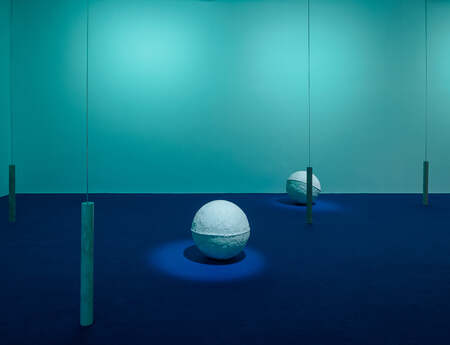
The Salinas Grandes is increasingly targeted for lithium extraction in the name of the “green energy transition”. This ancestral territory has been co-opted by the promise of a technological future in opposition to the Indigenous knowledge and stewardship that have sustained life here for generations. Through monumental sculptural installations and a new land-art commission developed in collaboration with the Indigenous communities of Red Atacama, Saraceno raises urgent questions about the costs of the so-called green transition. Together, these works propose alternative ways of inhabiting the Earth. One that does not rely on the promise of technological innovation but instead looks to ancestral knowledge as history and future.
The exhibition opens with Weaving with Red Atacama (2026), a communal daybed occupying much of the gallery floor. Upholstered with colourful woven blankets made from sheep and llama wool and dyed with pigments derived from the surrounding landscape. The textiles carry patterns and stories rooted in everyday life in the Salinas Grandes. Visitors are invited to sit, rest and read, encountering the exhibition publication.
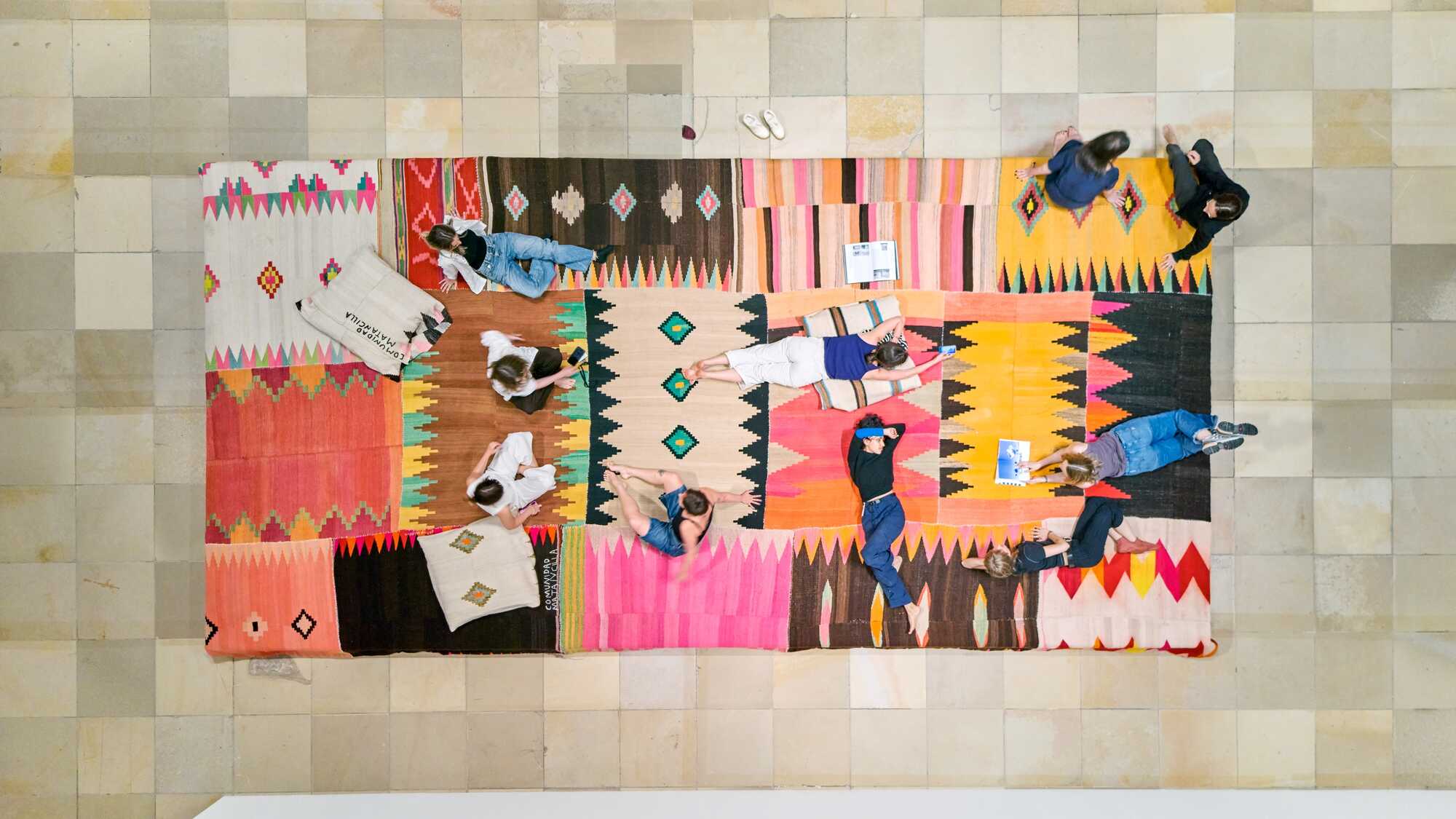
The daybed establishes the gallery as a space for gathering rest and exchange. This is a crucial point of departure for the exhibition, as it reinforces that the Indigenous communities involved are not simply the subjects of Saraceno’s environmental concerns but collaborators whose knowledge, practices and political struggles foreground many of the artworks to follow.
In the Ostgalerie, visitors are enveloped in an expansive dark landscape titled Towards the Sanctuary of Water (2026). Saraceno’s signature planet-like sculptures are suspended over a shallow pool of water that occupies most of the gallery floor. Their reflections multiply across the water’s surface to create the illusion of planetary bodies suspended in space. Geometric projections shift across the walls, evoking a solar eclipse, while enlarged images of spiderwebs emerge from the surrounding darkness. Sounds resembling cracking wood and falling droplets punctuate an ambient score. Familiar elements of the natural world become strange through exaggeration and scale, leaving visitors momentarily disoriented within a landscape that seems at once recognisable and otherworldly. The diasporic aesthetic elements combined create a complex and interdependent environment that is reflective of the planet we inhabit.
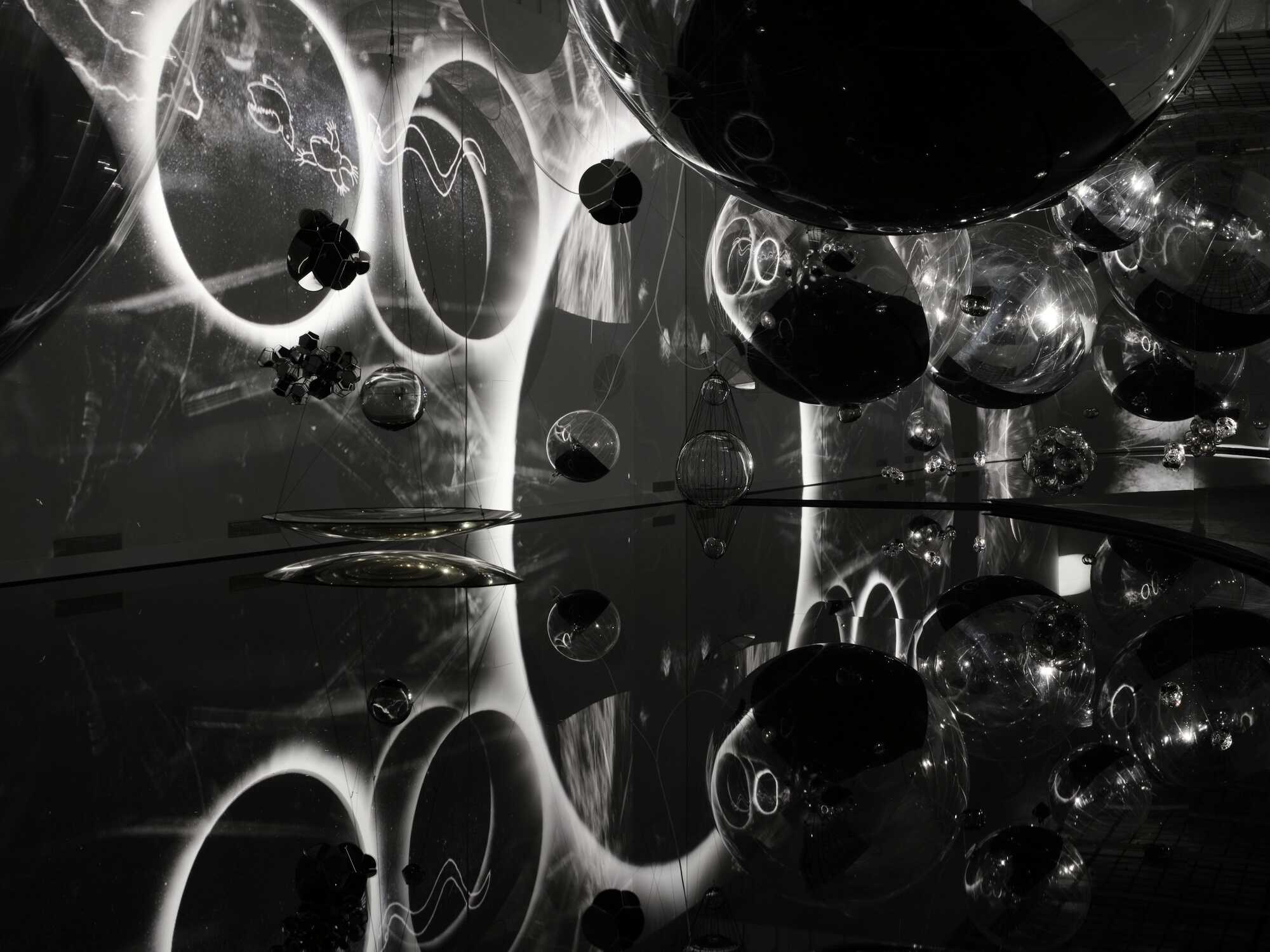
The installation’s significance extends beyond its sensory spectacle. Its title points towards the exhibition's most significant artwork, The Sanctuary of Water. Currently being constructed in the Salinas Grandes, the new permanent land-art project has been developed in close collaboration with Red Atacama. The Sanctuary of Water functions as a monument to water, a protection zone, and a site that orients towards futures that sustain the communities defending it.
The Sanctuary of Water centres around four large cylindrical mounds known as “Apachetas”. Apachetas are traditional Andean mounds often made from stone that have long been used to mark mountain paths as places of offering, gratitude and safe passage. Apachetas are built over time to form a collective monument of memory, care and reciprocity. In The Sanctuary of Water, these forms are reimagined at a monumental scale, built from locally harvested salt. Constructed together and over time, this artwork's significance lies in its collective making rather than its final form.
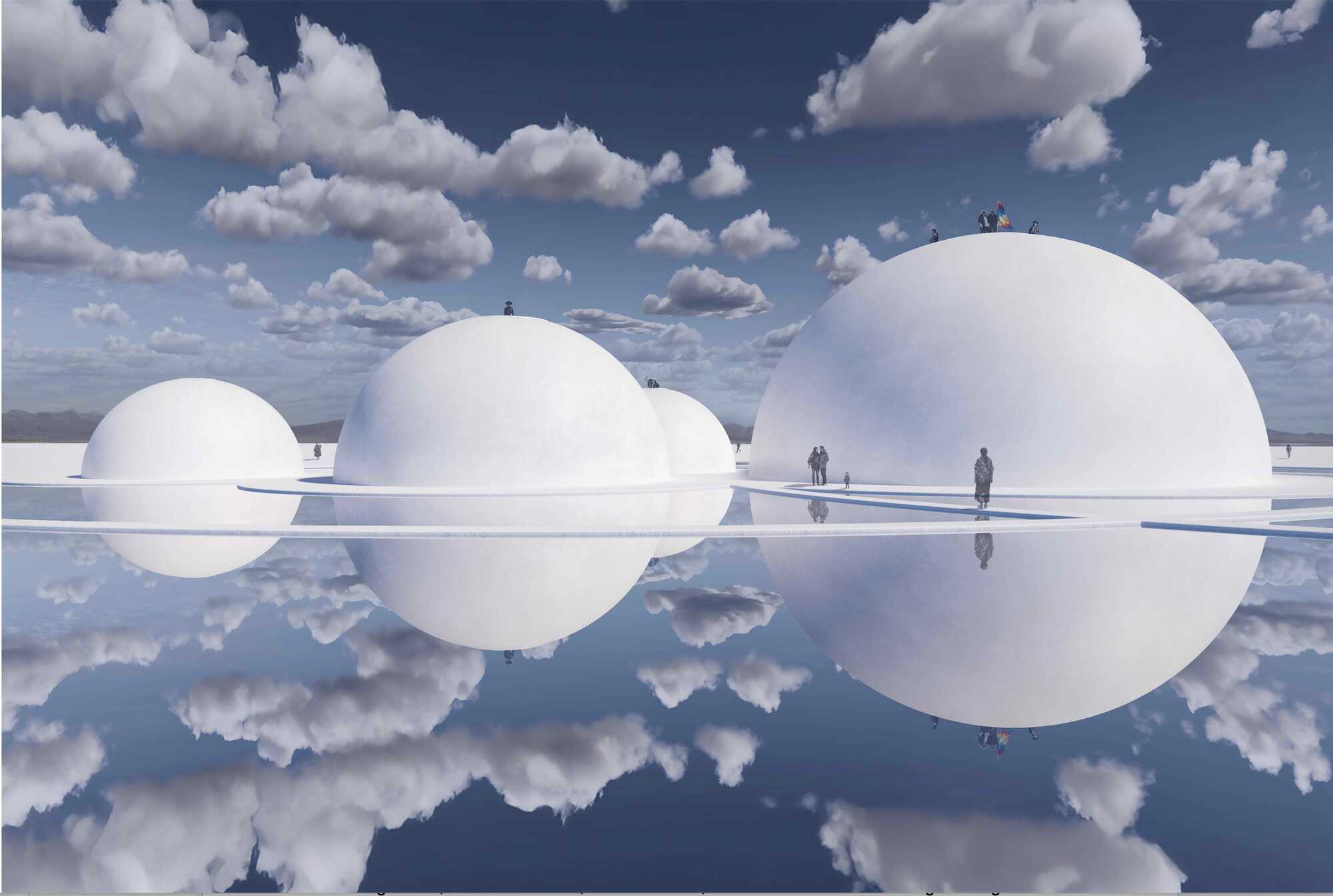
The artwork exists simultaneously as architecture, sculpture, monument, activism and land art. Its refusal to be categorised is precisely its strength. The Sanctuary of Water is a living entity, inseparable from the territory in which it is situated. It holds both memory and future. Here, Saraceno functions less as an individual artist than as a facilitator, with his artistic practice becoming a framework through which the Indigenous communities of Red Atacama can resist the extraction of resources from their ancestral territories while honouring the land and water that have sustained them for generations.
Although far from Haus der Kunst, the impact of this project permeates the exhibition. Further galleries present the extensive research and development behind the work, while video installations document Saraceno’s ongoing collaboration with Red Atacama. Images of the artwork’s construction are displayed and updated regularly throughout the exhibition. These gestures make visible the labour, knowledge and collective commitment that extend far beyond the work of a single artist. In doing so, the exhibition challenges the assumption that the future must be secured through technological innovation alone. It suggests instead that other futures are possible, if they are imagined and realised together.
Saraceno has long explored the relationships between human and non-human life, combining art, architecture and science to imagine alternative forms of coexistence. Ancestral Futures reminds us that the ecological crises of one place cannot be separated from the futures of another. The Sanctuary of Water extends this proposition beyond the gallery, transforming sculpture from an object of contemplation into a collective act of care, resistance and remembrance. In doing so, Saraceno and Red Atacama challenge the assumption that a sustainable future can be secured through technological progress alone. Perhaps the future does not need to be invented anew, but recognised in the ancestral knowledge, collective practices and relationships with the Earth that have sustained life for generations.
Haus der Kunst Munich
Tomás Saraceno in collaboration. Ancestral Futures
17 July 2026 – 7 February 2027
Myfanwy Halton wrote this article in English.
About the author
Myfanwy Halton
Myfanwy Halton is a writer and producer from Australia and is based in Munich.
Translation

Sybille Hayek
Sybille Hayek is an editor and translator. Since 2022 she has been supporting our team on a voluntary basis with her trained eye for detail and a great love of language.