Between colonial heritage and new labels

The Museum für Kunst und Gewerbe in Hamburg is breaking new ground: the Islamic Art Collection is now called the Southwest Asia and North Africa Collection. By contrast, the Pergamon Museum in Berlin is sticking with the old term. What are the curators’ arguments?
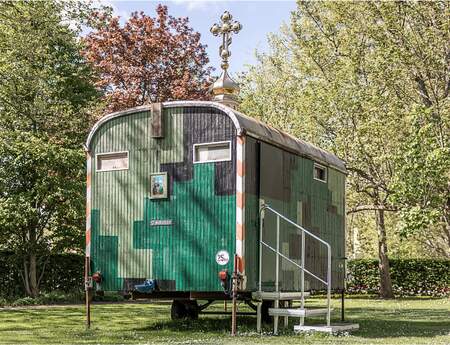
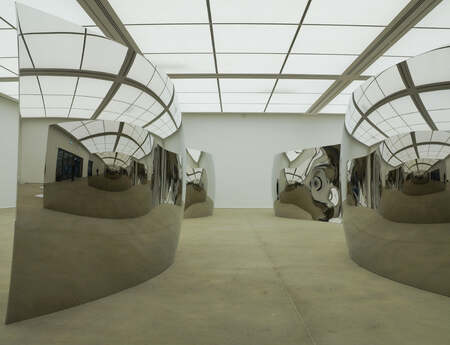
If you cross the road right next to Hamburg Central Station and enter the Museum of Arts and Design, you will come across a glass door on the first floor bearing the acronym SWANA, short for the “Southwest Asia and North Africa” collection.
The MK&G reopened the exhibition under its new name in October 2025, making it the first museum in the world to rename a collection of “Islamic art” as “SWANA”. On display are objects dating from the advent of Islam in the 7th century to the present day.
“It is fantastic to see how using this new term is also changing our entire way of thinking,” says Wibke Schrape, who curated the collection exhibition together with Jasmin Holtkötter. With SWANA, they sought to provide the collection with a more neutral name, particularly given that they are increasingly examining the colonial origins of the museum’s holdings.
Much appears in a new light when one steps back from the European perspective, the curators explain, including art-historical terms such as “Orient” and “Arabesques”, both of which only came into being through the European gaze.
Many contemporary artists also did not want their work to be exhibited under the traditional label of “Islamic art”, the curators explain. For when people have a connection to a cultural sphere described as “Islamic”, this means neither that they were brought up as Muslims, nor that they identify with this category culturally, politically or artistically.
“Nobody knows what SWANA means”
A change of scene. Berlin-Mitte, the Pergamon Museum on Museum Island by the River Spree. There, artefacts from West Asia and North Africa are primarily housed in two museums: the Museum of the Ancient Near East, which holds art created before the rise of Islam, and in the Museum of Islamic Art, which contains artefacts from the era of the Islamic dynasties, spanning the 7th to the 19th centuries.
Stefan Weber is the director of the Museum of Islamic Art. By “Islamic”, he does not refer to religious art, but rather to the art of a cultural region. This region extends primarily across Southwest Asia and North Africa, though part of southern Spain was also under Islamic rule for almost 800 years, and India was at times ruled by Muslim sultans and Mughals.
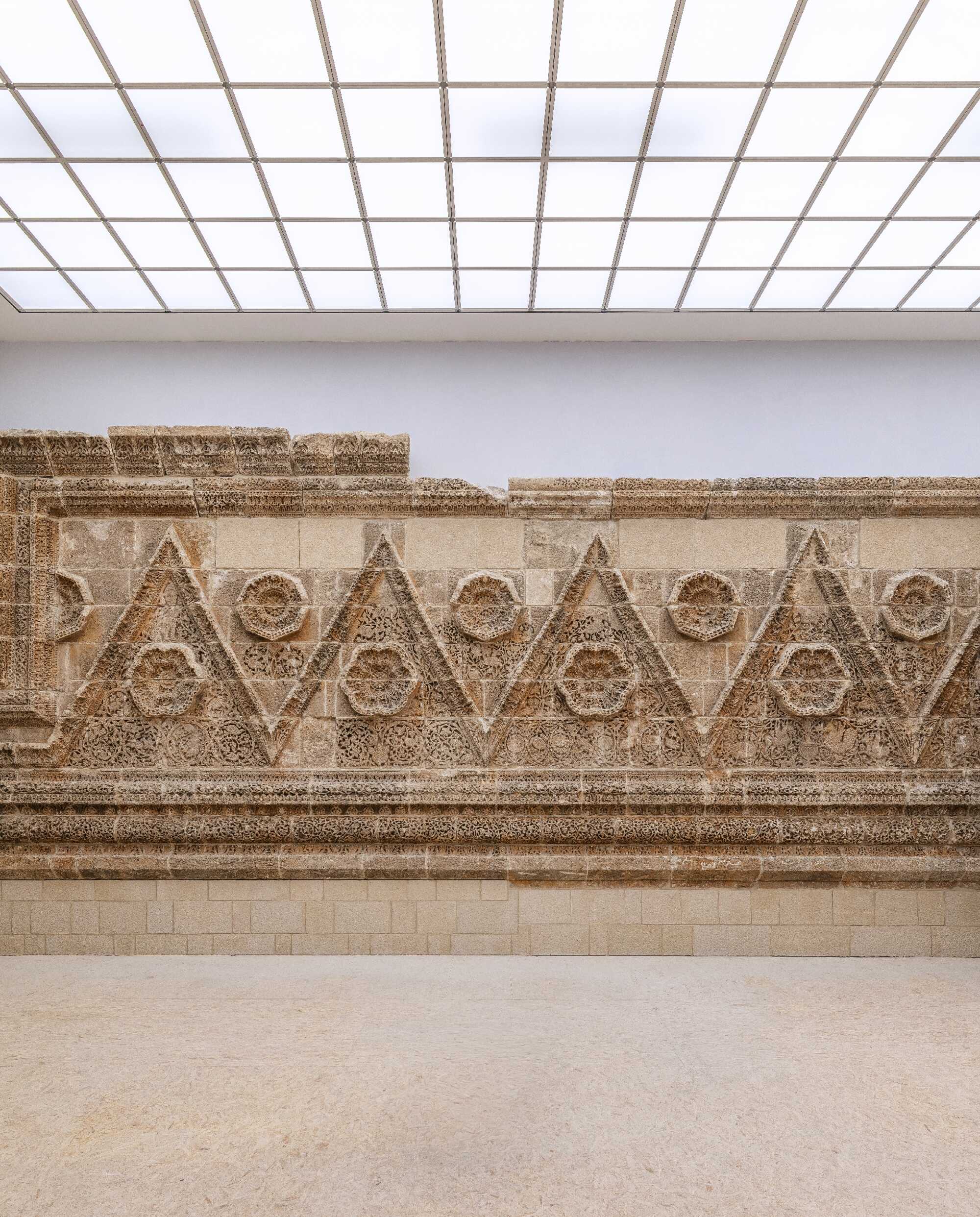
One of the founding exhibits of the collection, dating back to 1904, is the façade of the Mschatta Palace from what is now Jordan. In 1903, the already weakened Ottoman Sultan presented the German Emperor with the five-metre-high and approximately 33-metre-long façade. This gave rise to a question of central importance to the development of the history of Islamic art and culture in Germany: was the 8th-century façade of the palace “late antique” or “early Islamic”? The Kaiser-Friedrich-Museum at the time decided to classify the period as “early Islamic” and thus played a key role in establishing Islamic art as a distinct historical period.
The Pergamon Museum has been undergoing renovation since 2023. In 2027, the Museum of Islamic Art, comprising 26 rooms in the north wing, is set to reopen its doors. In an essay on the new conceptual approach, Director Weber writes, “Migration is the mother of all our cultures; cultural diversity is the prerequisite for progress, and cultural exchange is its driving force.”
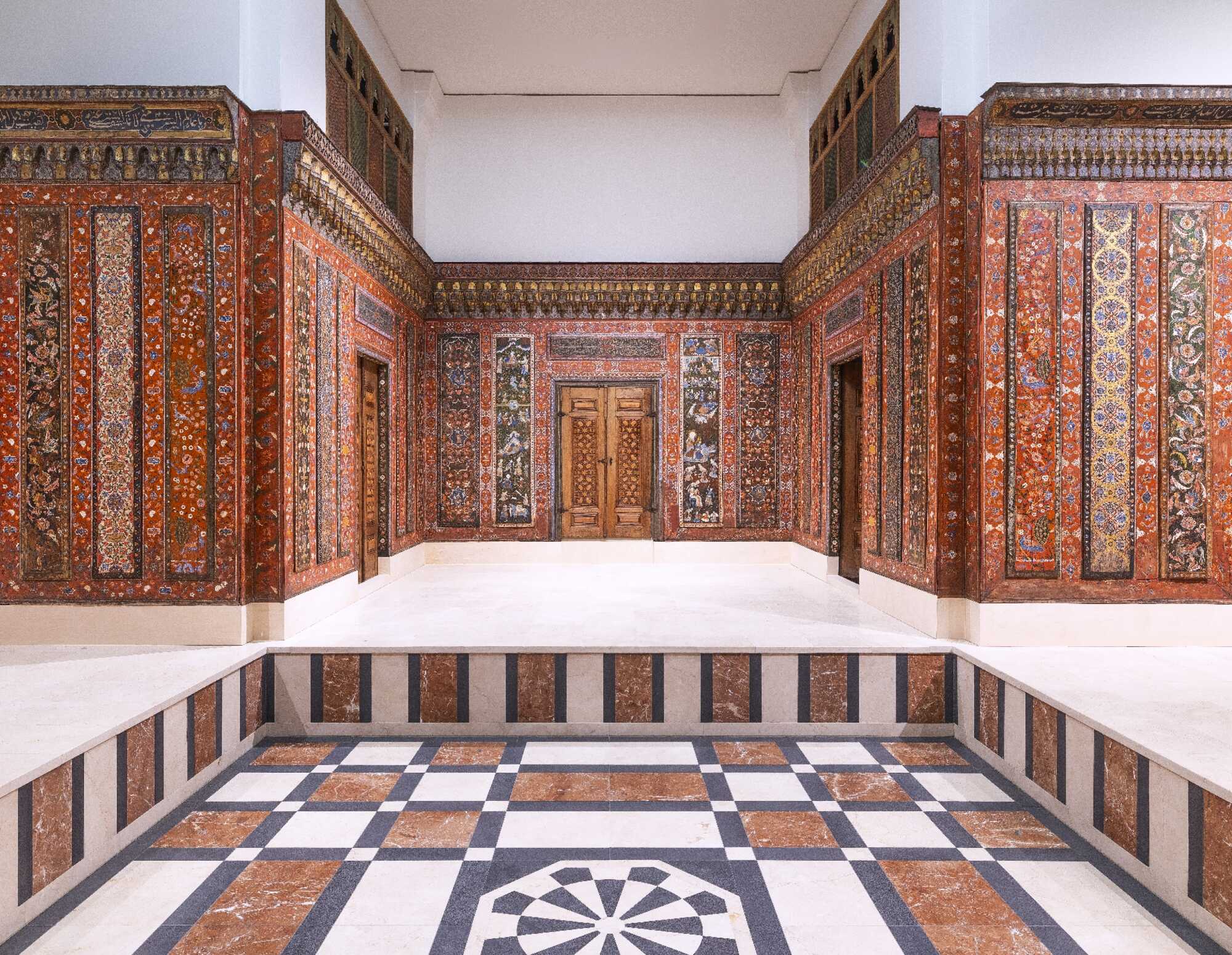
The newly curated exhibition is now set to convey this message: the chronological order remains, but is now organised by historical periods rather than dynasties. Early Islamic art is now displayed more closely alongside Greek, Roman and Byzantine exhibits. Visitors can stroll through a 17th-century reception room from Aleppo whilst being enveloped by the scent of jasmine from a diffuser. In new orientation rooms, visitors can navigate through time and space using animated maps and trace how art treasures – symbolised by arrows or ships – made their way, for example, from Egypt into the church treasuries of European cities.
Weber does not view such transfers of cultural assets as colonial appropriation but rather as cultural exchange. The problem, he argues, lies instead in the structural asymmetry: the fact that, conversely, no art treasures from Europe have found their way into the region. Weber tells the story of a Syrian female visitor who asked in amazement why the Aleppo Room was in Berlin – and gave herself the answer: “But of course, I’m here too.” Another woman was moved to tears because the room in Berlin had been spared from the Syrian war. But it is also true that it was only by a stroke of luck that it survived both world wars unscathed.
The wall panelling in the Aleppo Room was commissioned by a Christian merchant in the Ottoman Empire and depicts Old Testament motifs rendered in Ottoman visual language. Weber is well aware that the term “Islamic art” may be misleading, particularly in cases like this. And yet, upon considering all the alternatives, he stands by it. “Middle East” was also under discussion, as was “West Asia”. Weber, however, argues that “West Asia” would be yet another foreign designation, whilst SWANA is a term that is impossible to use in communication “because nobody knows what it means”.
From ethnological exhibitions to artists with equal rights
At one time, references to Islamic art were seen as progressive: in 1910, the exhibition “Masterpieces of Muhammadan Art” took place in Munich. Cultural artefacts from the “Orient” were suddenly considered part of the “Mohammedan” art period, which was deemed to be equally important to its European counterpart. The Great World’s Fairs of previous decades, such as those in Berlin in 1896 and Paris in 1889, had still been exoticising spectacles, not art presentations. Human beings were also put on display, expected to represent their “semi-civilised peoples” in the role of donkey drivers.
One of the key priorities for the Hamburg-based curators Schrape and Holtkötter is not only to rename the collection but also to decolonise its contents. Especially in Hamburg, the colonial legacy remains visible in the city’s architecture to this day. Anyone cruising past the narrow, tall brick buildings of the Speicherstadt finds themselves in what was once the world’s largest transshipment point for “oriental” rugs. During the colonial era, goods were exported via the Port of Hamburg to SWANA and imported from there to Germany. These included works of art and craft, which were purchased by art dealers and resold to collectors.

On the Wilhelminenbrücke in HafenCity, you walk across a stone Oriental carpet commemorating this association. Be it through purchase, donation or a system of partage: many material artefacts from the cultures of SWANA were imported from the “Orient” to Germany amid asymmetric power dynamics. “This cannot be undone, ” says curator Schrape, “but what can be done is to make it transparent and to proceed differently in the future.”
Given that colonisation-related acquisition contexts can never entirely be ruled out in the case of historical objects, Holtkötter and Schrape no longer wish to acquire historical works and intend instead to focus the exhibition on the present and the future. For Holtkötter, this also means that it is not solely up to museums to determine what is worth collecting.

In Hamburg, they intend to engage in dialogue with visitors and artists in the future and invite them to share their interests. To this end, they are organising their own event series, “Majlis”, providing an opportunity for artists and designers to exchange ideas directly with visitors.
“Mama, Baba – we’re at the museum!”
Jasmin Holtkötter from MK&G would particularly like to reach out to those who, like herself, have a biographical connection to the SWANA region. The second and third generations are making their presence felt more and more vividly on the cultural scene and are seeking positive links to their Iranian, Arab or Turkish roots, among others.
The streetwear label Habibi has contributed an interactive installation on the Arabic alphabet to the SWANA exhibition in Hamburg and has designed two pieces of clothing that are available to buy in the museum shop to be worn out and about in the city. The label’s founders dedicated this success to their parents: “Mama, Baba – we’re at the museum!”
This article was written in German by Nadine Schnelzer and has also been published in German and Arabic on Qantara.
About the author

Nadine Schnelzer
Nadine Schnelzer is a freelance writer specializing in cultural journalism.
Translation

Sybille Hayek
Sybille Hayek is an editor and translator. Since 2022 she has been supporting our team on a voluntary basis with her trained eye for detail and a great love of language.