You dwell in a breathing miracle.

What does it mean in today's world to have a body – and at the same time to think beyond it? “Anatomy of Fragility – Body Images in Art and Science” is the lengthy, yet fitting title of the current exhibition at the Frankfurter Kunstverein. It boldly curates a bridge between the often separately considered perspectives of science and art, inevitably immersing visitors in a world where body images shift, overlap, and emerge in new ways.
I arrive at the Kunstverein on a frosty Sunday afternoon. Particularly drawn by one of the headliners, female artist Agnes Questionmark, whose work I have been following on social media for quite some time. Together with a friend, I step through the doors, my breath still visible in the air.
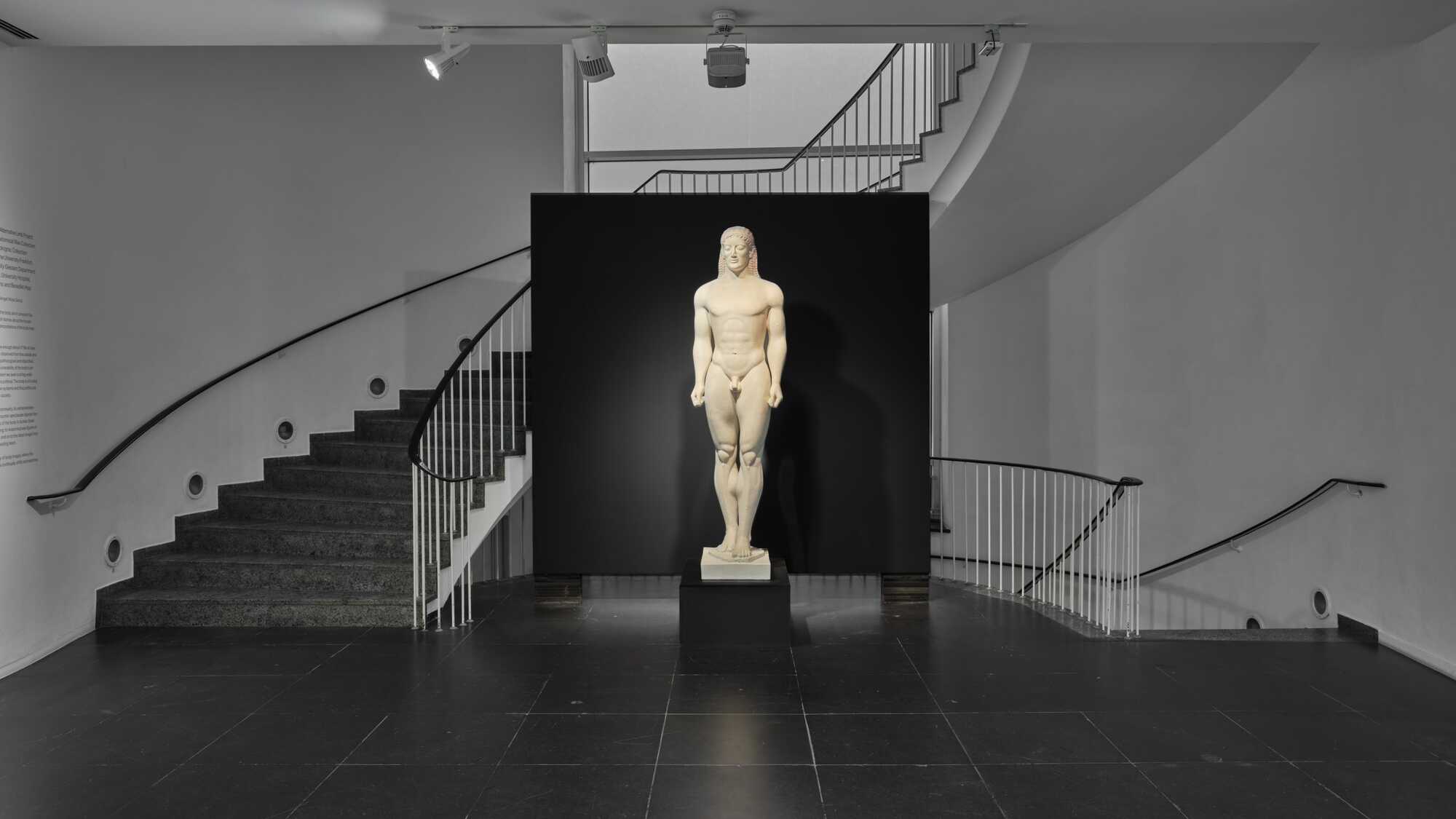
At the entrance, unlike most contemporary art galleries, we are greeted by a Kroisos Kouros – an exact replica of a male sculpture dating from around 530 BC. The loan from the Antiquities Collection of Goethe University Frankfurt instantly makes it pretty clear: this exhibition is of a different kind. Instead of starting with the present, it takes off from a classicised ideal from antiquity, an image of the beautiful, free, male body as the measure of all things.
In search of a locker for our winter clothes, we wander through a smaller room in the basement where scenes from a film about a female anatomist in Italy are playing. Intrigued by the actual exhibition, we leave this room behind for now and head up the spacious staircase.
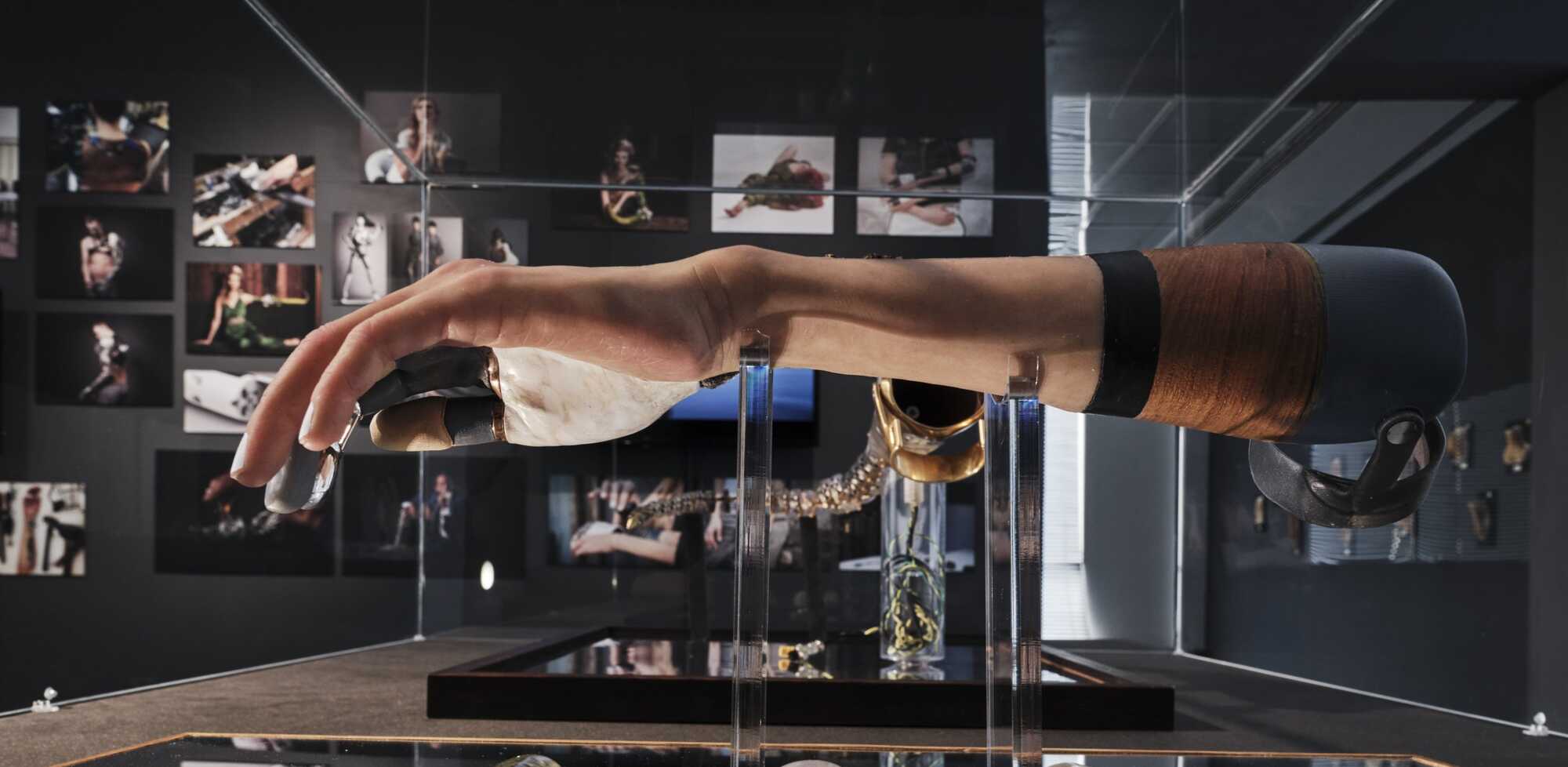
Barely arrived on the first floor, we encounter what soon turns out to be one of the strongest positions in the exhibition: The Alternative Limb Project by Sophie de Oliveira Barata. Here, photographs, video sequences, and two remarkably designed prosthetic arms reveal how art, craftsmanship, and technology are creating a new narrative about body concepts.

Barata's “wearable art pieces” – futuristic, humorous, and serious at the same time – transform what is often perceived as a deficit into a powerful language of identity and self-determination. Prostheses that not only compensate, but also enhance: a tentacle for an arm, a cuckoo clock embedded in the thigh, and a foot with an integrated bong you can smoke from illustrate how fragile yet imaginative physical existence can be. And at the same time, they are celebrating diversity on a whole new level.
In the rooms that follow, we experience an exciting interplay between historical, scientific, and contemporary works. Anatomical wax figures are boldly juxtaposed with large video projections and a VR installation. Among the anatomical works are models of the eye muscles by Anna Morandi Manzolini (1714–1774), the female anatomist to whom the film in the basement is dedicated. Well ahead of her time, she took over her husband's wax figure workshop after his death in 1755. In addition to her extraordinary sculptural skills, she also possessed remarkable anatomical expertise. The exhibition thus builds an astonishing curatorial bridge to the work of The Alternative Limb Project almost 300 years later.
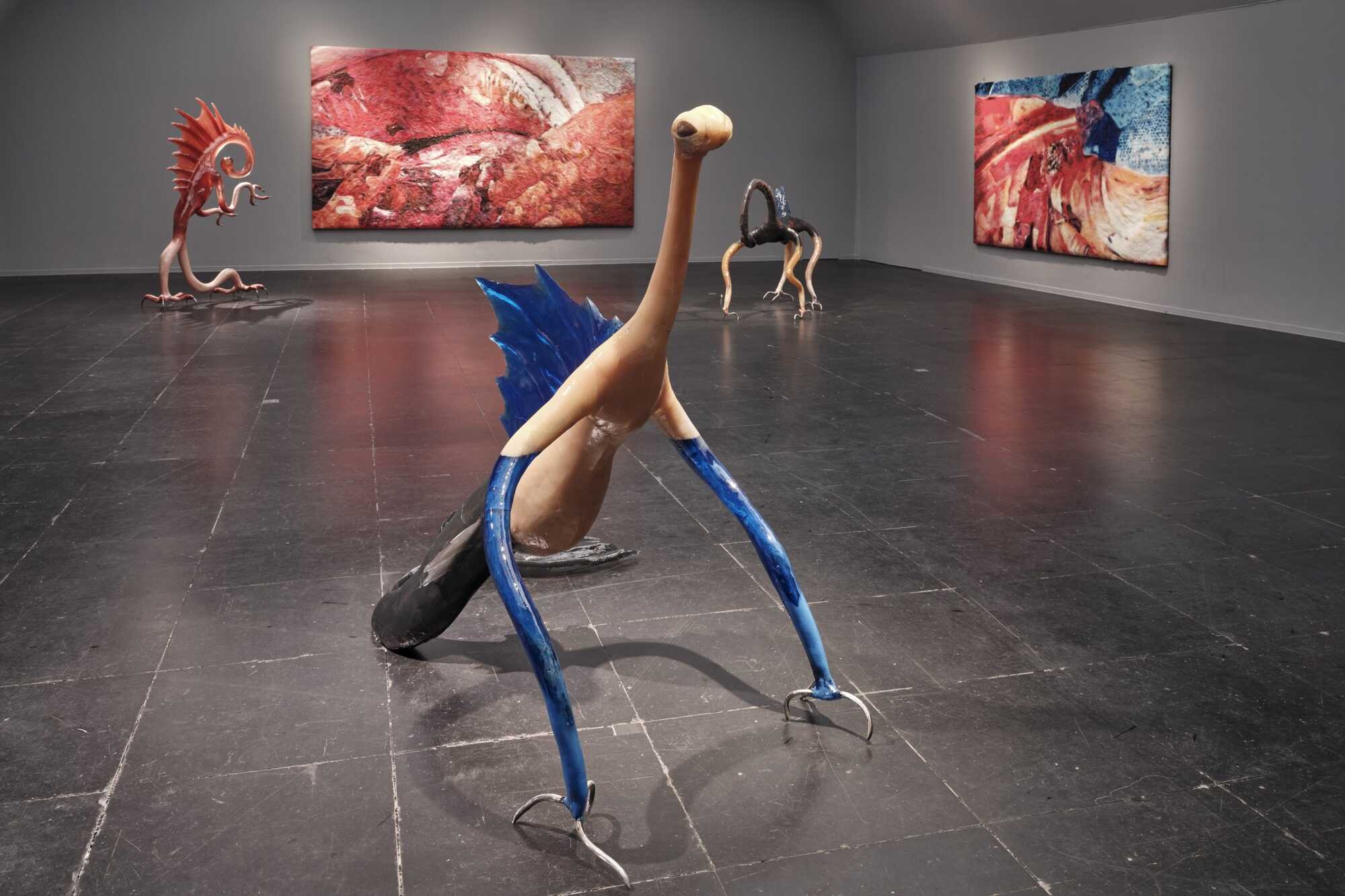
Finally, on the second floor, I find the room dedicated to the artist who guided me here: Agnes Questionmark. Her large-format images, the sound installation, and the life-size hybrid creatures are fascinating and unsettling at the same time. Despite their powerful presence and the acoustic ambiance, the artworks seem somewhat lost within their own large space. Perhaps, as in most of the other rooms, a dialogue between art and science would have been beneficial here as well?

The end of our visit brings a special experience: the slot we booked for the Evolver meditation and VR journey by the collective Marshmallow Laser Feast. Visitors experience a journey of sound and virtual reality that takes them through their own bodies, their own breathing. A dignified finale to this exhibition, which is so much more than just an Instagram-worthy art show, as we realise on our way home. It is an invite to re-discover our own body as a breathing, vulnerable, dynamic system.
I am leaving the Frankfurter Kunstverein humbled and grateful: for this living body, which I so often take for granted, that carries me through the winter and whose fragility and strength have been explored here in so impressive a way. I dwell in a breathing miracle.
Side note:
It is noteworthy that men are significantly underrepresented in the mix of contemporary artistic positions – a circumstance that, refreshingly, is not explicitly addressed.
Anatomie der Fragilität – Körperbilder in Kunst und Wissenschaft (Anatomy of Fragility – Body Images in Art and Science) runs until March 1, 2026, at the Frankfurter Kunstverein.
This article was written in German by Elisabeth Pilhofer.
About the author

Elisabeth Pilhofer
Elisabeth Pilhofer is a freelance editor and cultural manager based in Mainz, Germany.
Translation

Sybille Hayek
Sybille Hayek is an editor and translator. Since 2022 she has been supporting our team on a voluntary basis with her trained eye for detail and a great love of language.