Cast in Berlin and Brandenburg – 300 Years of Art Casting between Lauchhammer and the Spreebord

From Brandenburg’s founding sensation to Berlin’s important foundries up to a digital archive that brings sculpture back into view: a search for clues.
Bronze casting is a process that has remained practically unchanged for three thousand years. Clay, wax, molten metal, the finished mould. The steps have remained the same, even though the tools have become more modern. In Berlin and Brandenburg, this ancient technique has exceptionally deep roots.
1784: The Miracle of Lauchhammer
In the south of Brandenburg, in a marshy lowland between the Spreewald and Lusatia, an incident occurred in 1784 that was hailed by contemporaries as a technical marvel in the world of art. At the Lauchhammer iron foundry, for the first time in world history, a life-size hollow figure was successfully moulded from cast iron in a single piece! From then on, contemporaries referred to the remote village of Lauchhammer as an “artistic pilgrimage site”.
The groundwork had been laid sixty years earlier by a woman. In 1725, the entrepreneur Benedicta Margaretha, Baroness von Löwendal, commissioned the construction of a charcoal-fired blast furnace, the “Lauch-Hammer”. The decisive impetus for its use in art came from 1776 onwards from her successor, Detlev Carl Graf von Einsiedel, who brought in the sculptors Thaddäus Ignatius Wiskotschil from Bohemia and Joseph Mattersberger from East Tyrol to develop a completely new casting technique known as hollow casting.
In Lauchhammer, the connection between craftsmanship and art history deepened. Schinkel created cast-iron furniture and everyday objects that were manufactured there. Christian Daniel Rauch delivered models for bronze statues for the Poznań Cathedral, a commission the foundry was awarded a gold medal for at the 1855 Paris World’s Fair. The Luther monument in Worms, the cast-iron Nile Pavilion of Gezira marking the opening of the Suez Canal: the products of the Brandenburg foundry were soon to be found on all continents.

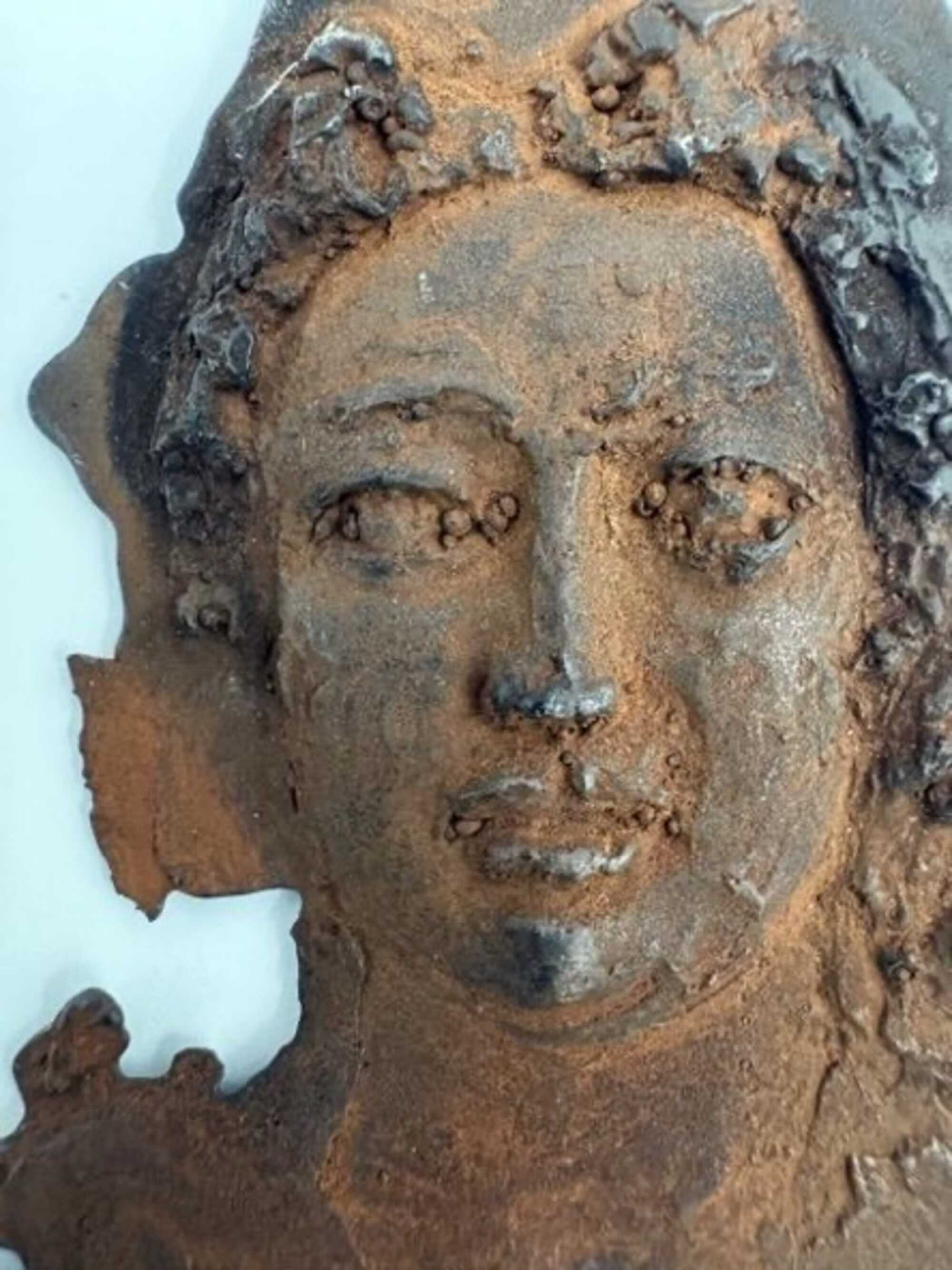
The Lauchhammer Art Casting Museum preserves this treasure: a historic collection of over 2,800 models, unique in the world. In 2025, the 300th anniversary was celebrated with the unveiling of a statue of the founder, Baroness von Löwendal, created by the Berlin artist Anna Franziska Schwarzbach and cast by the long-established Lauchhammer Foundry (an iron cast of the bust had already been exhibited in 2022 in the gallery of Sculpture Network member Gießerei Altglienicke). The Lauchhammer foundry was forced to file for insolvency in 2024; a clear sign that cultural heritage alone is not enough to keep a foundry afloat! Nevertheless, as Germany’s oldest art foundry, it continues to operate.
The Route from Lauchhammer to Berlin: The Noack House
It is no coincidence that the founder of Berlin’s most important art foundry hailed from Lusatia and learnt his craft in Lauchhammer. Hermann Noack I, born in Upper Lusatia in 1867, opened his own foundry in a basement in Berlin-Wilmersdorf in 1897 with the support of the Berlin sculptors August Gaul and Fritz Klimsch. Prior to that, he had been involved in the installation of Reinhold Bega’s national monument to Emperor Wilhelm I. The workers occasionally fainted during the casting process. It was an unsettling start for a company that, a century later, would rank among the world’s five leading art foundries.
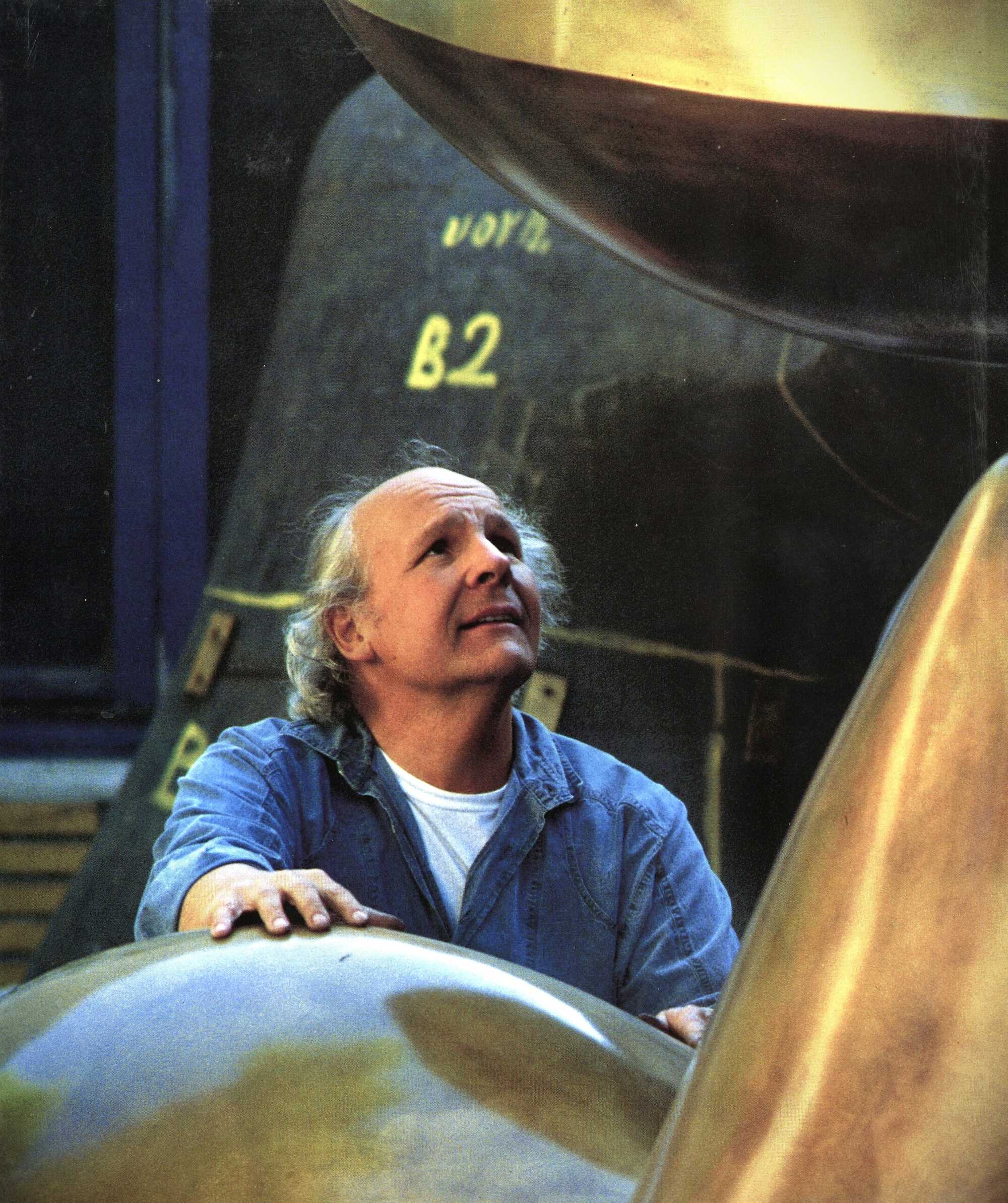
Foundry Noack became the leading name in German bronze casting and remains a family-run business in its fourth generation to this day: Hermann Noack I (1867-1941), II (1895-1958), III (1931-2026) and IV (born 1966). Hermann Noack III holds particular significance; he took over the business from his father at the age of just 27 and, starting in 1958, began a close collaboration with Henry Moore that lasted for decades – one of the most fruitful artist-foundry relationships of the 20th century. It all began with the casting of the Draped Reclining Woman, followed by numerous large-scale works, including the monumental Reclining Figure for the Lincoln Centre in New York (1965), as evidenced by a group photograph held in the Henry Moore Archive.
In 1967, to mark the foundry’s 70th anniversary, Moore personally wrote the foreword to the commemorative publication, an unusual expression of mutual appreciation. And art critic Heinz Ohff aptly remarked in it: “Between the artist’s initial draft in wax or plaster and the ultimate execution lies a process of craftsmanship that demands its own skill and has its own tradition, dating back to the second millennium BC.”
Noack left a distinctive mark on Berlin’s urban landscape with his bronze works: the recreation of Schadow’s Quadriga; the casting of the Berlin Bears based on designs by Renée Sintenis – works which the foundry had been producing since as early as 1913; and the restoration of the Viktoria on the Victory Column. Even during the division of Berlin, the foundry in West Berlin continued to work with international artists and maintained its links to the global art world. In 2009, it moved into a modern new building on the banks of the Spree in Charlottenburg.
Ernst Barlach and the Noack Foundry: When Bronze Outlives What Has Been Melted Down
There is a relationship between Berlin’s sculptural tradition and the Noack foundry that tells what is both the most beautiful and the most harrowing story of German art casting in the 20th century, a story centred on the sculptor Ernst Barlach.
From 1910 onwards, Barlach lived a largely secluded life, far removed from Berlin’s art scene. He was first and foremost a wood sculptor, but he sought bronze for works intended to last. It was precisely for this purpose that he found the ideal partner in the Noack foundry. In 1927, he created The Floating One: a floating bronze figure serving as a memorial to those who fell in the First World War. The facial features unmistakably bear the likeness of his friend Käthe Kollwitz, who was herself closely associated with Noack.
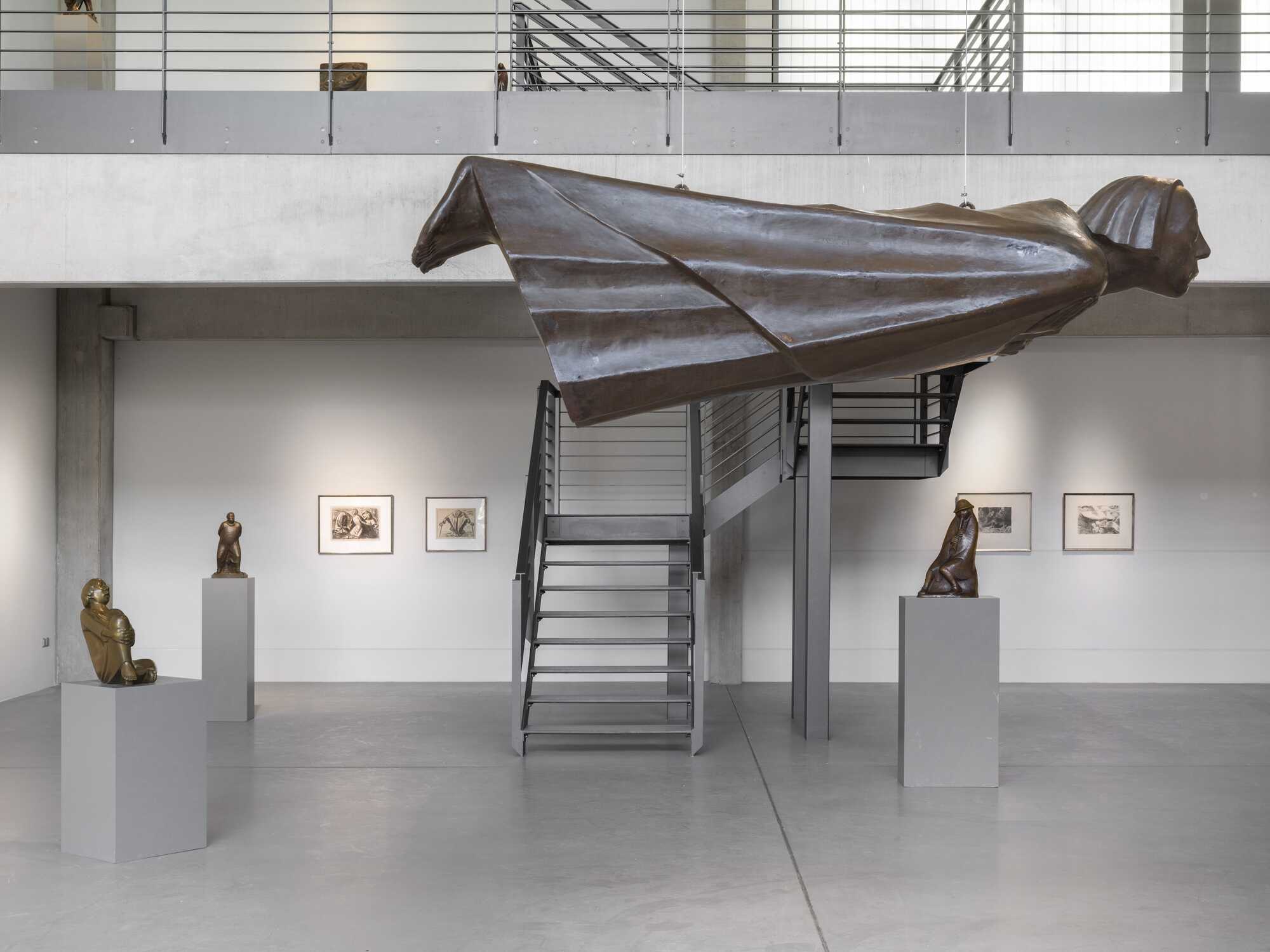
In 1937, the Nazis removed The Floating One, classifying it as “degenerate art”. In 1941, it was melted down to be used as material for ammunition. It is only because friends rescued the working model and had a second cast made that the artwork still exists at all; it was Noack, once again, who restored the parts after the war. The fact that the work has survived is due solely to the existence of a second cast. No other chapter in the history of casting illustrates the political nature of the material so vividly: bronze is durable, but it is not indestructible. It is its reproducibility that has become a form of cultural resistance.
Sculpture in Berlin: The Digital Memory of the City
Anyone wishing to find out which sculptures are or were located where in Berlin will, sooner or later, come across bildhauerei-in-berlin.de: a database that systematically catalogues monuments and works of art in the public spaces of the formerly divided city. The head of the project is Prof. Dr Susanne Kähler, Professor of Museology at HTW Berlin. From 2007 to 2014, she was director of the Lauchhammer Art Casting Museum before becoming a professor at HTW Berlin. In 2018, she took over the Sculpture in Berlin project at the university. The platform aims to present a more differentiated picture of sculpture in the GDR: sculptors such as Sabina Grzimek, Wieland Förster or Wilfried Fitzenreiter created works of high quality that deserve careful consideration. Bildhauerei-in-berlin.de is more than just an archive; it demonstrates that sculpture in public spaces constitutes collective memory.
Bodytalk 2026: Berlin as a Place of the Figure
In October 2026, the International Forum Bodytalk – The Return of the Human Figure in Contemporary Sculpture will bring the international sculpture scene to Berlin. Organised by Sculpture Network, the forum is a fixture in the European art world’s calendar.
After the Second World War, the human figure had largely ceased to exist in Western art. Exploited for propaganda purposes by totalitarian regimes, the figure had become a taboo. Since the 1980s, the figure has been making a comeback, but in a new form: not as an idealised body or a heroic monument, but as a conveyor of existential questions. During the forum, Prof. Dr Susanne Kähler will speak on Body language in public sculpture in (the two) Berlins and its development from the 1980s onwards. This brings full circle the narrative that makes the sculpture of the divided city comprehensible in its contrasts and parallels and ties in directly with her work for bildhauerei-in-berlin.de.

To round off the three-day conference, the Noack foundry is inviting the guests of the international forum to a guided tour of its historic premises on the banks of the Spree: through the casting room, the engraving workshop and the contemporary gallery. Particularly fascinating is the opportunity to explore the studio of the Russian sculptor Anna Bogouchevskaia, located within the foundry complex, an internationally renowned artist working at the intersection of figuration and abstraction. A living testimony to the fact that craftsmanship and creative freedom have always coexisted here. The evening concludes with a festive dinner at the Bar Brasse, located next to the foundry – a French restaurant with an open fire that provides the ideal setting for conversations beyond the conference.
In Retrospect: Bronze – Speaks and Promises
The history of art casting in Berlin and Brandenburg is not a history of preservation for preservation’s sake. It is a history of transformation. The iron of Lower Lusatia became the sensation of Lauchhammer; the craft of Lusatia moved to Berlin with Hermann Noack; bronze saved Barlach’s artwork from destruction; the digital archive brings to light what had long since become invisible within the urban landscape.
And from 29 to 31 October 2026, visitors from all over Europe will come to Berlin to discuss the human figure. To discuss what silent gestures are capable of conveying. To discuss what bronze endures when everything else shatters.
Original text by Anemone Vostell in German.
About the author
Anemone Vostell
Anemone Vostell is a Berlin-based cultural manager and founder of BAM! Berlin Art Management – art projects and consulting with a special interest in sculpture, installation art and land art.
Translation
Sybille Hayek
Sybille Hayek is an editor and translator. Since 2022 she has been supporting our team on a voluntary basis with her trained eye for detail and a great love of language.