Lifelike: Reimagining the Human Figure in Contemporary Sculpture
At a time when digital tools increasingly mediate our understanding of the body, Sculpture Network’s Online Club “Lifelike. From a Living Body to a Human Figure” returned to one of sculpture’s oldest and most enduring questions: how does inert matter become alive?
On 18 May the online event brought together two artists with profoundly different approaches to figurative sculpture — German sculptor Bärbel Dieckmann and Canadian sculptor Blake Ward — in a rich exchange moderated by Anne Berk. In addition to exciting and profound insights into technical approaches and artistic practices, the evening evolved into a reflection on empathy, movement, materials, and the evolving language of contemporary figurative art.
The event also served as a conceptual prelude to the upcoming International Forum “Bodytalk – The Return of the Human Figure in Contemporary Sculpture” which will take place in Berlin from 29 to 31 October. Throughout the discussion, one theme became unmistakably clear: the human figure remains one of the most challenging and emotionally charged subjects in sculpture because it is never merely anatomy. It is memory, tension, vulnerability, myth, and projection.
Bärbel Dieckmann opened the evening with a deeply personal account of how she came to figurative sculpture through an early fascination with ancient Greek culture. Her presentation moved fluidly between autobiography and artistic philosophy. Speaking from within a lineage that stretches from antiquity to contemporary sculpture, she described how encounters with Greek sculpture awakened her desire to “do something with the body.” Yet her work is far from archaeological quotation. Instead, she transforms classical references into psychologically charged, tactile forms.
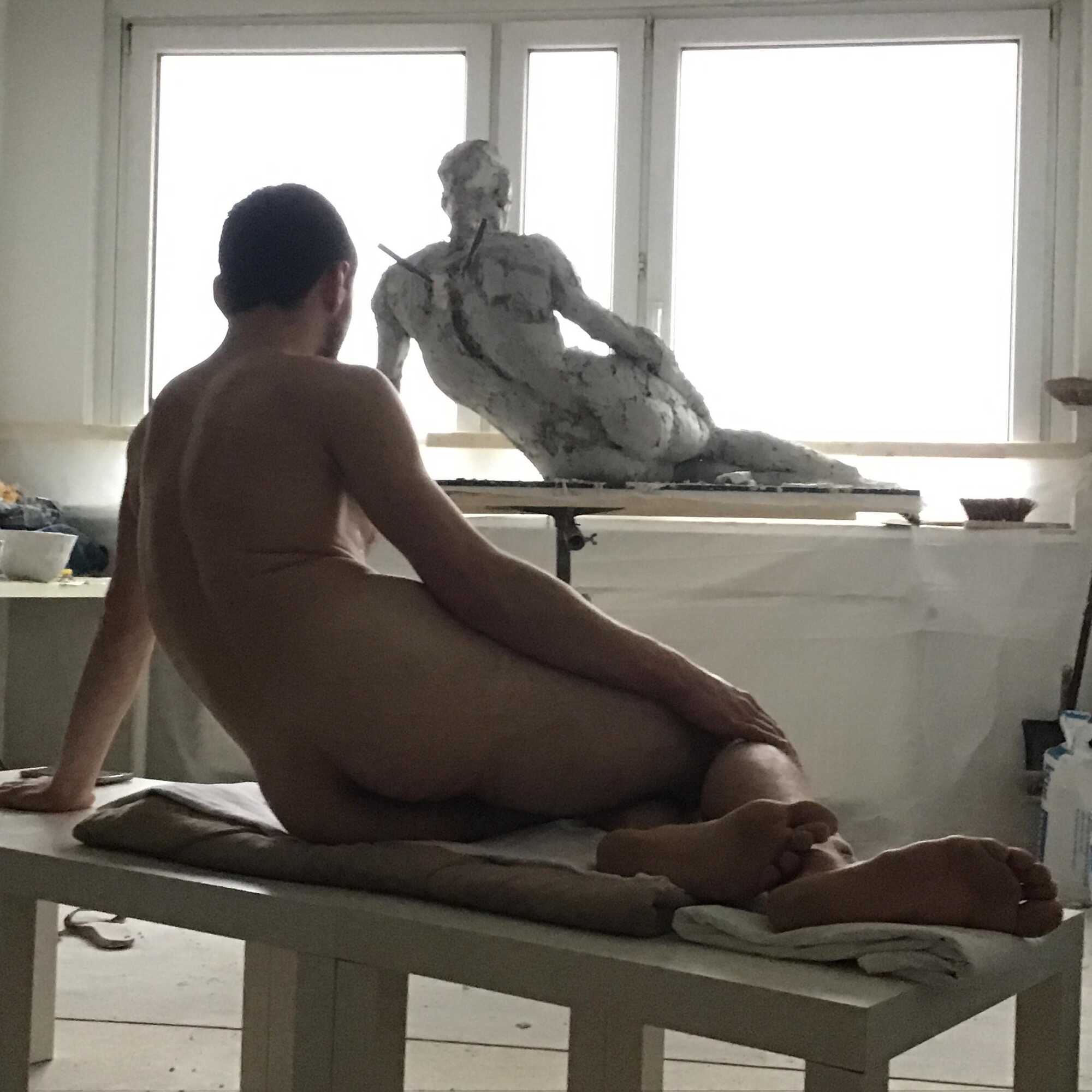
Dieckmann’s sculptures emerge from an intense bodily empathy. Again and again, she returned to the idea that a sculptor must physically understand movement in order to represent it convincingly. Her own experience with dance became central to this process. The body in her work is never static; even in repose, it appears suspended within a potential movement. Contrapposto, diagonal tensions, folded gestures, and asymmetrical balances generate the sensation that her figures might suddenly breathe or step away.
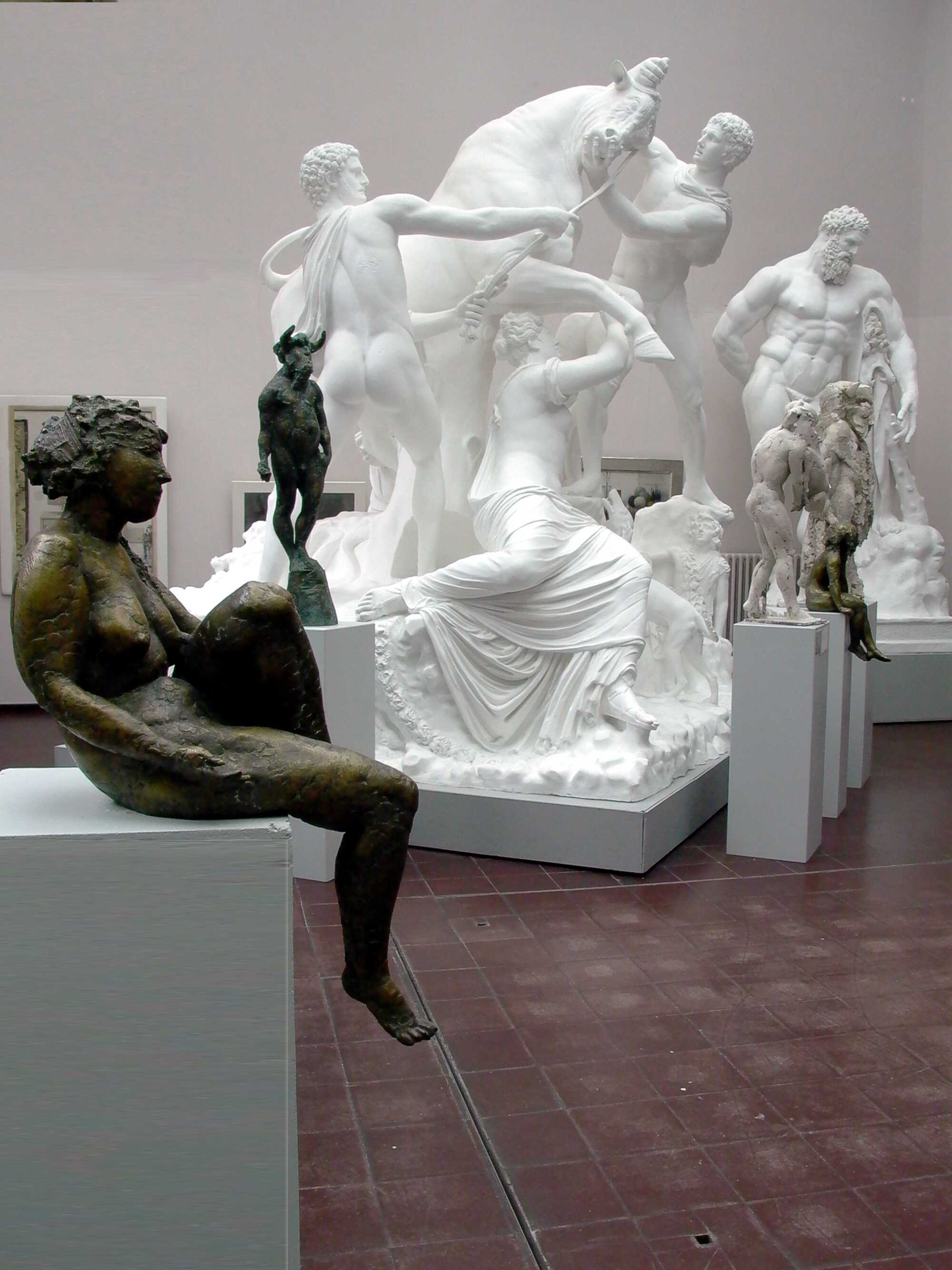
Her sculptures are also distinguished by their surfaces. Modeled directly by hand in plaster, clay, terracotta, or bronze, the works retain traces of physical contact. These textured surfaces reject polished perfection in favor of immediacy and presence. One senses not only the represented body, but also the artist’s own gestures embedded in the material. As moderator Anne Berk observed during the discussion, Dieckmann succeeds in giving sculpture a remarkable “body language” that viewers instinctively recognize through their own embodied experience.
If Dieckmann approached the human figure intuitively and emotionally, Blake Ward offered an almost architectural counterpoint. His lecture revealed an extraordinarily analytical sculptural method grounded in proportion, armatures, measurements, and structural systems. Yet despite the technical rigor of his presentation, Ward’s work ultimately seeks the same goal: to create figures that feel alive.
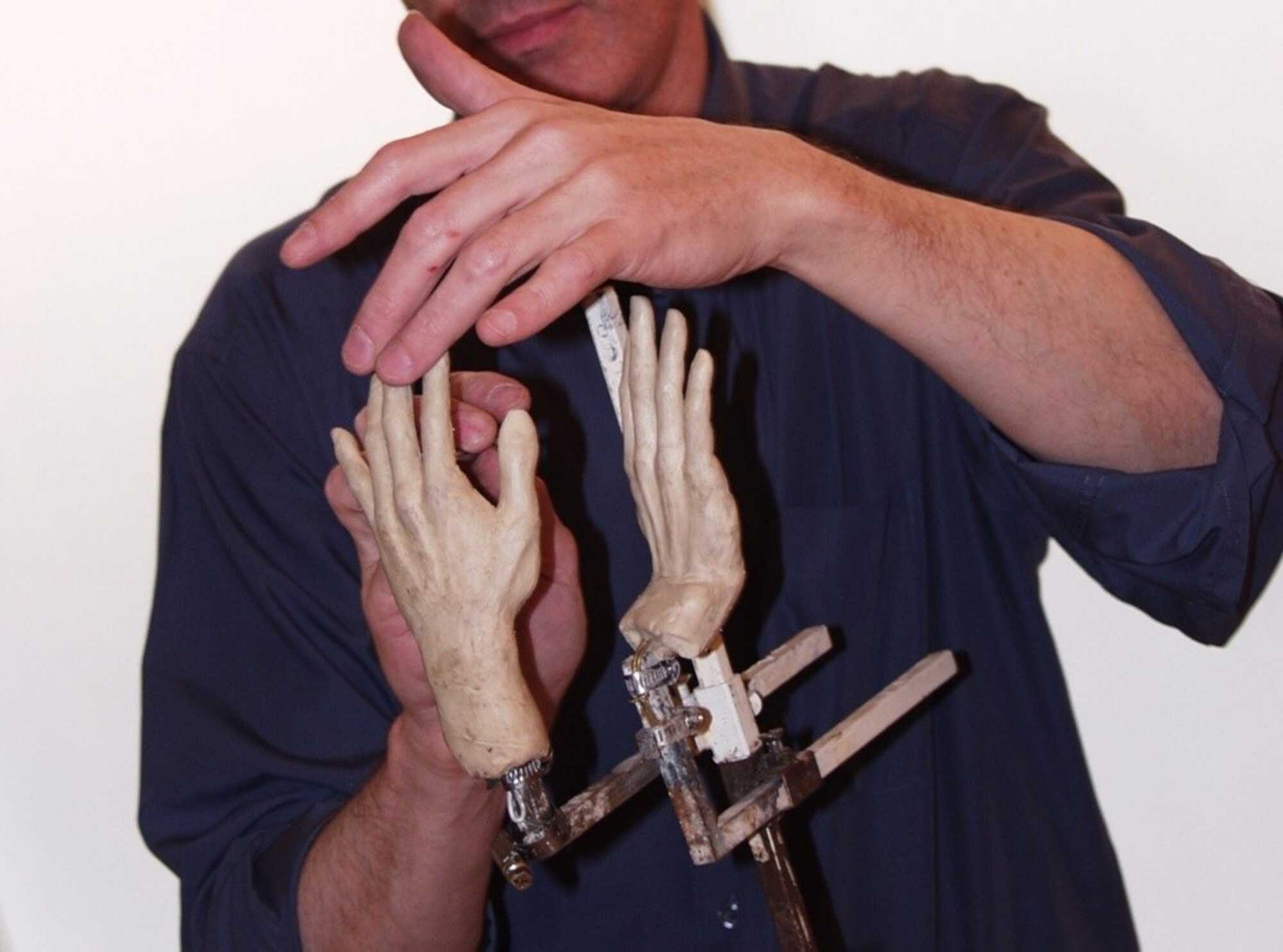
Working primarily in water-based clay, Ward demonstrated how the sculptor continuously aligns the clay figure with the live model through silhouettes, measurements, and geometric triangulation. His process — developed over more than a decade — combines classical discipline with engineering precision. Bones, joints, proportions, and structural axes become the hidden grammar through which the sculpture acquires coherence.
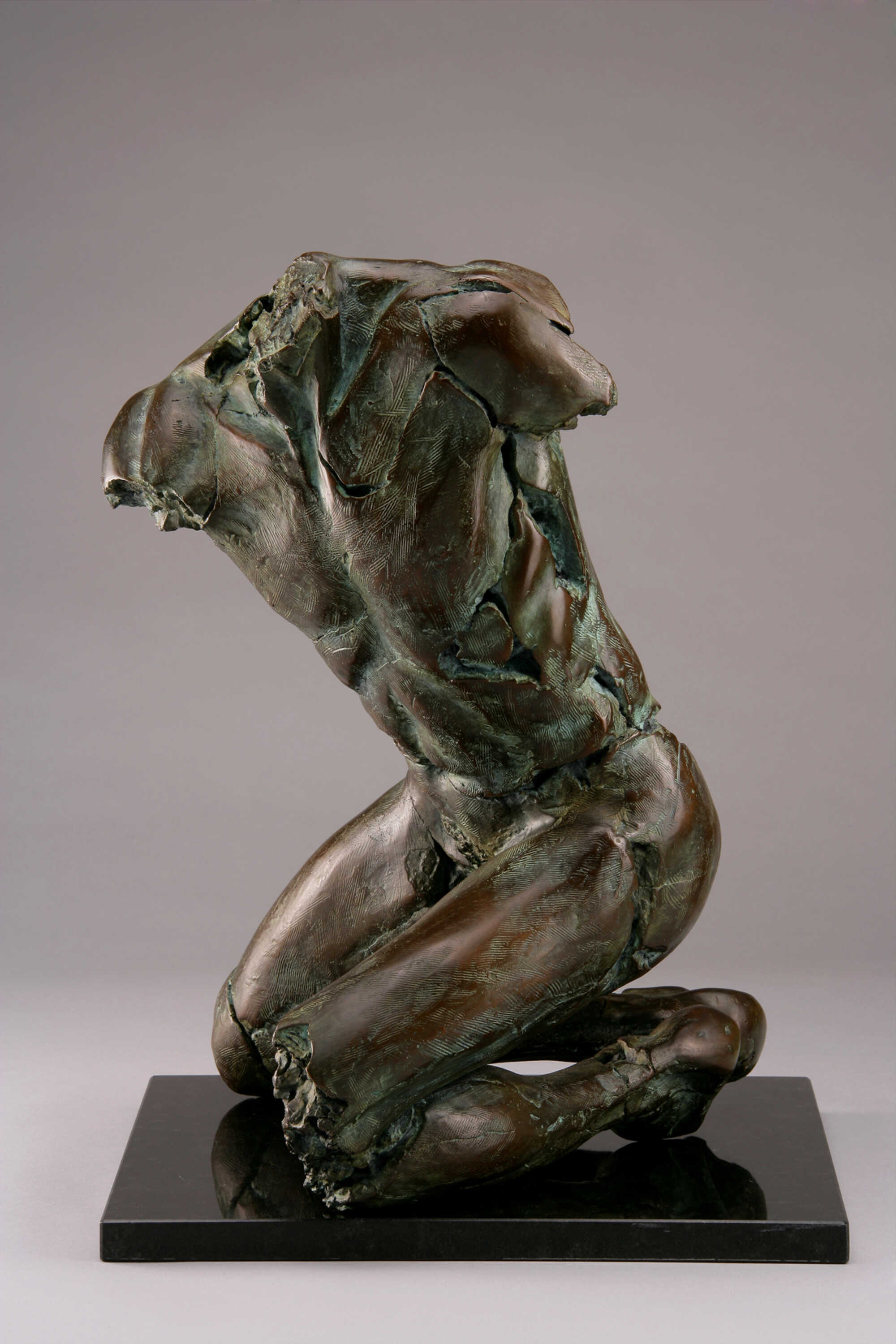
What emerged most clearly from Ward’s presentation was the paradoxical relationship between accuracy and artistic interpretation. While his method depends on careful anatomical observation, he repeatedly emphasized the importance of deviation. A sculptor may exaggerate the curve of a spine, elongate a dancer’s legs, enlarge hands to suggest strength, or intensify the sensuality of a form. Lifelikeness, in this sense, is not achieved through literal copying, but through selective transformation.
Ward also explored the evolving future of figurative sculpture. In recent years, his practice has increasingly incorporated digital scanning, 3D modeling, and highly complex bronze printing techniques. Yet even these technologically advanced works remain deeply connected to the body. Intricate lattice-like surfaces reveal internal structures, exposing the “inside” of the figure as both physical support and metaphorical inner landscape. The digital does not erase the human presence; instead, it offers new ways of articulating fragility, openness, and spatial complexity.

One of the evening’s most rewarding aspects was precisely this dialogue between two different sculptural temperaments. Dieckmann’s tactile immediacy and Ward’s analytical construction appeared at first almost oppositional. Yet the conversation revealed a shared commitment to the living body as sculpture’s essential source. Both artists insist on working from live models. Both emphasize the importance of physical presence over photographic reference. And both understand sculpture not as imitation, but as translation: a transformation of lived bodily experience into material form.
What made “Lifelike. From a Living Body to a Human Figure” particularly compelling was its refusal to reduce figurative sculpture to technique alone. The event demonstrated that the sculpted body remains a site where material, memory, emotion, and cultural history intersect. Whether through Dieckmann’s mythological tensions or Ward’s digitally expanded anatomies, the human figure continues to offer artists a profound means of exploring what it means to inhabit a body in the contemporary world.
In an era increasingly dominated by virtual images and artificial simulations, this Online Club reminded its audience of something fundamentally sculptural: that knowledge can also be held in the hand, carried in posture, embedded in gesture, and shaped through touch.
The Text was written with the help of AI and edited by our editorial team.
Translation
Julia Weiss
Project manager, member care & communication