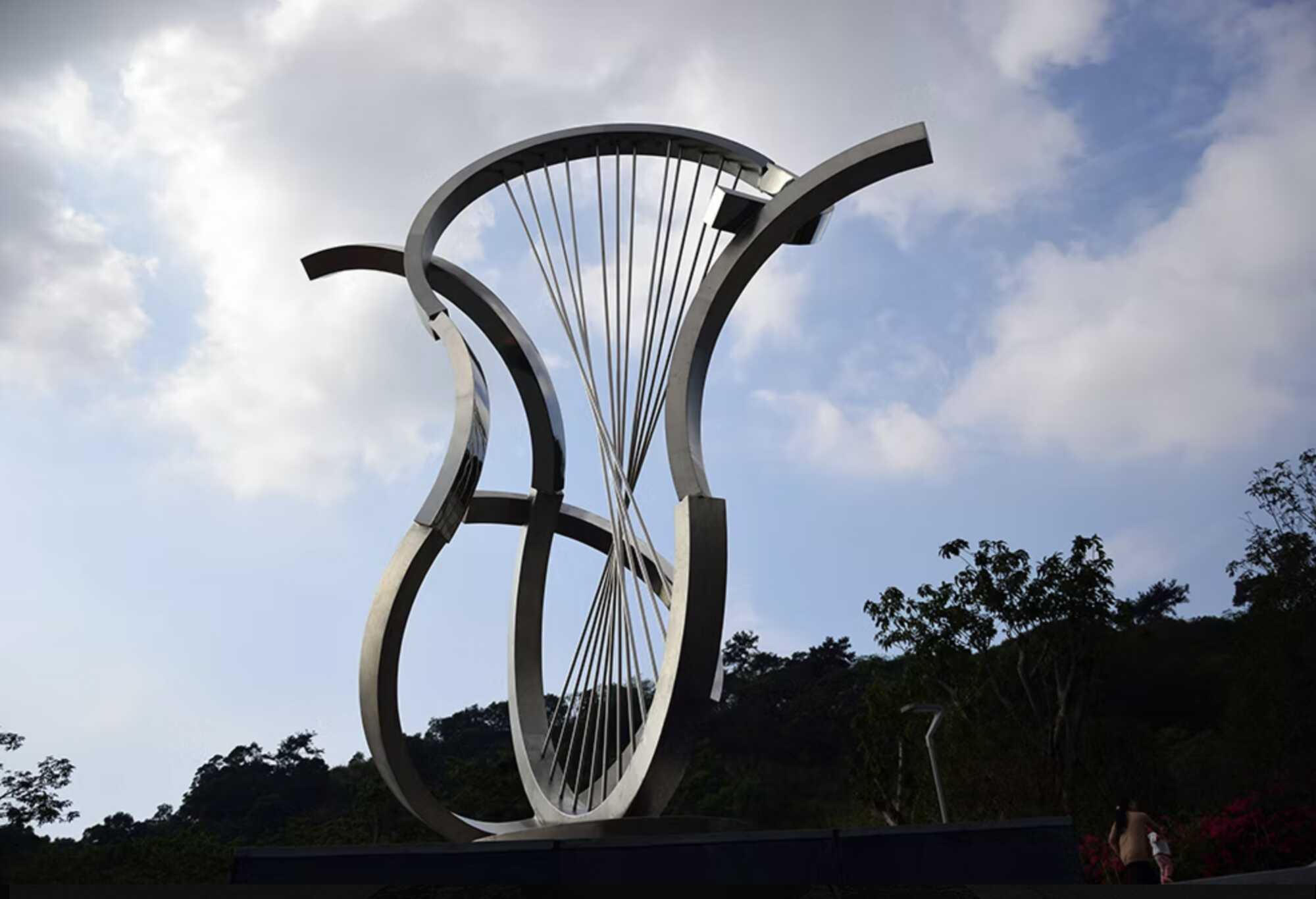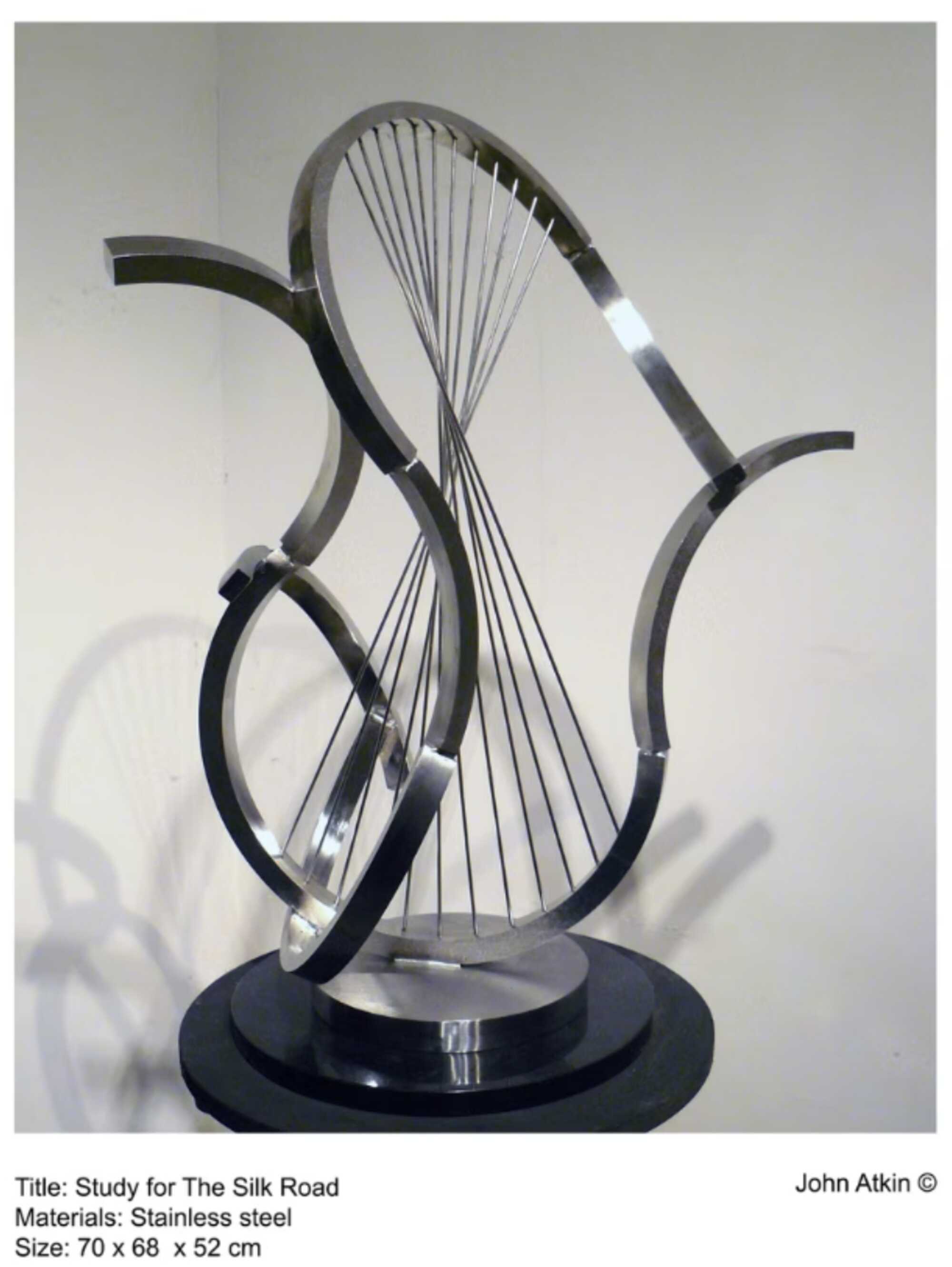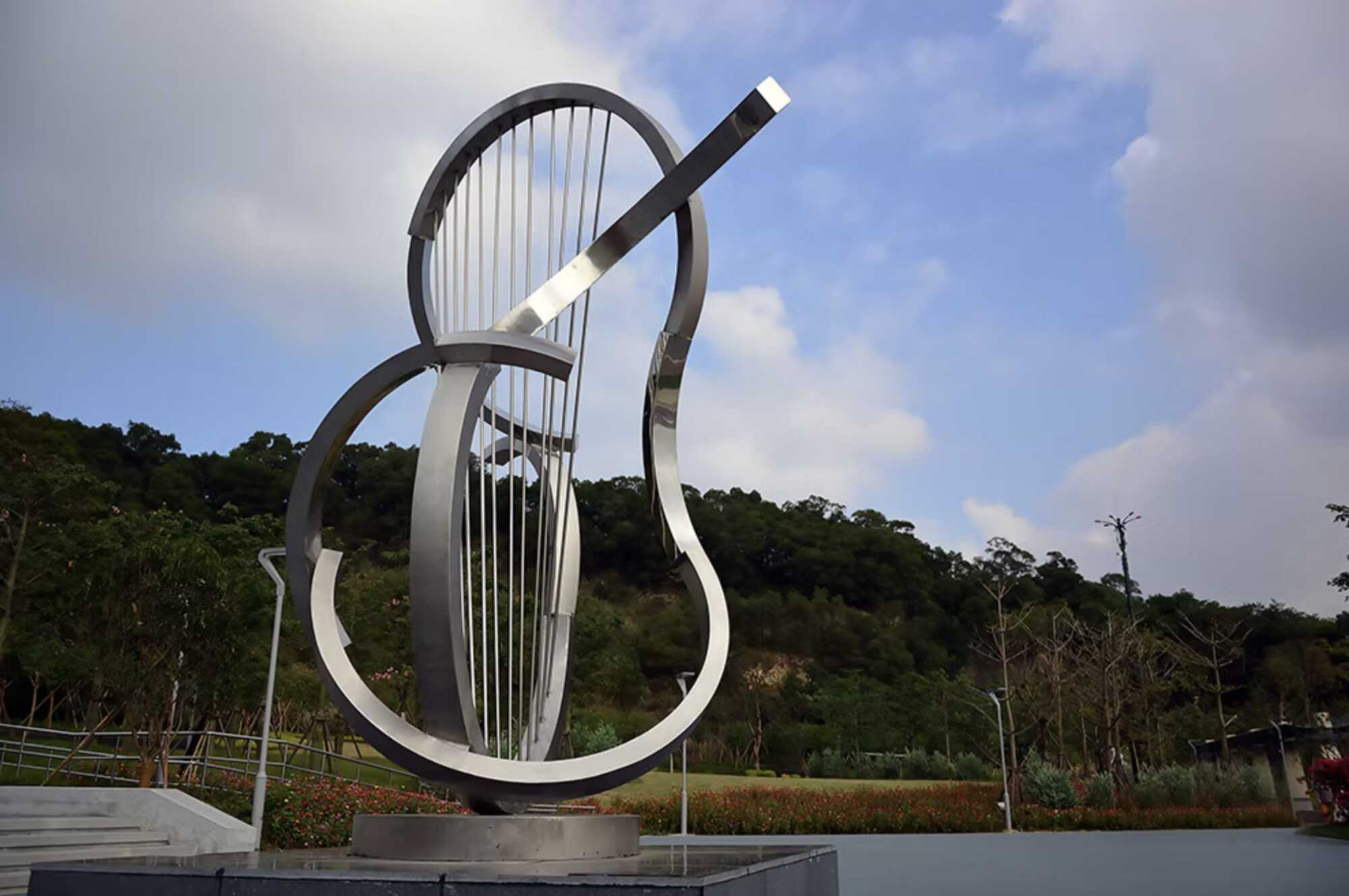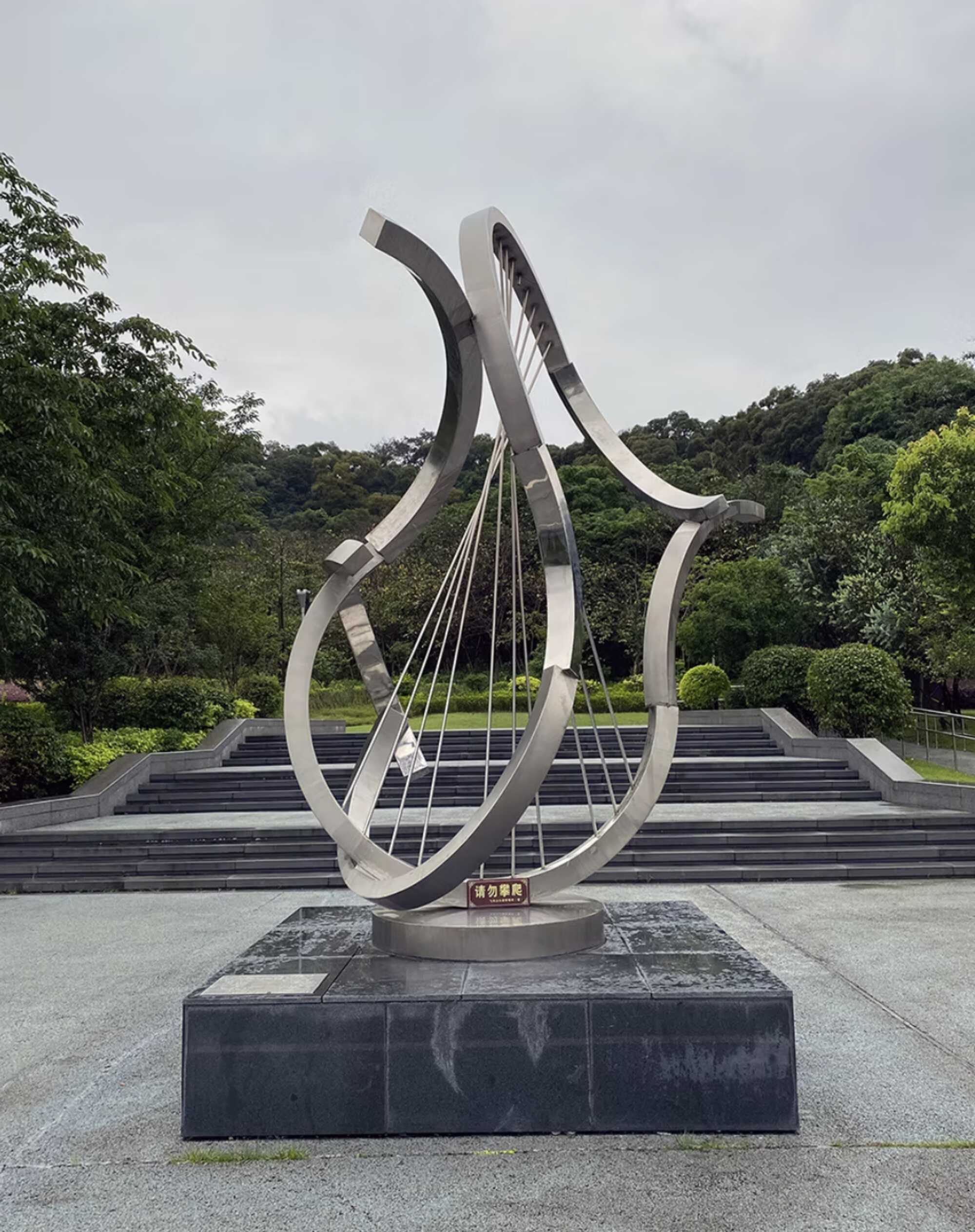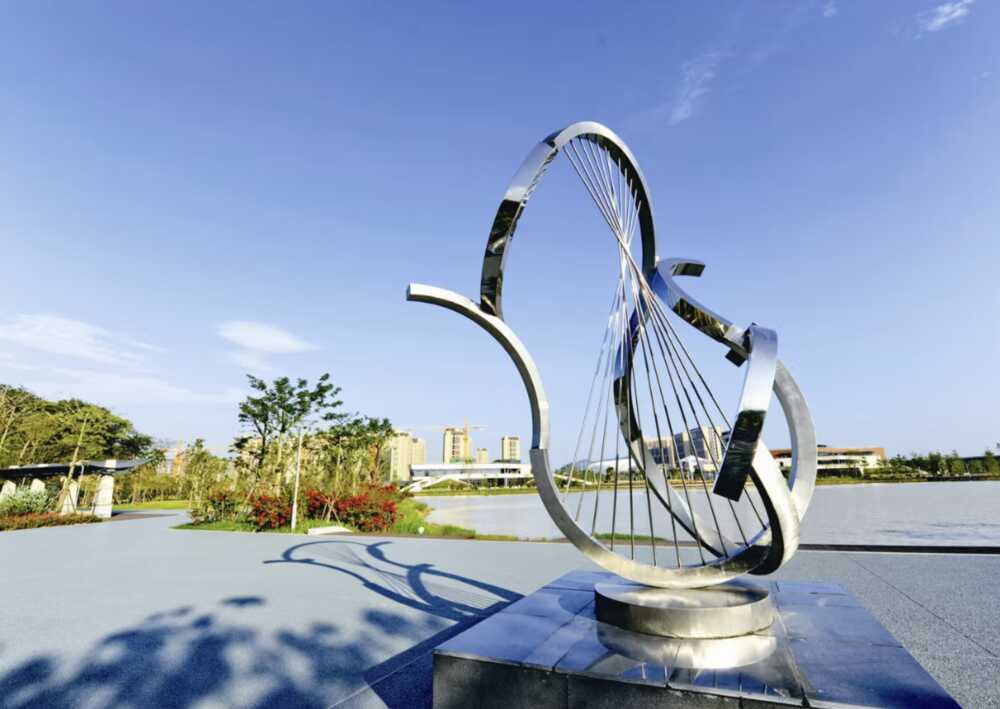
This stainless-steel sculpture of mine, the Silk Road was commissioned as part of the cultural arm for the first China Youth Games. And it was important that the sculpture articulated ideas relating to movement and athleticism.
The Silk Road was commissioned for the landscape redevelopment of a major public park in Fuzhou, China, as part of a broader urban renewal initiative connected to the China Youth Games. Constructed in polished stainless steel, the sculpture was designed to activate the surrounding environment through movement, reflection and openness. Rather than functioning as a static monument, the work invites viewers to move around and through it, allowing constantly shifting perspectives of the park, pathways and surrounding vegetation.
The sweeping arcs and tensioned rods reference ideas of travel, exchange and connectivity associated with the historic Silk Road, while also suggesting rhythm, athleticism and musical cadence. The reflective surfaces capture fragments of sky, trees and people in motion, embedding the sculpture within the life of the city itself. Its open structure deliberately avoids dominating the site, instead framing vistas and encouraging interaction with the wider landscape.
As part of Fuzhou’s programme of park revitalisation and cultural investment, the sculpture contributed to transforming the area into a more dynamic civic destination for residents and visitors alike. By integrating contemporary public art into the urban landscape, The Silk Road helped support tourism, public engagement and a renewed cultural identity within the city.