Bronze, Wood and Marble Beneath a Brick Vault: Asian Sculpture in a Dutch Church
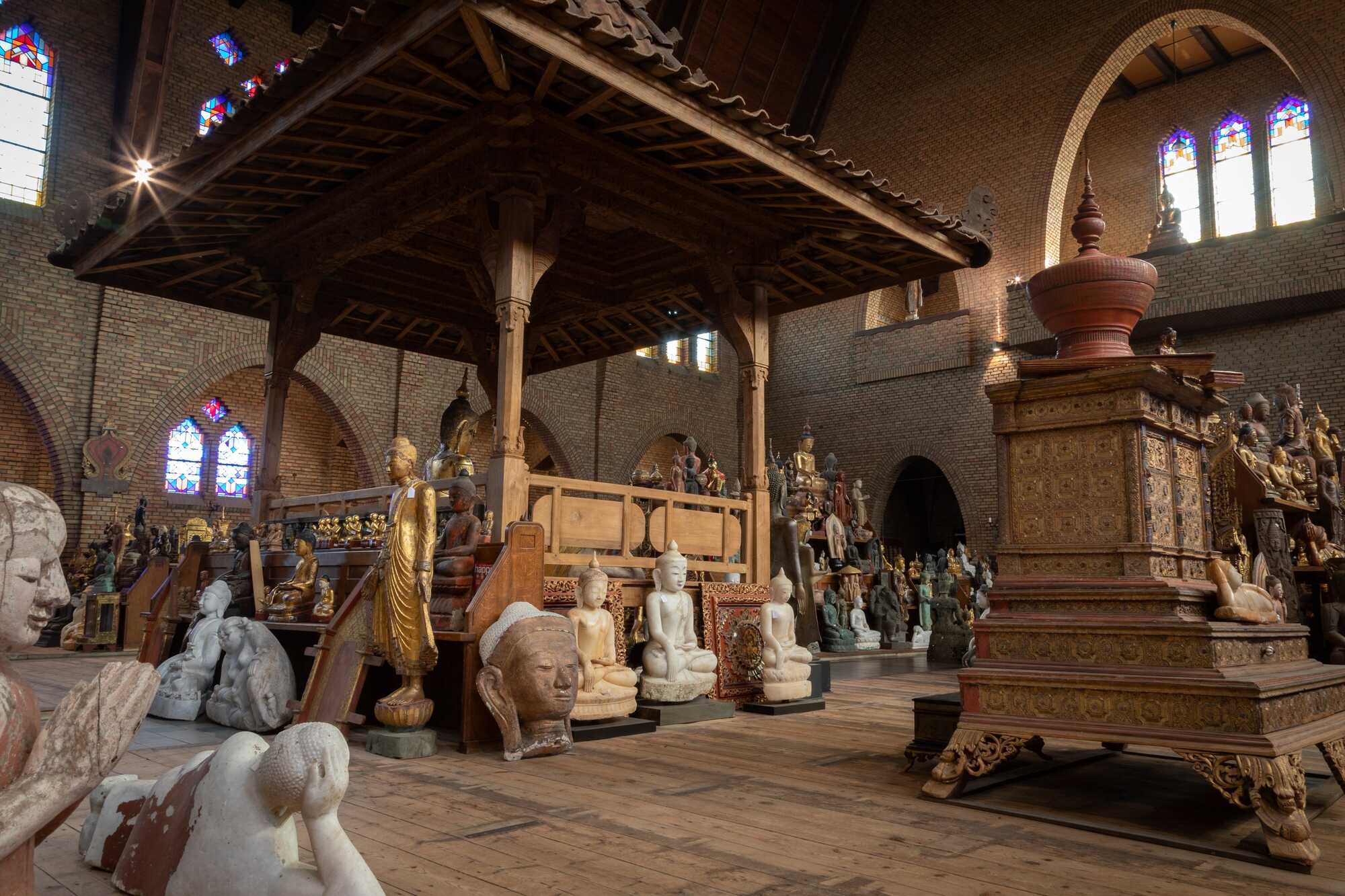
In Deventer, in the east of the Netherlands, a former church has become home to hundreds of antique Buddhist and Hindu sculptures. Seated Buddhas in white marble line the old pews, gilded wooden figures stand along the aisles, and small bronzes catch the light from the high stained-glass windows. For a building made for one sacred tradition, it now holds the art of several others.
Peter Vredeveld has collected and worked with Buddhist sculpture for more than 25 years. Bringing the collection together under one roof has taught him a great deal about how sculpture behaves in a space, and about what visitors actually see when they look.
Many materials, one light
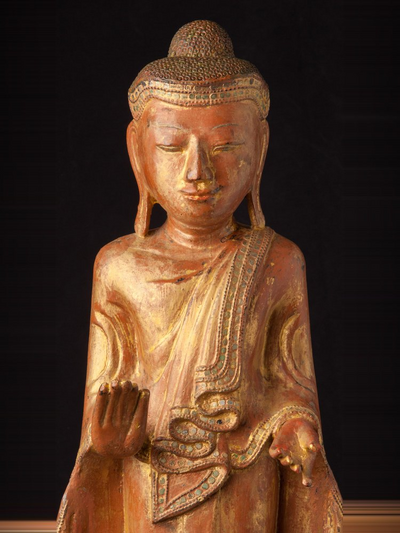
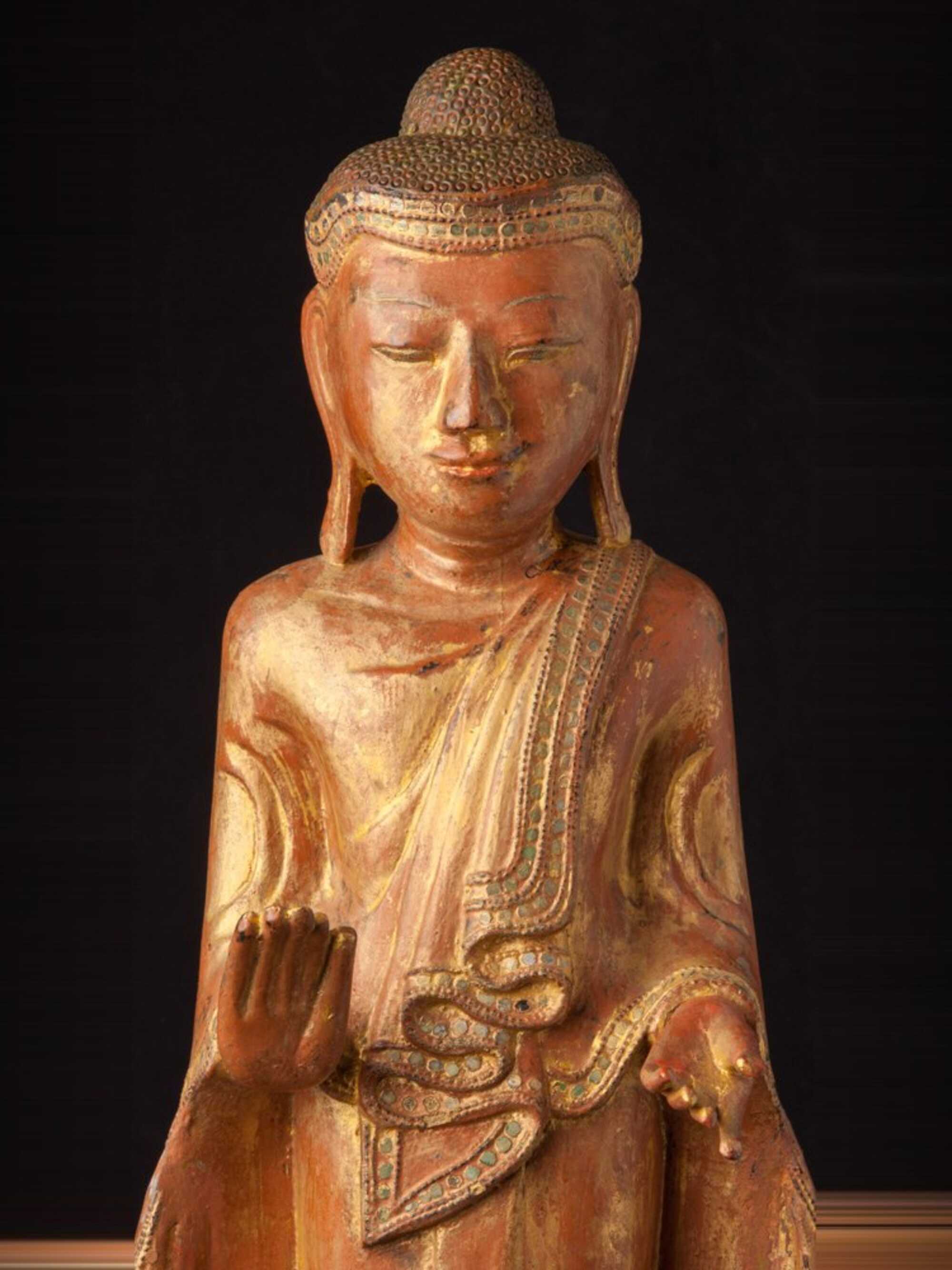
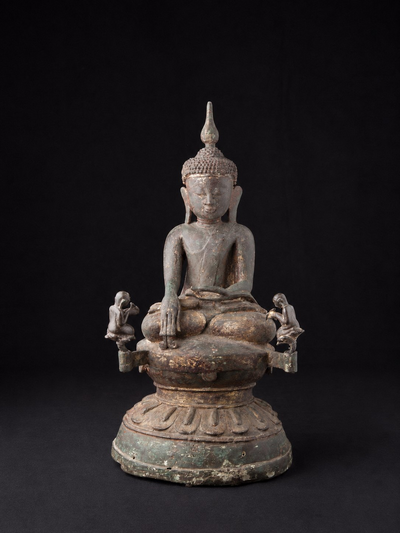
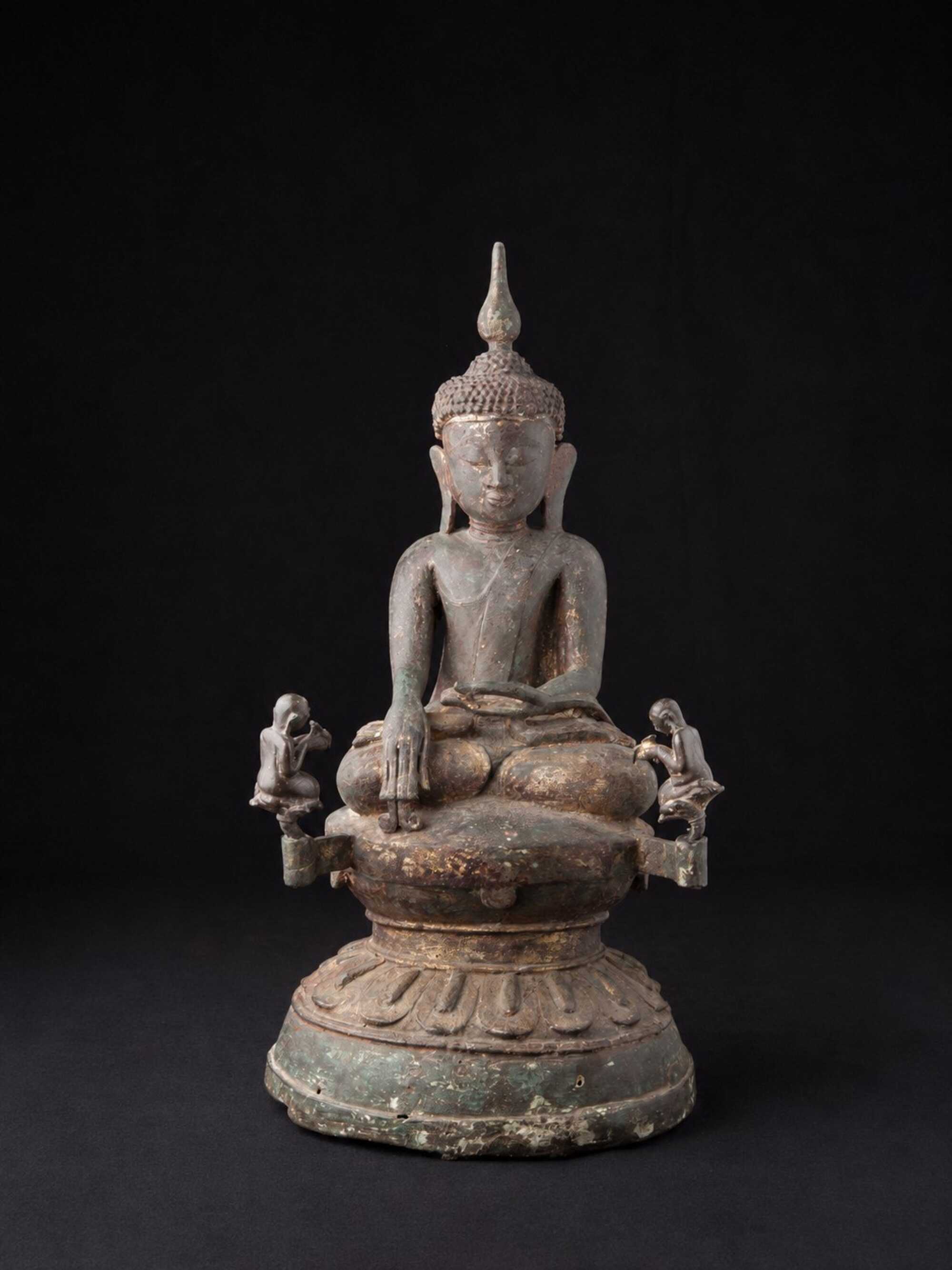
The daylight in the church comes from above, through tall windows set high in the brick walls. Every material answers it differently. Marble takes the light softly and seems to glow from within, which suits the calm faces of Burmese seated Buddhas. Gilding picks up sharp highlights and shows every fold of a carved robe. Bronze absorbs much of the light and rewards a closer look, revealing patina, casting marks and the polish left by centuries of handling. Old wood shows tool marks, cracks and traces of lacquer and pigment that tell the story of its age. Seeing these materials side by side, under the same light, makes their differences clearer than any label could. A sculptor will recognise how much of a figure’s character depends on the surface, and how much the surface depends on the light that falls on it.
Gesture as composition
Buddhist sculpture speaks through the hands. In the earth-touching gesture, the right hand reaches down over the knee towards the ground, recalling the moment of enlightenment. In sculptural terms it creates a strong diagonal that breaks the symmetry of the seated figure and leads the eye from the face to the base. A raised open hand, on the other hand, brings the attention up to the chest and face. These gestures were not decoration. They were the meaning of the work, and the carver built the whole composition around them. Looking at dozens of figures together, it becomes clear how each maker balanced the gesture against the weight of the body and the sweep of the robe.
The same subject, again and again
One of the most rewarding things about a large collection is repetition. Rows of seated Buddhas share the same posture and the same conventions of proportion, yet no two are alike. One carver lengthens the ears, another softens the shoulders, a third gives the face an almost personal expression. For anyone who works with form, this variation within a fixed canon is fascinating. It shows how much freedom a sculptor can find inside strict rules. Fragments make the point even more directly. A large carved head, separated long ago from its body, can no longer be read as an object of devotion in the usual way. It becomes pure sculpture: volume, surface and expression.
Height, distance and the base
Where a sculpture stands changes how it is read. Many of these figures were made to be seen from below, in a temple hall or on a raised altar, so we try to place the larger pieces a little above the eye wherever we can. Smaller figures sit on the pew backs at roughly eye level, close enough to study the face and hands. The base deserves attention too. A lotus throne or a stepped pedestal is part of the sculpture, not a stand for it. Its proportions lift the figure, frame the folded legs and complete the silhouette. When a base is lost, a simple modern plinth can restore some of that height, but it rarely replaces the rhythm of the original carving.
Two sacred traditions in one room
Visitors sometimes expect a church full of Buddha figures to feel like a contradiction. In practice it rarely does. Both the building and the sculptures were made to slow people down and focus their attention. The brick vault gives the figures a sense of seriousness and space, and the figures give the building a new reason to be visited and looked at closely. Neither has to pretend to be something else. Hindu figures add another layer to the conversation, with different body language, attributes and ideals of beauty. Placing them near Buddhist works from Myanmar, Thailand, Nepal, Tibet and India invites comparisons across regions and centuries.
An invitation to look slowly
More than anything, the building encourages slow looking. That is perhaps the most valuable thing an exhibition space can offer sculpture. You can find out more about the collection at Original Buddhas.
About the author
Peter Vredeveld is the founder of Original Buddhas B.V., a gallery of antique Buddhist and Hindu sculpture housed in a former church in Deventer, the Netherlands.
Text was written in English by Peter Vredeveld, Original Buddhas B.V.
Elka Parveva-Kern supports Sculpture Network since 2024 as a translator - a wonderful opportunity to combine her long-standing interest in languages and art.