Nature and the aftermath of pain

Peccia in the summer of 2024: severe weather has hit the Swiss Canton of Ticino. In the Upper Maggia Valley, bridges have collapsed, roads have flooded, and houses have been damaged. There have been fatalities and injuries. Maastricht-born artist Eline Kersten (*1994) has explored the impact of climate change in her exhibition ‘Forme di Solastalgia’ (eng. Forms of Solastalgia), which has been showing at the Centro Internazionale di Scultura (CIS) in Peccia since summer 2026.
Solastalgia is a form of psychological distress. In Eline Kersten’s case, however, it is more akin to environmental grief. It is a feeling experienced when people’s familiar surroundings change before their eyes. It is commonly known as homesickness.
Eline Kersten does not accuse, nor does she lecture. She does not make demands or preach. She conducts research alongside geologists, botanists, meteorologists, mineralogists, glaciologists and anthracologists (scientists who analyse plant charcoal residues in archaeology). She collaborates with firefighters, addressing, clarifying and articulating issues concisely. She avoids sentimentality and resignation, always acting based on the context in which people live. She highlights issues that affect us all, such as environmental degradation and climate change.
Eline Kersten explores the interplay between people and nature. Through her work, she reveals the facts and encourages viewers to question seemingly obvious realities. Her main topics are ecology and tackling the consequences of climate change. Rather than resorting to blind actionism, posters, slogans or trite demands, she addresses these issues differently: her approach is gentler, yet no less compelling. Using a variety of media such as moving images, installations and graphic works, she creates spaces that invite reflection.
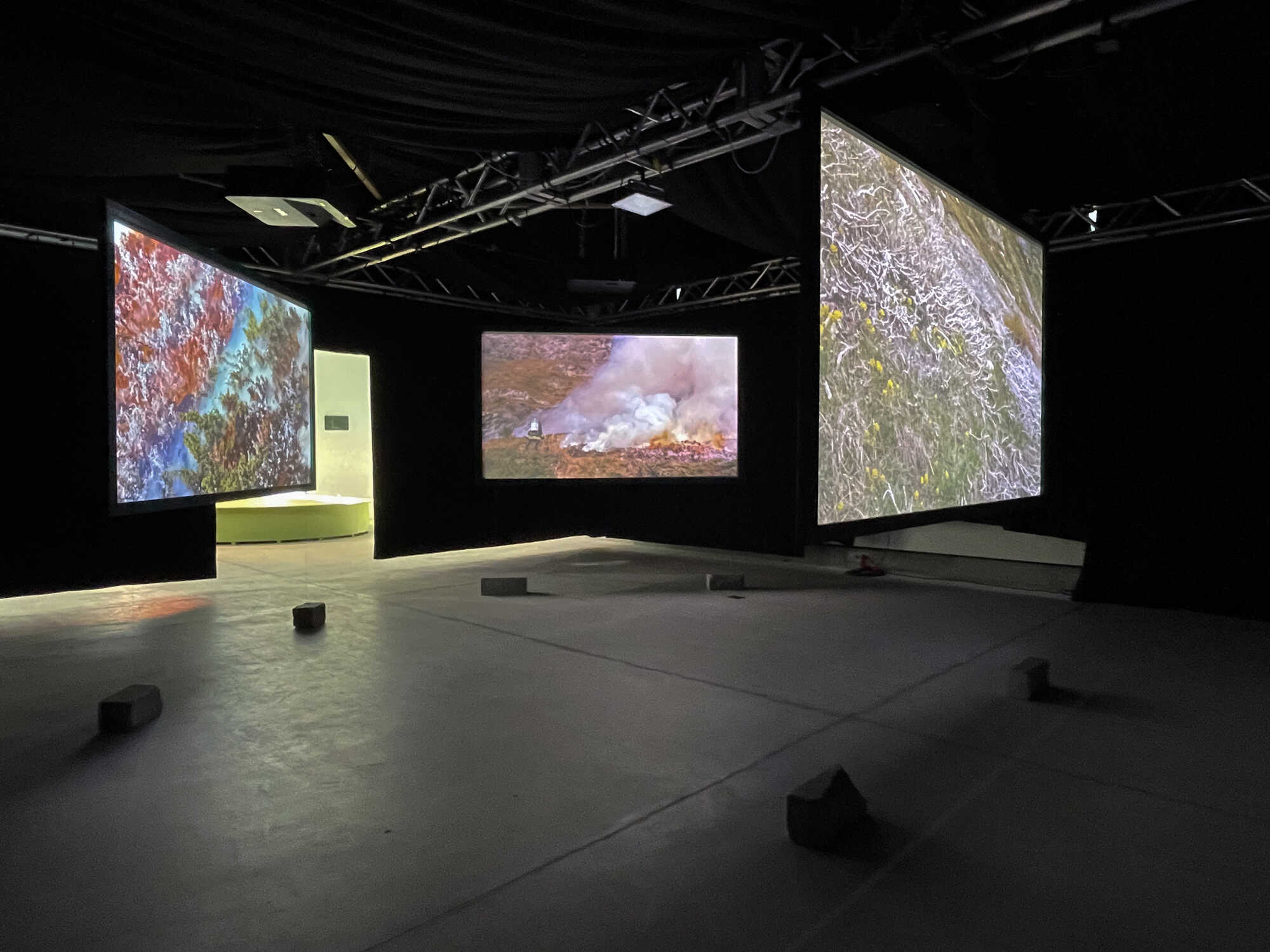
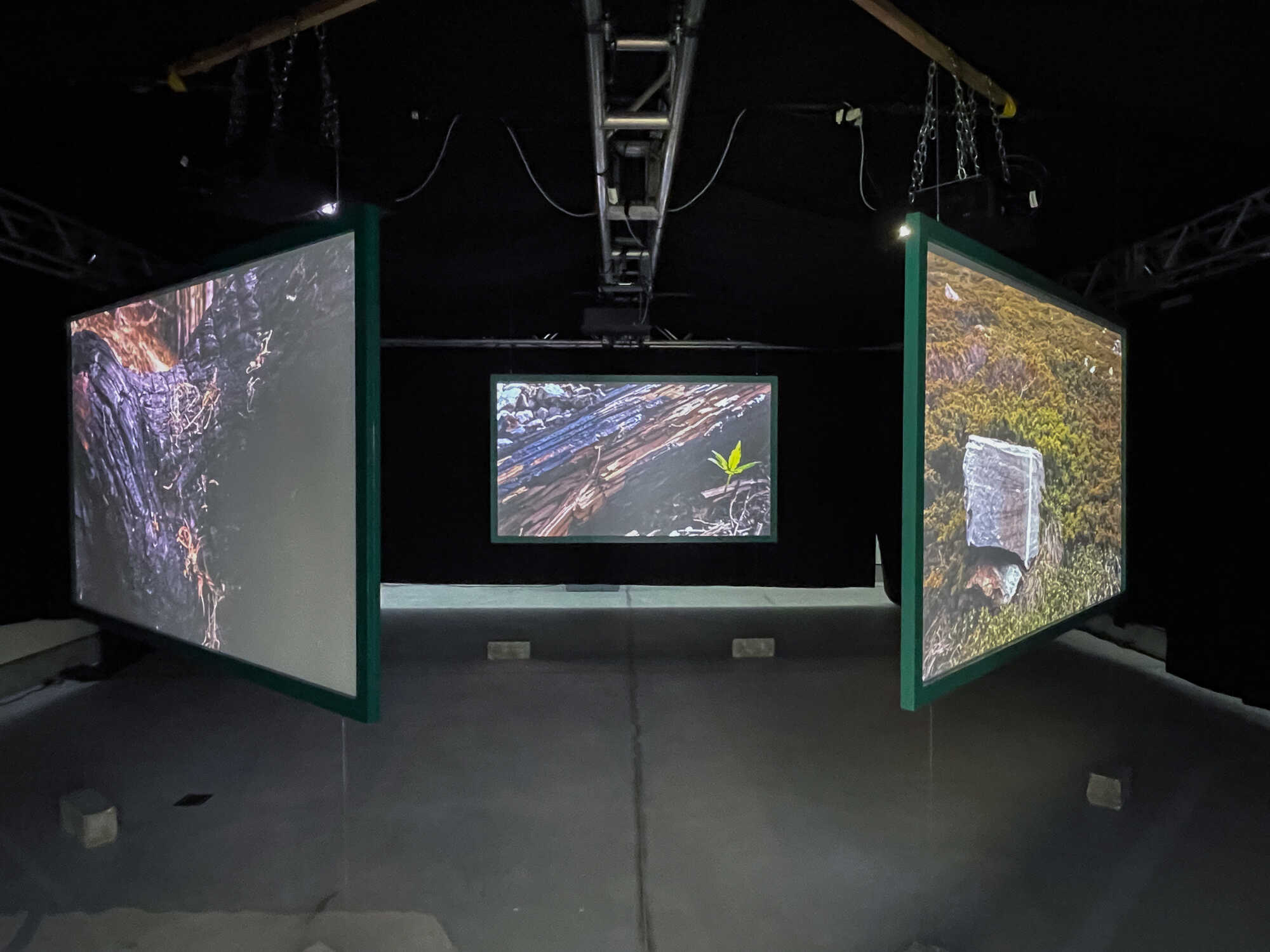
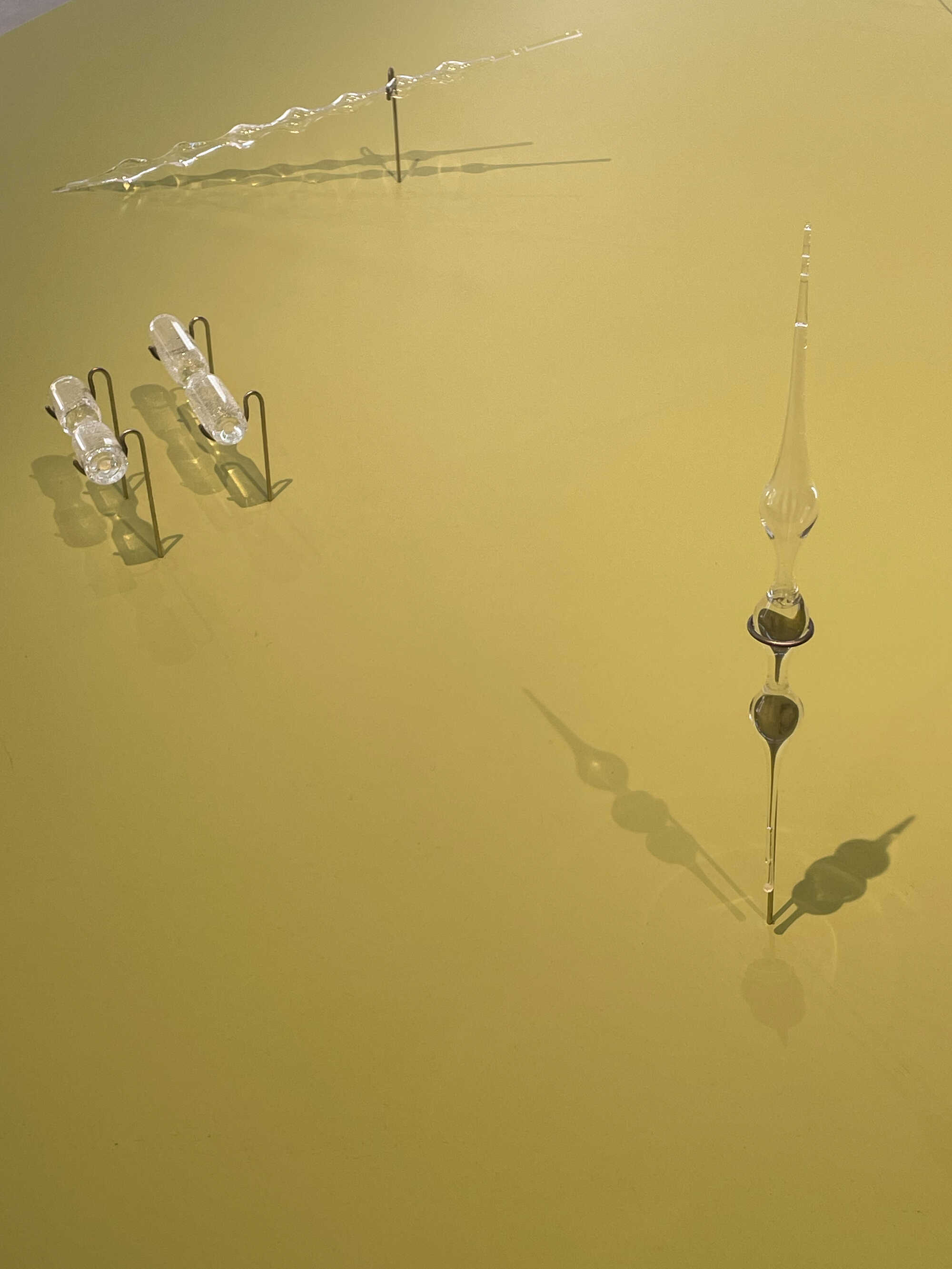
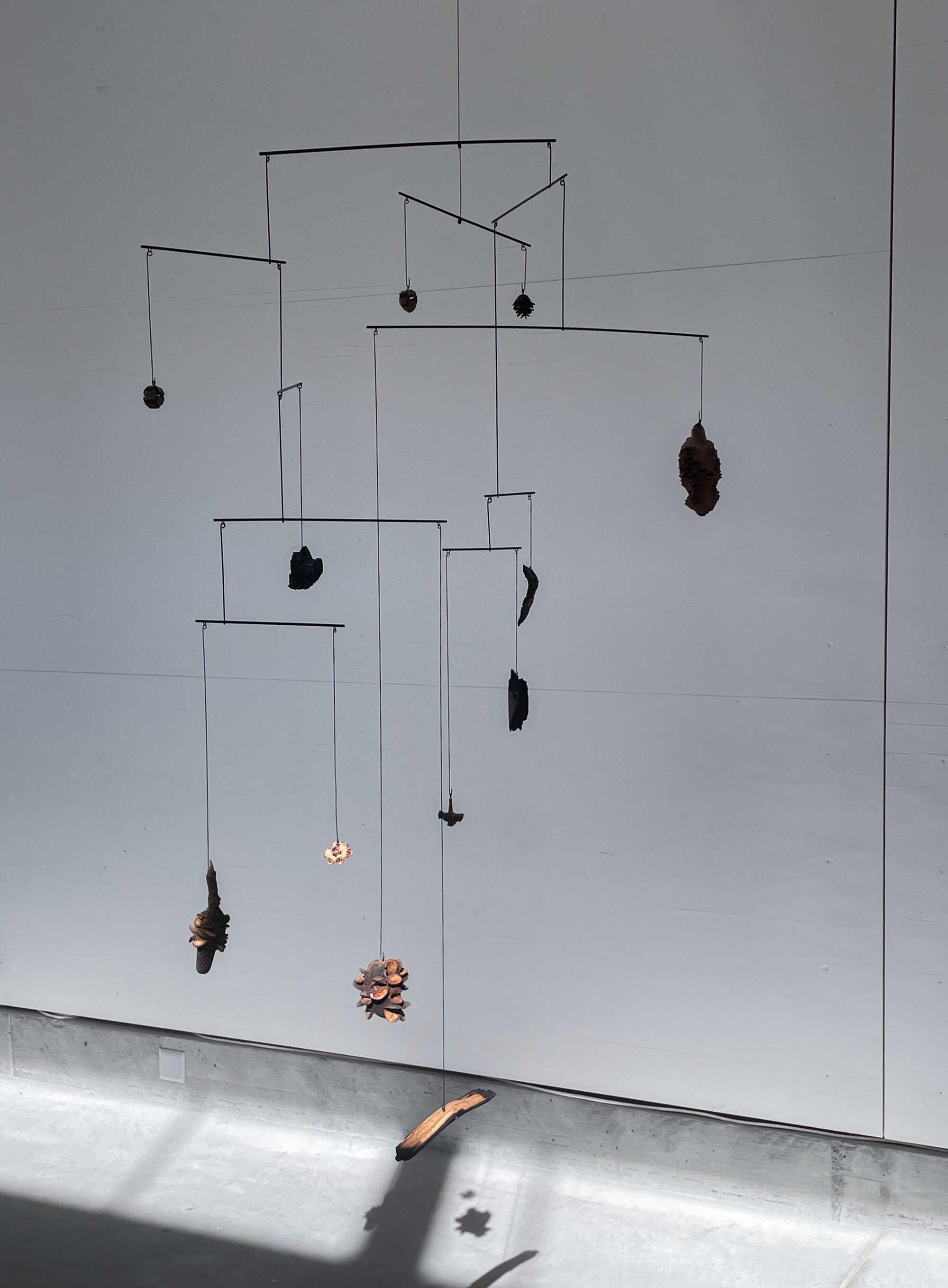
In Peccia, Kersten presents an immersive video installation across six screens, showing, from different perspectives, the destructive yet regenerative forces that fire can have on ecosystems. She examines forest and field fires in the Swiss Alps from various angles. Using visual material recorded by thermal imaging cameras, she reveals the aftermath of a forest fire and what is left aside from pioneer vegetation: blackened ground, charred wood and scorched earth. On a plinth, she has arranged a set of hand-blown borosilicate glass capsules that resemble test tubes found in chemistry laboratories. These vessels contain water extracted from the glaciers of Antarctica and Greenland via ice core drilling – water that is over 100,000 years old in places, and that reflects the memory of the Earth. Hanging in front of these is a kind of mobile (Alexander Calder would be proud!) made of partially scorched objects and lumps of coal found in charred forest areas.
In Eline Kersten’s work, landscapes change. She breathes life into their stories, making them visible and tangible, while reflecting on what might happen if they were to disappear. Kersten is interested in the ecological, historical and personal significance of these regions that are so often mistreated by humans. She highlights the connections between people and their surroundings, and between life and death.
Eline Kersten studied Fine Arts at the Maastricht Academy of Fine Arts and Design and Curating at Goldsmiths, University of London. While her aesthetic standards are evident, there is no moral judgement or wagging finger. She presents phenomena and perspectives, shedding new light on familiar things and engaging viewers directly. After all, art needs people who think beyond the visual – not just people to look at it.
The exhibition ‘Forme di Solastalgia’ (eng. Forms of Solastalgia) is running until 31 October 2026 at the Centro Internazionale di Scultura (CIS) in Peccia. From 30 October, works by the artist will be featured in the exhibition ‘Weltbilder im Wandel. Landschaften von Arkadien bis Anthropozän’ (eng. Changing Worldviews. Landscapes from Arcadia to the Anthropocene) at the Oldenburg State Museum. At Oldenburg Castle, installations by Eline Kersten, Viktor Brim, Dorota Gawęda, Eglė Kulbokaitė, Till Langschied and others will be juxtaposed with paintings and drawings by J. H. W. Tischbein, Erich Heckel and Gerhard Richter.
This article was written by Willy Hafner in German.
About the author

Willy Hafner
Willy Hafner is a Munich based art historian who helped organize the first and second Sculpture Network Lab in 2019. Since then he has been reporting for us on exciting sculpture projects in Germany and beyond. He is also a member of the Patronage Committee of the Centro Internazionale di Scultura and helps emphasize the economic and cultural significance of the project.
Translation
Elka Parveva-Kern
Elka Parveva-Kern supports Sculpture Network since 2024 as a translator - a wonderful opportunity to combine her long-standing interest in languages and art.