Japanese building and Zen garden for the Stone Sculpture Museum and the park in Bad Münster-Ebernburg

The Stone Sculpture Museum, which opened in 2010, is the only museum of contemporary stone sculpture in the world. It nestles within the wine-growing landscape of Germany’s Nahe Valley, opposite the Rotenfels cliff, Ebernburg Castle, Norheim Village, and the rocky pinnacles of the Rheingrafenstein.
The endowment of sixty-five works in stone sculpted by Anna Kubach-Wilmsen (1937-2021) and Wolfgang Kubach (1936-2007) laid the foundation for the museum project. In order to turn their vision into reality, in 1998 the two artists established the Fondation Kubach-Wilmsen trust and designated about four acres of land for their stone sculpture park.
The Stone Sculpture Museum was designed on behalf of sculptors Anna Kubach-Wilmsen and Wolfgang Kubach by the world-famous architect Tadao Ando from Osaka, Japan. At the heart of Ando’s concept for the museum building is a half-timbered wooden field barn, which originally stood in nearby Sponheim. This historical nucleus is flanked by two open-air sculpture courtyards in contemporary concrete construction.
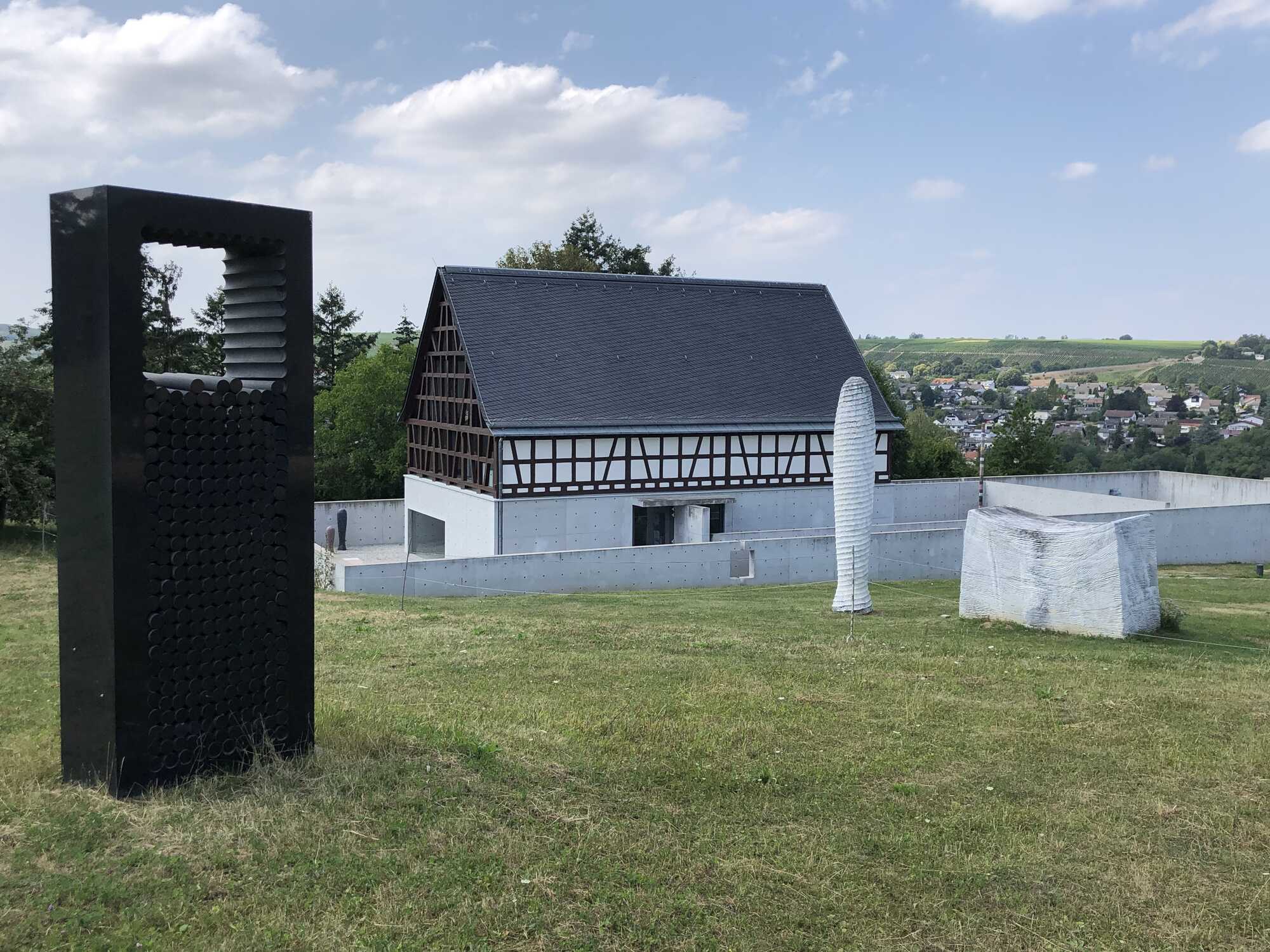
Japanese architect Tadao Ando gave the museum the shape of a traditional barn from the region but with typical Zen elements
Stone sculptors Anna Kubach-Wilmsen and Wolfgang Kubach began working together in 1968. They have carried out large-scale sculptural commissions in Germany and abroad and participated in many international sculpture symposia. Their works have regularly appeared in exhibitions from Japan to the United States. The success of the artist couple Wolfgang Kubach and Anna Kubach-Wilmsen made their dream come true. Their stone books (Steinbücher)—some even stacked up high—sold so well that they could build a new museum for their work while they were still alive. Japanese architect Tadao Ando eventually came up with the idea of giving the museum the shape of a traditional barn from the region, but with typical Zen elements. For the new museum, Ando used wooden parts from an old half-timbered farmhouse that was being demolished at the time. The museum was completed in 1986; a simple wall of concrete elements was built around the building, and inside, a Zen garden with water and pebbles was created, in which the abstract stone sculptures by the Kubach-Wilmsen couple were placed.
Sculpture Garden
A beautiful sculpture garden was laid out in the surrounding fields that originally served as a vineyard and was named Stone Sculpture Park. The park covers an area of 1.5 hectares and is open to the public 24 hours a day. There are about thirty sculptures in the park that reflect the evolution of stone as a material from five continents. Particularly noteworthy are the Buchtürme by the Kubach-Wilmsen couple: towering stacks of natural stone that in some cases reach up to seven meters in height. Even though they contrast sharply with the surrounding rolling hills, they certainly do not clash. Of particular note is the stunning 2.5-meter-high stone circle made of green Indian granite, which the couple named Steinbuchrolle. As you walk toward the museum entrance, you can hardly miss this eye-catcher. Another striking element in the work of this acclaimed couple is the rough finish of some of the sculptures. The creators were more concerned with the shape of the original fossilized stone than with their own additions; various large chunks of stone have been worked with only minimal intervention. For example, ridges have been milled into the sides of the rough chunks, suggesting that these are pages from a book. In the Zen garden one stumbles upon a chunk of Brazilian green granite, cut, polished, and shaped into a half-egg form. The 3.5-meter-tall stone lies like a sort of prehistoric animal on the pebbles in the museum’s courtyard.
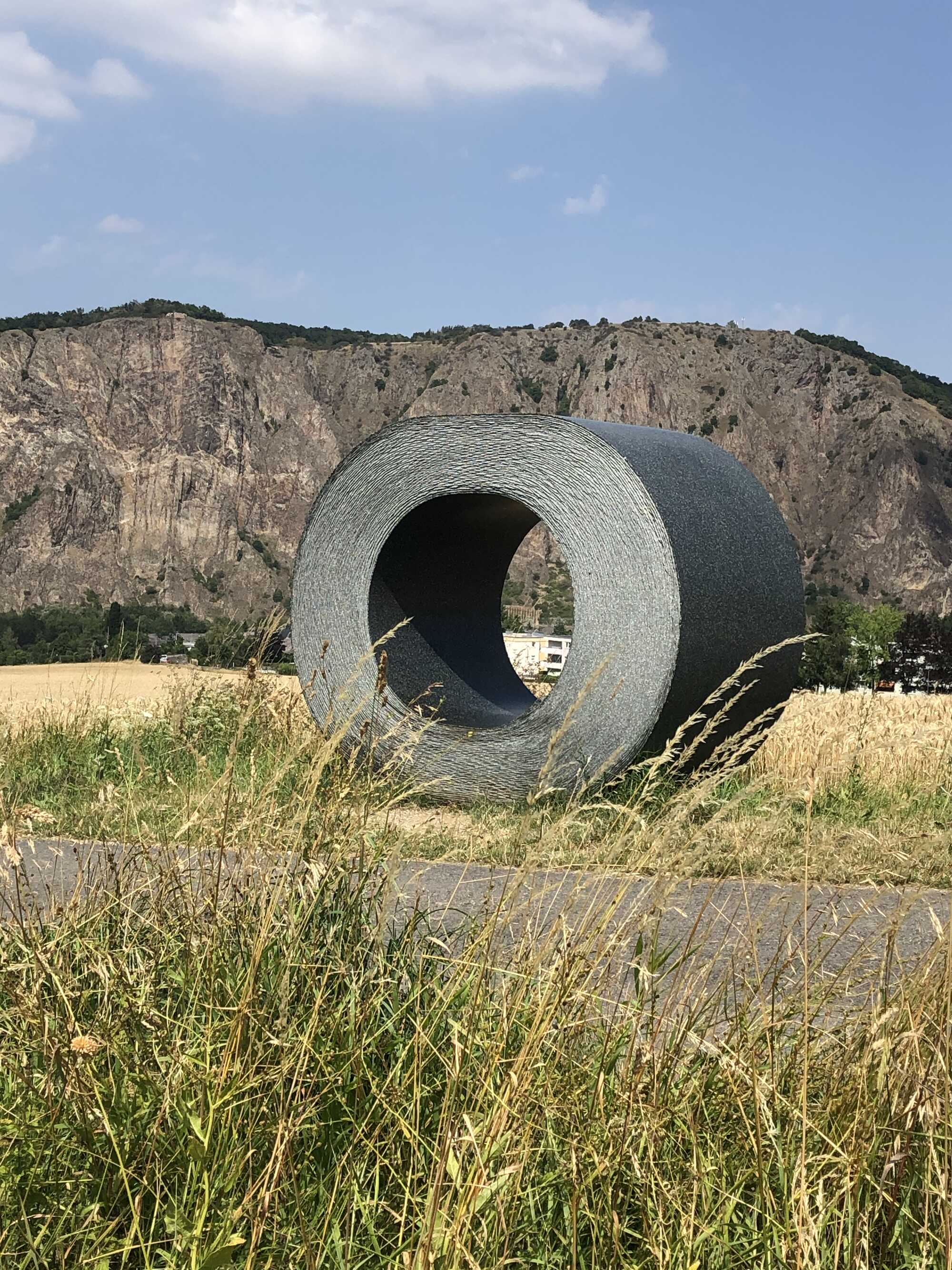
The combination of landscape and contemporary sculpture works remarkably well
The dynamic couple Kubach-Willemsen spared no expense or effort in tracking down unique types of stone. To that end, they visited quarries all over the world as well as trade fairs abroad, where they purchased large blocks of stone. In the sculpture garden, I saw a large aqueduct made of Roman travertine and a slender stele of Carrara marble. Walking through the garden and museum, you notice that the combination of landscape and contemporary sculpture works remarkably well here. This is partly due to the Rotenfels behind it, which is two hundred meters high and 1,200 meters long and serves as a magnificent backdrop for the building and the garden. The rock formation consists of the stone type porphyry.
The artistic oeuvre of the Kubach-Wilmsen sculptors represents a 50-year homage to stone as the material that evolved our planet’s natural architecture. Their work continues to be devoted exclusively to stone as an archetype. They understand stone as a testament to the history of the Earth’s formation over millions of years.
Livia Kubach and Michael Kropp
Among the sculptures by the Kubach-Wilmsen couple, both in the park and in the museum, are also works by their daughter Livia Kubach and her partner Michael Kropp. During a guided tour, which visitors can book, Livia Kubach explained that after her parents’ death, she found herself responsible for a foundation entirely dedicated to their legacy. During her lifetime, daughter Livia had chosen her parents’ path and studied sculpture at the Düsseldorf Art Academy under Tony Cragg and Günther Uecker, among others. She later decided to step out of their shadow as a sculptor and daughter of this famous couple and to continue the foundation her parents had established. But now also with her own work and that of her partner, which they both contributed to the foundation. As a female sculptor, Livia believes it is much harder to achieve success.
The Säulengitter (column gallery) at the park’s entrance is simply magnificent
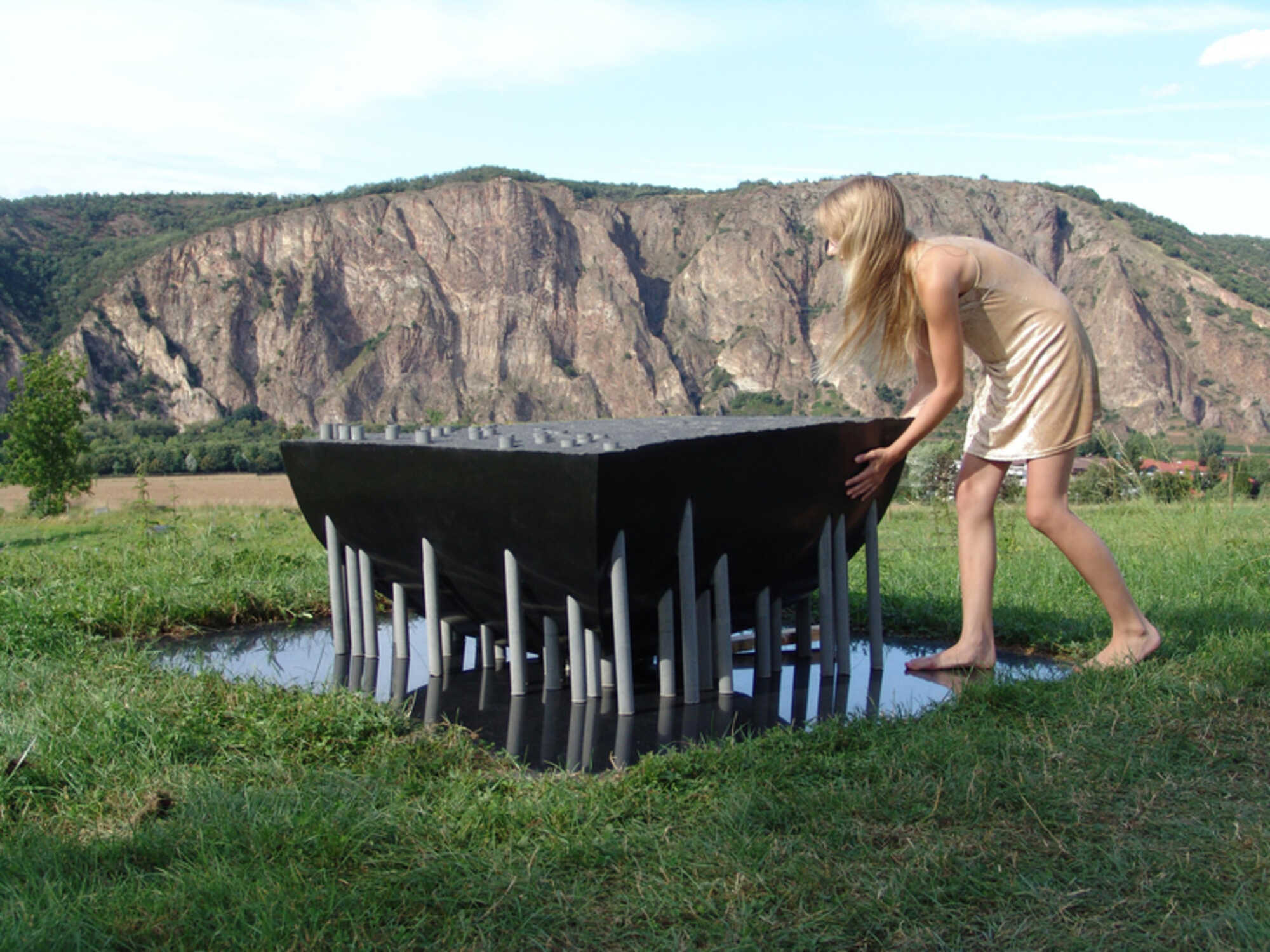
By placing her work in the context of her famous parents’ sculptures, she gains significantly more exposure. Her stone sculptures are created in close collaboration with Michael Kropp, who is a self-taught sculptor. You can find their work in several museums and parks in Germany. Their objects are mostly made of black granite from various regions around the world, cut, and sometimes polished. Sometimes the stone is displayed in its raw form with visible fracture surfaces; this results in refined works that possess optical and sometimes also acoustic properties. These acoustic properties are introduced by Michael Kropp, who was originally trained as a musician. Take their Säuleninseln: they consist of large chunks of granite, rough on top and pierced with deep holes across the entire surface. The bottom is beautifully rounded and polished. Inside the holes are small, loose stone pillars on which the sculpture rests. You can move it back and forth, and then the pillars make a ticking sound against the granite form as it moves along with them. The Säulengitter (column gallery) at the park’s entrance is simply magnificent: a tall, rectangular, open structure of African granite filled with stacked round rods of the same material and size. An impressive statement by this couple that harmonizes perfectly with the understated Japanese architecture of Tadao Ando. Conclusion: Sculpture, museum building, and landscape are brought together here in an almost mystical way to form a visually stunning Gesamtkunstwerk.
Further Information:
Stone Sculpture Museum and Park
www.fondation-kubach-wilmsen.de
Bad Münster am Stein-Ebernburg, Germany
The museum is open from 10 May until 25 October 2026.
This article was originally written in English by Etienne Boileau.
About the author
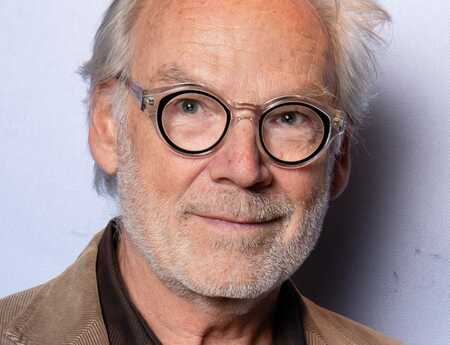
Etienne Boileau
Etienne Boileau is a Rotterdam based journalist and writer.
Translation

Sybille Hayek
Sybille Hayek is an editor and translator. Since 2022 she has been supporting our team on a voluntary basis with her trained eye for detail and a great love of language.