A Sense of Happiness – Brancusi in Berlin

Winter, 40 years ago; it's snowing in Bucharest, and driving is difficult because lighting is scarce. At times the power is out, so we drink lukewarm coffee in the hotel breakfast room, wrapped in our coats and wearing warm hats. Children are begging; the poverty is impossible to ignore. We drive through Târgu Jiu, and then it appears: the Endless Column, towering nearly 30 metres into the Romanian sky. And this infinity, bursting the bounds of earthly space, striving toward the heavens – that is what has stayed with me: “Art must, in a single stroke, without warning, trigger the shock of life, the sensation of breathing – a feeling of happiness.”
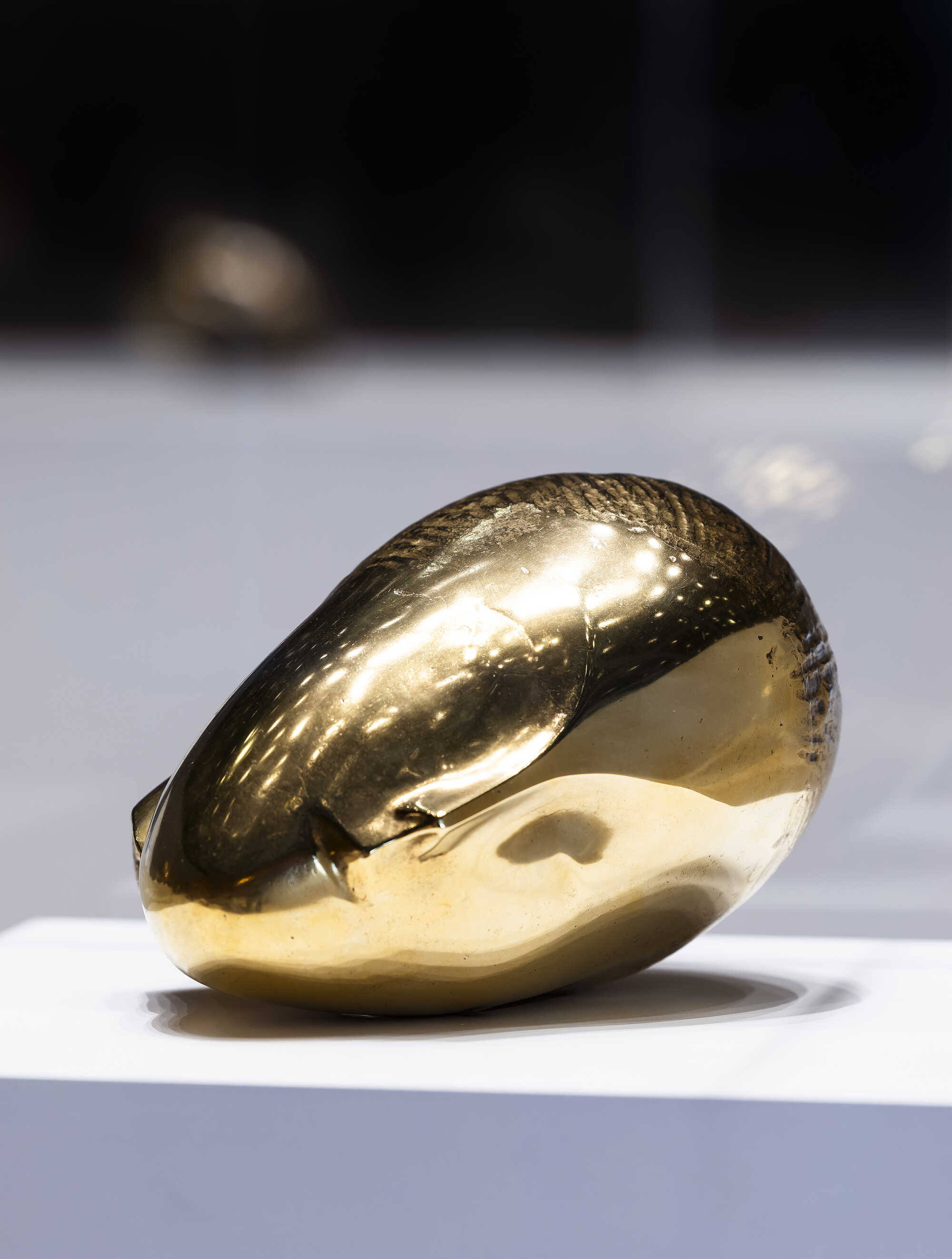
The fact that Brancusi’s works will be on view in Berlin until August 9, 2026, is due in part to the fact that the Centre Pompidou has been undergoing renovations since last year and in part to the good relations between Klaus Biesenbach, the museum’s director, and Paris. The sculptor, who died in 1957, stipulated in his will that his artistic legacy should pass to the French state and be exhibited in France. This is exactly what has happened at the Centre Pompidou and for the studio with an adjacent building. On display are 150 sculptures, photographs, drawings, films, and archival materials. These include major works such as the aforementioned Endless Column, The Kiss, Bird in Space, Muse endormie (The Sleeping Muse), and a partial reconstruction of his studio, which is on display outside of Paris for the very first time.
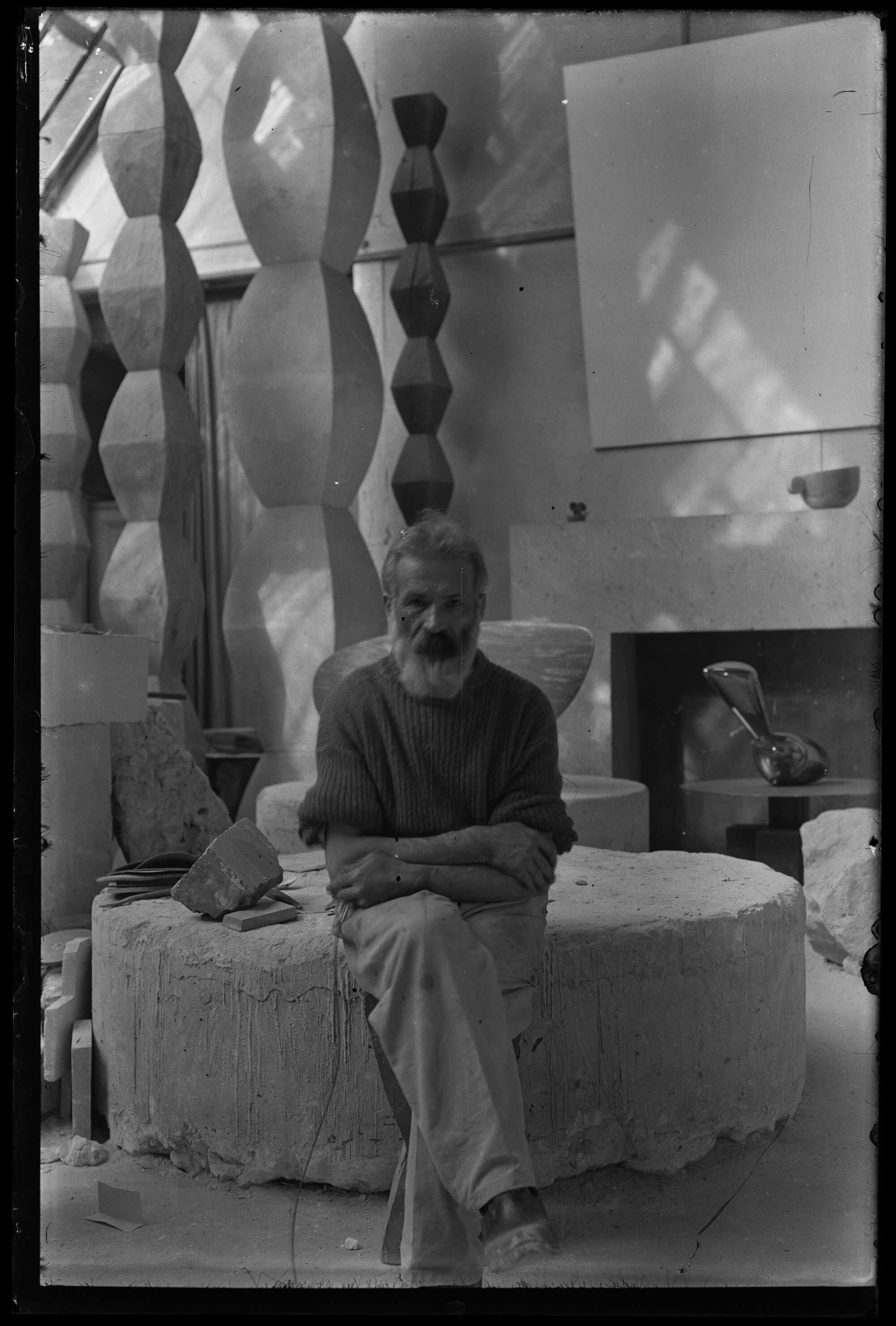
After 1904, he gave up modelling in plaster and began to sculpt directly in stone or wood, using the “taille directe” technique. His self-portrayal as a “peasant from the Carpathians” is vaguely reminiscent of Rilke, who, incidentally, had also worked for Rodin a year earlier.
Brancusi commissioned a clipping service, and the exhibition features a thick booklet in which articles about his sculptures were carefully cut out and pasted. In addition, he subscribes to numerous art and literary publications from across Europe and the United States and is befriended by Man Ray, his compatriot Tristan Tzara, Modigliani, Marcel Duchamp, Léger, and the composer Erik Satie. Representatives of various isms such as Cubism, Futurism, Dadaism, and Surrealism frequented his studio, but he himself never belonged to any of these artistic movements. The American painter Reginald Pollack aptly called him a “shaman and showman” in his 1988 essay by the same name.
After customs officials classified his bird sculpture not as a work of art but as a kitchen utensil for tax purposes, he filed a two-year lawsuit against the French state, which he won.
Following the scandal involving Princess X, who, depending on the viewer’s perspective, represents either a female figure with breasts or a phallus, he preferably exhibits his works in his own studio, where he stages their presentation himself. Here, he plays with the dissolving of traditional gender roles, just as he promotes the convergence of male and female in The Kiss.
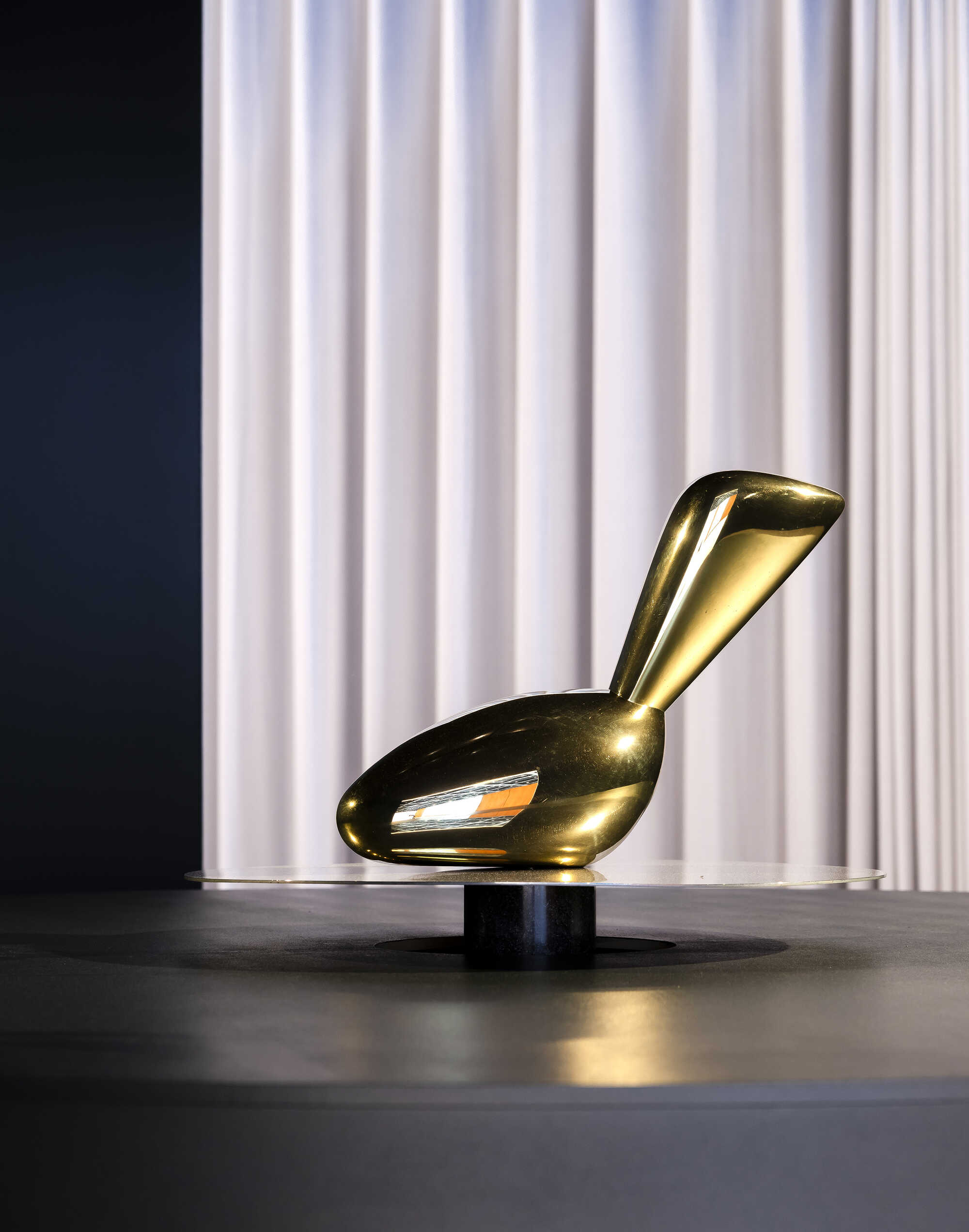
His fauna consists of fish, birds, seals, and turtles. “I do not wish to depict the bird itself, but rather the impulse, the lift-off, the momentum.“
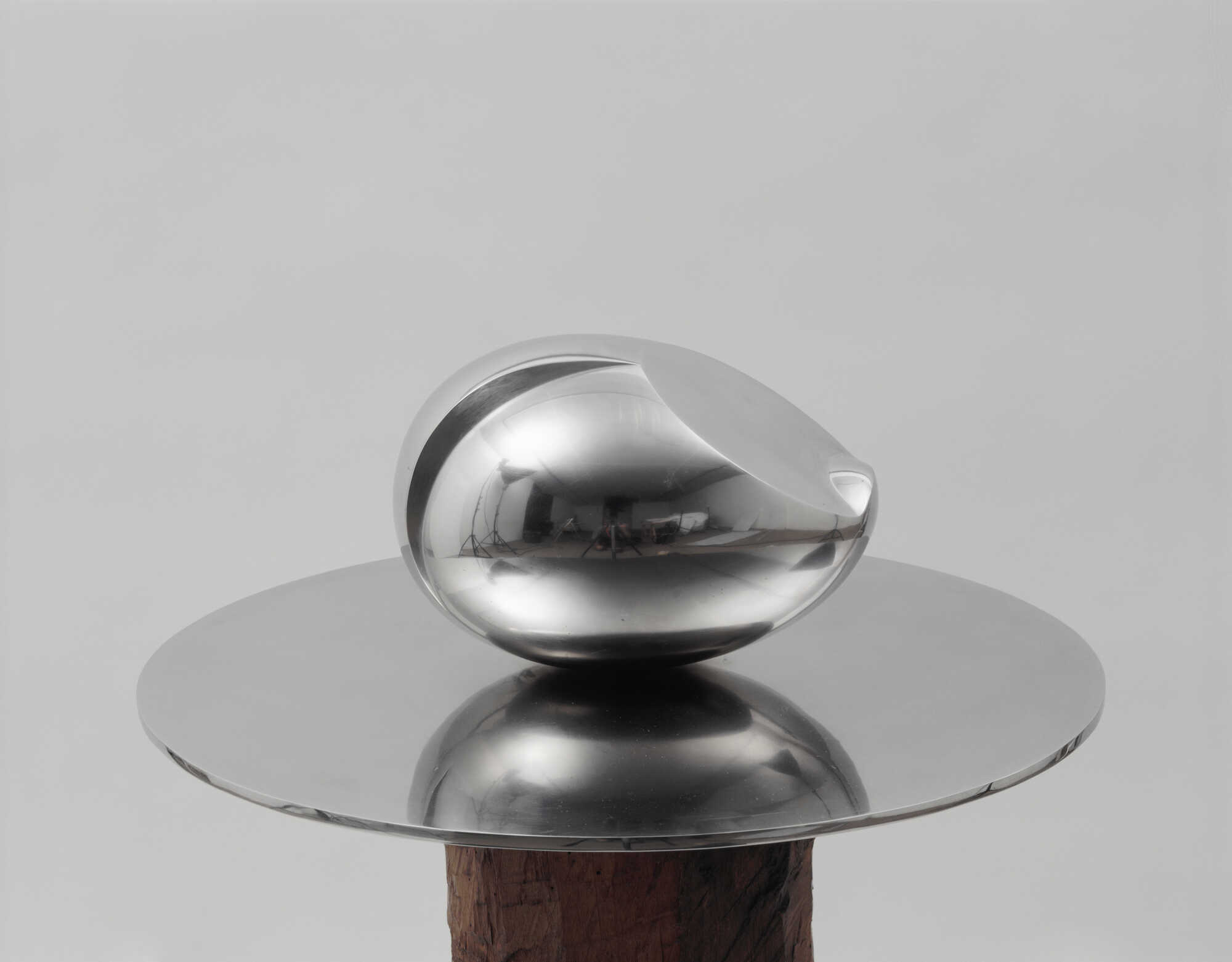
In 1926, he mounts the gold-glittering bronze sculpture Leda on a ball bearing to enhance the impression of movement. The steady rotation causes light effects that transform and expand object and space, merging them into a single entity, a phenomenon he has captured in a film he made himself.
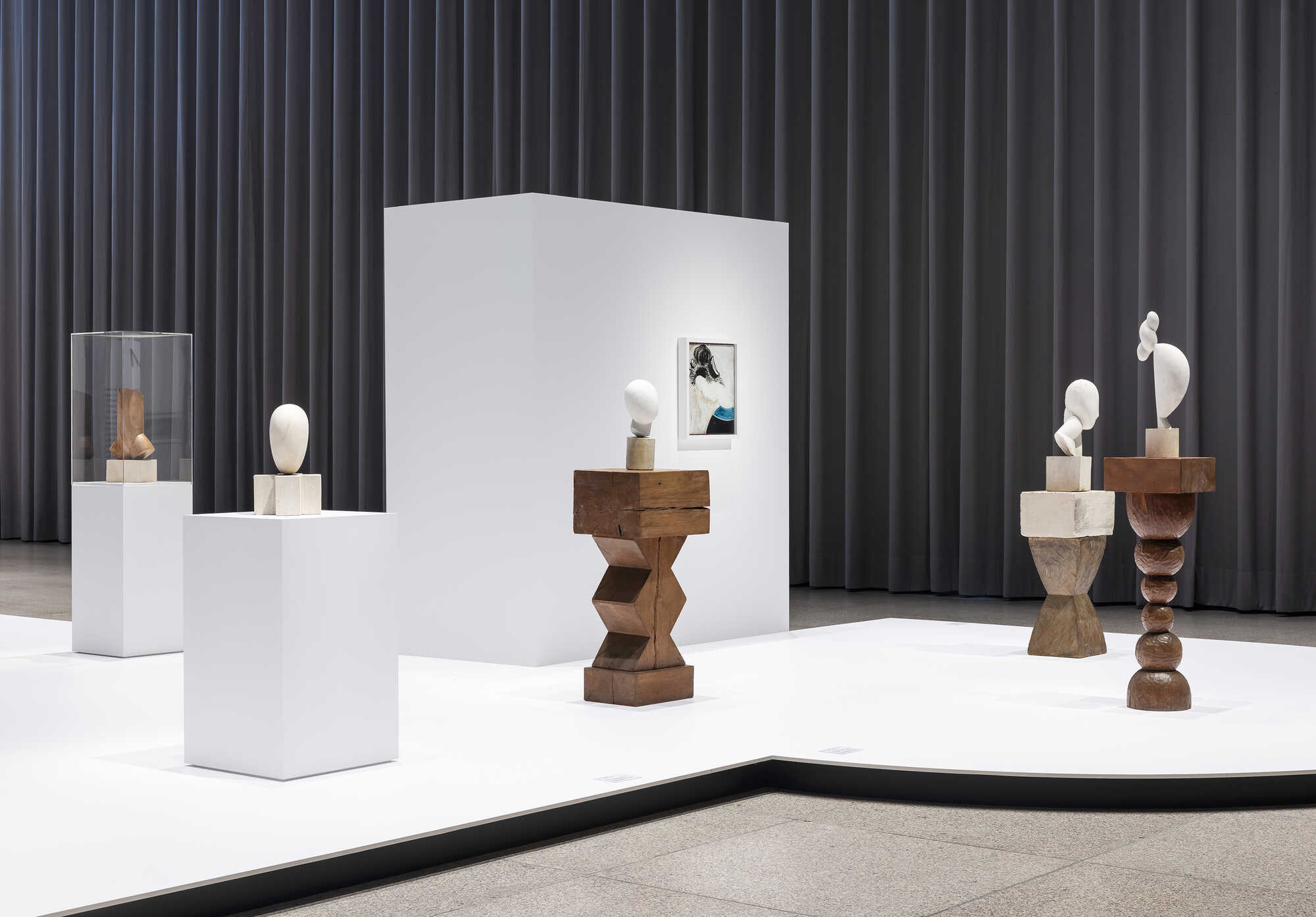
In 1908, he creates a head carved from marble, the inspiration from Rodin in which is impossible to overlook. Just two years later, he produces a completely reduced version of an egg-shaped head, brilliantly polished in bronze, but also rendered in plaster and stone. These heads are arranged in a curved display case that is part of a dazzling exhibition design featuring stepped white floors in flowing forms, upon which the sculptures are generously arrayed. It is not always possible to position it in such a way that viewers are able to walk around it. But the shiny golden bird, which seems to be flying toward the skies, makes a striking impression against Mies van der Rohe’s emerald-green marble wall. As wood changes when exposed to sunlight, the glass walls had to be covered. The requirements were demanding. And yet there is a wonderful interplay between the glass-and-metal temple, which is difficult to display in, and the wood-and-metal sculptures, which hold their own and whose impact is actually enhanced by the architecture.
Starting in 1916, Brancusi began selling his sculptures and pedestals as a single unit. He rejected any form of artistic hierarchy.
His works echo traditional Romanian craftsmanship but also the formal language of ancient, African, and Far Eastern artefacts. The exhibition features a Cycladic idol created between 2700 and 2300 B.C.E., alongside a photograph depicting one of his minimalist sculptures.
In a 16-mm film by Man Ray, dating from around 1930, Lee Miller is seen removing the dust cover from a sculpture, a task that Brancusi usually performed himself to enhance the effect of his highly polished sculptures. Staging was not foreign to Brancusi, which brings us right up to today's performances. Photographs show dancers performing on pedestals. The studio, which served as a residence, workshop, and exhibition space, was also a gathering place and party venue – a powerhouse for a powerful artist!
This text was originally written in German by Ursula Karpowitsch.
Further Information:
Brancusi Exhibition at the Neue Nationalgalerie in Berlin, March 20 – August 9, 2026.
Click here for the article about our Sculpture Network Dialogue on the exhibition.
About the author

Ursula Karpowitsch
Ursula Karpowitsch was initially only interested in two dimensional art until she discovered shimmering bronzes. For Sculpture Network she writes reports on our events and exciting exhibitions and translates texts.
Translation

Sybille Hayek
Sybille Hayek is an editor and translator. Since 2022 she has been supporting our team on a voluntary basis with her trained eye for detail and a great love of language.