Kunstverein Kohlenhof Nürnberg e. V., 2026
Hand-blown glass from the Lamberts Glassworks, light source, dimensions variable
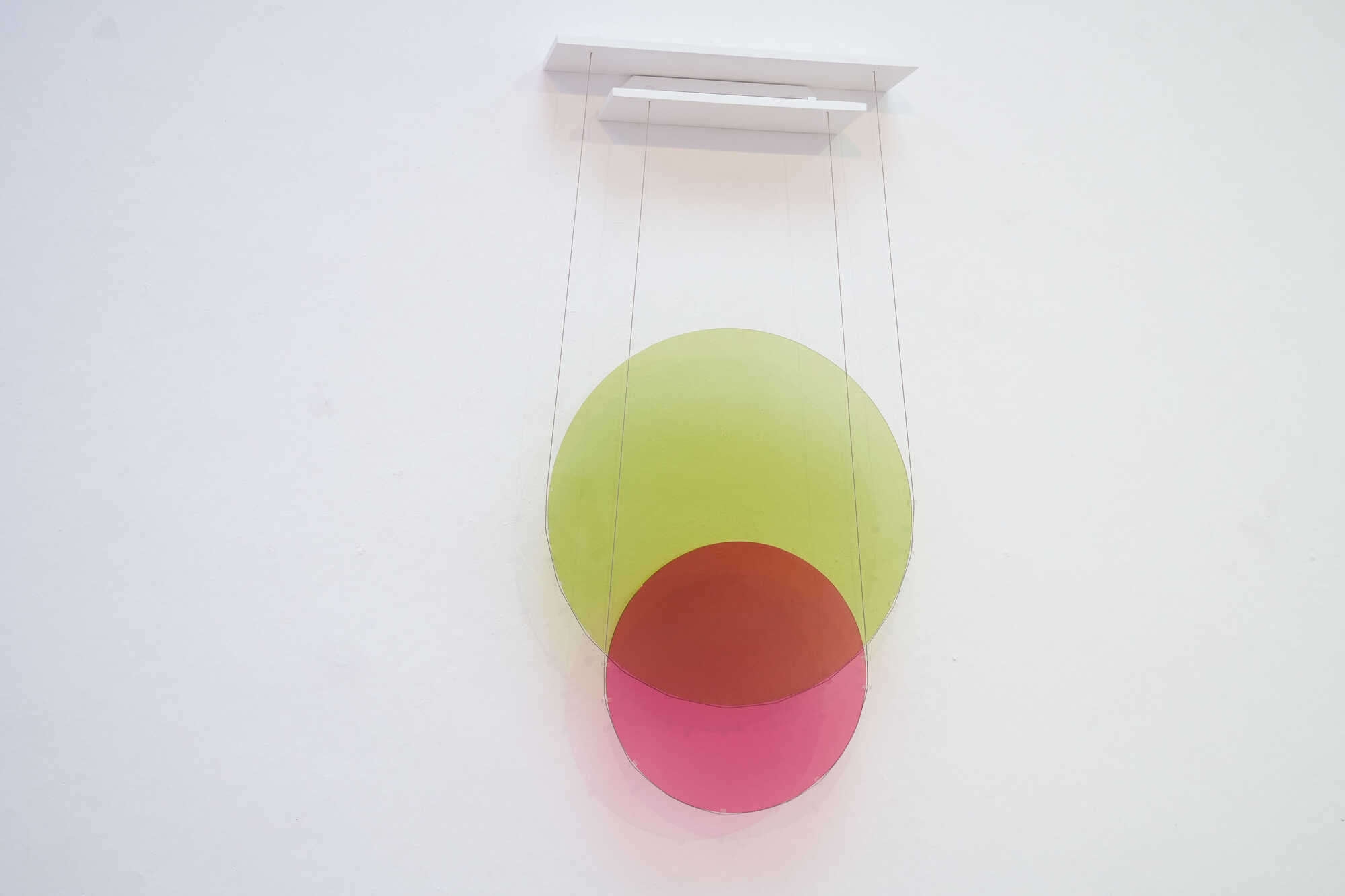
Global gender parity (f 33% | m 67%), Gold-Pink on White (⌀ 33 cm) & Yellow-Greenish (⌀ 47 cm)
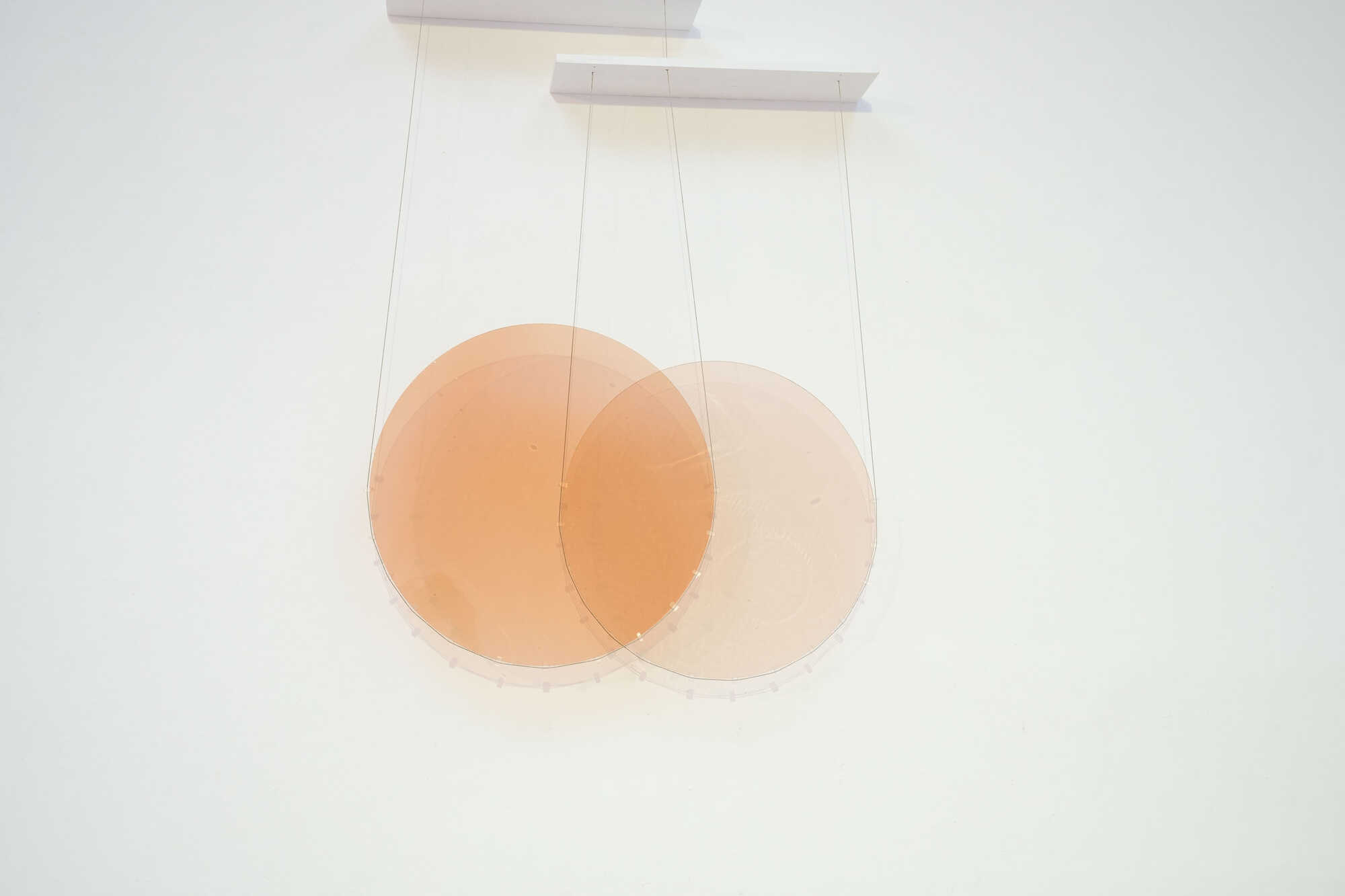
Birth rate in Germany in 2025 (f 48.5% | m 51.5%), Selenium-Reddish (⌀ 40 cm) & Brownish (⌀ 42 cm)
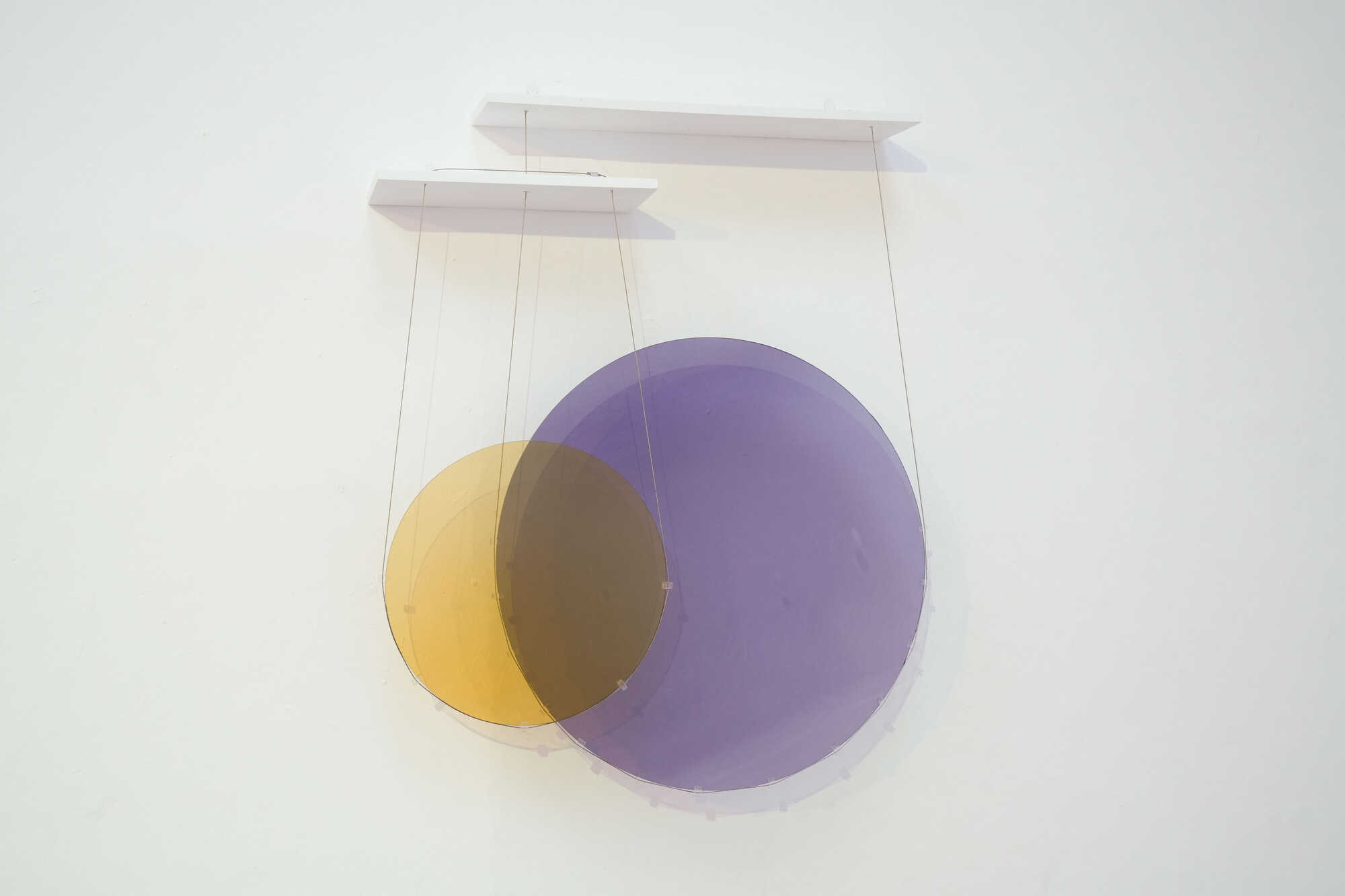
Gender distribution in international art galleries (f 27% | m 73%), charcoal yellow (⌀ 30 cm) & violet (⌀ 50 cm)
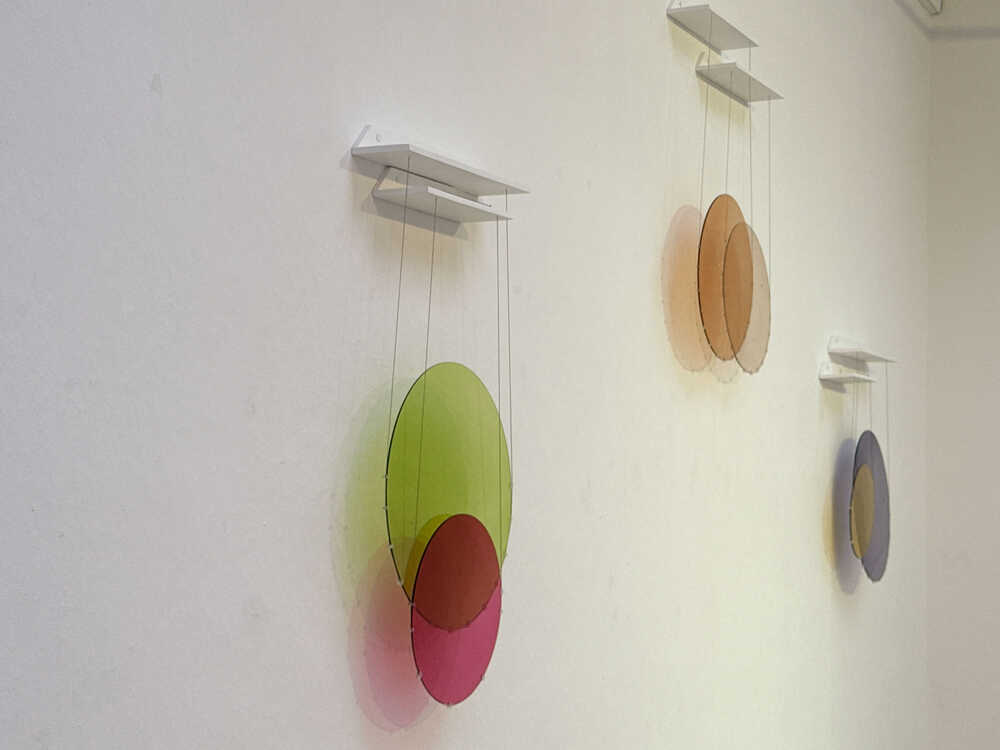
The room installation consists of round, solid-colored glass panels of varying sizes, some of which overlap. Natural and artificial light passes through the panels, creating colorful reflections and fleeting projections in the room and on the walls.
Behind the work lies the artist’s intensive engagement with data and norms. To date, standards have been based predominantly on one-sided data—namely, that of men. This gives rise to the so-called “gender data gap”: a lack of data for a specific gender (even beyond just women and men). This becomes particularly significant in the context of AI, as it perpetuates the dominance of male-centric data.
For “Norm and the In-Between,” Wegemann compiled an atlas of 39 pairs of numbers based on data from the years 2025–2026. Thus, the work serves as a mirror of the present. The number 39 refers to the installation “The Dinner Party” (1974–76) by artist Judy Chicago, consisting of 39 place settings at a banquet table, each dedicated to a significant female figure.
Wegemann materializes the identified “gender data gaps” by translating and transforming them into glass. In the presentation, the glass panels appear in pairs—one based on female data sets and one on male data sets. In the overlapping area of the panels, additional genders are considered and visualized.
The work shifts the focus from the legibility of the data to its artistic impact. Here, the differences manifest not only as measurable numbers, but as a visual situation and tangible spatial relationships: proximity and distance, density and void. The installation thus operates at the intersection of materials research, optics, and data science, and should be understood as a spatial exploration of data, bodies, and absence—and as a translation of information into weight, light, and fragility.
Norm and the In-Between
Factsheet
- Year
- 2026
- Material
- Glass, Light
- Style
- Installation
- Theme
- Science, Society