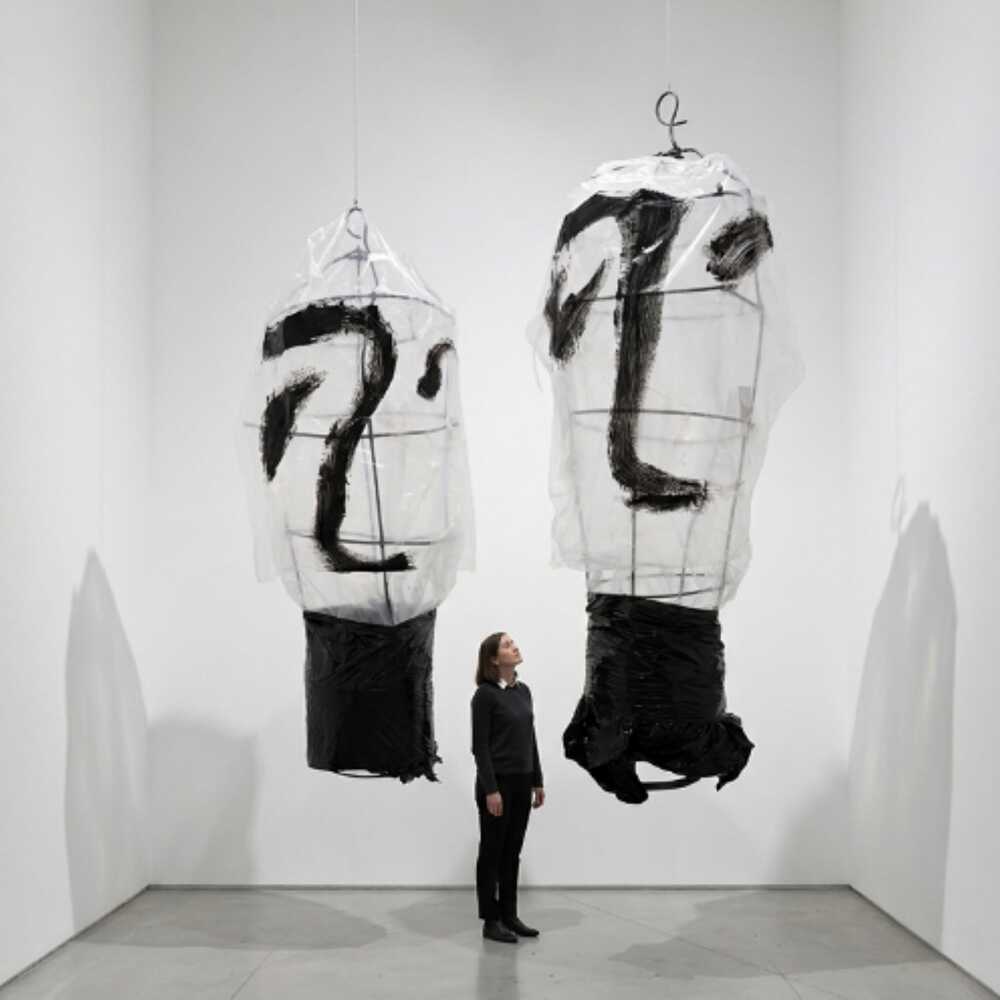
ASPHYXIA is a sculptural installation that explores suffocation as a physical, social and environmental experience. Two monumental bodies made from reclaimed translucent plastic, recovered black packaging plastic and recycled metal bars remain suspended in space as vulnerable, unstable presences.
Translucent plastic acts as a second skin: it protects and contains, yet at the same time compresses, isolates and restricts breathing. Broad black gestures on its surface suggest faces without a fixed identity. The individual figure is displaced towards a shared, collective body.
The internal metal structures remain visible through the membrane and can be read simultaneously as skeleton, support or cage. This ambiguity is central to the work: protection becomes confinement; support becomes pressure; resistance coexists with fragility.
Scale and suspension transform the installation into an encounter rather than an object to be observed at a distance. Positioned in a space of passage, the two forms interrupt habitual movement. The visitor must negotiate their presence physically - approaching, moving around or passing beneath them.
ASPHYXIA does not simply represent the inability to breathe. It makes suffocation perceptible as a spatial and material condition, connecting the vulnerability of bodies with the growing pressure placed on ecosystems and shared environments.
Plastic as skin
WHAT PROTECTS CAN ALSO SUFFOCATE.
Plastic is not a secondary material in ASPHYXIA; it is the conceptual and sensory core of the installation. A material associated with protection, packaging, durability, and domestic use is transformed into a membrane around vulnerable bodies.
The work shifts the question of plastic from an external environmental problem to an embodied experience. The viewer encounters plastic at the scale of the body: as skin, boundary, pressure and lack of air. The same material that makes contemporary life practical and durable becomes an image of the conditions that make life increasingly difficult to sustain.
The exhibition asks what the pervasive presence of plastic means for people while foregrounding its effects on nature and human bodies. ASPHYXIA responds through an experiential rather than illustrative language: it asks what it feels like to inhabit this saturation.
The installation also works through material contradiction. The translucent plastic is reclaimed from discarded furniture, and the black plastic is recovered from packaging; the internal metal bars are recycled. 100% of the sculptural materials are recovered, reused or recycled. This is not presented as a simple solution to the plastic crisis, but as a material practice that exposes the persistence, excess and afterlife of the material itself.

