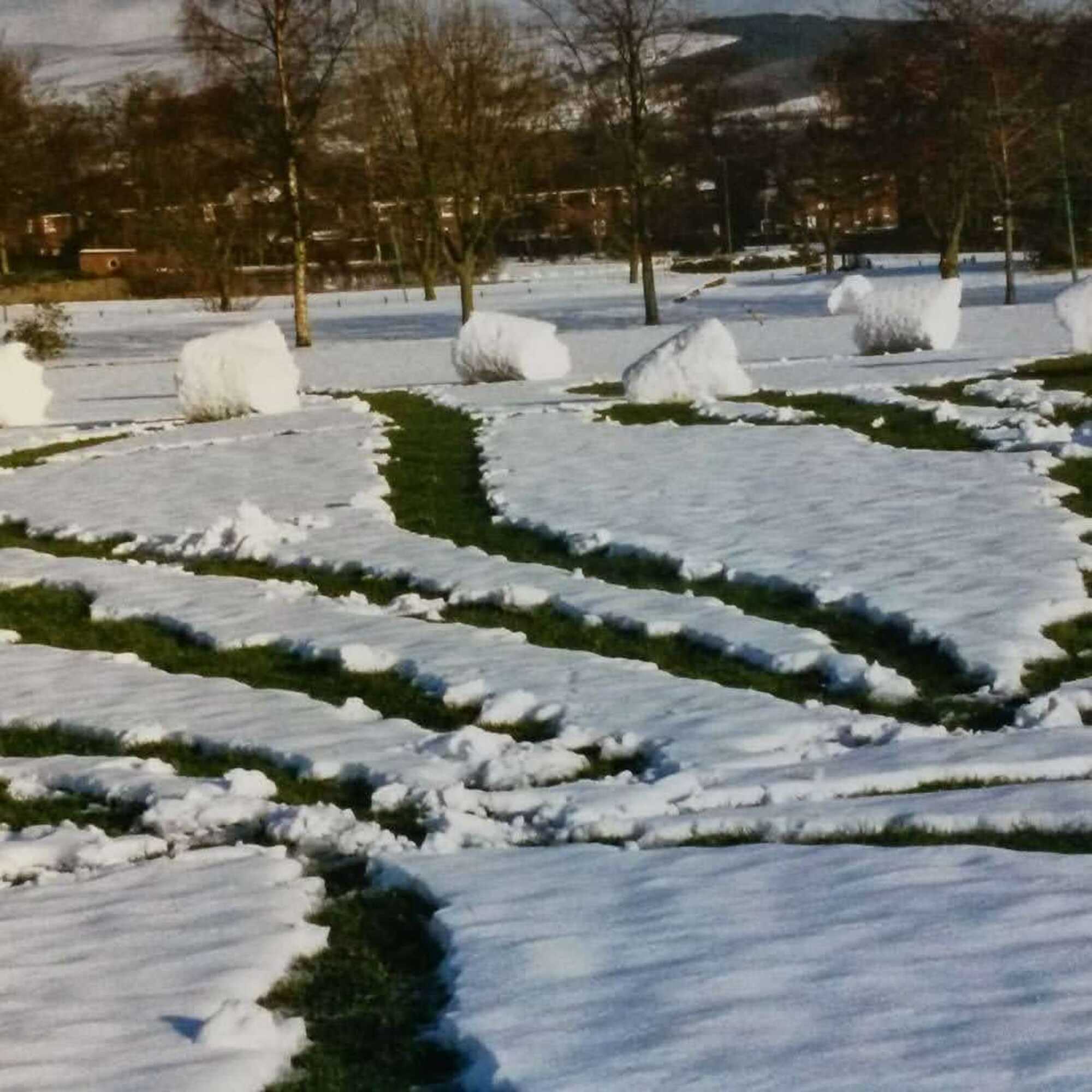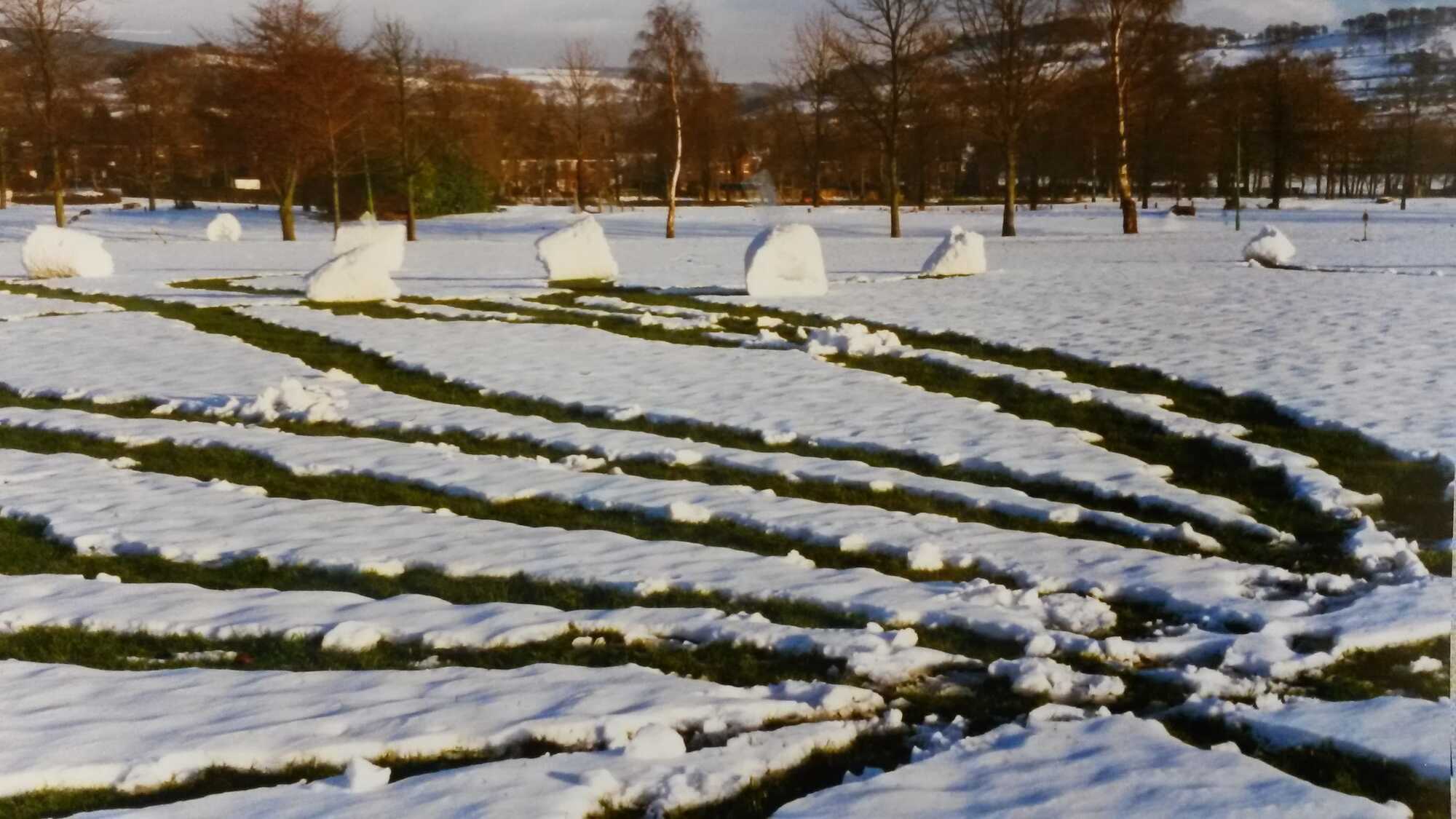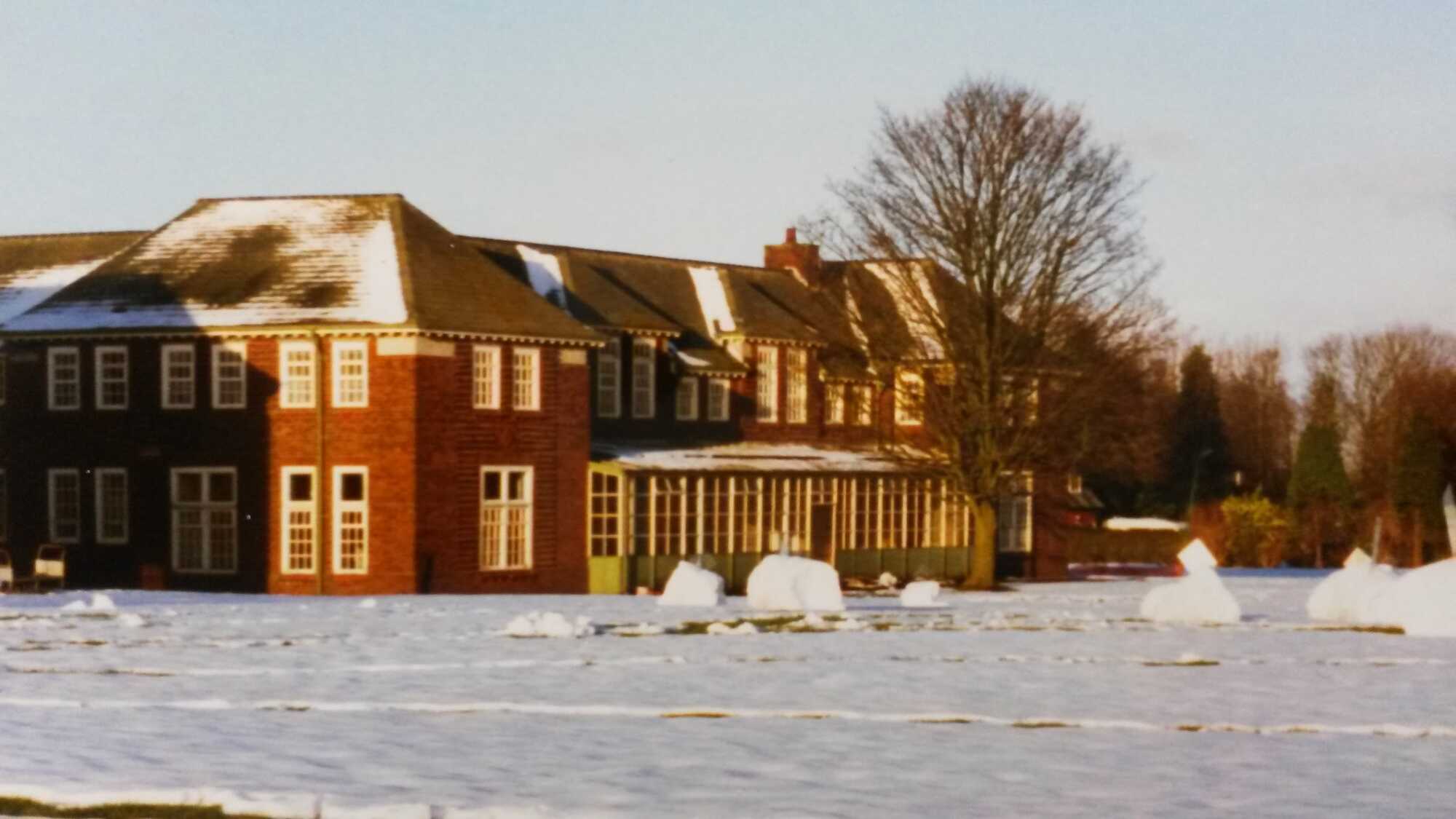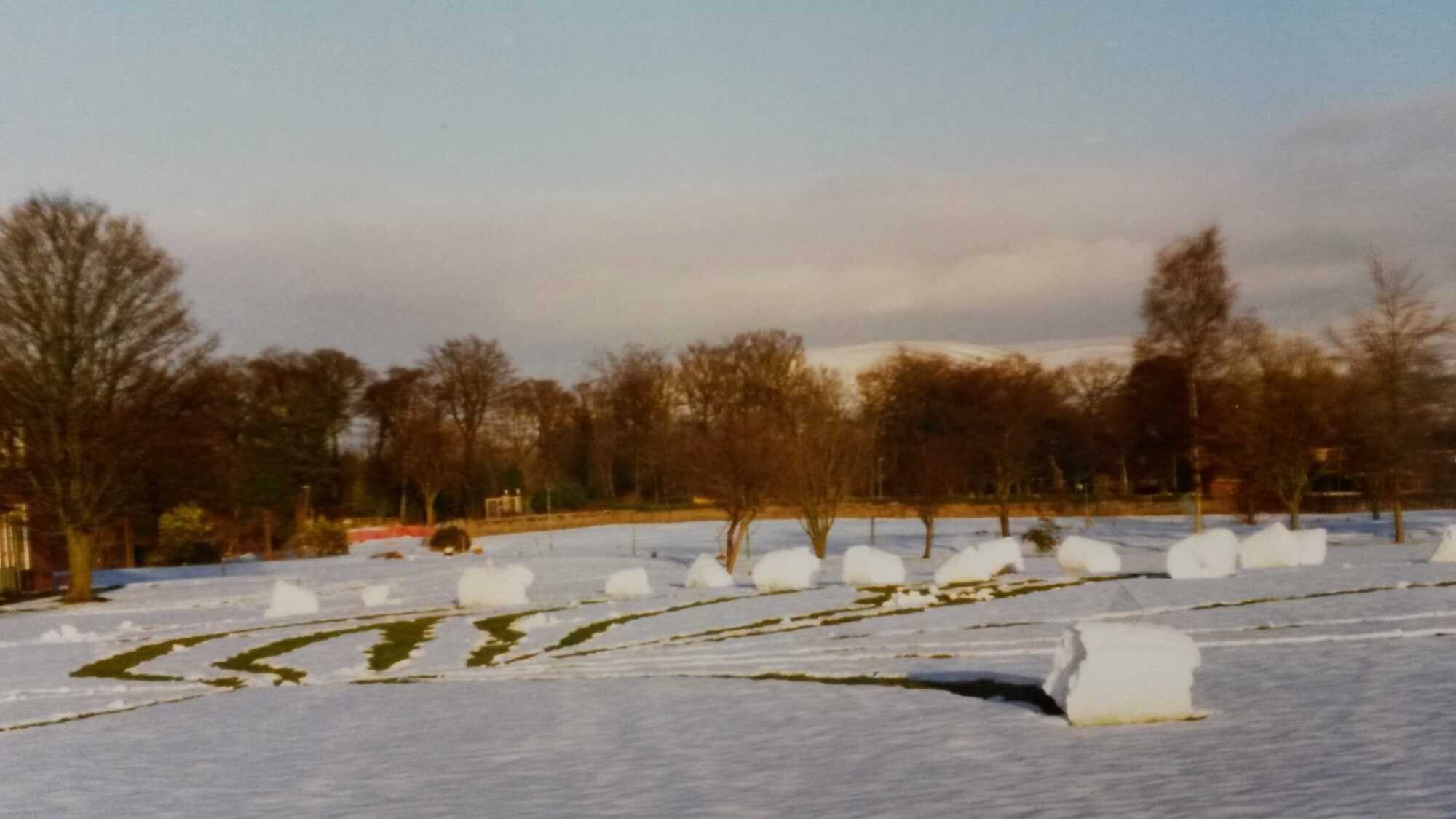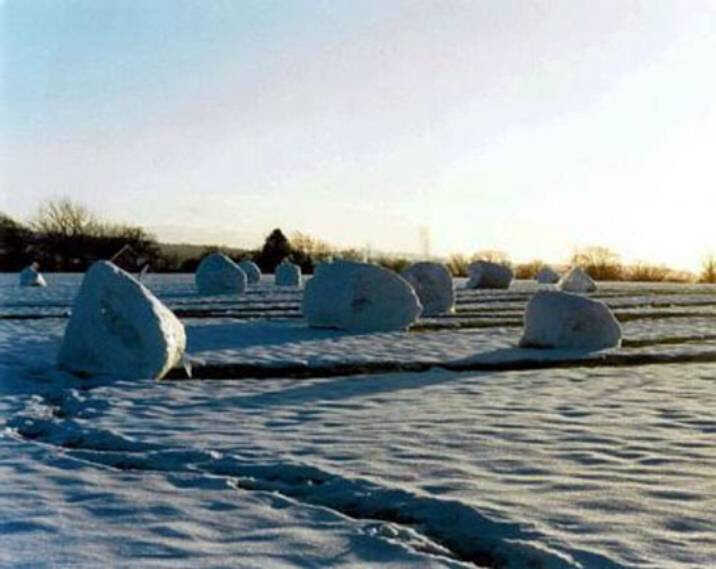
Snow Flower was a large-scale Land Art project realised by Abu Jafar during the winter of 1996 across six acres of open countryside in Lancashire. Emerging from a profound personal encounter with an unfamiliar environment, the work marked the artist's first experience of snowfall after arriving in Britain from Bangladesh.
Snow Flower (1996)
Land Art
Brockhall Village, Old Langho, Blackburn, Lancashire, United Kingdom
Snow, ice, glass, handwritten texts in Bangla and English
Landscape Approx. Six acres
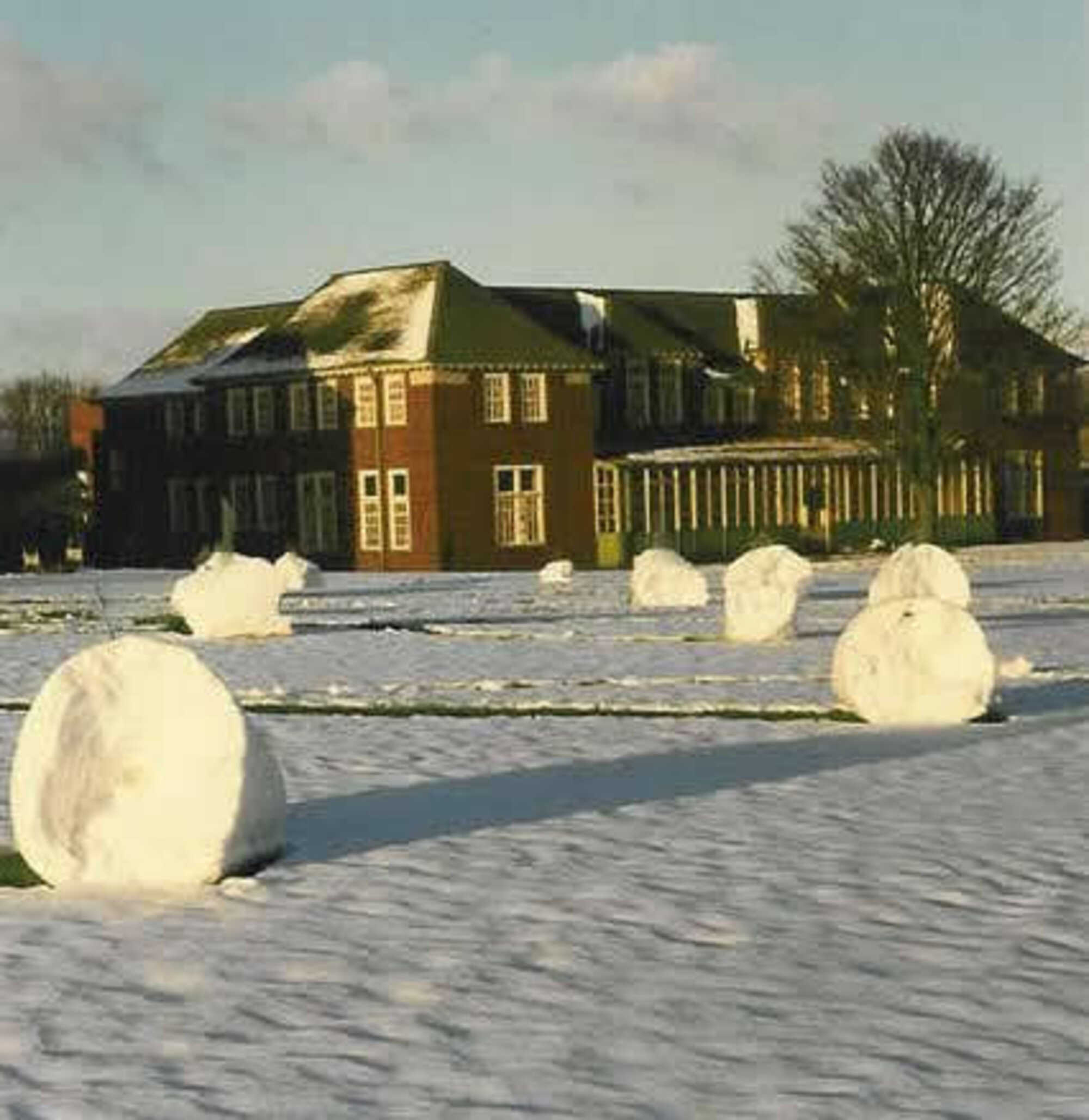
Snow Flower was a large-scale Land Art project realised by Abu Jafar during the winter of 1996 across six acres of open countryside in Lancashire. Emerging from a profound personal encounter with an unfamiliar environment, the work marked the artist's first experience of snowfall after arriving in Britain from Bangladesh.
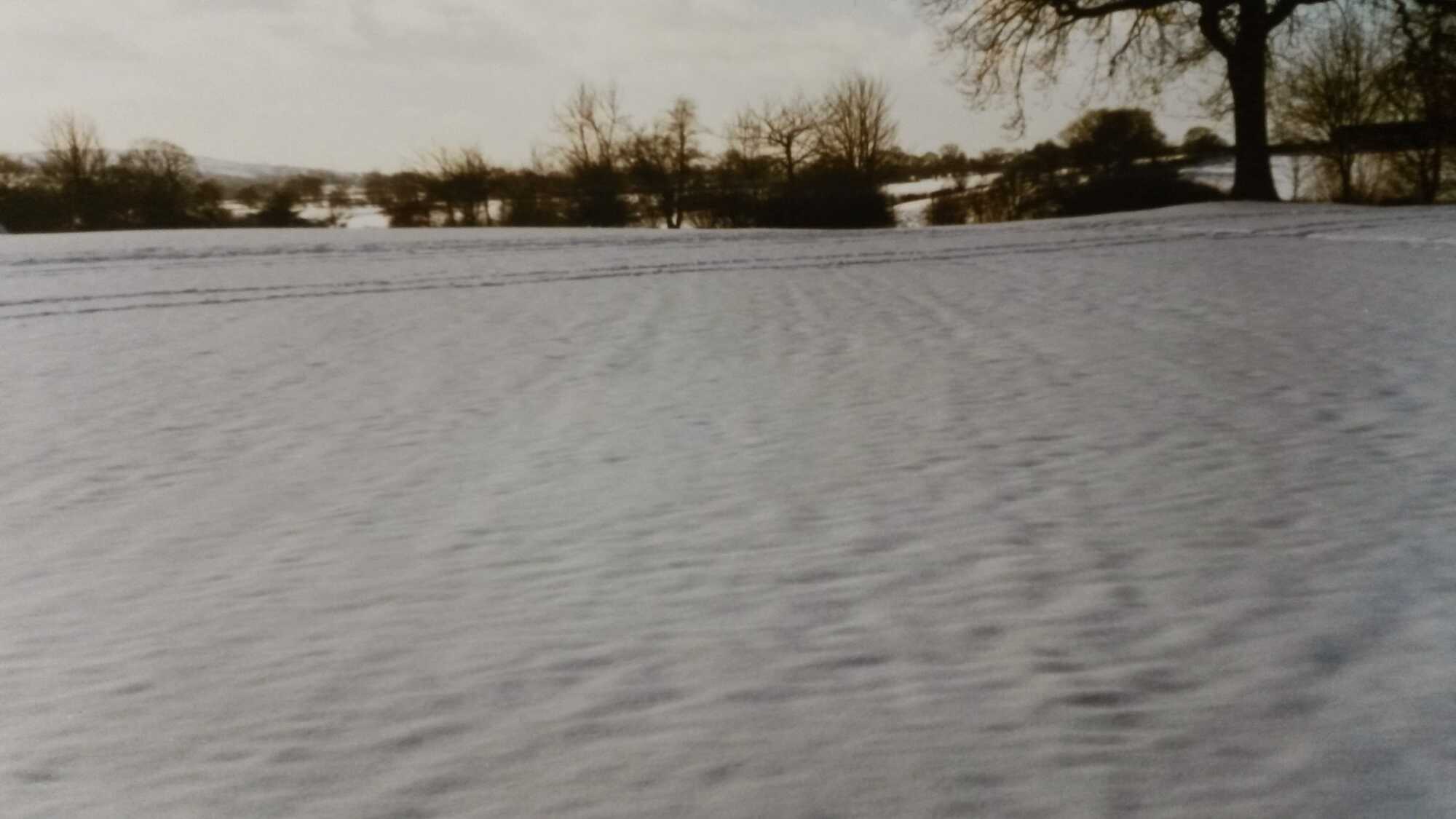
The project began before dawn when Jafar awoke to discover the landscape transformed by heavy snow. Captivated by the silent expanse of white stretching across the countryside, he felt compelled to respond through artistic action. Without a predetermined plan, he walked through the snow to the nearby home of his friend and fellow sculptor Andy and persuaded him to accompany him into the landscape. As they crossed the snow-covered fields, a simple observation proved transformative. Watching snow compress and hold its form, Jafar suddenly recognised its sculptural potential. At that moment, the concept for Snow Flower was born.
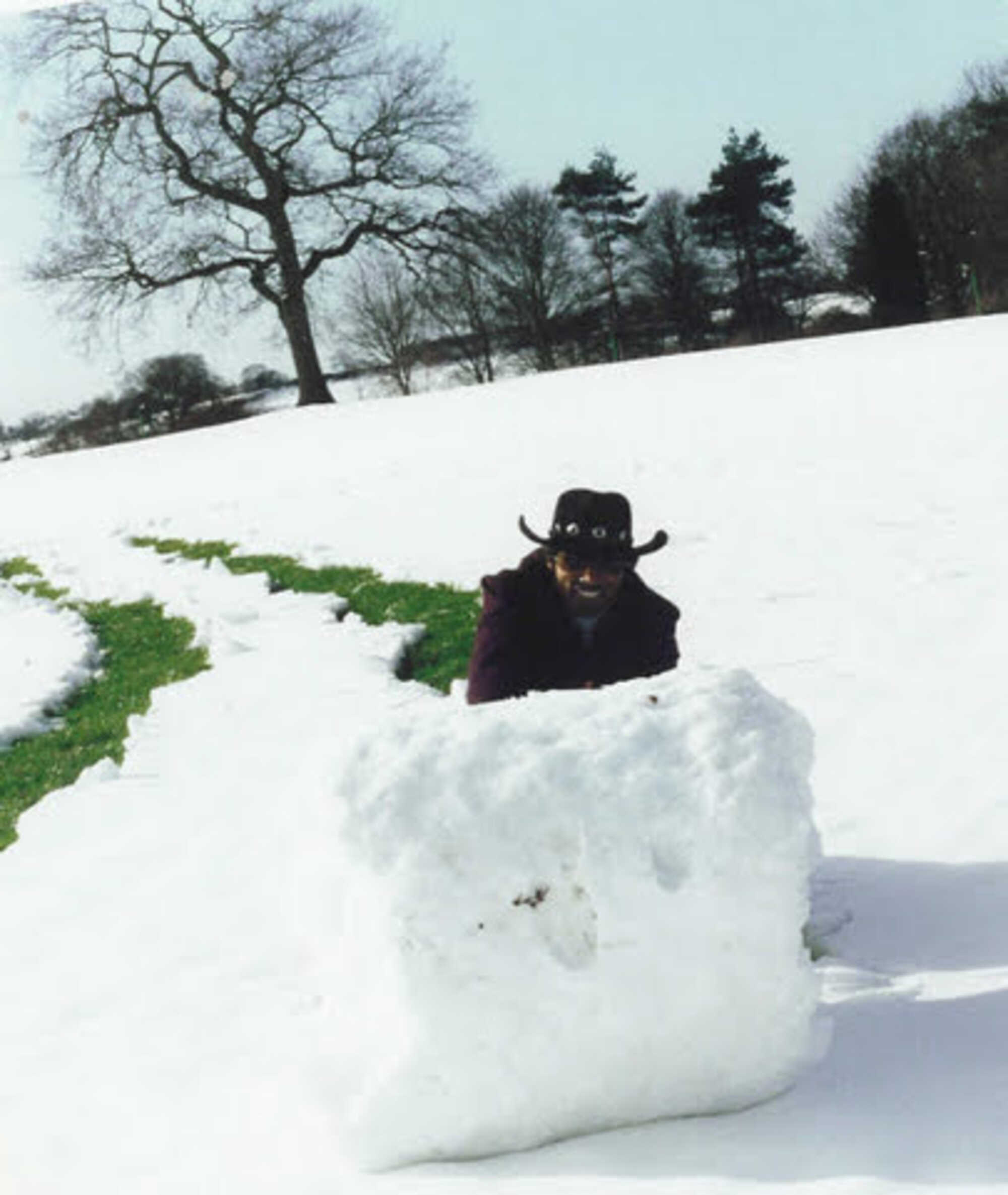
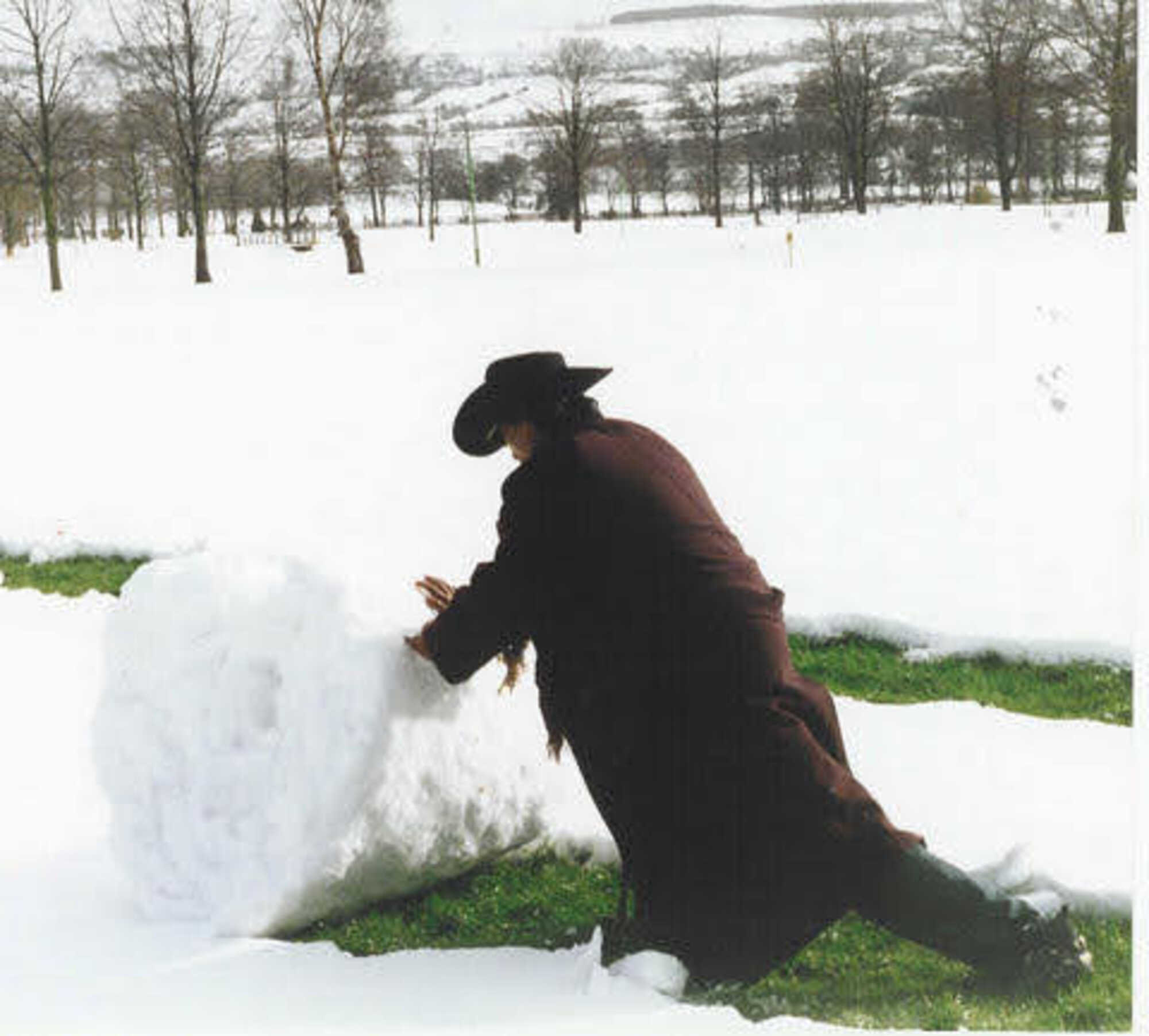
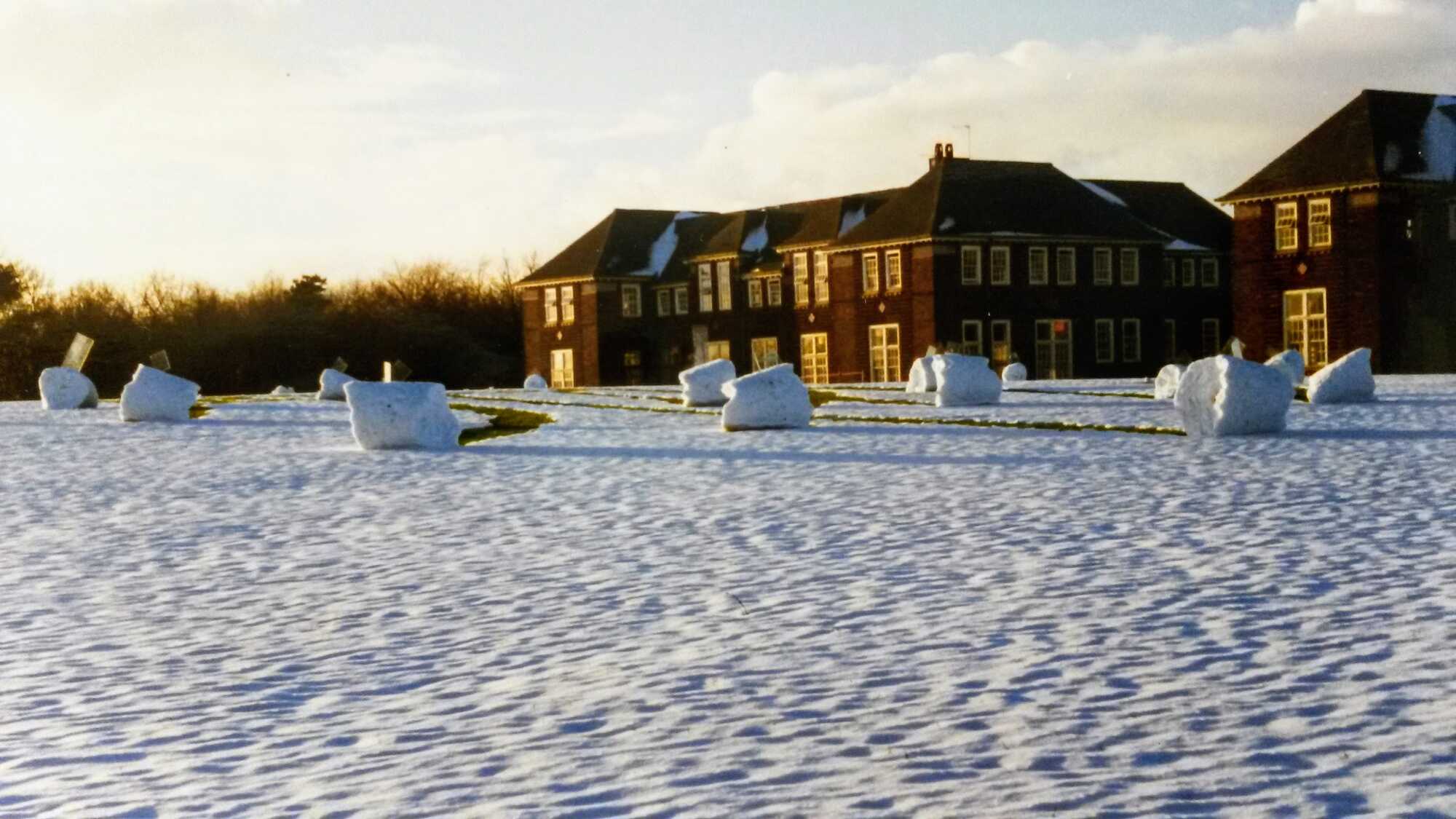
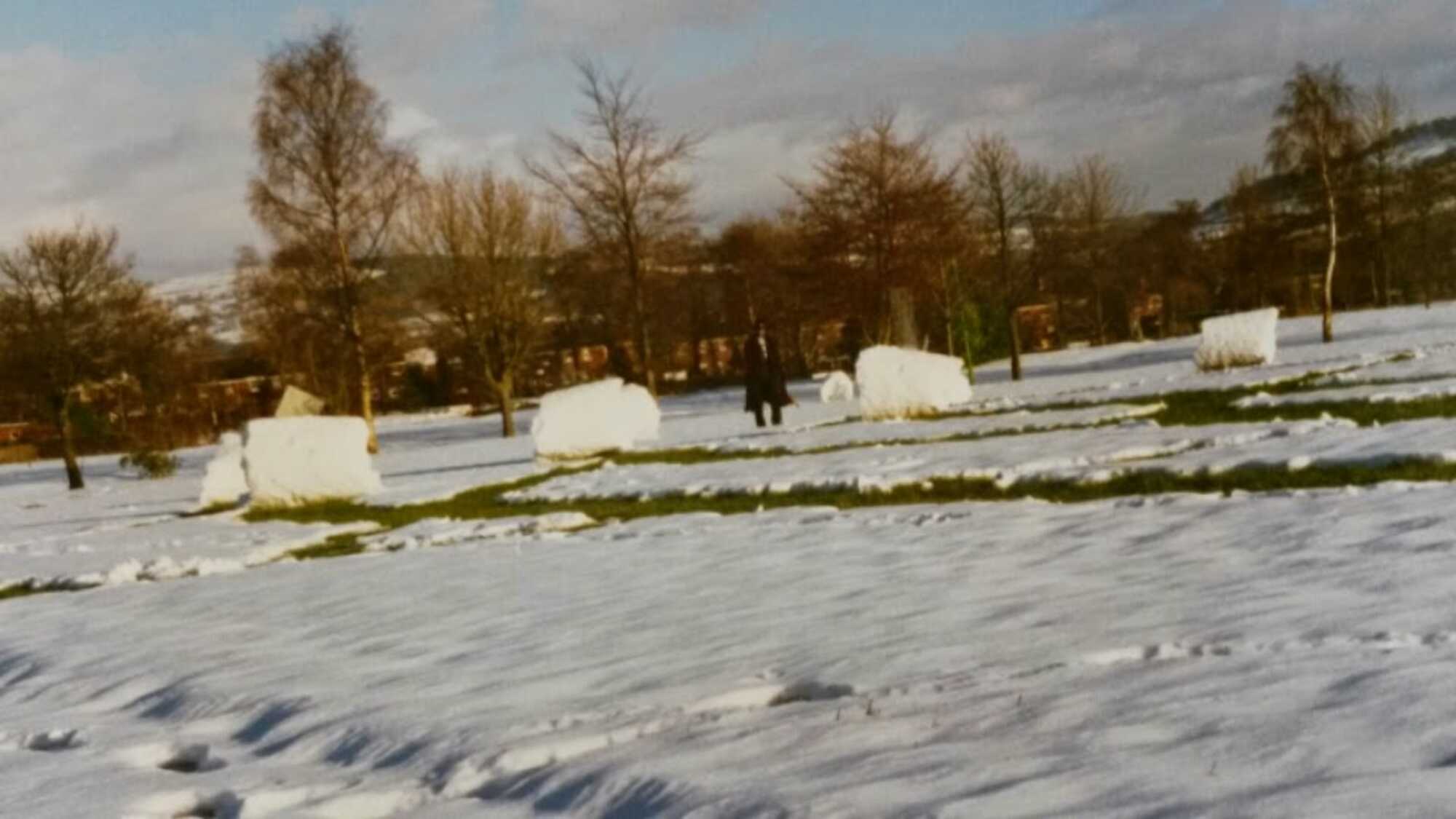
Working instinctively and directly with the material, Jafar spent nearly six hours outdoors in temperatures approaching -10°C. Rolling and accumulating snow across the frozen terrain, he gradually created a constellation of large sculptural forms distributed throughout the six-acre site. Appearing like scattered petals, seeds, stones or fragments of a vast flower, the forms established a rhythmic dialogue between sculpture and landscape, transforming the field into an ephemeral environmental artwork.
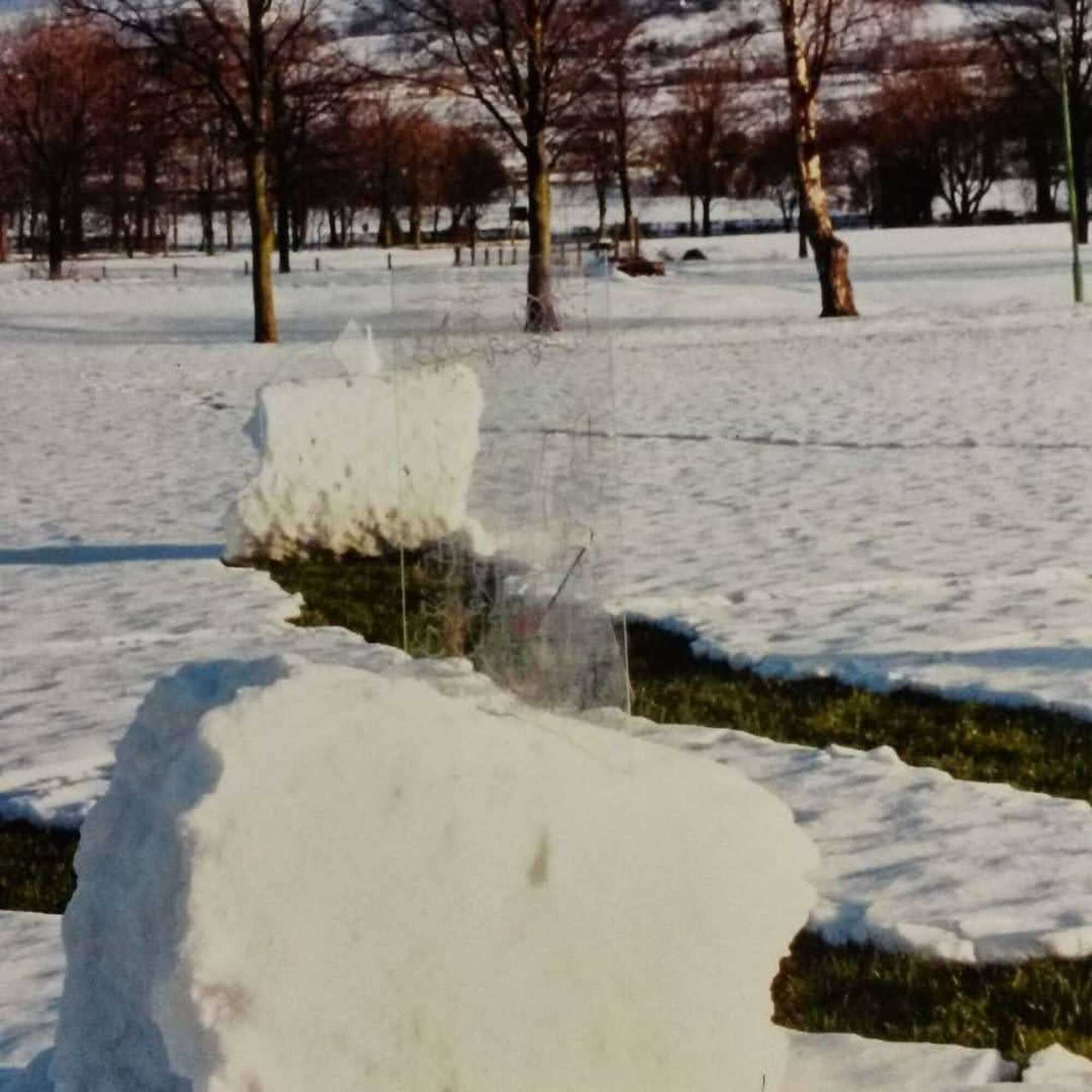
Upon completing the primary structures, Jafar introduced sheets of glass onto and beside the snow forms. These transparent surfaces reflected the changing winter light while also serving as places for inscription. Personal thoughts, observations and emotions were written in both Bangla and English, creating a dialogue between cultural memory and present experience. Through the presence of language, the work connected the artist's birthplace with his adopted environment, bringing together questions of migration, identity, belonging and transformation.
During the making of the installation, Jafar unknowingly cut his hand on a sharp layer of naturally formed ice hidden within the compacted snow. Owing to the extreme cold, he remained largely unaware of the injury until blood appeared on the surface of one of the white forms. This unexpected event became an integral dimension of the work, reinforcing the physical and reciprocal relationship between artist and environment. The landscape was not merely a site for artistic intervention; it actively participated in the creation of the work and left its own trace upon the artist.
A defining aspect of Snow Flower is its independent origin. At the time of its creation, Jafar was unfamiliar with artists working with snow and ice within the tradition of Land Art. The project emerged entirely through direct observation, experimentation and discovery. Only many years later did the artist encounter the work of figures such as Andy Goldsworthy. Rather than raising questions of influence, this later recognition gave Jafar a broader understanding of creativity: artists separated by geography, culture and experience can arrive independently at related insights through their engagement with the natural world.
This realisation became central to Snow Flower's philosophical significance. The work proposes that creativity is not confined by cultural or geographical boundaries but arises from a shared human capacity for wonder, imagination and discovery. Through this perspective, art becomes a force of connection, revealing common threads of experience that unite rather than divide humanity.
Both teacher and collaborator, the landscape shaped every aspect of the project. Snow, ice, temperature, light, space and time became active components in the creative process. As the seasons changed, the forms gradually melted and returned to the earth from which they had emerged, leaving behind only photographs, documentation and memory.
Today, Snow Flower remains one of the most significant works of Abu Jafar's early career. Combining Land Art, migration, bilingual text, environmental engagement and independent discovery, the project transformed a first encounter with snow into a poetic meditation on creativity, belonging and the universal human spirit.