Dialogue in April - Brancusi in Berlin

To give us the opportunity to learn more about Brancusi’s formal language and discover further highlights of the Neue Nationalgalerie’s sculpture collection, coordinator and cultural manager Anemone Vostell organised a discursive tour with the accomplished art historian and gallery owner Katharina-Maria Raab.
The speaker of the Academy lecture series Modern Sculpture guided our selected group of 20 people – mostly members who had travelled from places such as Hanover and Munich – through the special exhibition at the Neue Nationalgalerie in Berlin.
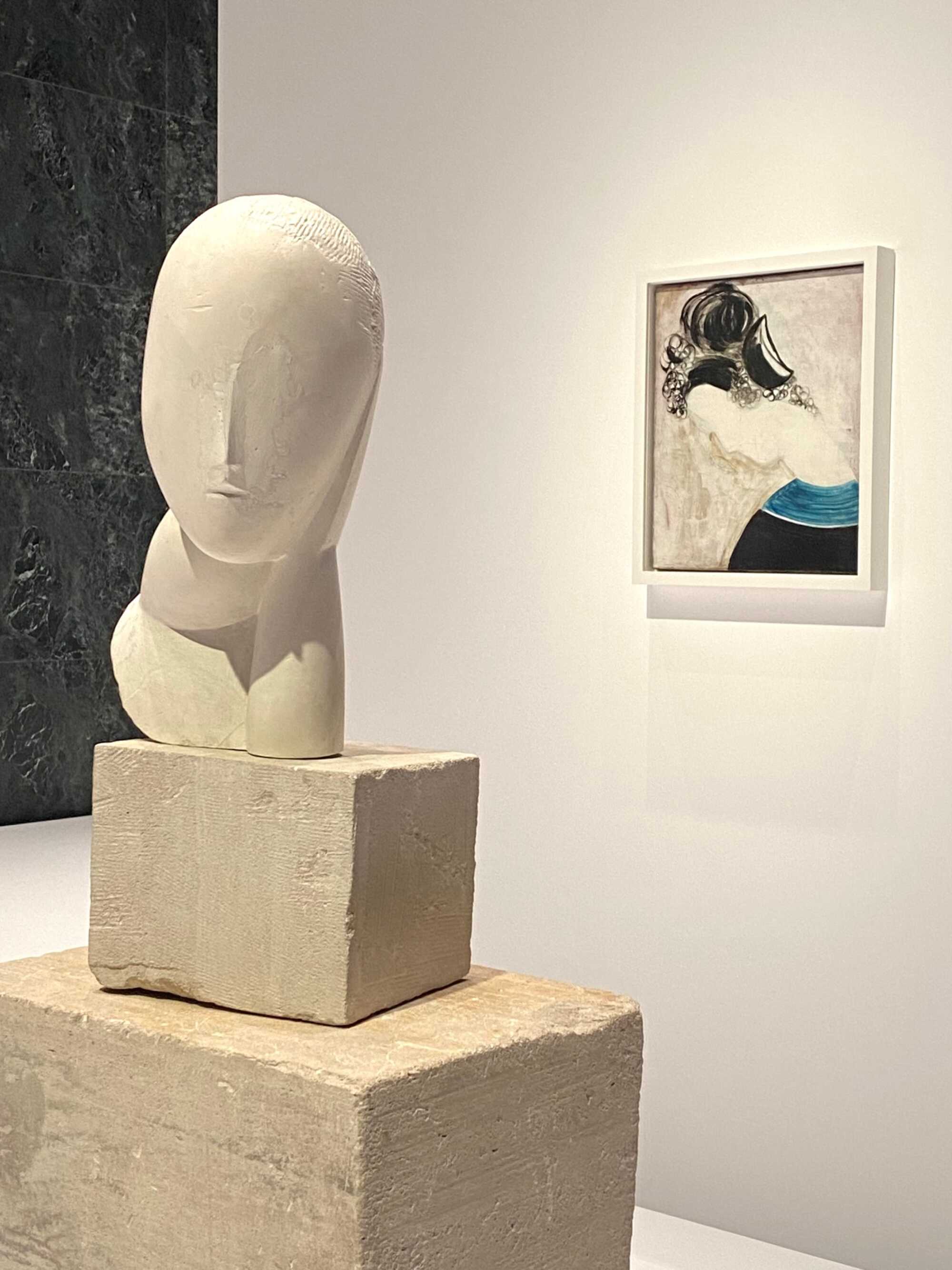
Particularly impressive are the portraits of women, including A Muse (plaster on a pedestal of limestone and poplar wood, after 1917) alongside the oil painting Woman’s Profile with Bun, Tilted Face (before 1924), which demonstrate the versatility of Brancusi’s artistic output and his use of materials.
Looking at the latter, it quickly becomes clear that, like Rodin – as beautifully illustrated by the example of the Citizens of Calais – Brancusi also follows the method of placing the sculpture at the viewer’s eye level. When standing in front of the Portrait of Nancy Cunard (Clever Young Lady) from 1926, it becomes apparent that the bust merges into the body of the pedestal. One can virtually see the slender figure and the long, thin legs of the young woman.
And yet, despite the reduction of form, one cannot speak of abstraction in Brancusi’s work; it is rather an extraction of the figurative, for his sculptures remain representational, the art historian explains.
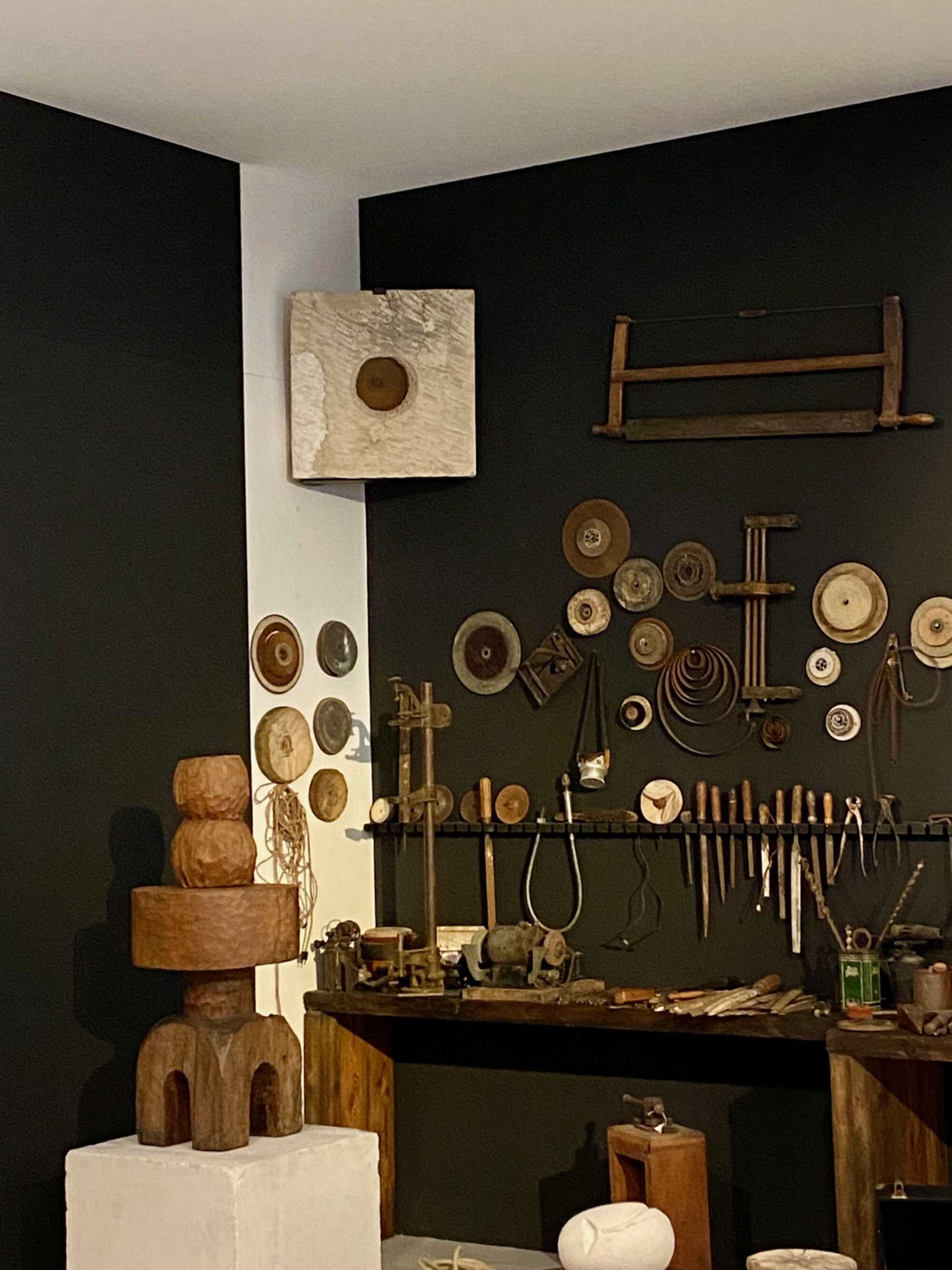
Although Brancusi is an outstanding artistic personality, he is by no means isolated. The influences of his time – be it the then-prevalent interest in esotericism or alchemy, subjects in which he took an interest – are evident in his works. At times he references them with a hint of humour, as one might surmise from the homemade loudspeaker in his studio: is this not a nod to the Suprematists’ first public exhibition in Moscow, to Kazimir Malevich’s work Black Square, displayed in the top corner? Photographs of the artist show how he emphasises the staging of his sculptures in the studio with black and red painted surfaces.

For those who don’t want to wait until then, we recommend the Academy lecture series Modern Sculpture, accompanying the special exhibition „Brancusi“, with four sessions in May (6–27 May 2026) in the Kulturforum lecture hall, in which speaker Katharina Maria Raab demonstrates how Brancusi’s sculptures set new standards for modernism through reduced lines, precisely balanced spatial dimensions, proportions and the deliberate use of space, material and perception.
We got a taste of it this afternoon and are absolutely thrilled!
This text was originally written in German by Anemone Vostell.
About the author
Anemone Vostell
Anemone Vostell is a Berlin-based cultural manager and founder of BAM! Berlin Art Management – art projects and consulting with a special interest in sculpture, installation art and land art.
Translation
Sybille Hayek
Sybille Hayek is an editor and translator. Since 2022 she has been supporting our team on a voluntary basis with her trained eye for detail and a great love of language.