Bodytalk: How Artists Reclaim the Fragile Body
Report from Sculpture Network’s Online Club “Bodytalk: Our Fragile Body,” 30 March 2026
The body is never neutral. It carries memory, culture, and expectation, and it often sits at the centre of artistic inquiry. Sculpture Network’s recent Online Club gathered three voices who each approach the body as something both vulnerable and resistant. Curator Emily Sargent from Wellcome Collection in London, and artists Katharine Dowson and Sofie Muller, opened a candid look into how contemporary sculpture traces illness, trauma, identity, and ageing. This event was part of a series, preluding Sculpture Network’s International Forum on the topic Bodytalk - The Return of the Human Figure in Contemporary Sculpture which will be held from 29 - 31 October 2026 in Berlin.
The Wellcome Collection and the “Unruly Body”
Emily Sargent began the evening by placing the human body within the long arc of the Wellcome Collection’s history. Founded by Henry Wellcome (1853 –1936), a pharmacist fascinated by what he called “the art and science of healing,” the collection grew into a vast archive ranging from medical instruments to devotional objects. While the contemporary collection now focuses on books, archives, and digital material, it continues to explore how we understand health through culture and art.
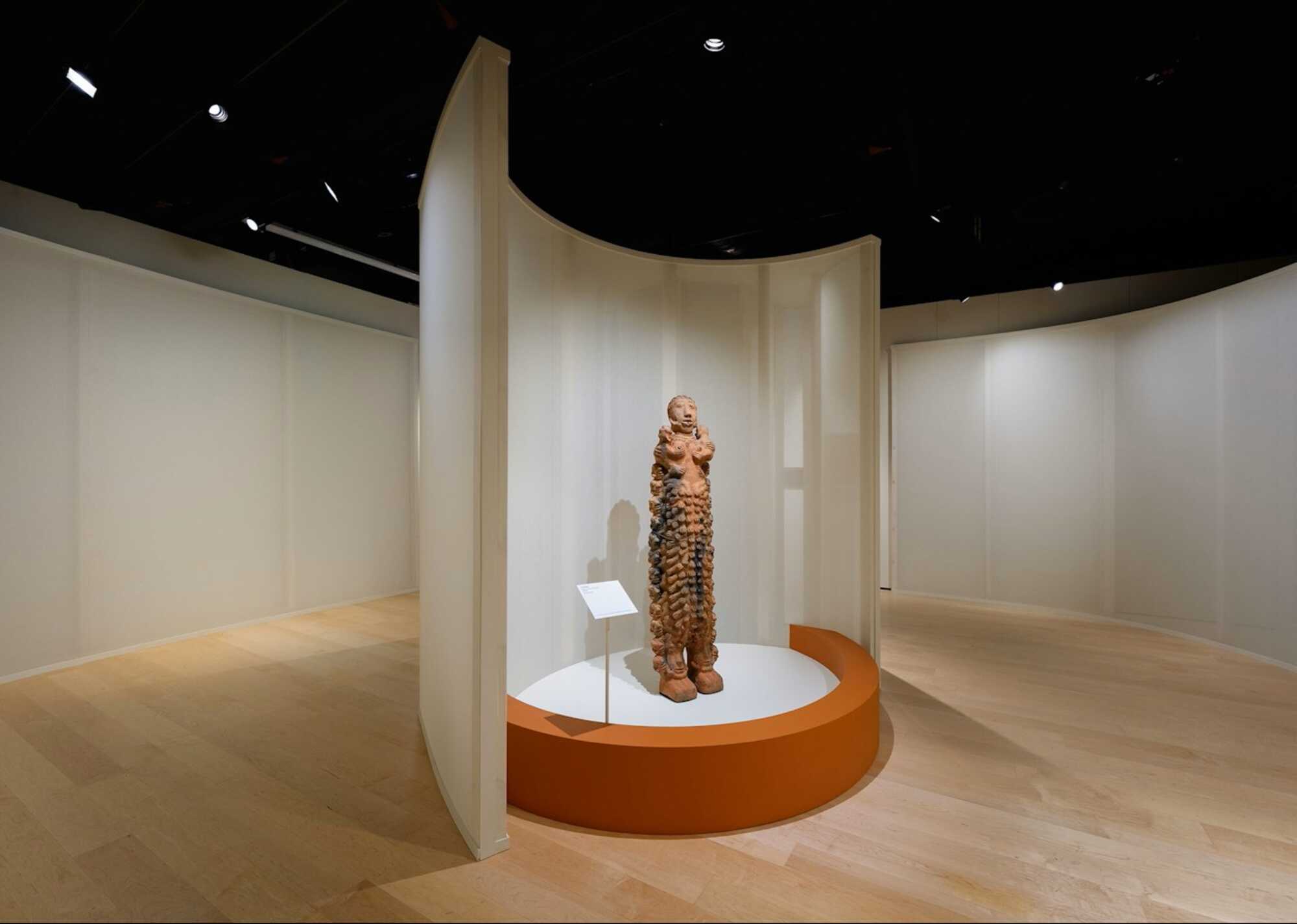
Sargent reframed the event’s theme, suggesting that instead of “fragile bodies,” we might speak of unruly bodies. The three artists she presented—Jason Wilsher-Mills, Seyni Awa Camara, and Serena Korda—each challenge traditional ideas of the idealised body. Their works confront disability, loss, infertility and menopause, refusing the silent stereotypes that often accompany these experiences.
Jason Wilsher-Mills: Childhood, Humour, and the Social Model of Disability
The most expansive project Sargent shared was Jason and the Adventure of the 254, a vivid sculptural commission that filled Wellcome Collection’s upstairs gallery between 2024 and 2025. Wilsher-Mills, a disabled artist from Wakefield, builds worlds that mix humour, autobiographical memory, and political clarity. His central question is simple: What disables us—our bodies, or the structures around us?
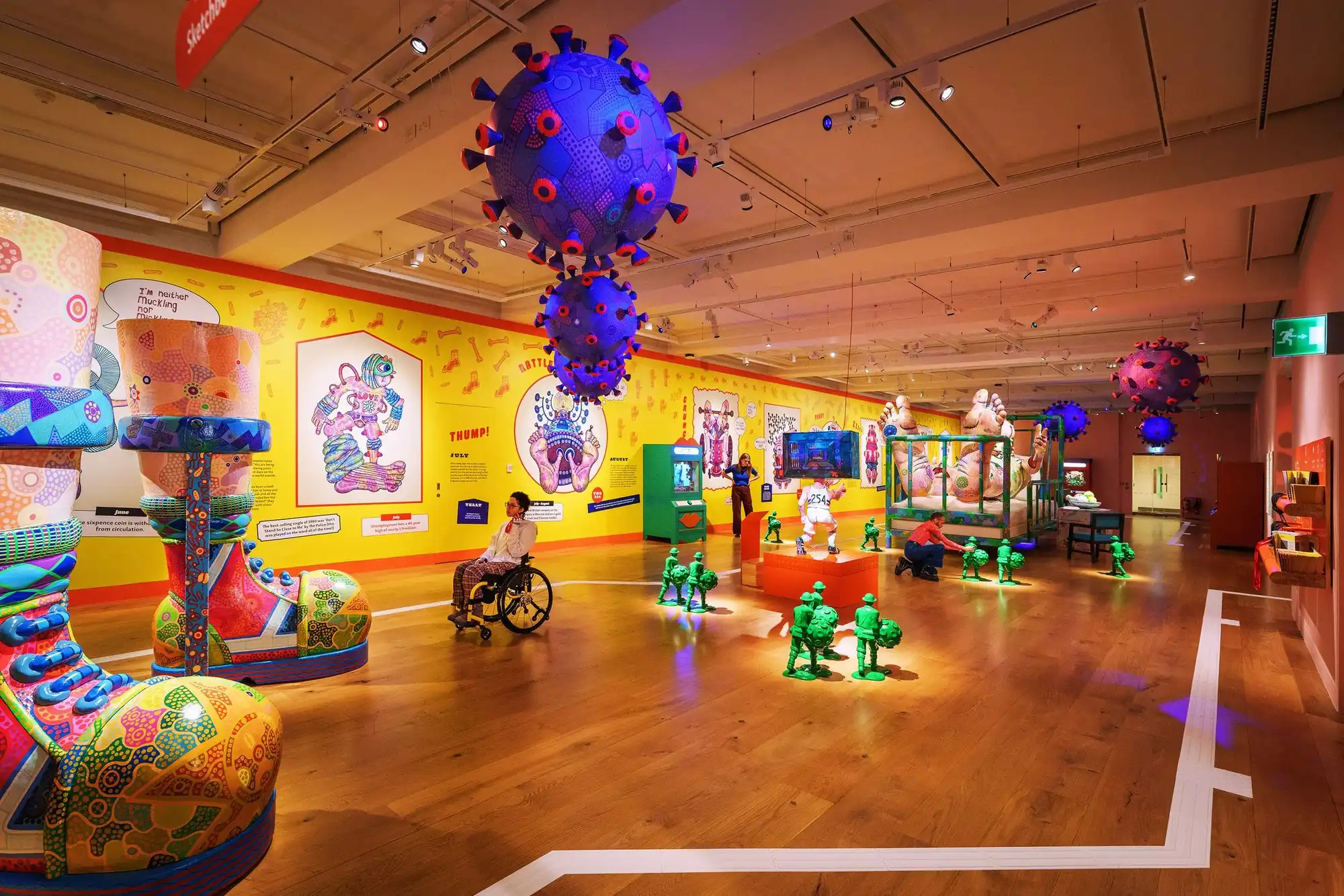
The giant figure at the heart of the installation lies in a hospital bed, cast in fibreglass and dressed in medical braces, splints, and a bright superhero mask. This is Jason at twelve, when a case of chickenpox triggered an autoimmune response that left him paralysed for years. Visitors were invited to touch the work. Inside small windows cut into the figure’s body, they could reach in and feel ribs, joints, and organs—an echo of anatomical teaching sheets from the 16th century, which Wilsher-Mills had studied in Wellcome’s archives. The installation unfolds as part confession, part carnival. A television-headed figure of Olympic runner Sebastian Coe stands opposite the bed, pointing back at Jason. The title 254 refers to the moment of the artist’s diagnosis, 2:54 p.m., which happened to coincide with Coe’s victory in the 1980 Olympics and his racing number. Rows of small “virus soldiers” animated the battlefield between illness and resilience.
The work strikes a balance rare in sculpture: it is both playful and fierce. Wilsher-Mills embraces popular culture, disability politics, and personal memory without losing joy. As Sargent noted, Jason often describes this period of hospitalisation not only as trauma, but also as the moment he became an artist. Unable to use his hands, he learned to paint with a brush held in his mouth. For a child expected to become a semi-professional rugby player, art opened another world and eventually, another future.
Seyni Awa Camara: Motherhood as Grief, Ritual, and Sculpture
Awa Camara grew up in a ceramicist family, watching her mother shape vessels for everyday use. Her own sculptures, however, move far beyond function. They carry personal grief, resilience, and the weight of lived experience. Her pieces appear in the Wellcome exhibition Expecting: Birth, Belief, and Protection (on view until 19 April 2026), which centres on a rare 15th-century English birth scroll once used during labour. Scientific analysis of the stains on the parchment confirmed that it was physically handled during childbirth. Awa Camara’s work enters into dialogue with this history, though it is grounded in contemporary Senegal and her Wolof heritage. After multiple miscarriages and medical complications, she began sculpting figures that merge motherhood, protection, and the spiritual world. Her unglazed clay guardians rise with quiet force, their surfaces populated by infants, hands, and animal forms. Many of the children depicted were shaped with the help of the sons she later adopted.
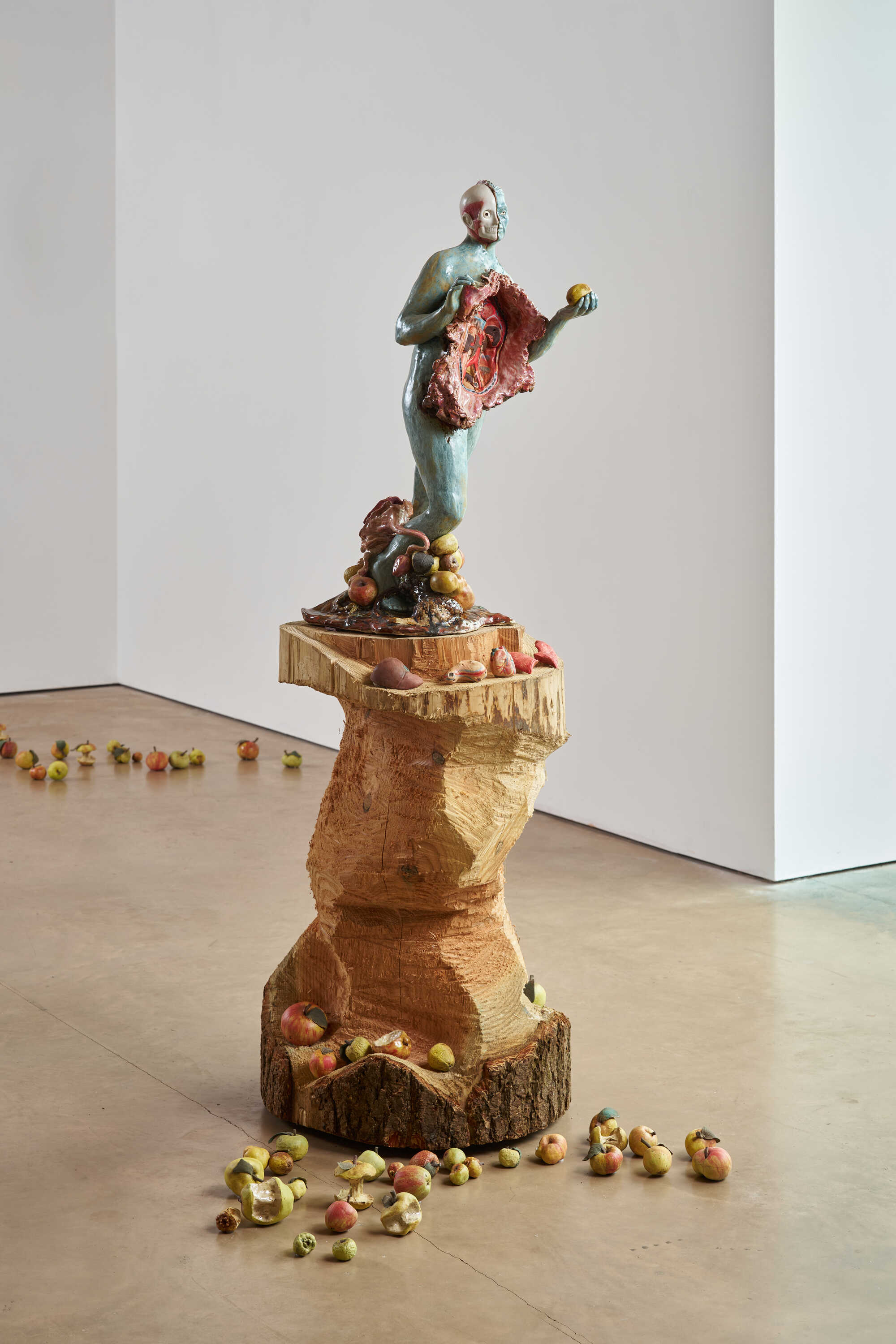
Serena Korda: Reclaiming the Crone
Katharine Dowson: Sculpting Thought, Memory, and the Invisible Body
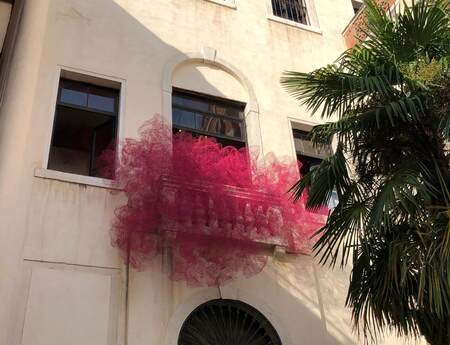
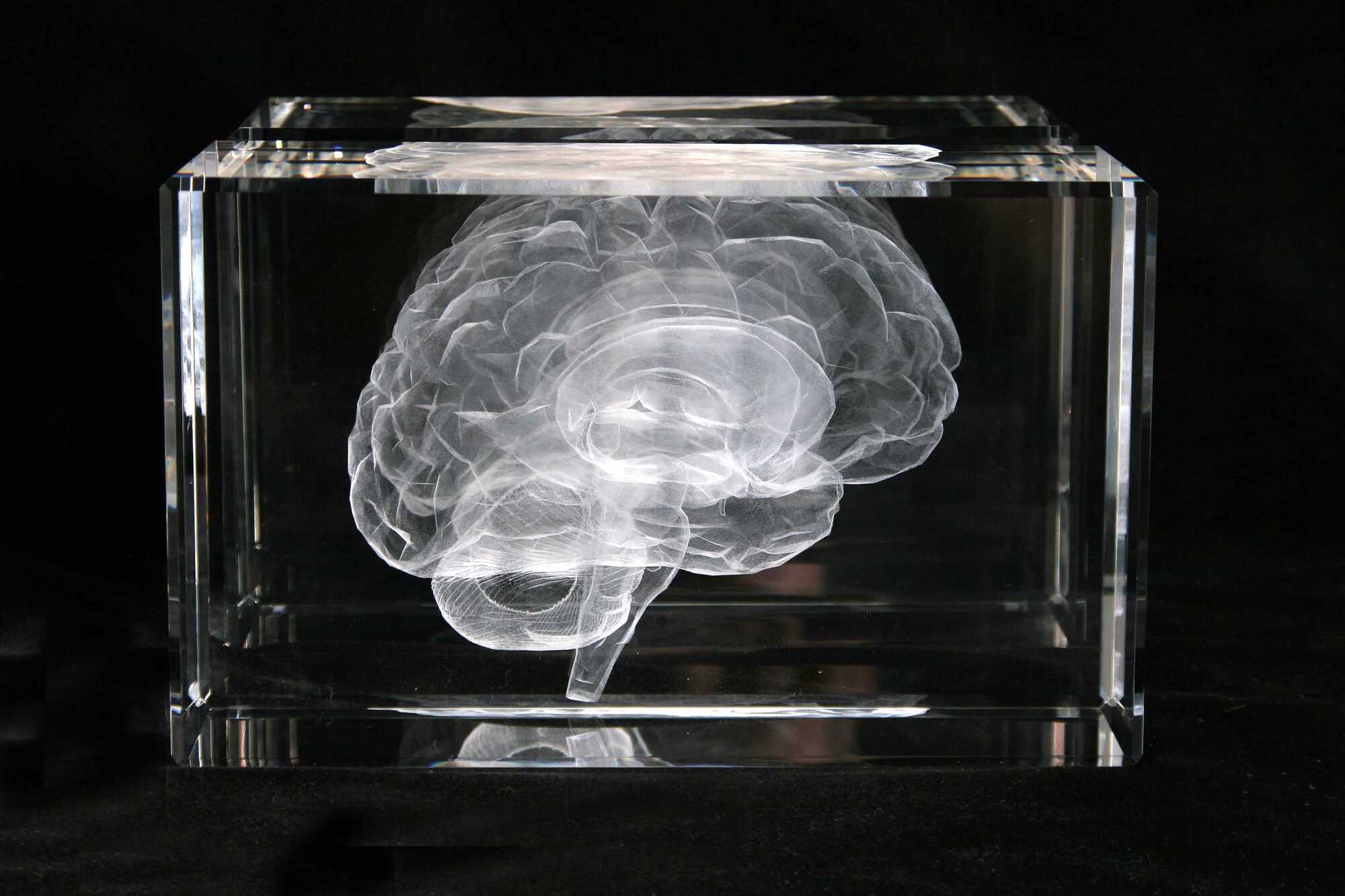
The evening continued with British artist Katharine Dowson, whose long career has explored the hidden mechanisms of the body: organs, thoughts, and the nervous system. Dyslexic since childhood, Dowson often channels the feeling of being “out of step” into her work. She began with Myriad, a hanging curtain built from hundreds of rejected spectacle lenses. Each lens carries an optician’s code—a language she cannot read. For Dowson, the work becomes a metaphor for how dyslexia shapes perception, fragmenting and refracting the world. Her early fascination with anatomy led her to the Hunterian Museum and later to the famed spectacle-wax collections at La Specola in Florence. During the Hayward Gallery exhibition Spectacular Bodies, she produced a suspended glass spine illuminated with fibre optics. Vertebrae cast shadows on the wall as they gently swayed, turning the staircase into a slow-moving x-ray. A glass brain hovered at the top of the stairs, signalling her shift from anatomy toward the question that has guided much of her practice: How do you sculpt thought?
She also presented one of her most emotionally series: Silent Stories (2010). This project began when her father underwent radiotherapy for a cancerous growth on his nose. She witnessed the making of the rigid plaster head casts used to anchor patients during treatment, casts that were later discarded. Dowson recovered several of these casts through patient consent and cast them in glass. Each head becomes both mask and portrait, showing a person at a moment of extreme vulnerability. The work gained a new dimension when the Science Museum commissioned Dowson to create a soundscape of patient testimonies. Their voices, recorded years later, describe terror, claustrophobia, humour, recovery, and resilience. Together, the glass heads and the audio form a quiet but powerful memorial to survival, and a rare sculptural witness to the inner life of medical treatment.

Sofie Muller: The Body as History, Memory, and Ethical Mirror
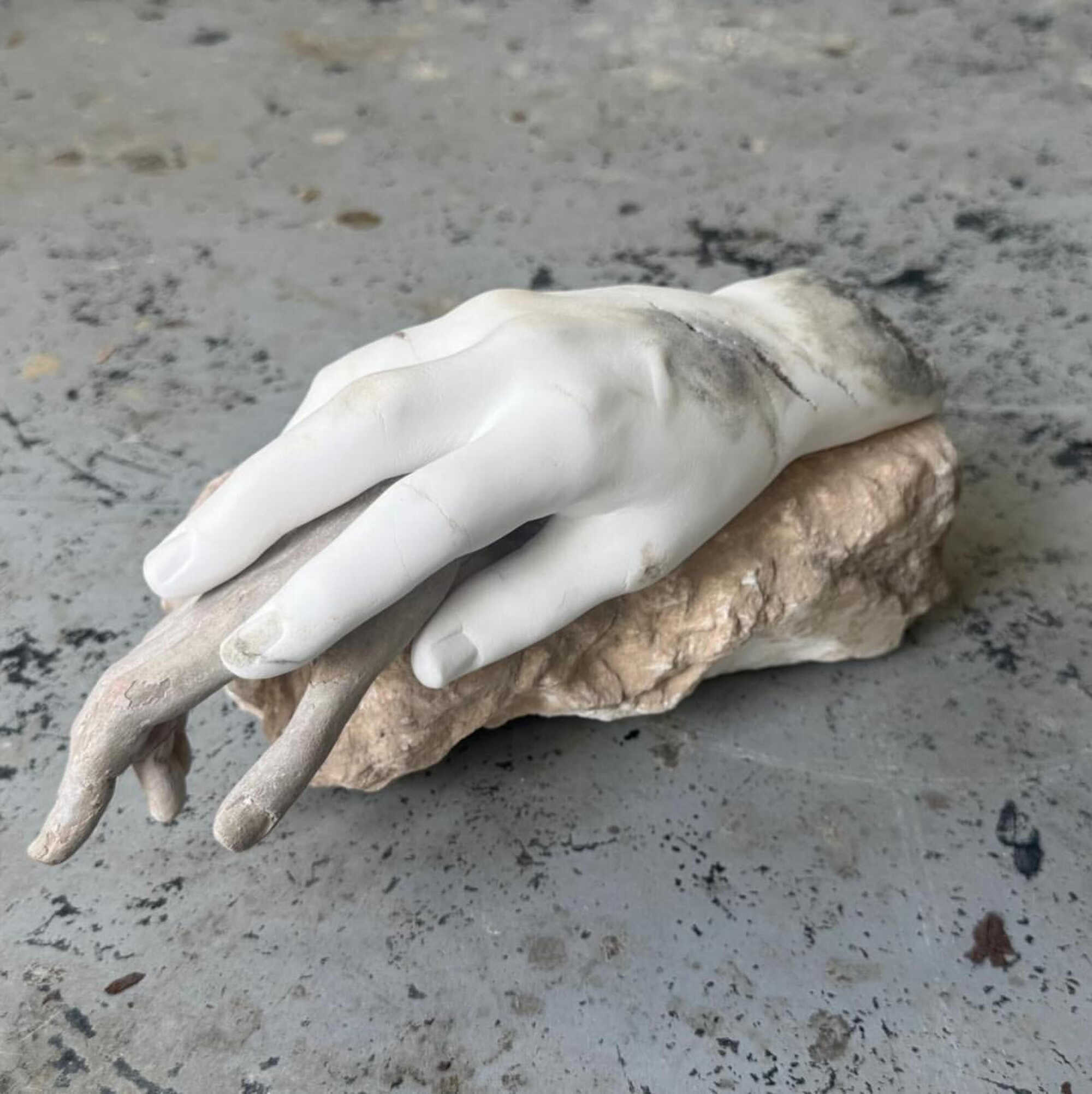
A major part of her talk centred on her alabaster heads. Muller deliberately chooses stones with flaws, veins, or cracks, allowing the material to speak its own history. Alabaster’s skin-like transparency gives these heads an uncanny presence. Many appear injured or restored, echoing both religious iconoclasm and the patchwork survival of ancient statuary. In 2022, her alabaster works entered into dialogue with medieval masterpieces in Museum M Leuven, including her three-part Trinitas Terrestris, a sculptural trinity of mother, daughter, and grandmother carved from a single stone.
She also discussed The Clean Room, an installation of alabaster infants shown at the Malta Biennale and in the Guislain Museum. Inspired initially by a child with Down syndrome, the work expands into broader questions about genetic selection, the pursuit of “perfect” babies, and the role of technology in shaping life. The babies lie together in a neutral, laboratory-like space—tender, fragile, and unsettling. The work was initially considered too controversial for Malta, where abortion remains illegal, yet it later won the prize for best pavilion.

Bodies That Refuse to Disappear
Taken together, the evening revealed a striking truth: fragility is not weakness. The artists presented use sculpture to reclaim bodies marked by illness, grief, age, or difference through humour, rage, tenderness, or stillness. Their works insist that these bodies are not marginal or shameful. They are central to our lives and reflect what it actually means to be human.
The Text was written with the help of AI and edited by our editorial team.
Translation
Elka Parveva-Kern
Elka Parveva-Kern supports Sculpture Network since 2024 as a translator - a wonderful opportunity to combine her long-standing interest in languages and art.