Kulturhauptstadt Europas
Chemnitz
Germany
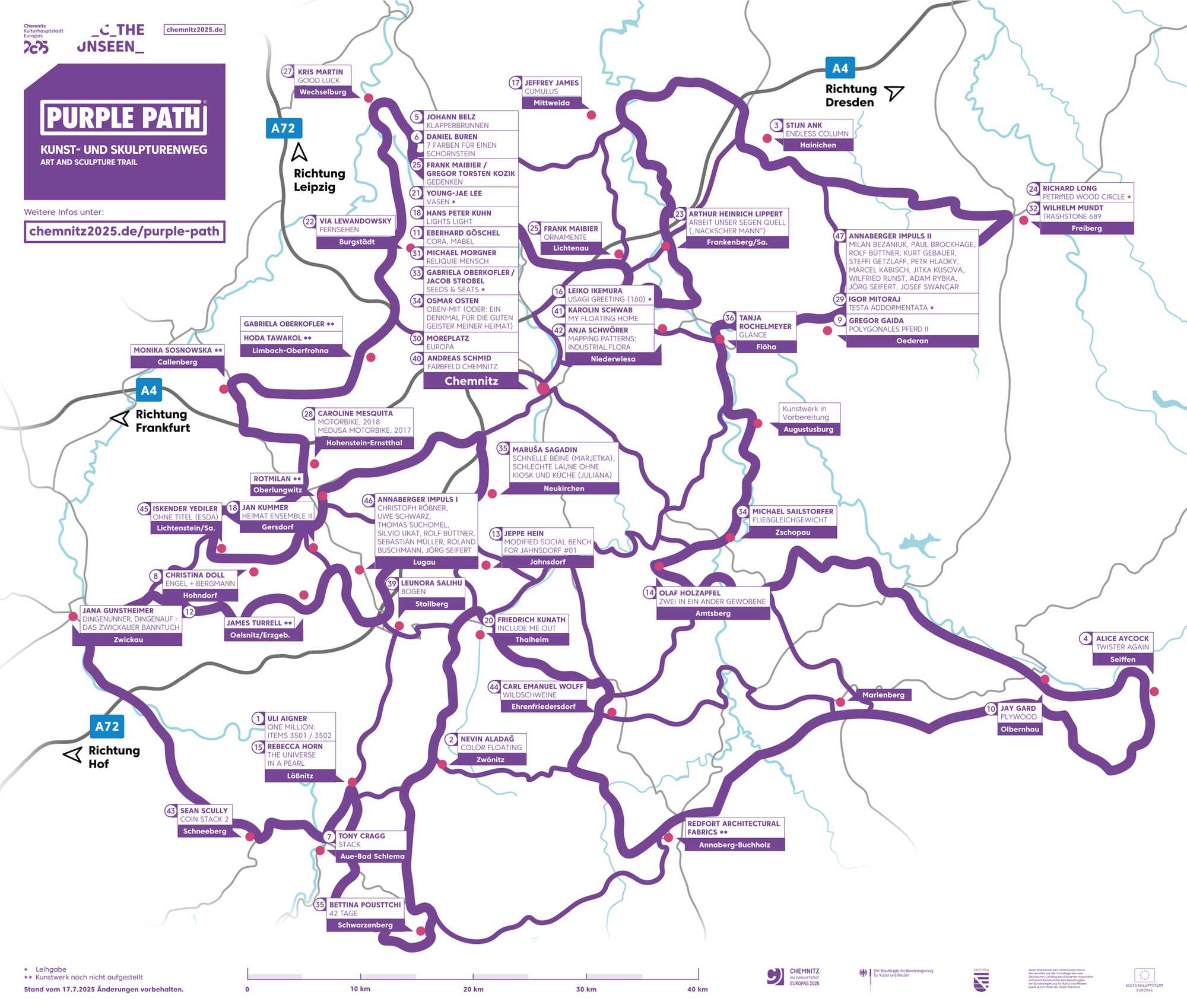
Purple Path
Chemitz 2025 - Kulturhauptstadt Europas
With around half a million inhabitants, the Chemnitz region is a densely populated conurbation in Europe. Chemnitz 2025 invites you to discover the region, see it with different eyes and perhaps even leave the beaten track. This is because 38 cities and municipalities together with Chemnitz form the Capital of Culture region and together bear the title of "European Capital of Culture".
The occasion was the Chemnitz Model - a major construction project that connects the region via light rail and is constantly being expanded. And if the region can soon be experienced comfortably by public transport, it can also be experienced together! Initially, the 24 municipalities along the Chemnitz model joined forces, with more joining later. What the region has in common are shared traditions, upheavals and new beginnings, shared soils, nature and culture.
In the Chemnitz 2025 programme, "On the move!" in particular is dedicated to this shared, vibrant history. The programme field tells the stories of people from the region: what moved them in the past, what moves them today and what will move them in the future? The PURPLE PATH art and sculpture trail will showcase works by renowned international, national and regional artists that tell the story of the region's people, crafts and industry.
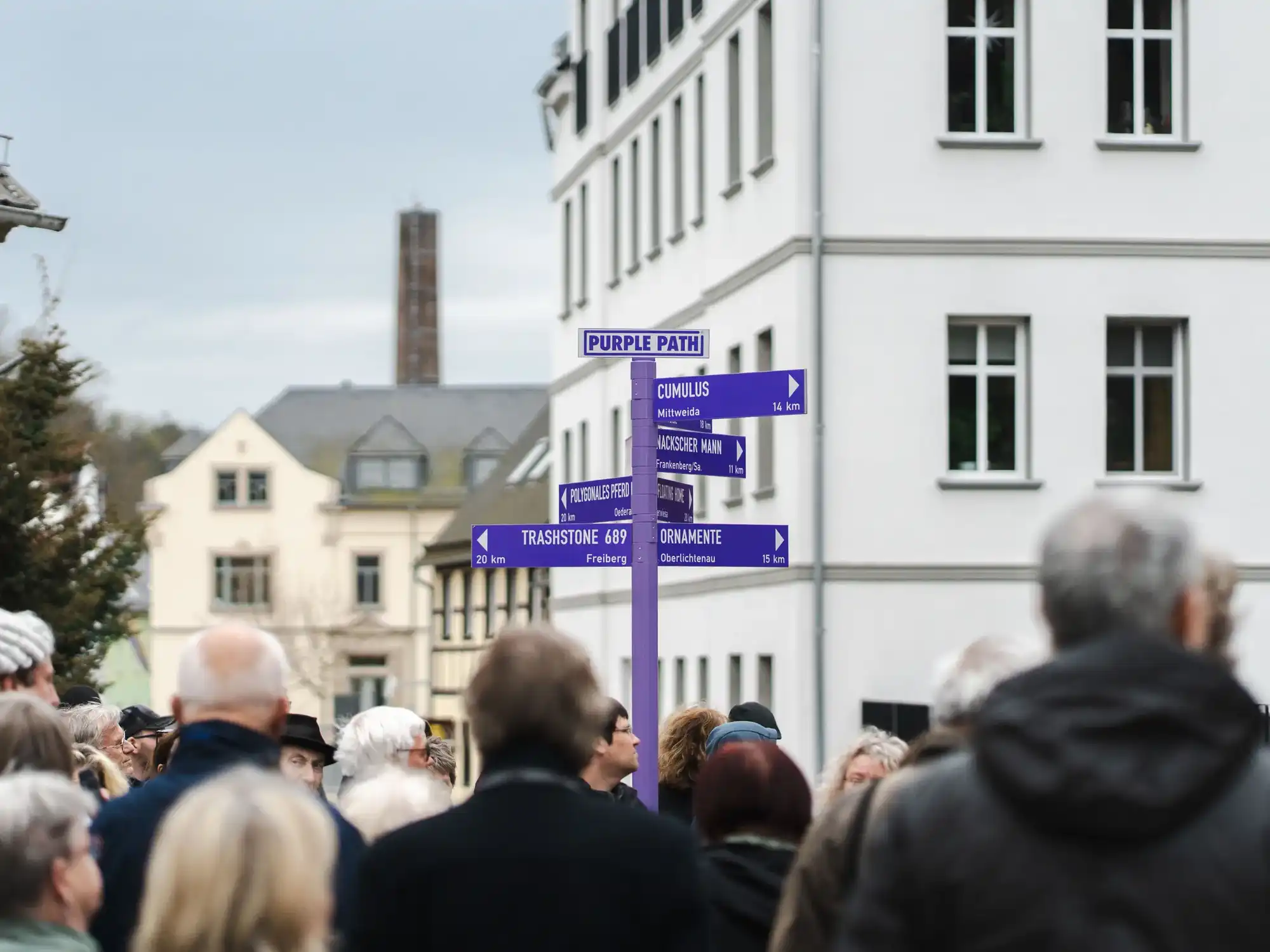
Purple Path
The PURPLE PATH connects the citizens of Chemnitz with each other and with the people of 38 towns and municipalities in the region. A sustainably designed sculpture museum is being created in public spaces between Mittweida and Schwarzenberg, Glauchau and Seiffen, Freiberg and Schneeberg. Stars of the contemporary art scene such as Leiko Ikemura, Monika Sosnowska, Jeppe Hein or Michael Sailstorfer meet significant artists from Saxony such as Jana Gunstheimer, Via Lewandowsky and documenta artist Olaf Holzapfel. Chemnitz-based artists such as Johann Belz, Gregor-Torsten Kozik or Michael Morgner remain largely unknown in the West. Their works encounter international classics such as those by Rebecca Horn, who died in 2024, Daniel Buren and James Turrell.
Art and history
The PURPLE PATH becomes a storyteller: behind the foil of the installed artworks, an unknown history of the region is formulated, a narrative of mining and industry, exploitation and profit, marginalisation and solidarity, as well as a history of precarity and innovation that continues to this day.
Works by more than 60 artists can be found on industrial wastelands, at railway stations, on riverbanks or in the still waters of a millrace. They correspond with farm and textile museums, connect with castles and old churches, their organs and their art. Sometimes they also take place in illustrious nooks and crannies of UNESCO-protected old towns, which become context providers and polyphonic narrators of the history mentioned.
From work to work
Purple scouts travel along designated country roads or use a network of well-functioning buses and trains; they cycle through landscapes shaped by mining, often with wonderfully soft contours, or hike from artwork to artwork through dense forests along wildly flowing rivers. The colour purple is attributed with inspiration, creativity, magic and transformation. A new path is inscribed in the region - until 2025 and far beyond.
Art routes at the PURPLE PATH
Universes in Universe - Worlds of Art, the platform for international contemporary art, has put together three exemplary routes. The routes link selected works of art with local stories, scenic features and cultural highlights. They invite you to bring art into dialogue with its surroundings and their history at the PURPLE PATH.