KVOST, nGbK, Mitte Museum, Werkbundarchiv – Museum der Dinge
Berlin
Queer Art in the GDR? Biographies between Underground and Propaganda
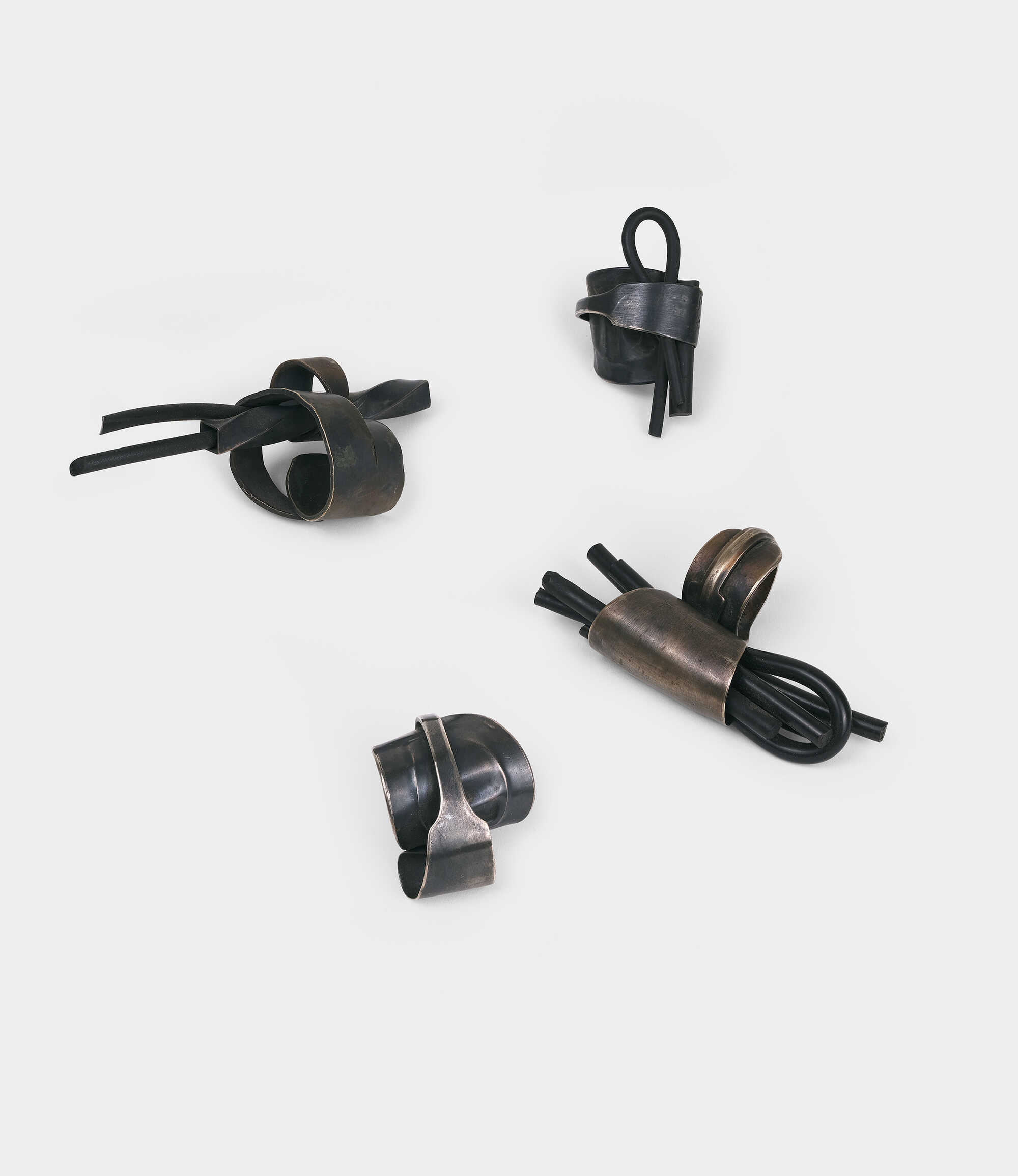
Object Stage with the works of Egon Wrobel
Exhibition venues
KVOST / Leipziger Straße 47, 10117 Berlin / kvost.de
nGbK / Karl-Liebknecht-Straße 11/13, 10178 Berlin / ngbk.de
Mitte Museum / Pankstraße 47, 13357 Berlin / mittemuseum.de Werkbundarchiv – Museum der Dinge / Leipziger Straße 54, 10117 Berlin / museumderdinge.org
Artists
KVOST & nGbK: Toni Ebel, Andreas Fux, Harry Hachmeister, Jochen Hass, Dorothea von Philipsborn, Erika Stürmer-Alex, Rita „Tommy“ Thomas, Jürgen Wittdorf, Egon Wrobel
Mitte Museum: Andreas Fux, Jürgen Wittdorf
Werkbundarchiv – Museum der Dinge: Egon Wrobel
The Werkbundarchiv – Museum der Dinge is a collaborating partner in the “Queer Art in the GDR? Biographies between Underground and Propaganda” project and shows works by Egon Wrobel.
Under what conditions did “queer” art arise in the German Democratic Republic (GDR)? How did the artists’ art and lived realities become visible and what role did censorship, the State Security Service, and cultural policy play? The exhibition QUEER ART IN THE GDR? and the extensive accompanying events programme focus on a hitherto insufficiently researched chapter in German art history and contemporary history. On the basis of the checkered life stories of nine artists and their works, the exhibition encourages a new reading of art from East Germany: not as homogeneous, government-controlled art output but as a complex field of personal experiences, upheavals, and ambivalences. It shows how closely questions of identity, power, conformism, and artistic freedom are interlinked – and why it is still important to engage with these issues today.
The artists brought together in this exhibition, namely Toni Ebel, Andreas Fux, Jochen Hass, Erika Stürmer-Alex, Dorothea von Philipsborn, Rita “Tommy” Thomas, Egon Wrobel, and Jürgen Wittdorf responded in very different ways to the conditions of their day. The show concentrates on their often intrinsically contradictory, at times film-worthy life stories as well as on their artistic endeavors: Paintings, photographs, prints, sculptures, ceramics, and installations. The works and biographies tell a story of conformism and resistance, of visibility and concealment, of self-assertion and vulnerability. In connection with a timeline of political and social developments, these stories and works are juxtaposed to socio- historical documents. In this way, the multifaceted artistic and social contexts of life in the GDR emerge and in this way art historical and socio-historical perspectives interweave. The artistic position of Harry Hachmeister, born in 1979 in Leipzig, expands the historical frame to include a contemporary perspective, and highlights how topical the issues still are today, not least against the backdrop of attacks worldwide on the rights and lived realities of queer people.
Although the term “queer” in today’s meaning did not exist in the GDR, it is consciously used in the exhibition: as a collective term for people who as lesbians, gays, and bisexuals desire and love the same sex, as well as for those who as transgender and non-binary persons live outside conventional notions of gender.
The relationship of art, politics, and queer identities in the GDR was characterized by ambivalences. Section 175 of the East German Penal Code which made homosexuality between adult men a penal offense was repealed as early as 1968, although social stigmatization and discrimination remained intact. At the same time, art was highly political: It was meant to stabilize the Communist state and help shore up its ideology. Artists who were members of Verband Bildender Künstler (VBK) received government commissions and a comparatively secure existence, and in return had to align their work to the demands of cultural policy in terms of both form and content. Moreover, the State Security Service functioned as an instrument of permanent control. Artistic processes and private life were strongly affected by this world of surveillance, by the records the secret police kept, and the deliberate intervention in work, and this left an enduring mark on biographies, visibility, ad artistic practices. Parallel to this, there were forms of artistic expression that persisted outside the state system, frequently hidden from the eye, in informal networks, or in private spaces.
The exhibition and the accompanying program see themselves as a contribution to historically reviewing the artistic positions on display. The lives of many of the artists on show here have to date hardly been researched properly; often the source material is anything but complete and, moreover, defined by having been seen through the eyes of the state surveillance apparatus. It is therefore all the more important to preserve the knowledge of contemporary witnesses and make it publicly accessible. At the same time, the project seeks to underscore the upheavals and contradictions in the various biographies, and to stimulate new research and debate.
The exhibition and extensive accompanying events programme are a KVOST – Kunstverein Ost e.V. initiative and are taking place in cooperation with neue Gesellschaft für bildende Kunst (nGbk), Mitte Museum, and Werkbundarchiv – Museum der Dinge.
DISTANZ Verlag is publishing a catalogue to coincide with the exhibition.
The project is being made possible with funding from the Capital City Cultural Fund.
With thanks to the Berlin Commissioner for the Reappraisal of the SED Dictatorship for the funding of the catalogue.
Curation
Stephan Koal
Other cooperation partners
Feministisches Archiv FFBIZ, Leibniz-Zentrum für Literatur- und Kulturforschung, Museum Lichtenberg, Schwules Museum, Sonntagsclub, Leipzig University, and other private collections, contemporary witnesses, and experts.
Openings (free entrance)
March 25, 2026 Soft opening, Werkbundarchiv – Museum der Dinge (5–7 p.m.) Soft opening with presentation of the catalogue, KVOST (6–9 p.m.) March 26, 2026 Soft opening, Mitte Museum (6–9 p.m.) March 27, 2026 Official opening of the project, nGbK (6–9 p.m.)