Netherlands
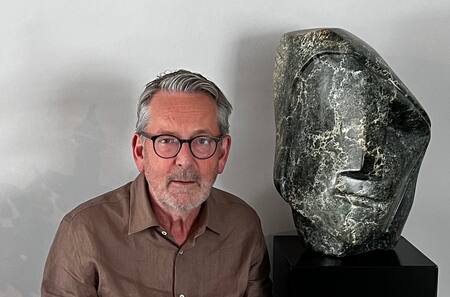
Ad van den Boom
Ad van den Boom transforms perceptions through art, blending words and images to reveal life's essence. Inspired by nature, his exhibitions inspire viewers to see the world anew.
From an early age, Ad van den Boom has written, drawn, painted and sculpted. After a long career as a creative in advertising and several years teaching at the Utrecht School of the Arts, he now devotes himself fully to his autonomous work.
Trees form the heart of his artistic practice. To Van den Boom, they are more than elements of a landscape. They are living witnesses: carriers of memory, resilience, connection and hope. In his drawings and paintings, he often constructs them from thousands of individual dots. In his sculptures, he translates the same visual language into continuous three-dimensional forms.
Van den Boom calls his approach Crealism. It is not simply a style, but a way of seeing. He begins with recognisable reality and transforms it into another possibility. His sculptures do not reproduce trees literally; they reveal their movement, character and inner energy.
His artistic vision is expressed in one sentence:
“Not what it is, but what it can be.”
About Sculpting
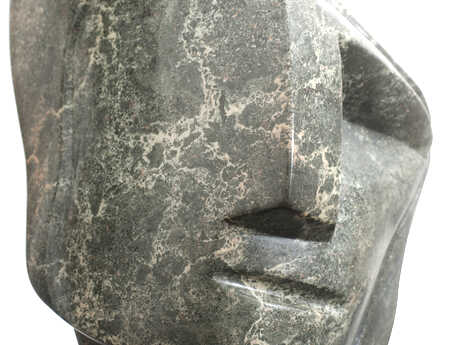
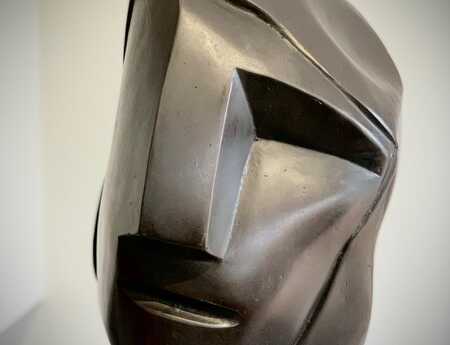
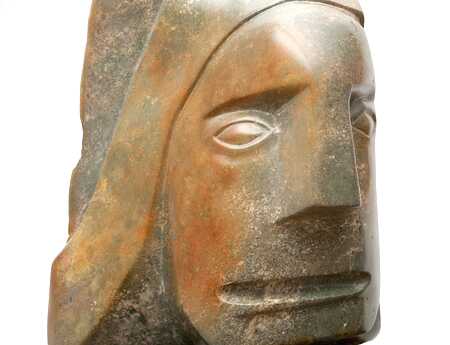
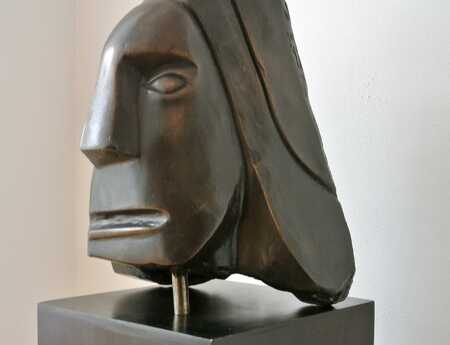
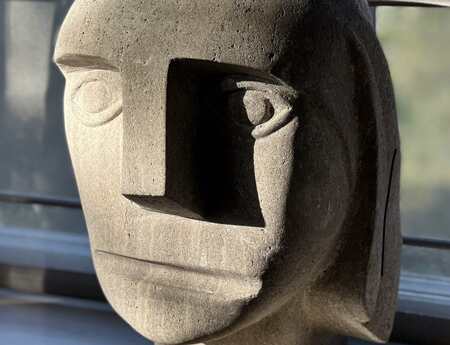
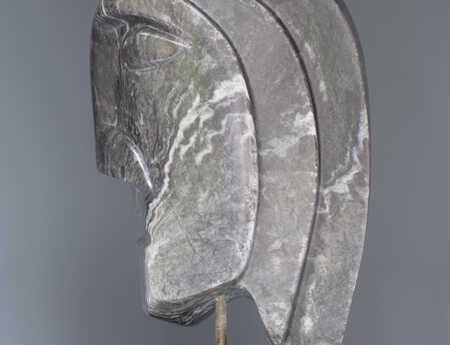
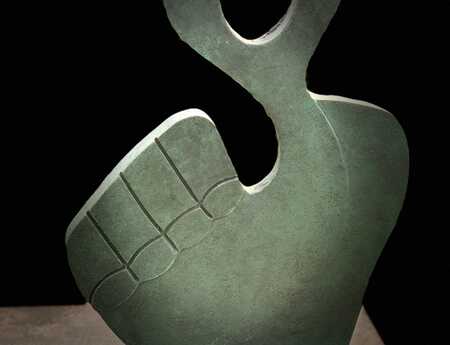
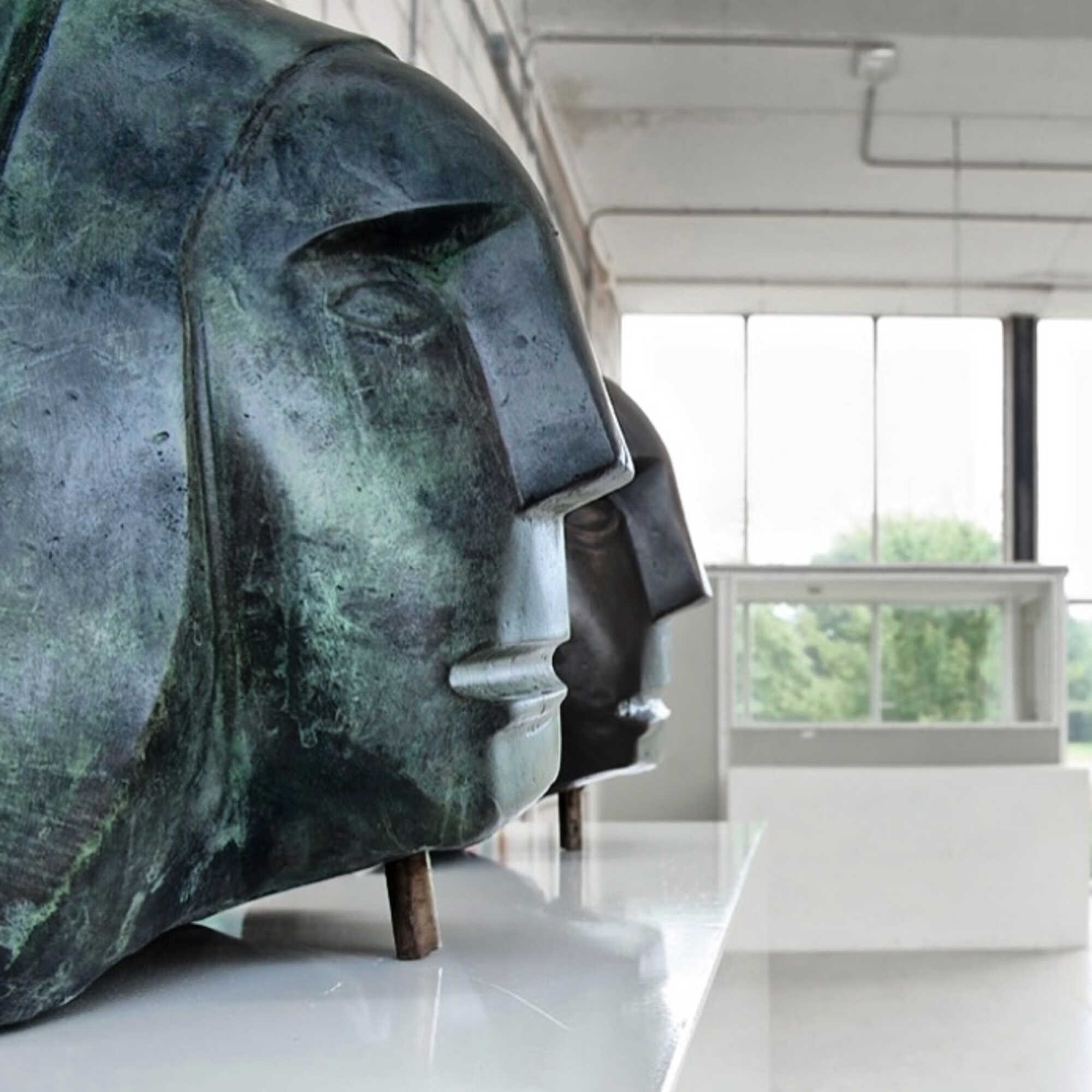
My journey into sculpture began with stone and later continued in bronze. Working with stone taught me to listen to the material. I came to believe that every form already exists as a possibility, waiting to be discovered. In a quarry, there is always one stone that seems to say, “Pick me.” As I carve, file and sand, the stone gradually reveals which direction the work must take. Every decision is irreversible: once something has been removed, it cannot be put back.
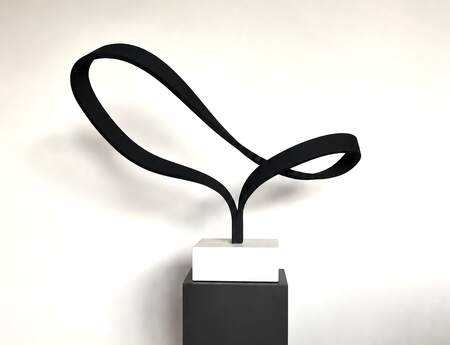
My recent sculptures begin in a different way. They grow from the visual language of my drawings and paintings. The challenge is not only to imagine the form, but also to discover how a complex and continuous movement can be physically realised in three dimensions. Synthetic resin gives me the freedom to create forms that appear to bend, branch out and return to themselves.
The process has changed from uncovering a form within the material to building a form into existence. Yet the underlying principle remains the same: I do not force the work towards a predetermined outcome. The form and the material help determine what the sculpture can become.
My sculptures do not reproduce trees as they appear. They seek to reveal their movement, character and life force.
Not what it is, but what it can be