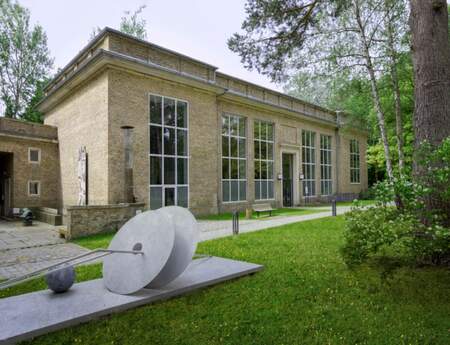
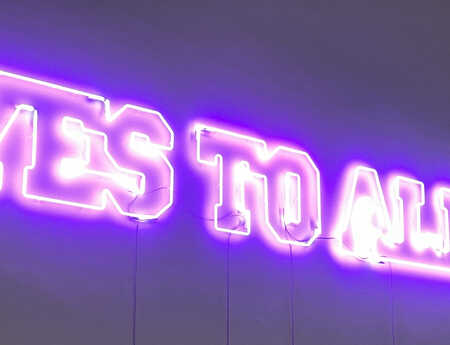
Remembering instead of forgetting – Sonsbeek 26

Biennale or Documenta – Venice or Kassel? Sonsbeek 26! At the thirteenth edition of this exhibit for art in public spaces in Arnhem, the Netherlands, 17 artists are exploring the themes of remembering and forgetting under the title “Ik hoef geen tuin, ik deel een park” (I don’t need a garden, I share a park). Like the Documenta in Kassel, this open-air event runs for 100 days; this year, it ends on 11 October.
In a city that was almost completely destroyed in large parts during the Second World War by months of artillery bombardment and close combat, before being rebuilt from the ashes, the central themes this year are farewell and forgetting, as well as remembrance and renewal.
In 1971, the exhibition expanded beyond the eponymous Sonsbeek Park for the first time under the title “Sonsbeek buiten de perken” (Sonsbeek Beyond Its Bounds), spreading across the whole city; the same is true again this year.
“Remembering is not the opposite of forgetting.” The two curators, Amira Gad and Christina Li, use this quote from Chris Marker’s film “Sans Soleil” (Invisible Sun) to describe their concept. For them, bidding farewell is the steady, ongoing process of overwriting older memories, a process inextricably linked to renewal. For Gad and Li, life is full of goodbyes, always and everywhere. History is constantly being rewritten, and no one can escape the final farewell anyway.
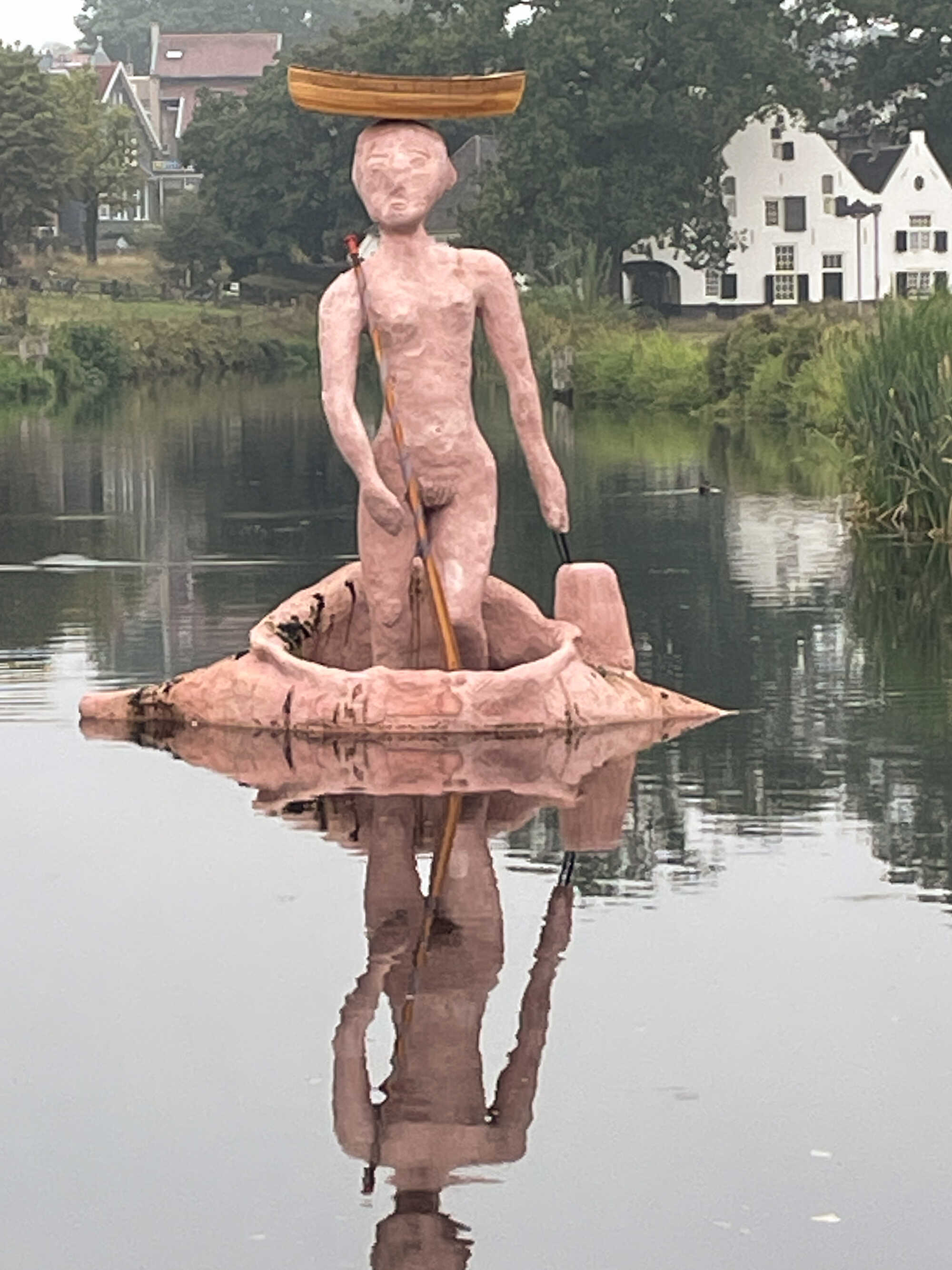
Sonsbeek Park is a very special park. This urban park in Arnhem, covering almost 70 hectares, was constructed as far back as the 19th century; it is an impressive, by Dutch standards, hilly green space comprising woods, meadows, ponds and streams. At the entrance to the 13th edition of this exhibition – originally founded in 1949 as a biennial and held irregularly since the 1980s – visitors are met by a larger-than-life clay figure of a woman, visible from afar, who rises from a pond on top of a shell. And Europa fled is the title of the work by the Lebanese artist Mounira Al Solh. On the one hand, it is a bitter, postcolonial portrayal of a continent that is increasingly turning away from its own ideals; on the other, it symbolises the struggle for survival faced by many people from Africa; and finally, it poses the question of the role that art may play in this context.
In this exhibition, no single work – the majority of which are new commissions – is placed by chance. The dialogue with the surroundings is intentional. The spectrum is multifaceted. The perspectives interweave historical layers and individual experiences. Of central importance in this exhibition is the engagement with history – that of the city, of the Second World War and of today’s refugee flows.
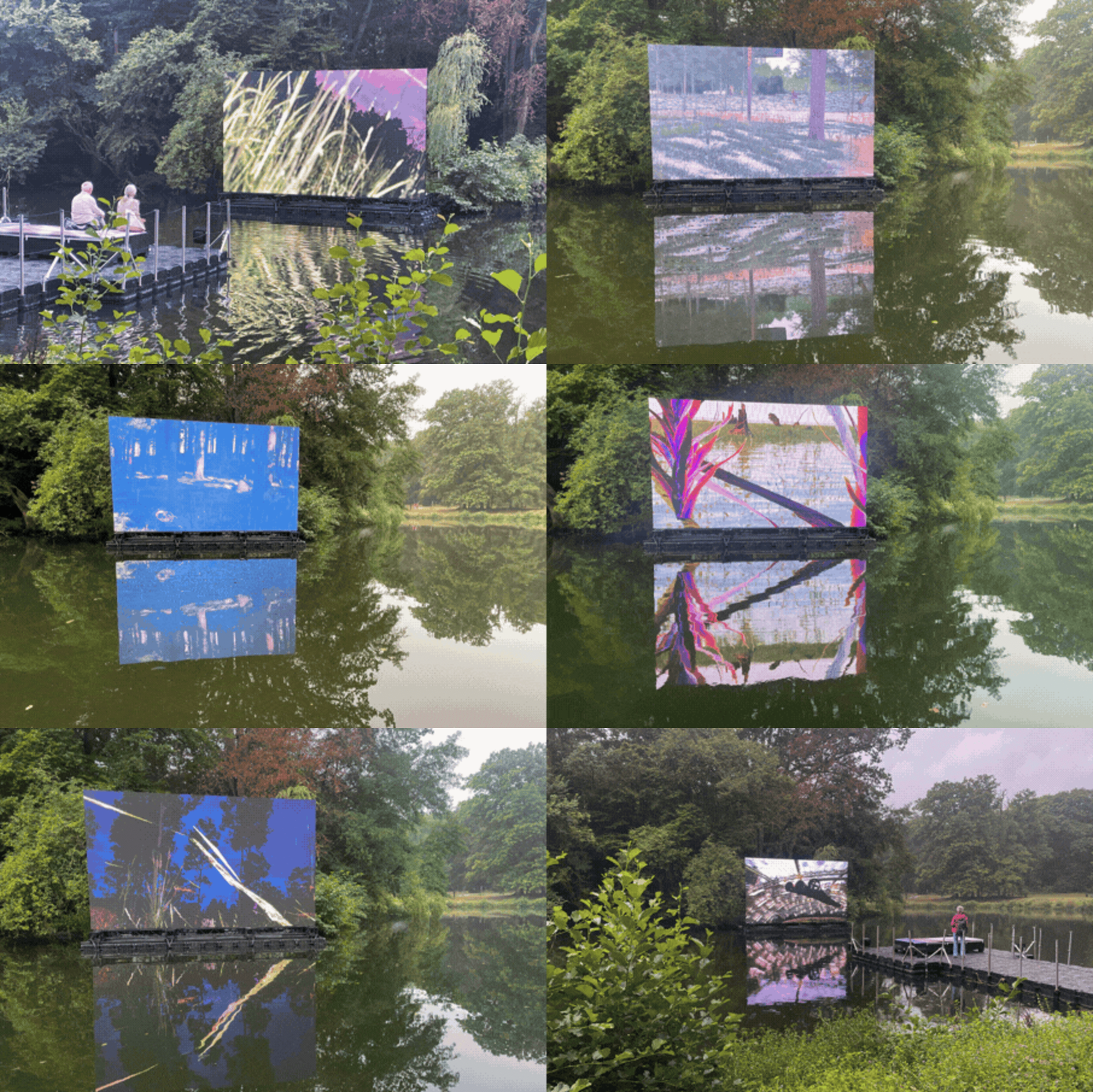
Multimedia artists such as Femke Herregraven are the ones providing fresh impetus. Herregraven explores the effects of abstract human interventions on landscapes, ecosystems, language, historiography and everyday life. The Amsterdam-based artist displays a real-time simulation of the ever-changing ecosystem on a giant screen, fed by sensors distributed throughout the park. Visible even from a distance, the LED screen – positioned on a floating, walk-on island (with a nod to Christo and Jean-Claude!) – displays the simulations as live data streams.

Anne-Mie Van Kerckhoven, who lives in Antwerp, has transformed the town hall square into a colourful gathering place in the heart of a city marked by many visible scars, using a spiral-shaped carpet of flowers. At the end of the 100 days, the plants will be handed out. The sculpture lives on, albeit in a different form.
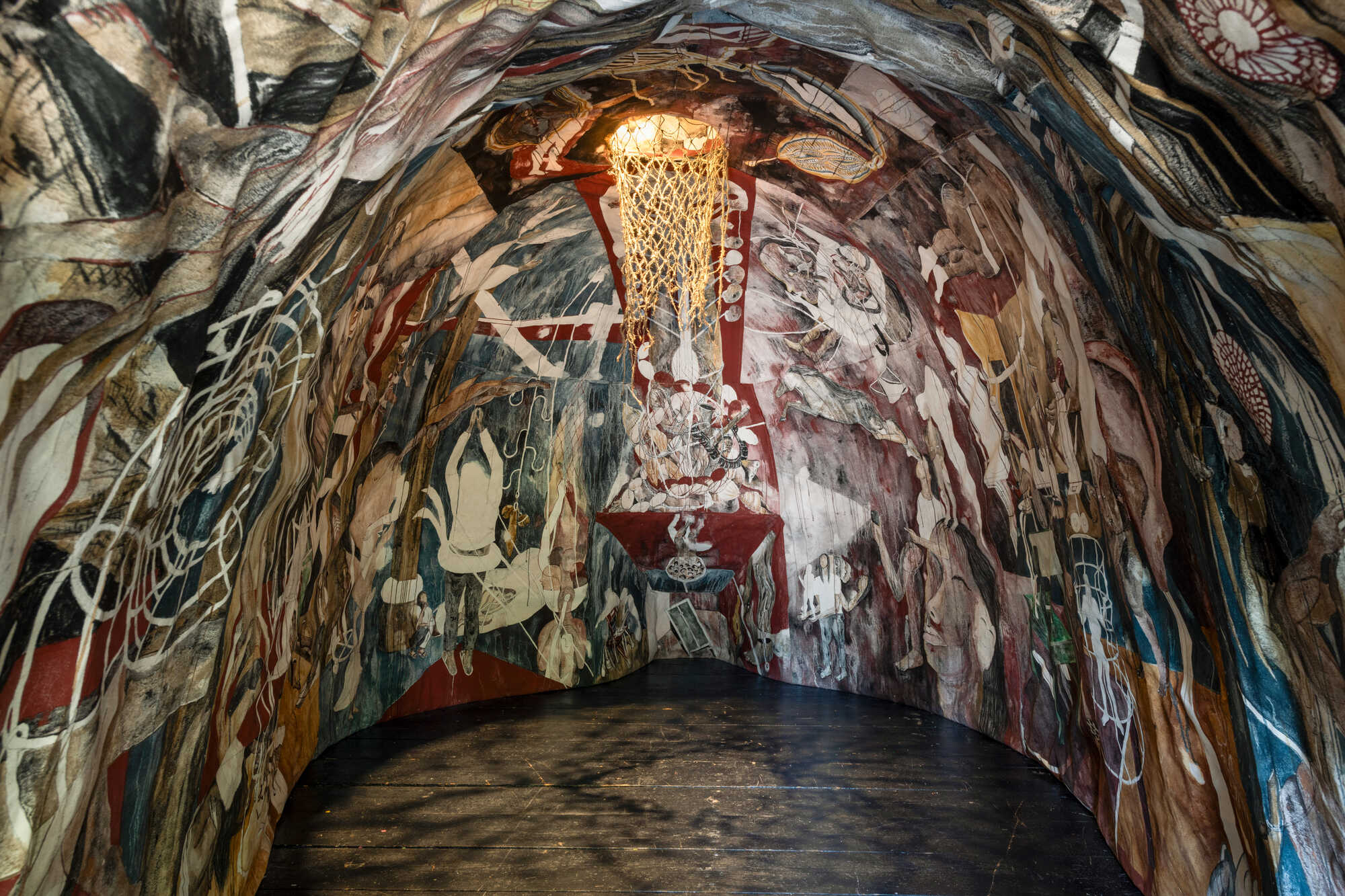
Ipeh Nur, an artist living on the Indonesian island of Java, invites visitors to step inside a cave lined with coloured canvases and create their own space free from restrictions. With the Brazilian artist Jota Mombaça, the real world recedes into the background. Here, the fictional (digital?) world is experienced as real and tangible. A rock-like female singer stands in the midst of a soundscape that invites visitors to view their memories as something to be shared with others. You’ll Never Walk Alone! That is the prevailing theme of this exhibition. The projects and installations engage with the constantly shifting political and cultural conditions of the present day. They pose questions and define what art in public spaces can or could mean.
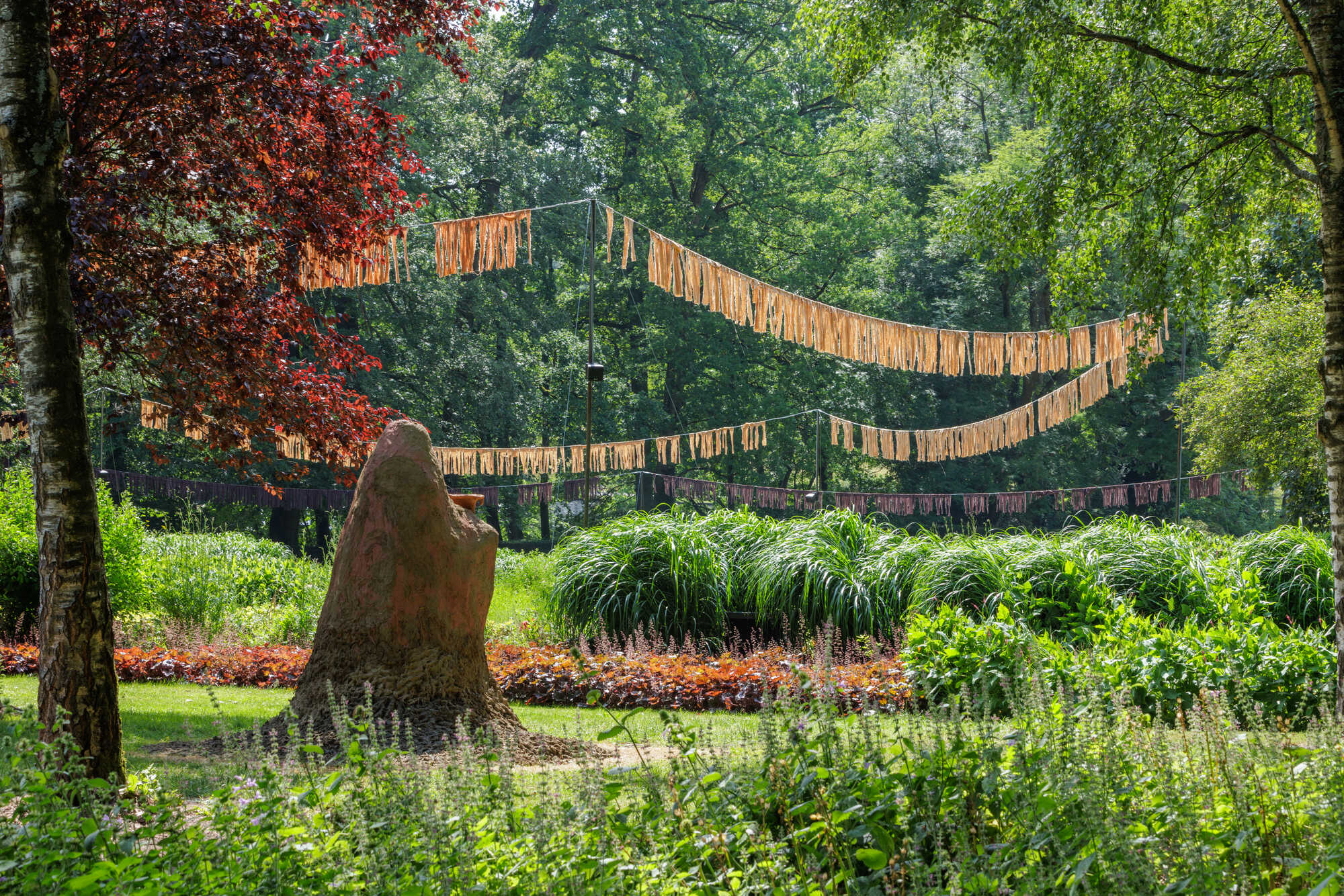
In Arnhem, remembering is not a matter for preservation but for further development and transformation. Perspectives are formulated that resist the forces of forgetting. The large-scale sculptures on display at Sonsbeek are political, yet also fragile, unstable and poetic.
As the world becomes increasingly alienating, sharing art is essential. As is tradition, admission to this exhibition is free. It couldn’t be any more accessible, a (social) aspect that is particularly important at a time when social responsibility and a community-orientated way of life are no longer taken for granted.
Here, it becomes apparent that contemporary art does not merely have an aesthetic mission to fulfil, but that it also has the potential to lay bare the wounds of our times. Art has the power to tell stories of the past, the future and the present all at once. In Arnhem, it does so in such a vivid way that, for all its seriousness, coming to terms with the past can actually be good fun.
This article was originally written in German by Willy Hafner.
About the author

Willy Hafner
Willy Hafner is a Munich based art historian who helped organize the first and second Sculpture Network Lab in 2019. Since then he has been reporting for us on exciting sculpture projects in Germany and beyond. He is also a member of the Patronage Committee of the Centro Internazionale di Scultura and helps emphasize the economic and cultural significance of the project.
Translation

Sybille Hayek
Sybille Hayek is an editor and translator. Since 2022 she has been supporting our team on a voluntary basis with her trained eye for detail and a great love of language.