Symbolically, the combination of art in public space and the demolition of existing structures creates an image of cultural urban transformation. Traces of human use and nature alter the artwork, gradually causing it to disappear until it can one day be unearthed and interpreted as part of human settlement history.
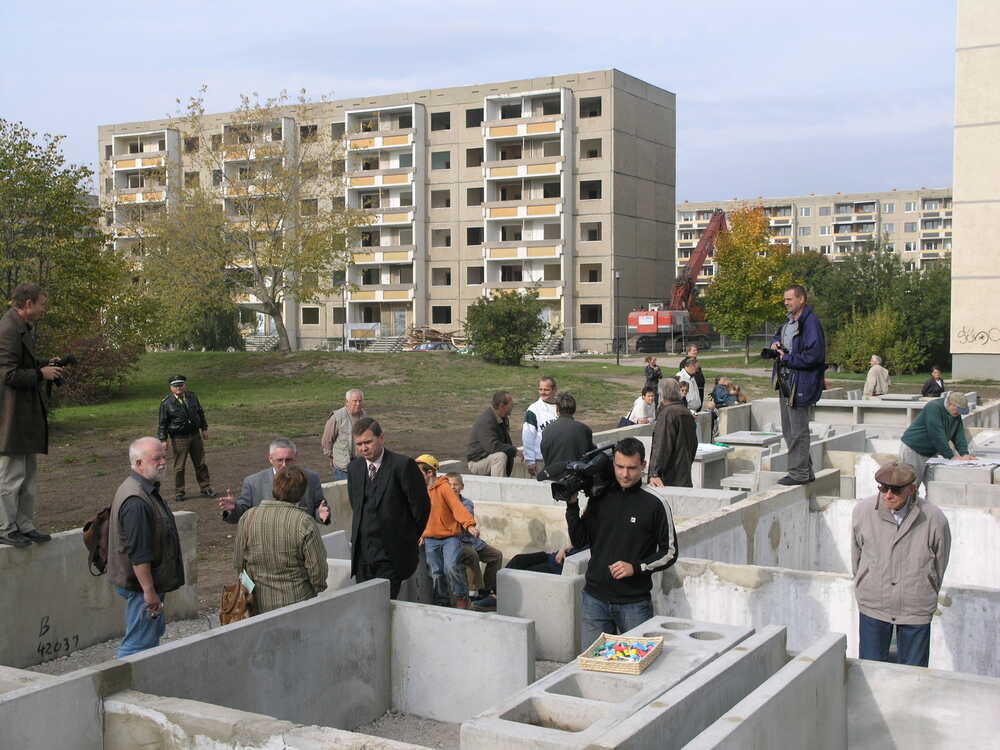
Over a million P2-type housing units were built in the German Democratic Republic between 1960 and 1990. This included numerous apartments in Halle – for example, in the Silberhöhe district. Since then, the function of such districts has fundamentally changed, and this large-scale urban planning utopia is perceived entirely differently. At the beginning of the 21st century, deconstruction was under discussion for many of these buildings: the vacated apartment blocks were demolished, leaving no trace, down to the foundation slab.
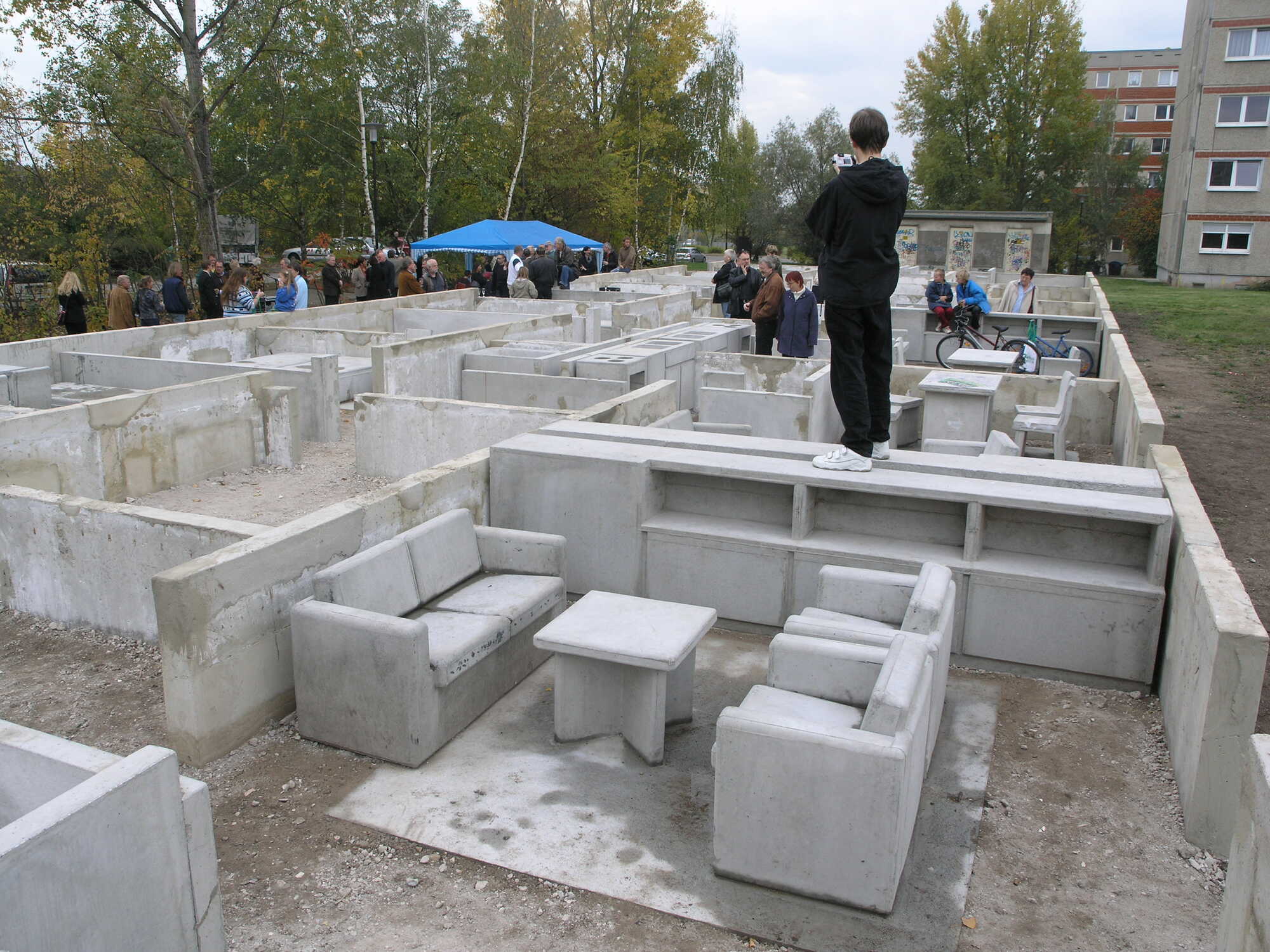
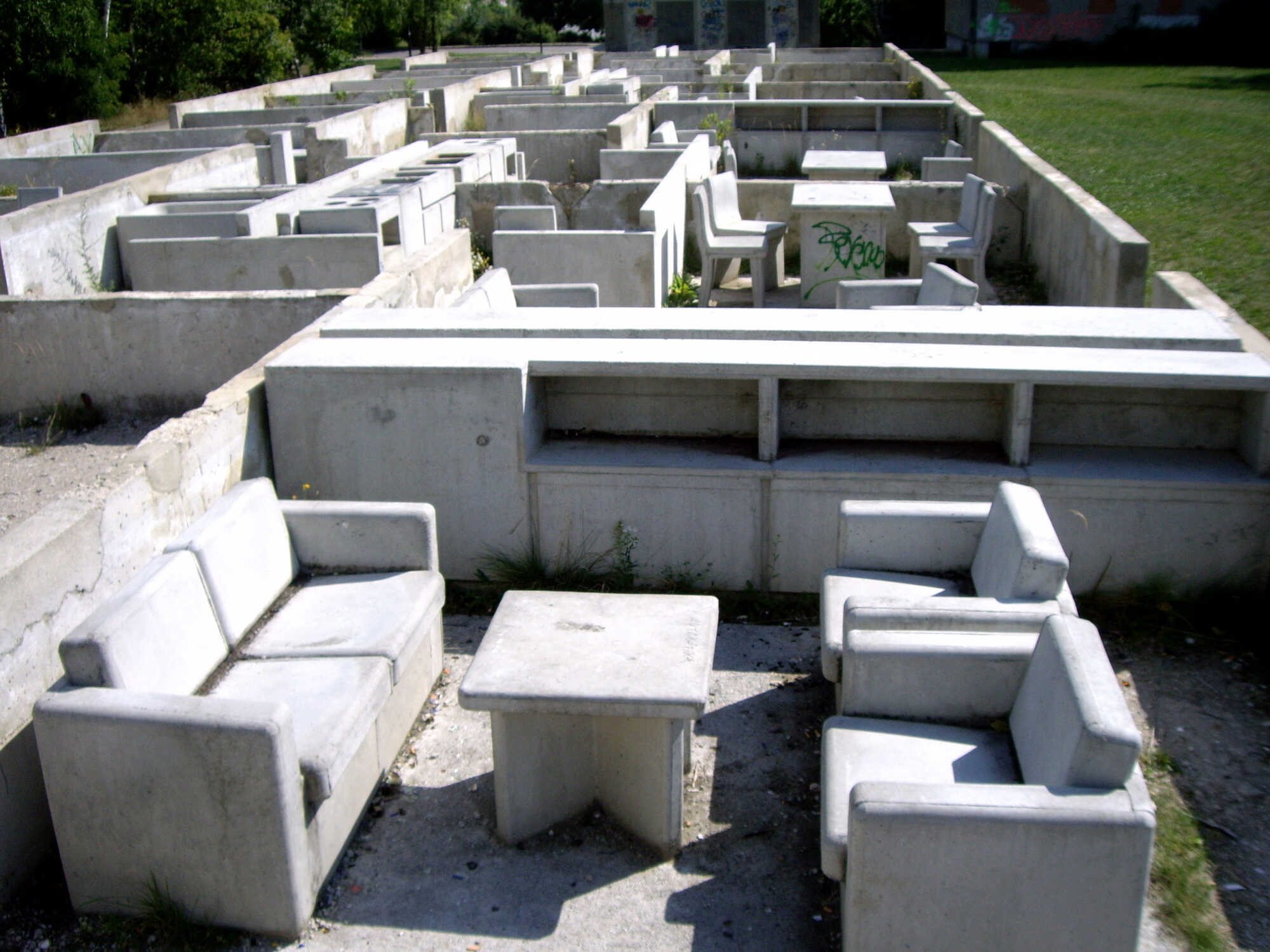
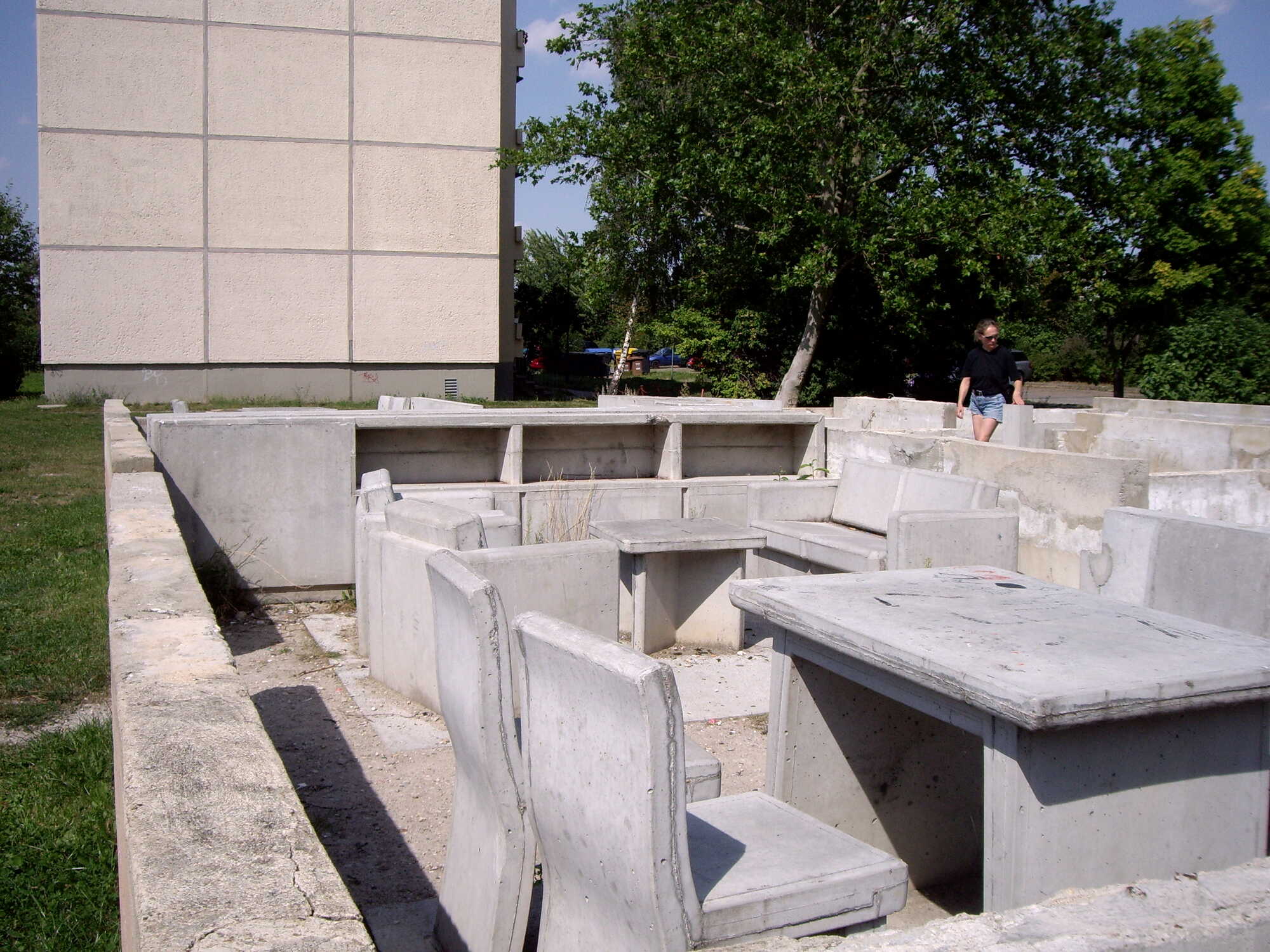
However, three entrances in Silberhöhe still have a future within the context of the artistic symposium "Trace of Stones": on Erich-Kästner-Strasse, six apartments are preserved as ground-level sculptures in the open air. From above, one can look down into a typical apartment floor, much like into the often-reconstructed floor plans of archaeological excavations. One discovers a living environment that seems to have been preserved as a site of life from just a few decades ago, carefully conserved in concrete. And of course, such an artistic transformation always elevates and elevates the site to a certain degree. The "capital beneath the earth," seemingly revealed through a deliberate act, allows visitors to glimpse how large this now-abandoned housing complex once was; or how small the living spaces of the typical family of four actually were back then.
360 square meters of partially furnished remnants of a prefabricated apartment block offer a glimpse into a 20th-century world of living in industrially prefabricated buildings. A walk-in artwork becomes a museum-like experience: Visitors can vividly experience the spaces of movement in the new housing developments of that era or refresh their own memories. Symbolically, the combination of art in public space and the demolition of existing structures creates an image of cultural urban transformation. Traces of human use and nature alter the artwork, gradually causing it to disappear until it can one day be unearthed and interpreted as part of human settlement history.