Burning Deck (1992)
Installation with discarded alcohol bottles, smoke, light, and dripping elements within a disused market lift.
Spitalfields Market, London. LATOF Group Exhibition.
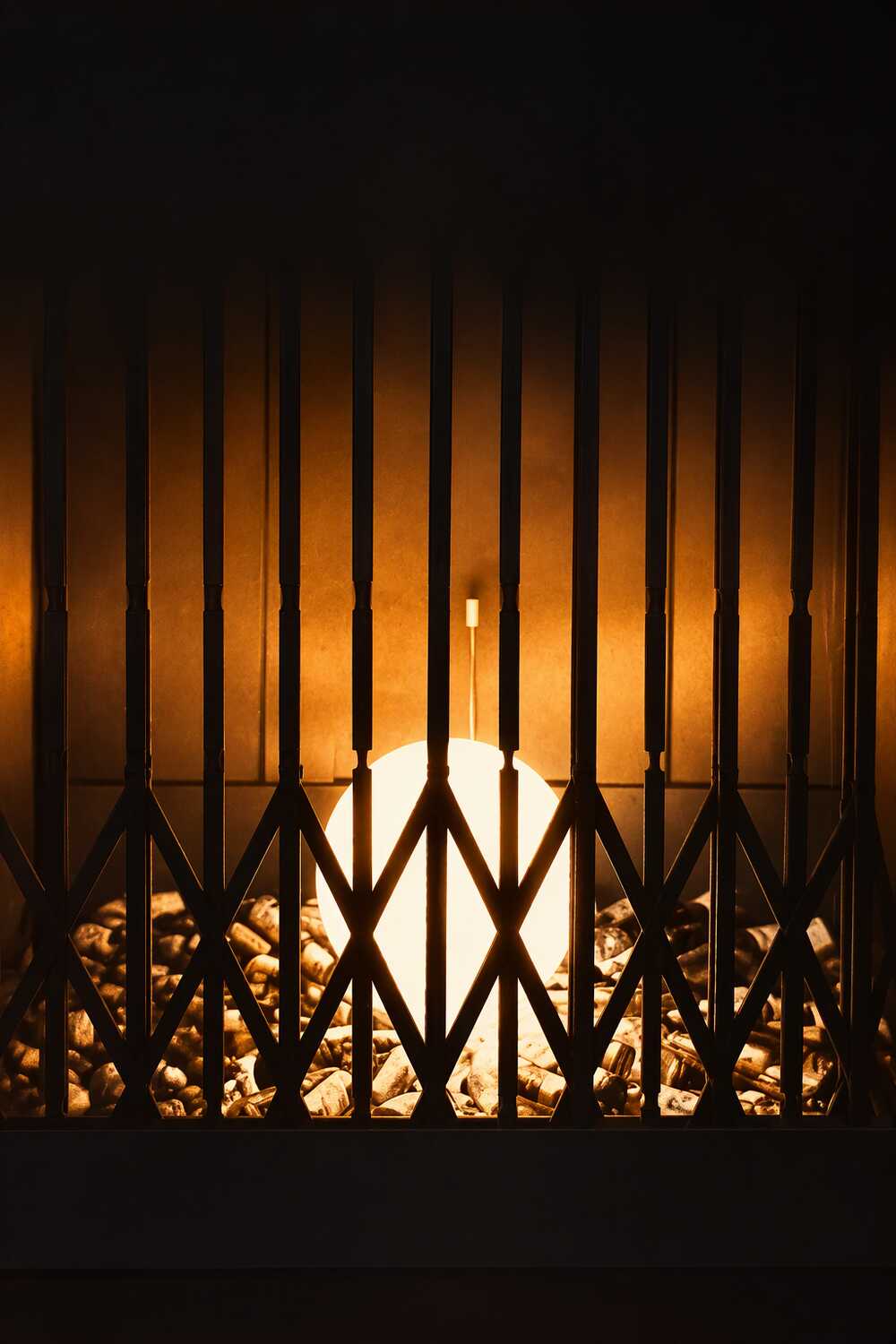
Burning Deck transformed an abandoned industrial lift into a symbolic environment exploring addiction, vulnerability, and confinement. Hundreds of discarded bottles surrounded an intense central light, while smoke and dripping elements altered the atmosphere of the enclosed space. Viewed through the lift's metal lattice gate, the installation evoked the physical and psychological imprisonment of dependency, using everyday materials as metaphorical language to reflect on the slow consumption of human life.
Burning Deck (1992)
Installation with hundreds of discarded alcohol bottles, smoke, light, and dripping elements within a disused market lift.
Presented at Spitalfields Market, London, as part of a LATOF group exhibition.
Created in 1992, Burning Deck transformed an abandoned industrial lift into a luminous and immersive environment. Hundreds of discarded alcohol bottles accumulated around an intense central light source, while smoke and dripping elements altered the atmosphere of the confined space. Viewed through the lift's metal lattice gate, the installation evoked a powerful sense of enclosure and captivity.
The work was conceived as a metaphor for the destructive effects of alcohol addiction on human life. The collapsible lift functioned as a symbolic prison, suggesting the physical and psychological confinement that can result from dependency, illness, and self-destruction. At its centre, a glowing light evoked the gradual consumption of life itself, while the accumulation of bottles, smoke, and dripping forms reflected the slow erosion of health, freedom, and human potential.
By transforming discarded materials and industrial architecture into a symbolic environment, Burning Deck addressed themes of addiction, vulnerability, and social neglect. As in much of Abu Jafar's practice, every material functioned as metaphorical language. Nothing was intended as literal representation; rather, the relationship between bottles, light, smoke, and the prison-like structure created a visual warning about the consequences of addiction and the invisible forms of confinement that shape human lives.
The installation received wider public attention through coverage in Time Out London and a review by the distinguished art critic Sara Kent, highlighting its powerful transformation of an industrial space into a compelling metaphorical environment.